



Heathrow's losses have widened, despite an improvement in passenger numbers, as the London airport warned demand may not recover “for a number of years”.
About 18 million people passed through Heathrow this summer, making it the busiest hub in Europe over the period.
The airport predicts passenger numbers this year will reach 60 to 62 million, about 25 per cent less than in 2019.
“Headwinds of a global economic crisis, war in Ukraine and the impact of Covid-19 mean we are unlikely to return to pre-pandemic demand for a number of years, except at peak times,” it said in a statement.
The airport's underlying losses increased to £442 million ($503m) in the year to date “as regulated income fails to cover costs, adding to the £4 billion in the prior two years”, it said.
“We have acted responsibly in the face of an uncertain market to protect liquidity and cash flow and reduced gearing. We are not forecasting any dividends this year,” it added.
Heathrow is preparing to lift a passenger cap imposed in July to limit the number travelling to 100,000 per day amid staff shortages.
It will be removed on October 30.
Decades of flight: Heathrow through the years - in pictures
-
Heathrow Airport in London, the UK's busiest, has been a travel hub for decades. Here The National takes a look back at Heathrow through the years. All photos: Getty Images -
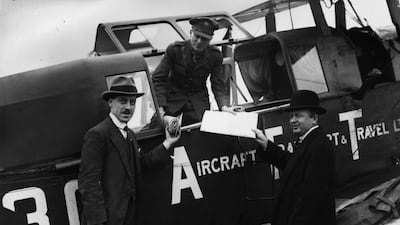
An Airco De Havilland biplane of the British airline, Aircraft Transport and Travel Limited, about to leave on the company’s inaugural flight from Hounslow Heath Aerodrome, later known as Heathrow, to Le Bourget, Paris, in August 1919 -
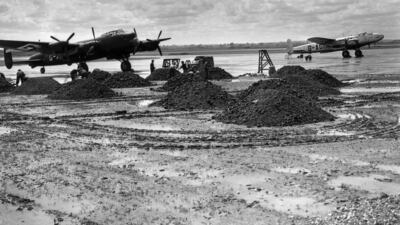
Waterlogged runways at London Airport - Heathrow's original name - one week before it became Britain's main aerial gateway to the US in 1946 -
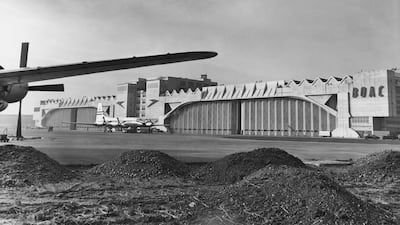
The new BOAC maintenance headquarters at London Airport circa 1955 -
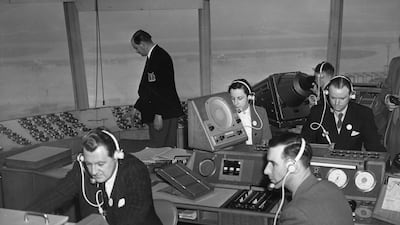
The air traffic control room at the airport's new terminal in 1955 -
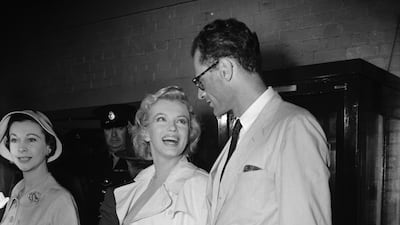
US film star Marilyn Monroe with her husband, playwright Arthur Miller, after arriving at the airport in July 1956 -
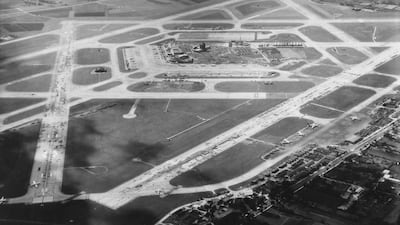
An aerial view showing the runways in 1958 -

The arrivals and departures board in 1960 -

A new airport gift shop, selling items by Chanel, Wedgwood and Pringle of Scotland, in 1961 -
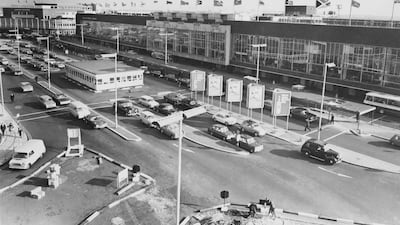
The Queen's Building and the No. 1 Building Europa at Heathrow in 1965 -
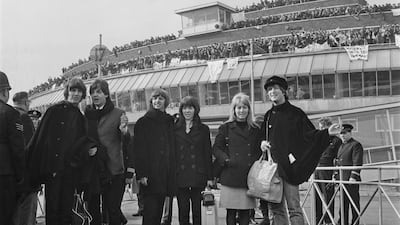
The Beatles leave Heathrow for Salzburg in Austria, to resume filming of the movie Help!, in 1965 -
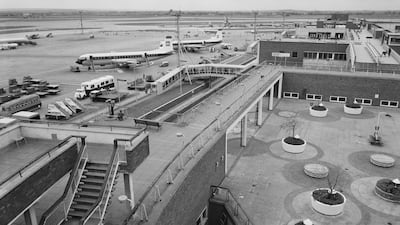
Passenger terminal gates at Heathrow in 1966 -
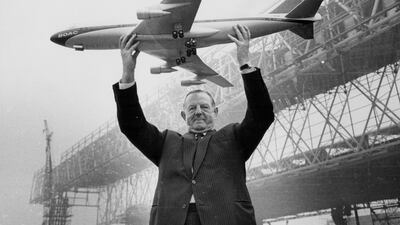
Keith Granville, managing director of BOAC, holding up a model of the Boeing 747 jet, with the new aircraft hangars under construction in the background, at Heathrow in 1969 -
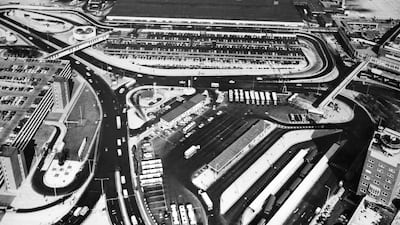
An aerial view of Heathrow in 1970 -
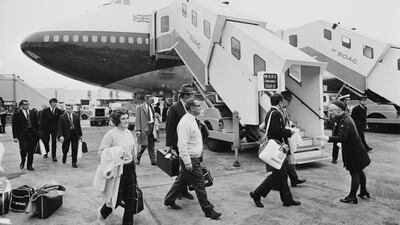
Passengers boarding the first BOAC Jumbo Jet 747 used for a commercial flight, from London Heathrow to New York, in 1971 -
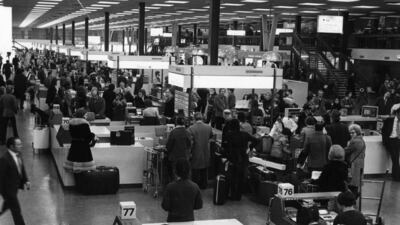
Passengers going through the departure lounge at Heathrow in 1973 -
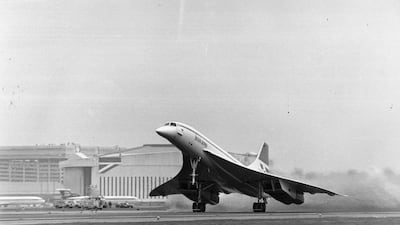
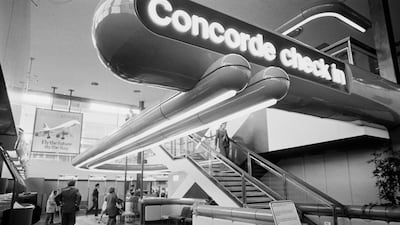
Concorde takes off from Heathrow on her first commercial flight for British Airways in 1976 -
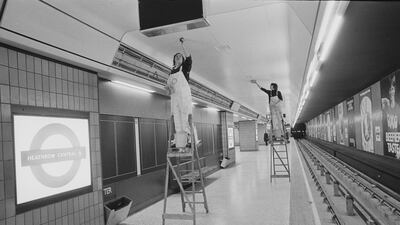
Men at work finalising the Heathrow Central underground station before its opening in 1977 -
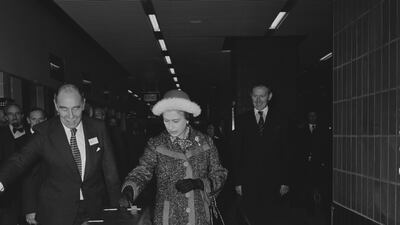
Queen Elizabeth II passing though the Tube gates at Heathrow Central station on its opening in 1977 -
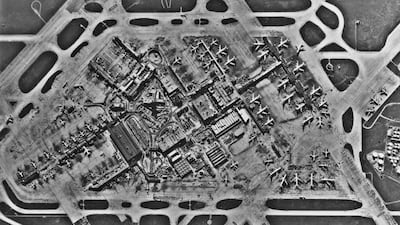
An aerial view of Heathrow in 1978 -

Passengers waiting near a departures board in 1979 -
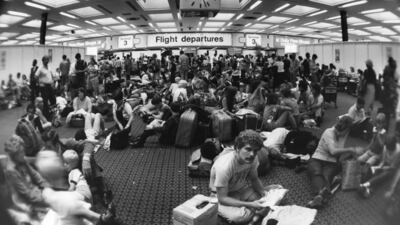
Holidaymakers waiting in the departure lounge at Terminal 3 of Heathrow in 1981 -
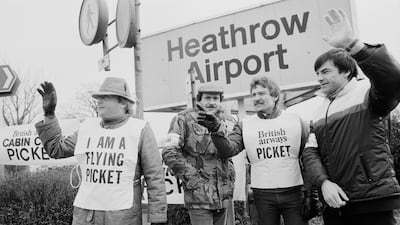
British Airways employees protesting at Heathrow in 1984 -
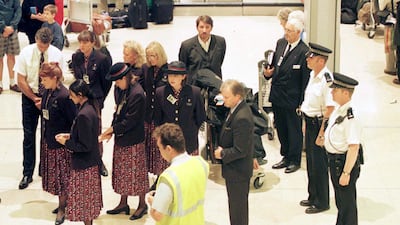
Passengers and staff observe a silence in Heathrow's Terminal One to mark the beginning of the funeral of Diana, Princess of Wales, in 1997 -
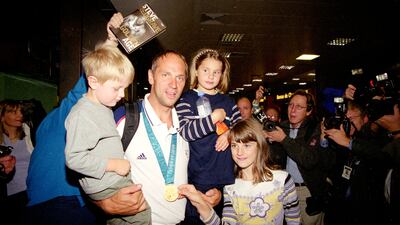
Rower Steve Redgrave at Heathrow with daughters Sophie and Natalie and son Zak after returning from the Sydney 2000 Olympic Games with his gold medal -
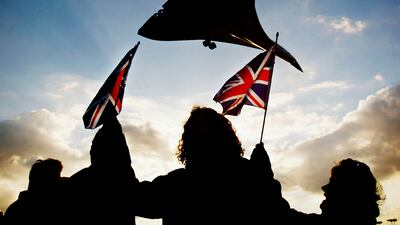
Spectators watch the last Concorde land at Heathrow in 2003 -
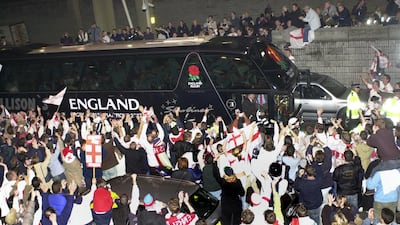
Fans surround the coach carrying the England rugby team at Heathrow, as they arrived from Sydney after winning the World Cup in 2003 -
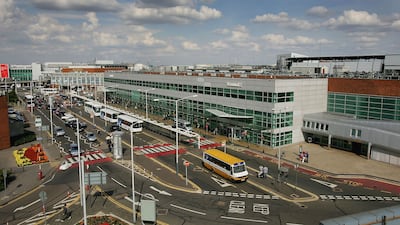
Heathrow's Terminal 2 in 2004 -
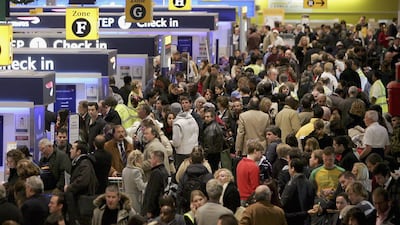
Passengers queue to check in at Terminal 1 of Heathrow Airport during the Christmas 2006 and New Year period -
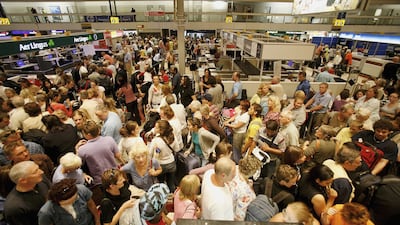
Passengers wait at Terminal 1 on August 10, 2006, after airport security was raised to critical when a terrorist plot to blow up planes in mid-flight from the UK to the US was disrupted by police -
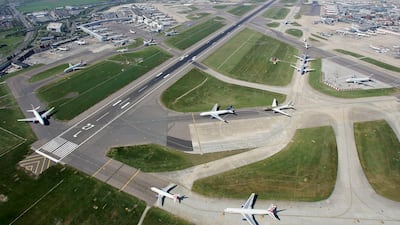
Planes queueing to take off at Heathrow in 2007 -
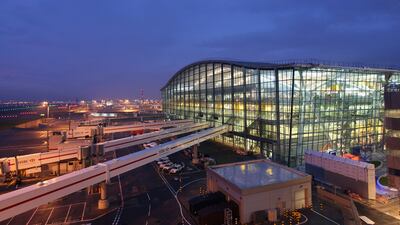
The new Terminal 5 at Heathrow in 2008 -
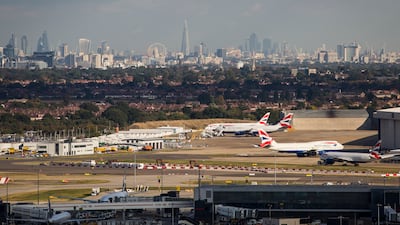
Aircraft at Heathrow Airport in front of the London skyline in 2016 -
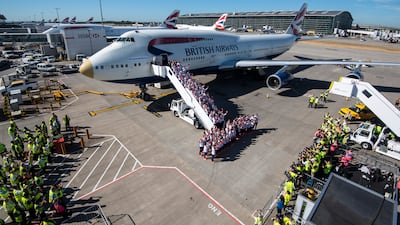
Members of Team GB arrive from Rio de Janeiro at Heathrow, after returning from the 2016 Olympics, which saw Great Britain's strongest performance at the Games in over a century -

A composite photo shows planes taking off from Heathrow in November 2016. Forty-two planes were captured between 10.17am and 11.17am and a montage was created from those single images -
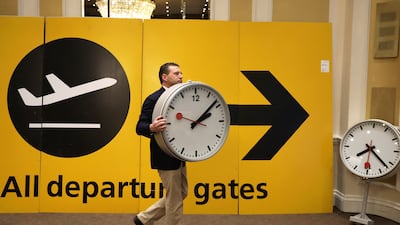
Items are arranged during an auction preview at Heathrow in 2018. The contents of Terminal 1, which closed in 2015, were being sold -
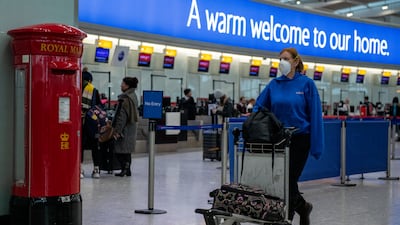
An airline passenger wearing a face mask pushes her bags through Heathrow's Terminal 5 during the coronavirus pandemic in 2020 -
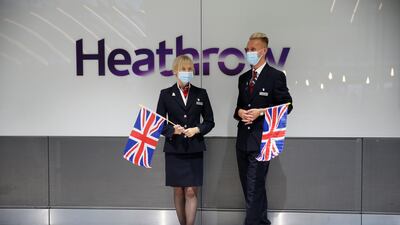
British Airways employees welcome Olympians returning from the Tokyo Olympics in 2021 -
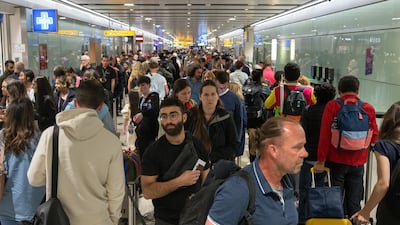
Travellers wait in a long queue to pass through the security check in 2022


“We are working with airlines to agree a highly targeted mechanism that, if needed, would align supply and demand on a small number of peak days in the lead up to Christmas,” said the airport.
“This would encourage demand into less busy periods, protecting the heavier peaks, and avoiding flight cancellations due to resource pressures.”
The airport said it also aims to build back its ecosystem to meet demand at peak periods.
"To do so, businesses across the airport need to recruit and train up to 25,000 security cleared people - a huge logistical challenge," it said.
"We are supporting, including establishing a recruitment taskforce to help fill vacancies, working closely with the government on a review of airline ground handling and appointing a senior operational executive to invest in joint working."
Heathrow’s chief executive John Holland-Kaye said the hub can be proud of ensuring 18 million people passed through the airport over the summer, with the “vast majority experiencing good service”.

“We have lifted the summer cap and are working with airlines and their ground handlers to get back to full capacity at peak times as soon as possible,” he said.
“As we look to the future, we encourage the [Civil Aviation Authority] to think again at stimulating the long-term investment that will deliver the smooth and predictable journeys consumers value most, rather than focusing on short-term pricing which we have seen only benefits airline profits.”
The airport, which was once the world’s busiest before it was overtaken by Dubai International Airport, is currently operating at about 80 per cent of capacity compared with 2019, before the onset of the Covid-19 pandemic.

