


The number of asylum seekers in hotels almost tripled in a year, a report claims.
By the end of 2021, there were 26,380 migrants living in this type of temporary accommodation, compared to 9,421 at the start of the year, Home Office data obtained by the Refugee Council showed.
More than 200 hotels were being used and about 10 per cent of those staying in them were children, responses to freedom of information requests revealed.
Nearly 3,000 people had been “trapped in unsuitable hotel accommodation” for more than six months and 378 had been there for a year, the charity said.
It warned some migrants were experiencing depression and feeling suicidal while “languishing” in hotels as they awaited a decision on their asylum claim.
The Refugee Council highlighted cases of people having “inadequate access to clothing, appropriate footwear and other basic essentials such as paracetamol, mobile phones and the internet”.
-
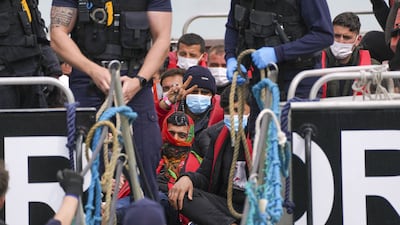
British Home Secretary Priti Patel has challenged opponents of her plan to send migrants to Rwanda to come up with a better idea to tackle small-boat crossings in the Channel. PA -
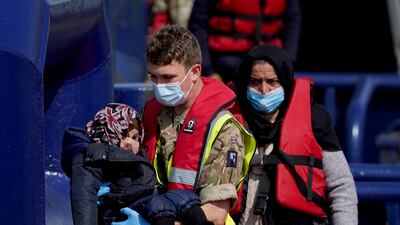
A rescuer carries a child as migrants are brought in to Dover, Kent, after a small-boat incident in the English Channel. PA -
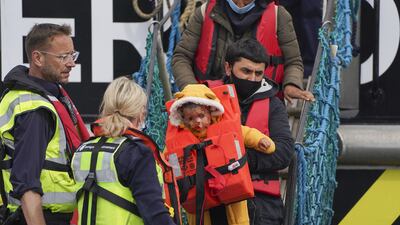
Under the new proposals, asylum seekers who try to enter the UK through the English Channel route from France will be flown to Rwanda in Africa on a one-way ticket. PA -
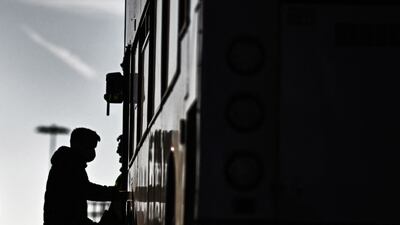
A migrant found at sea while attempting to cross the English Channel boards a bus to be taken for processing in Dover. AFP -
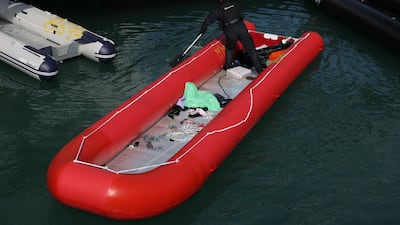
A border force officer parks a dingy used to carry migrants at Dover Port. Getty Images -
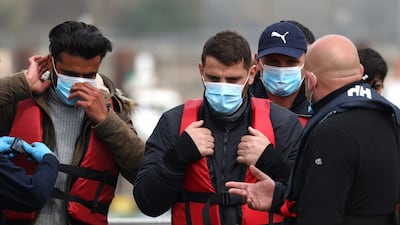
The number of migrants who have reached the UK by crossing the English Channel has topped 6,000 so far this year, official figures showed. Getty Images -

British navy ship 'HMS Tyne' on patrol in the English Channel off the coast of Dover. PA -
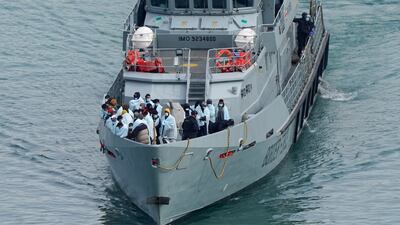
A group of people thought to be migrants are brought in to Dover, Kent, on board a Border Force vessel. PA


“The huge increase in the number of families and vulnerable children stuck between the four walls of a hotel room, from morning 'til night, is the brutal reality of a broken system," said the charity's chief executive, Enver Solomon, who called the situation deeply disappointing.
“Far from the glitzy hotels people may imagine, these are not places anyone would want to stay in for long periods. They are cramped and unsafe.
“Hotel stays are days, weeks, months, and in some cases a year, stuck in limbo, cut off from society, unable to find work with children often missing out of vital education.
“The impact of this on people who have already endured extreme suffering is huge, damaging their mental health, robbing children of their childhood and leaving people unable to progress with their lives in any meaningful way, or participate in the lives of their communities.
“The government must ensure swift decisions are made so that those who have protection needs can stay in this country as a refugee, and those who do not can be supported to safely return to the country from which they came.”
In February, it emerged that the government was spending £4.7 million ($5.6m) a day housing asylum seekers in hotels.
The Home Office has been contacted for comment.

