


Live updates: follow the latest news on Russia-Ukraine
The retreat of Russian forces from Kyiv has revealed evidence of atrocities against civilians in the capital's suburbs, with mutilated bodies and mines strewn across the town of Bucha.
Ukraine’s Prosecutor General, Iryna Venediktova, said the bodies of 410 civilians had been removed from Kyiv-area towns that were recently retaken from Russian troops.
Ms Venediktova posted on Facebook that the bodies were recovered on Friday, Saturday and Sunday. She said 140 of them had undergone examination by prosecutors and other specialists.
Ukrainian Deputy Prime Minister Iryna Vereshchuk said the mayor of the village of Motyzhyn in the Kyiv region was murdered while being held by Russian troops.
Ms Vereshchuk said 11 mayors and community heads were being held by the Russians across Ukraine.
In Bucha, mines have been left scattered around homes and corpses.
The body of a missing Ukrainian photographer, Maksim Levin, was found in a nearby village.
A mass grave in the grounds of a church was still open, with hands and feet poking through the red clay heaped on top, Reuters reported.
-

A Ukrainian soldier inspects a burnt Russian tank in Dmytrivka, Kyiv region. Getty Images -
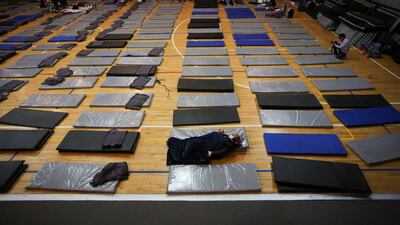
Ukrainians who fled to Mexico amid Russia's invasion of their homeland arrive at a shelter near the US border, in Tijuana, Mexico. Reuters -
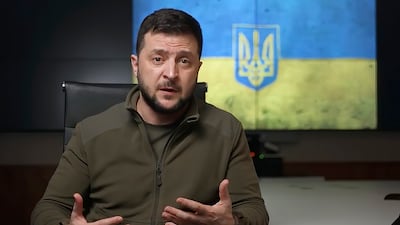
Ukrainian President Volodymyr Zelenskyy speaks from Kyiv. AP -

A woman hugs a Ukrainian soldier after a convoy of military and aid vehicles arrived in the formerly Russian-occupied Kyiv suburb of Bucha. AP -
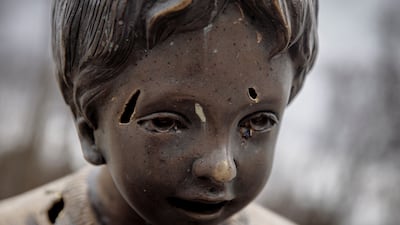
Shrapnel marks are seen on the statue of a child after shelling that hit the Gorky amusement park, in Kharkiv. Reuters -
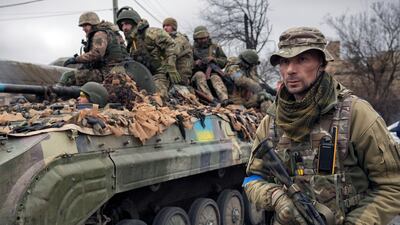
A Ukrainian soldier walks next to a military vehicle, outside Kyiv. AP -
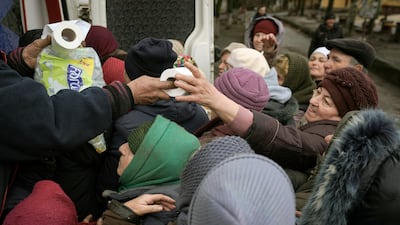
A man distributes toilet paper rolls as people wait for medicine and sanitary supply handouts in the formerly Russian-occupied Kyiv suburb of Bucha, Ukraine. AP -
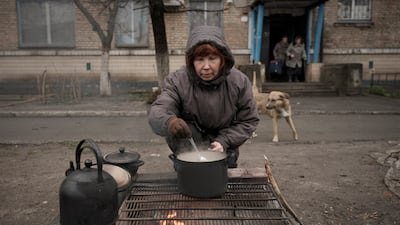
A woman cooks on an open fire outside an apartment building, in Bucha. AP -

Ukrainian servicemen check streets for landmines in Bucha. AP -
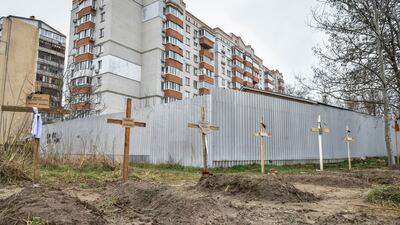
Graves of residents who died during the Russian invasion, in front of residential buildings in the areas recaptured by the Ukrainian army, in Kyiv. EPA -
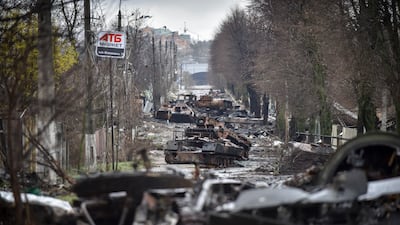
Destroyed Russian military vehicles on a street in Kyiv. EPA -
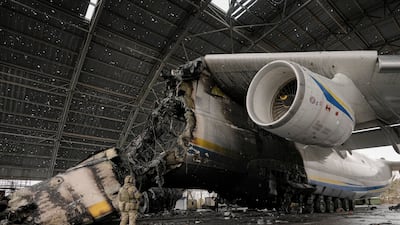
A Ukrainian soldier walks by the wreckage of the Antonov An-225 Mriya aircraft , the world's largest cargo airplane and relic of the Soviet space programme, which was destroyed during fighting in Hostomel, Ukraine. AP -
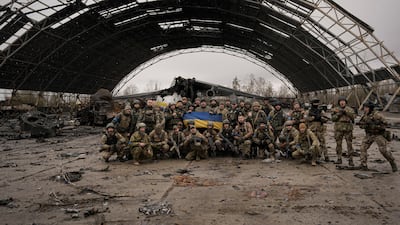
Ukrainian soldiers shout patriotic slogans with the Antonov An-225 in the background. AP -
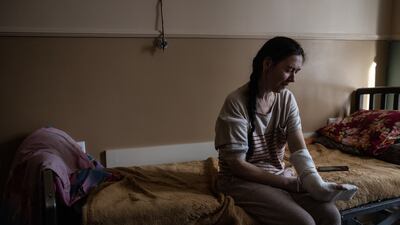
Yulia Dyrda, who sustained arm injuries from Russian shelling, recovers at a hospital in Chuhuiv, Ukraine. Getty Images -
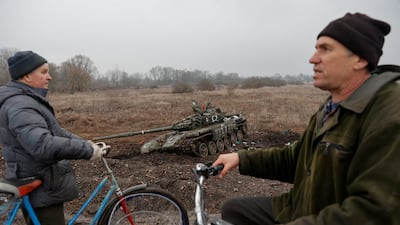
Residents stand next to a stuck Russian tank, in Nova Basan. Reuters -
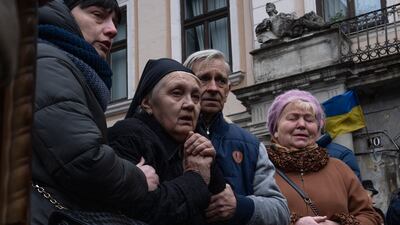
The mother of Lt Oliynyk Dmytro, 40, mourns his death during his funeral ceremony, after the soldier was killed in action, in Lviv, western Ukraine. AP -
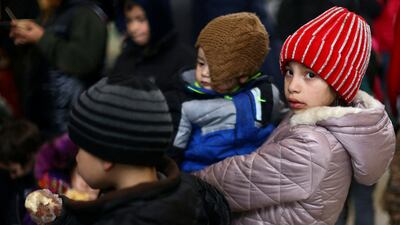
Ukrainian refugees rest in the ticket hall at Przemysl Glowny train station, Poland. Reuters -
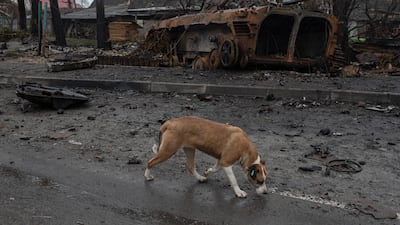
A dog walks past the wreckage of a Russian armored personnel carrier, in Dmytrivka, Kyiv region. Getty Images -
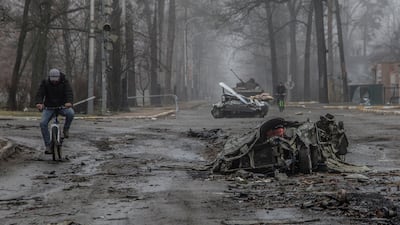
Ukrainians ride bicycles past destroyed cars in the town of Bucha, north-west of the capital Kyiv. Reuters -
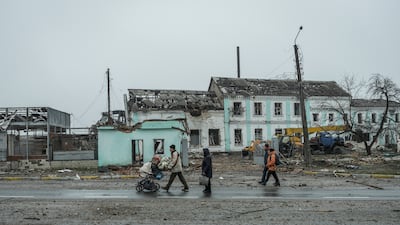
Buildings damaged by shelling in the town of Makariv, in Kyiv region. Reuters -
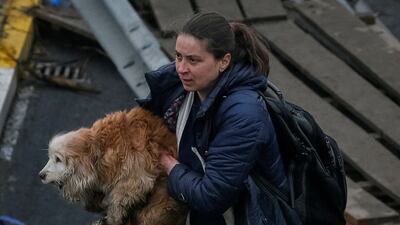
A woman carries her dog during an evacuation in the town of Irpin outside Kyiv. Reuters -
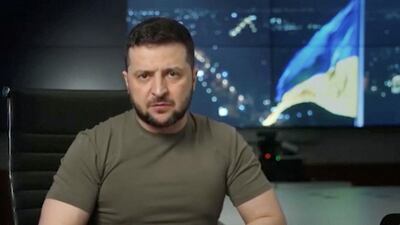
Ukrainian President Volodymyr Zelenskyy gives a video update in which he said the situation in east of the country remained extremely difficult. Reuters -
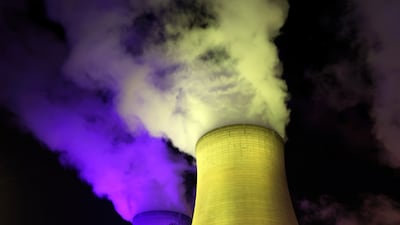
The Drax Power Station in North Yorkshire, England, illuminated in the colours of the Ukrainian flag. Reuters -

Russian soldiers destroyed this bridge as they withdrew from a village on the outskirts of Kyiv. AP Photo -
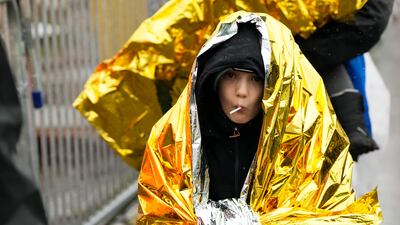
A child wrapped in a rescue emergency blanket crosses the border into Medyka, south-eastern Poland. AP Photo -
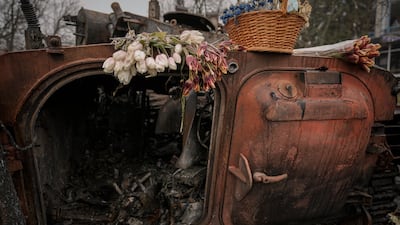
Flowers lay on a Ukrainian armoured vehicle destroyed during fighting between Russian and Ukrainian forces on the outskirts of Kyiv. AP Photo -
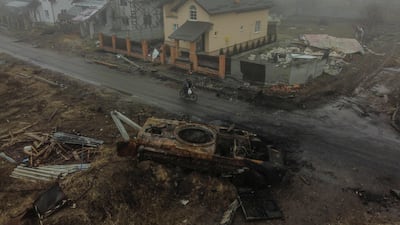
Damaged houses and a burnt-out Russian armoured vehicle on the outskirts of Kyiv. AFP -

Ukrainian soldier Dasha, 22, checks her phone after a military sweep to search for Russian troops after their withdrawal from villages in the outskirts of Kyiv. AP Photo -
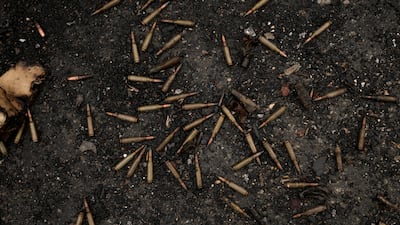
Ammunition scattered on the ground next to a Ukrainian armoured car destroyed in fighting outside Kyiv. AP Photo


Residents of the city have said the people were killed by Russian soldiers without any apparent provocation, corroborating mounting evidence of alleged war crimes.
"These people were just walking and they [the Russian soldiers] shot them without any reason. Bang,” one Bucha resident told AP.
"In the next neighbourhood, Stekolka, it was even worse. They would shoot without asking any questions."
In a video address on Sunday, Ukrainian President Volodymyr Zelenskyy denounced targeted killings of civilians in towns that the Russians occupied.
Mr Zelenskyy called the killers “freaks who do not know how to do otherwise".
He said that more atrocities could be revealed if Russian forces were driven out of other occupied areas.
International leaders have condemned the attacks in the Kyiv-area towns after harrowing accounts from civilians and graphic images of bodies with hands tied behind their backs.
Russia’s Defence Ministry has rejected the claims of atrocities against civilians in Bucha and other suburbs of Kyiv.
UK Prime Minister Boris Johnson has condemned Russia’s “despicable attacks” against Ukrainian civilians in Irpin and Bucha, adding that “we will not rest until justice is served”.
Mr Johnson said “no denial or disinformation from the Kremlin” can conceal that Russian President Vladimir Putin is “desperate” and “his invasion is failing”.
He said the UK was increasing its sanctions and military support, and “bolstering” humanitarian help for those on the ground.
“The UK has been at the forefront of supporting the International Criminal Court’s investigation into atrocities committed in Ukraine,” Mr Johnson said.
“The Justice Secretary has authorised additional financial support and the deployment of specialist investigators. We will not rest until justice is served.”
The Ministry of Justice said on March 24 that £1 million ($1.3m) in funding would be provided, and soldiers with military expertise would be assigned to the ICC to help uncover evidence.
New Scotland Yard’s War Crimes Team would also assist the investigation, the ministry said.
Britain’s Foreign Secretary Liz Truss said she was “appalled by atrocities in Bucha and other towns in Ukraine”.
Ms Truss said the UK would fully support any move by the International Criminal Court to investigate Russia for war crimes.
"As Russian troops are forced into retreat, we are seeing increasing evidence of appalling acts by the invading forces in towns such as Irpin and Bucha," she said, referring to places near Kyiv.
"Their indiscriminate attacks against innocent civilians during Russia's illegal and unjustified invasion of Ukraine must be investigated as war crimes."
Russia has previously denied attacking civilians and rejected allegations of war crimes in what it calls a "special military operation" in Ukraine.
Ukraine’s attorney general is gathering a dossier of claims about the Russian use of local children to avoid fire when in retreat from around Ukraine’s capital and elsewhere.
The horrifying witness accounts and physical evidence have come to light after the pull-out of Russian troops from areas around Kyiv after more than five weeks of fighting.
Ukrainian soldiers have reportedly regained control of more than 30 towns and villages in the area.
Russia continued withdrawing some of its ground forces from areas around Kyiv after saying this week that it would reduce military activity near the Ukrainian capital and the northern city of Chernihiv.

