
The coronavirus pandemic has provided new opportunities for ISIS, Al Qaeda, neo-Nazis, white supremacists and other hate groups, the UN Secretary General has said.
Antonio Guterres said it was too early to fully assess the implications of the pandemic on terrorism, but all of these groups sought to exploit divisions, local conflicts, failures in governing and other grievances.
Mr Guterres told the launch of UN Counter-Terrorism Week that ISIS, which once controlled vast territories in Syria and Iraq, was trying to reassert itself in both countries, “while thousands of foreign terrorist fighters battle in the region”.
“The pandemic has also highlighted vulnerabilities to new and emerging forms of terrorism, such as misuse of digital technology, cyber attacks and bio-terrorism,” he said.
Josep Borrell, the EU’s foreign affairs representative, told the online meeting that a global understanding of the pandemic’s implications on counter-terrorism efforts around the world was needed.
“It is true that, in some places, the crisis has led to a reduction of terrorist activity, mainly due to the mobilisation of state security services,” Mr Borrell said.
“But in other regions, terrorism and human suffering caused by it continue unabated.”
-
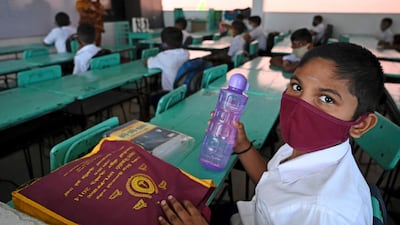
Sri Lankan children wearing face masks sit in a classroom after their school was reopened in Colombo. AFP -
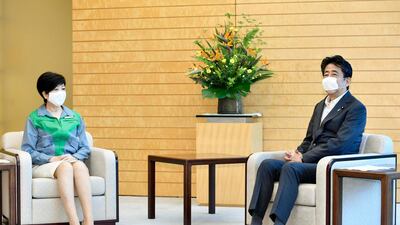
Japanese Prime Minister Shinzo Abe, left, with Tokyo governor Yuriko Koike at the prime minister's office in Tokyo. AP -
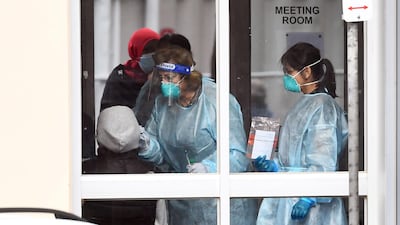
Medical staff perform a Covid-19 test on a resident in Melbourne. AFP -

A man lowers his mask to smoke as he passes by a statue in Beijing, China. AP Photo -
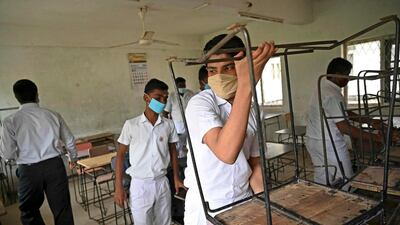
Pupils wearing face masks arrange desks in a classroom after their school was reopened in Colombo. AFP -

People wearing protective face masks make their way during rush hour at a train station in Jakarta, Indonesia, . Reuters -
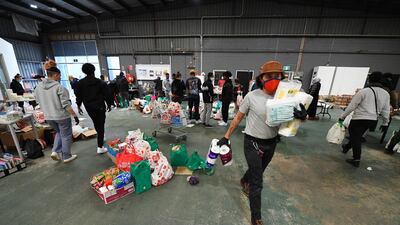
Volunteers scramble to organise food and personal hygiene supplies at the Australian Muslim Social Services Agency in Melbourne, Australia. EPA -
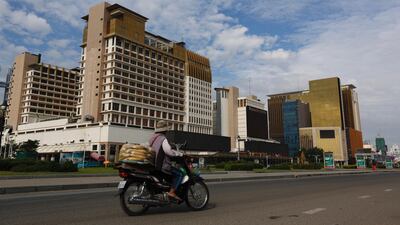
A Cambodian vendor rides a motorbike past the Nagaworld Casino in Phnom Penh, Cambodia. EPA -
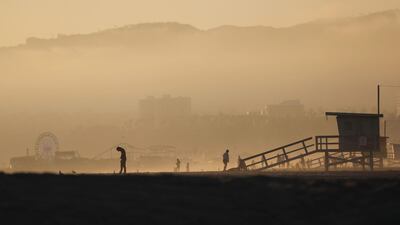
People gather as the Sun sets on the mostly empty Venice Beach, California. AFP -

Customers wearing protective masks try out Samsung Galaxy Tab tablet devices at the company's Digital Plaza store in Seoul, South Korea. Bloomberg -

Police officers and personnel of the ministry of health inspect a room rental centre where a person died after contracting Covid-19, in San Jose, Costa Rica. EPA -

Members of a police squad patrolling a temple complex in Bagan, Mandalay Region, Myanmar. AFP -

A customer wearing a face mask gets a haircut at a barber shop in New York City. Reuters -

People sit together at Peace Arch Historical State Park in Blaine, Washington. AP -
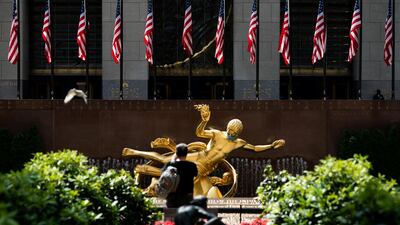
The Prometheus statue at Rockefeller Centre in Manhattan, New York City, is seen adorned with a face mask. Reuters -
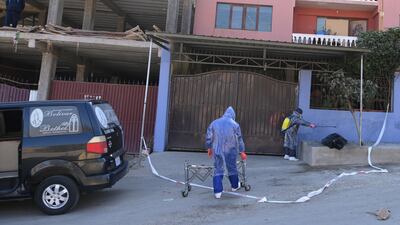
An employee of a funeral home disinfects a bag containing the body of a man who died on a street in Cochabamba, Bolivia. Reuters -

People visit Ocean Beach during the coronavirus outbreak in San Francisco. AP Photo -

Electoral officials wear protective masks as a precaution against the spread of the new coronavirus, count ballots after polls closed during the presidential elections, in Santo Domingo, Dominican Republic. AP Photo -

Homeless men sleep on a handcart parked on a road divider in a containment zone during lockdown in Bengaluru, India. AP Photo -

A plainclothes policeman holds a stick to prevent movement of people inside a containment zone during lockdown in Bengaluru, India. India's coronavirus tally is fourth in the world behind the US, Brazil and Russia. AP Photo -
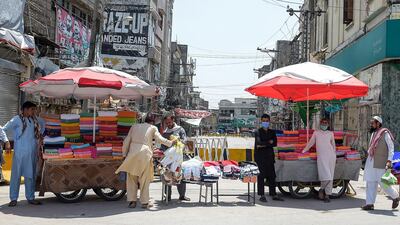
Vendors standing near their stalls wait for customers in front of a market sealed by authorities as a preventive measure against the coronavirus in Rawalpindi. AFP -
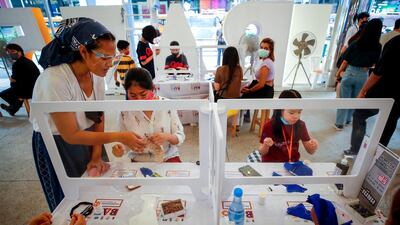
People are separated by plastic partitions to ensure minimum social distancing as they make protective face masks for children with cloth at a fair in Bangkok, Thailand. EPA


Former American diplomat Richard Haas, who leads the Council on Foreign Relations, believed Covid-19 “will add to the challenges of counter-terrorism”.
“It will perhaps create an environment where more countries become weak or fail,” Mr Haas said.
Recruitment for terrorist organisations would quite possibly go up, he said.
Tunisia’s UN ambassador Kais Kabtani, who chairs the UN Security Council’s counter-terrorism committee, said its recent report on Covid-19 showed the pandemic might have temporarily limited terrorist groups because of lockdowns and travel restrictions.
But Mr Kabtani said groups including ISIS were also exploiting increased social isolation and online use “to spread their propaganda through virtual platforms”.
He said that with global attention focused on tackling the pandemic, terrorist groups were also seeking to capitalise “by undermining state authority and launching new attacks”.
The report by the committee’s executive directorate said the global population, including more than one billion students, was spending more time on the internet as a result of Covid-19.
“The increase in the number of young people engaging in unsupervised internet usage, particularly on gaming platforms, offers terrorist groups an opportunity to expose a greater number of people to their ideas," the experts said.
"Although the relationship between online activity and radicalisation to violence is not fully understood.
“The reported rise in cyber crime could also lead to increased connectivity between terrorist and criminal actors.”
The report said a wide variety of terrorist groups had integrated Covid-19 into their propaganda.
They did this “to exploit divisions and weaknesses among their enemies”, “resulting in racist, anti-Semitic, Islamophobic and anti-immigrant hate speech”.
“These narratives have been fused with an array of new or existing conspiracy theories, particularly by the extreme right, including through linking 5G technology to the spread of the virus,” the experts said.
On the positive side, the pandemic could also disrupt extremist groups' supplymaking it difficult for them to obtain food, medicine, money and weapons.
With the overwhelming global focus on Covid-19, the experts said terrorists might seek "even more attention-grabbing" targets or techniques, such as the May attack on a maternity hospital in Afghanistan.

