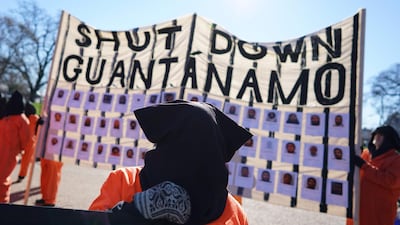
Former president Barack Obama famously pledged to close Guantanamo Bay during his first campaign for the White House, stating that, “In the dark halls of Abu Ghraib and the detention cells of Guantanamo, we have compromised our most precious values.”
Although Mr Obama signed a 2008 executive order to close the prison within a year on his second full day in office, the notorious US detention centre in Cuba has now remained open during four different administrations.
President Joe Biden has also pledged to close the prison, first opened by former president George W Bush, and the White House launched a review of the issue this month. Nonetheless, the congressional impediments that prevented Mr Obama from closing Guantanamo still remain on the books.
But that may not be the case for long.
"Many police debates are given new life in the beginning of an administration, and this year the discussion regarding Guantanamo Bay, Cuba, is among them," House Armed Services Committee Chairman Adam Smith told The National. "As we continue this policy debate, those of us who believe the detention facility should be closed still have work to do."
That work will involve repealing long-standing restrictions on closing Guantanamo that Congress inserts into two pieces of legislation that become US law every year: an annual defence authorisation bill and a government spending bill.
“With close to 1,500 military assigned to provide security for just 40 detainees, [Guantanamo] is simply not a cost-effective use of taxpayers’ dollars,” said Mr Smith. “I look forward to working with the Biden-Harris administration to build support for closing [Guantanamo] and work with my congressional colleagues to address the legislative measures that have previously hampered efforts to close [Guantanamo] for good.”
Ironically, Congress maintained restrictions that kept Mr Obama from closing Guantanamo even when Democrats controlled Congress during the first two years of his presidency.
Even progressive stalwarts such as Bernie Sanders and Elizabeth Warren voted against easing the restrictions in the Senate in 2013.
Unable to legally close the prison, Mr Obama largely contented himself with gradually trying to empty it by transferring prisoners to third-party countries, including the United Arab Emirates.
By the end of Mr Obama’s presidency, the prison held 41 prisoners, down from 242 when he took office. The prison held nearly 800 inmates at its peak under the Bush administration.
And while Mr Trump did not transfer any detainees out of the facility, he also did not add more, despite his 2016 campaign pledge to do so.
Luckily for Mr Biden, Democrats in Congress have had a change of heart in closing the prison.
Mr Smith, whose committee oversees the annual defence authorisation bill, first led the push to remove the restrictions on closing Guantanamo Bay from the legislation in 2019.
While the Democratic-held House passed the bill without the restrictions, the Republican-held Senate insisted on maintaining the prohibitions in the final legislation that Mr Trump signed into law.
The House Appropriations Committee followed Mr Smith’s lead last year, opting to remove similar restrictions from the annual defence-spending bill in a party-line vote. Still, the House lost out in negotiations with Senate Republicans and the restrictions remained in the compromise spending package that Mr Trump signed in December.
The new chairwoman of the defence appropriations subcommittee, Betty McCollum, told The National that she also supports closing the prison.
“For nearly two decades, the detention of prisoners at Guantanamo Bay has undermined the US commitment to human rights and proven to be a stain on the soul of America and our values,” said Ms McCollum. “I fully expect Congress and the Biden administration to work towards a responsible and deliberate path to closing the detention facility. That is my goal and I intend to stay focused on it.”
Both bills hamper any attempt Mr Biden may make to close the prison.
But with congressional Democrats’ change of heart on closing the prison, and their new control of Congress, albeit by a razor-thin margin, Mr Biden may have an opportunity to succeed where Mr Obama failed – assuming Senate Democrats jump on board.

COMPANY%20PROFILE
%3Cp%3E%3Cstrong%3ECompany%3A%20%3C%2Fstrong%3EGrowdash%0D%3Cbr%3E%3Cstrong%3EStarted%3A%20%3C%2Fstrong%3EJuly%202022%0D%3Cbr%3E%3Cstrong%3EFounders%3A%20%3C%2Fstrong%3ESean%20Trevaskis%20and%20Enver%20Sorkun%0D%3Cbr%3E%3Cstrong%3EBased%3A%20%3C%2Fstrong%3EDubai%2C%20UAE%0D%3Cbr%3E%3Cstrong%3EIndustry%3A%20%3C%2Fstrong%3ERestaurant%20technology%0D%3Cbr%3E%3Cstrong%3EFunding%20so%20far%3A%3C%2Fstrong%3E%20%24750%2C000%0D%3Cbr%3E%3Cstrong%3EInvestors%3A%20%3C%2Fstrong%3EFlat6Labs%2C%20Plus%20VC%2C%20Judah%20VC%2C%20TPN%20Investments%20and%20angel%20investors%2C%20including%20former%20Talabat%20chief%20executive%20Abdulhamid%20Alomar%2C%20and%20entrepreneur%20Zeid%20Husban%3C%2Fp%3E%0A
%20Ramez%20Gab%20Min%20El%20Akher
%3Cp%3E%3Cstrong%3ECreator%3A%3C%2Fstrong%3E%20Ramez%20Galal%3C%2Fp%3E%0A%3Cp%3E%3Cstrong%3EStarring%3A%3C%2Fstrong%3E%20Ramez%20Galal%3C%2Fp%3E%0A%3Cp%3E%3Cstrong%3EStreaming%20on%3A%20%3C%2Fstrong%3EMBC%20Shahid%3C%2Fp%3E%0A%3Cp%3E%3Cstrong%3ERating%3A%20%3C%2Fstrong%3E2.5%2F5%3C%2Fp%3E%0A
THE SPECS
Engine: 3-litre V6
Transmission: eight-speed automatic
Power: 424hp
Torque: 580 Nm
Price: From Dh399,000
On sale: Now
The rules on fostering in the UAE
A foster couple or family must:
- be Muslim, Emirati and be residing in the UAE
- not be younger than 25 years old
- not have been convicted of offences or crimes involving moral turpitude
- be free of infectious diseases or psychological and mental disorders
- have the ability to support its members and the foster child financially
- undertake to treat and raise the child in a proper manner and take care of his or her health and well-being
- A single, divorced or widowed Muslim Emirati female, residing in the UAE may apply to foster a child if she is at least 30 years old and able to support the child financially
THE SPECS
Engine: 1.5-litre, four-cylinder turbo
Transmission: seven-speed dual clutch automatic
Power: 169bhp
Torque: 250Nm
Price: Dh54,500
On sale: now
Who's who in Yemen conflict
Houthis: Iran-backed rebels who occupy Sanaa and run unrecognised government
Yemeni government: Exiled government in Aden led by eight-member Presidential Leadership Council
Southern Transitional Council: Faction in Yemeni government that seeks autonomy for the south
Habrish 'rebels': Tribal-backed forces feuding with STC over control of oil in government territory
SPEC%20SHEET%3A%20APPLE%20M3%20MACBOOK%20AIR%20(13%22)
%3Cp%3E%3Cstrong%3EProcessor%3A%3C%2Fstrong%3E%20Apple%20M3%2C%208-core%20CPU%2C%20up%20to%2010-core%20CPU%2C%2016-core%20Neural%20Engine%3C%2Fp%3E%0A%3Cp%3E%3Cstrong%3EDisplay%3A%3C%2Fstrong%3E%2013.6-inch%20Liquid%20Retina%2C%202560%20x%201664%2C%20224ppi%2C%20500%20nits%2C%20True%20Tone%2C%20wide%20colour%3C%2Fp%3E%0A%3Cp%3E%3Cstrong%3EMemory%3A%3C%2Fstrong%3E%208%2F16%2F24GB%3C%2Fp%3E%0A%3Cp%3E%3Cstrong%3EStorage%3A%3C%2Fstrong%3E%20256%2F512GB%20%2F%201%2F2TB%3C%2Fp%3E%0A%3Cp%3E%3Cstrong%3EI%2FO%3A%3C%2Fstrong%3E%20Thunderbolt%203%2FUSB-4%20(2)%2C%203.5mm%20audio%2C%20Touch%20ID%3C%2Fp%3E%0A%3Cp%3E%3Cstrong%3EConnectivity%3A%3C%2Fstrong%3E%20Wi-Fi%206E%2C%20Bluetooth%205.3%3C%2Fp%3E%0A%3Cp%3E%3Cstrong%3EBattery%3A%3C%2Fstrong%3E%2052.6Wh%20lithium-polymer%2C%20up%20to%2018%20hours%2C%20MagSafe%20charging%3C%2Fp%3E%0A%3Cp%3E%3Cstrong%3ECamera%3A%3C%2Fstrong%3E%201080p%20FaceTime%20HD%3C%2Fp%3E%0A%3Cp%3E%3Cstrong%3EVideo%3A%3C%2Fstrong%3E%20Support%20for%20Apple%20ProRes%2C%20HDR%20with%20Dolby%20Vision%2C%20HDR10%3C%2Fp%3E%0A%3Cp%3E%3Cstrong%3EAudio%3A%3C%2Fstrong%3E%204-speaker%20system%2C%20wide%20stereo%2C%20support%20for%20Dolby%20Atmos%2C%20Spatial%20Audio%20and%20dynamic%20head%20tracking%20(with%20AirPods)%3C%2Fp%3E%0A%3Cp%3E%3Cstrong%3EColours%3A%3C%2Fstrong%3E%20Midnight%2C%20silver%2C%20space%20grey%2C%20starlight%3C%2Fp%3E%0A%3Cp%3E%3Cstrong%3EIn%20the%20box%3A%3C%2Fstrong%3E%20MacBook%20Air%2C%2030W%2F35W%20dual-port%2F70w%20power%20adapter%2C%20USB-C-to-MagSafe%20cable%2C%202%20Apple%20stickers%3C%2Fp%3E%0A%3Cp%3E%3Cstrong%3EPrice%3A%3C%2Fstrong%3E%20From%20Dh4%2C599%3C%2Fp%3E%0A
Key changes
Commission caps
For life insurance products with a savings component, Peter Hodgins of Clyde & Co said different caps apply to the saving and protection elements:
• For the saving component, a cap of 4.5 per cent of the annualised premium per year (which may not exceed 90 per cent of the annualised premium over the policy term).
• On the protection component, there is a cap of 10 per cent of the annualised premium per year (which may not exceed 160 per cent of the annualised premium over the policy term).
• Indemnity commission, the amount of commission that can be advanced to a product salesperson, can be 50 per cent of the annualised premium for the first year or 50 per cent of the total commissions on the policy calculated.
• The remaining commission after deduction of the indemnity commission is paid equally over the premium payment term.
• For pure protection products, which only offer a life insurance component, the maximum commission will be 10 per cent of the annualised premium multiplied by the length of the policy in years.
Disclosure
Customers must now be provided with a full illustration of the product they are buying to ensure they understand the potential returns on savings products as well as the effects of any charges. There is also a “free-look” period of 30 days, where insurers must provide a full refund if the buyer wishes to cancel the policy.
“The illustration should provide for at least two scenarios to illustrate the performance of the product,” said Mr Hodgins. “All illustrations are required to be signed by the customer.”
Another illustration must outline surrender charges to ensure they understand the costs of exiting a fixed-term product early.
Illustrations must also be kept updatedand insurers must provide information on the top five investment funds available annually, including at least five years' performance data.
“This may be segregated based on the risk appetite of the customer (in which case, the top five funds for each segment must be provided),” said Mr Hodgins.
Product providers must also disclose the ratio of protection benefit to savings benefits. If a protection benefit ratio is less than 10 per cent "the product must carry a warning stating that it has limited or no protection benefit" Mr Hodgins added.
Mercer, the investment consulting arm of US services company Marsh & McLennan, expects its wealth division to at least double its assets under management (AUM) in the Middle East as wealth in the region continues to grow despite economic headwinds, a company official said.
Mercer Wealth, which globally has $160 billion in AUM, plans to boost its AUM in the region to $2-$3bn in the next 2-3 years from the present $1bn, said Yasir AbuShaban, a Dubai-based principal with Mercer Wealth.
“Within the next two to three years, we are looking at reaching $2 to $3 billion as a conservative estimate and we do see an opportunity to do so,” said Mr AbuShaban.
Mercer does not directly make investments, but allocates clients’ money they have discretion to, to professional asset managers. They also provide advice to clients.
“We have buying power. We can negotiate on their (client’s) behalf with asset managers to provide them lower fees than they otherwise would have to get on their own,” he added.
Mercer Wealth’s clients include sovereign wealth funds, family offices, and insurance companies among others.
From its office in Dubai, Mercer also looks after Africa, India and Turkey, where they also see opportunity for growth.
Wealth creation in Middle East and Africa (MEA) grew 8.5 per cent to $8.1 trillion last year from $7.5tn in 2015, higher than last year’s global average of 6 per cent and the second-highest growth in a region after Asia-Pacific which grew 9.9 per cent, according to consultancy Boston Consulting Group (BCG). In the region, where wealth grew just 1.9 per cent in 2015 compared with 2014, a pickup in oil prices has helped in wealth generation.
BCG is forecasting MEA wealth will rise to $12tn by 2021, growing at an annual average of 8 per cent.
Drivers of wealth generation in the region will be split evenly between new wealth creation and growth of performance of existing assets, according to BCG.
Another general trend in the region is clients’ looking for a comprehensive approach to investing, according to Mr AbuShaban.
“Institutional investors or some of the families are seeing a slowdown in the available capital they have to invest and in that sense they are looking at optimizing the way they manage their portfolios and making sure they are not investing haphazardly and different parts of their investment are working together,” said Mr AbuShaban.
Some clients also have a higher appetite for risk, given the low interest-rate environment that does not provide enough yield for some institutional investors. These clients are keen to invest in illiquid assets, such as private equity and infrastructure.
“What we have seen is a desire for higher returns in what has been a low-return environment specifically in various fixed income or bonds,” he said.
“In this environment, we have seen a de facto increase in the risk that clients are taking in things like illiquid investments, private equity investments, infrastructure and private debt, those kind of investments were higher illiquidity results in incrementally higher returns.”
The Abu Dhabi Investment Authority, one of the largest sovereign wealth funds, said in its 2016 report that has gradually increased its exposure in direct private equity and private credit transactions, mainly in Asian markets and especially in China and India. The authority’s private equity department focused on structured equities owing to “their defensive characteristics.”
