
Grieving families of those killed in the mosque shootings in Christchurch on Friday are growing increasingly anxious to hold funerals for their loved ones.
New Zealand authorities have dug graves and made other preparations for the burials but the first body from among the 50 people killed on Friday was only cleared for release to relatives on Sunday night.
Deputy Police Commissioner Wally Haumaha said the family had not yet taken the body because another relative was also killed and they wanted to collect them together.
"The process has been highly emotional and stressful for all ... as in accordance with Islamic faith the families have wanted the bodies to be returned as soon as possible," he said at a press conference on Monday.
"We have burial expert teams in place ready to receive the bodies at a point in time."
Prime Minister Jacinda Ardern has said she expects all the bodies to be released by Wednesday.
The victims, ranging in age from three to 77, come from across the world. Some grew up in the area where the attacks took place, while others were refugees or migrated to New Zealand for work.
"There will be a lot of decisions being made," Commissioner Haumaha said. "There'll be those wanting to repatriate back to their home countries. There'll be those who want to bury within the time frame that they receive these bodies. There'll be others who want to come together and have a mass burial."
Under Islam, it is customary to conduct burials as soon as possible, usually within 24 hours.
Javed Dadabhai, who flew in from Auckland after learning about the death of his 35-year-old cousin, Junaid Mortara, told the Associated Press the Muslim community was being patient.
"The family understands that it's a crime scene. It's going to be a criminal charge against the guy who's done this, so they need to be pretty thorough," he said.
Still, it was hard, he said, because the grieving process would not really begin until he could bury his cousin.
Muslims funerals, or Janazah, follow strict guidelines outlined in the Quran and Sunna, or way of the Prophet Mohammed. Burial rites should be performed as soon as possible after death, beginning with the bathing of the body by adult members of the deceased's family – preferably within hours.
After the bathing ritual, which varies according to local interpretation, the body must be wrapped in a plain cloth, typically white.
-

Students hold candles during a moment of silence as they gather for a vigil outside the Al Noor mosque in Christchurch. AP Photo -
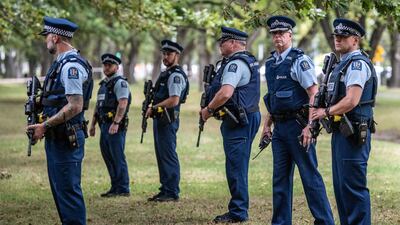
Police officers guard the area near Al Noor mosque. Getty Images -
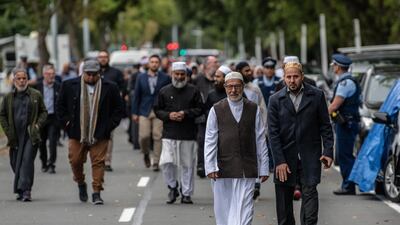
Community members leave Al Noor Mosque. Getty Images -

Students perform the Haka during a vigil outside Al Noor mosque. Reuters -
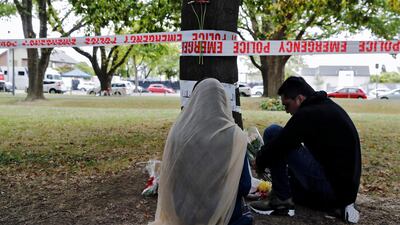
People visit at a memorial site in front of Al Noor mosque. Reuters -

Strangers comfort each other in front of flowers and condolences near Linwood mosque in Christchurch. Getty Images -
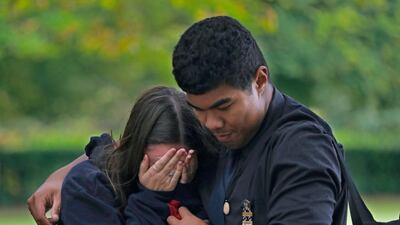
A mourner reacts after paying her respects outside Al Noor mosque. AP Photo -
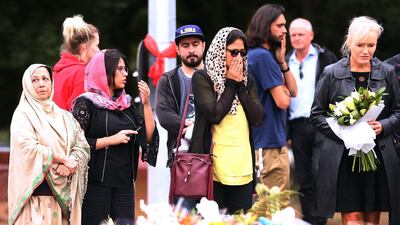
People react as they look at the floral tributes laid near Al Noor mosque. AFP -
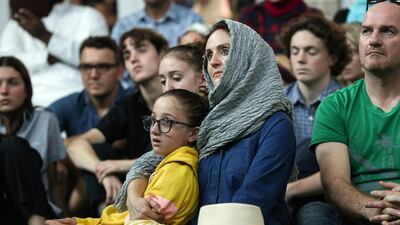
Mourners from different faiths paying their respects during an Open Day at Preston mosque in Melbourne. AFP -

Flowers and tributes are laid at the Botanic Gardens in Christchurch. Getty Images


The time of the funeral prayer should be set and announced. However, unlike in normal Muslim prayers, there is no bowing or prostrating in the prayer for the dead.
The burial must be performed directly after the prayer. The grave's position should be determined beforehand and the grave aligned perpendicular to the Qibla so that the right side of the body faces Makkah. Grave markers should typically be inconspicuous.
Family members and those who attended the funeral prayer can aid in burying the dead – but wailing is discouraged, according to the Hadiths of the Prophet. Lowering of the body enshrouded in the cloth should be done by the male members of the family.
Prayers can be read while the corpse is buried.
After the burial, the family must observe three days of mourning by receiving visitors in a modest setting, but family members are again advised to avoid loud expressions of grief.

