• The arrivals' terminal at Beirut international airport is pictured as it re-opens. AFP
    The arrivals' terminal at Beirut international airport is pictured as it re-opens. AFP
  • An airport worker wearing a protective suit sprays disinfectant as a precaution against the spread of the Covid-19. EPA
    An airport worker wearing a protective suit sprays disinfectant as a precaution against the spread of the Covid-19. EPA
  • Beirut's airport is partially reopening after a three-month shutdown and Lebanon's cash-strapped government hopes thousands of Lebanese expatriates will return for the summer, injecting badly needed dollars into the sinking economy. AP
    Beirut's airport is partially reopening after a three-month shutdown and Lebanon's cash-strapped government hopes thousands of Lebanese expatriates will return for the summer, injecting badly needed dollars into the sinking economy. AP
  • Social distancing markings have been established in the arrival hall of the Rafik Hariri international airport during its re-opening in Beirut. EPA
    Social distancing markings have been established in the arrival hall of the Rafik Hariri international airport during its re-opening in Beirut. EPA
  • Social distancing markers line the floors to the passport control area in the departures hall at Rafik Hariri International Airport in Beirut. Bloomberg
    Social distancing markers line the floors to the passport control area in the departures hall at Rafik Hariri International Airport in Beirut. Bloomberg
  • People arriving at Beirut international airport stop at a counter manned by health workers as the airport re-opens in the Lebanese capital. AFP
    People arriving at Beirut international airport stop at a counter manned by health workers as the airport re-opens in the Lebanese capital. AFP
  • A member of a Lebanese General Security checks the passports of passengers upon her arrival at Rafik Hariri international airport during its re-opening in Beirut. EPA
    A member of a Lebanese General Security checks the passports of passengers upon her arrival at Rafik Hariri international airport during its re-opening in Beirut. EPA
  • Medical workers wearing personal protective equipment collect Covid-19 swab samples as they test travellers inside the arrivals hall at Rafik Hariri International Airport in Beirut. Bloomberg
    Medical workers wearing personal protective equipment collect Covid-19 swab samples as they test travellers inside the arrivals hall at Rafik Hariri International Airport in Beirut. Bloomberg
  • A passenger arrives at the Rafik Hariri international airport during its re-opening in Beirut, Lebanon. EPA
    A passenger arrives at the Rafik Hariri international airport during its re-opening in Beirut, Lebanon. EPA
  • A worker carries luggage at Rafik Hariri international airport during its re-opening in Beirut at 10 per cent capacity, which is expected to bring in around 2,000 travellers per day. EPA
    A worker carries luggage at Rafik Hariri international airport during its re-opening in Beirut at 10 per cent capacity, which is expected to bring in around 2,000 travellers per day. EPA
  • Social distancing markers sit on the floor around the baggage reclaim carousel in the arrivals hall at Rafik Hariri International Airport in Beirut. Bloomberg
    Social distancing markers sit on the floor around the baggage reclaim carousel in the arrivals hall at Rafik Hariri International Airport in Beirut. Bloomberg
  • Passengers wearing protective face masks walk through the baggage reclaim area inside the arrivals hall at Rafik Hariri International Airport in Beirut. Bloomberg
    Passengers wearing protective face masks walk through the baggage reclaim area inside the arrivals hall at Rafik Hariri International Airport in Beirut. Bloomberg
  • With many governments loosening travel restrictions to restart economies, airlines have begun restoring flights that were put on hold as the coronavirus pandemic spread. Bloomberg
    With many governments loosening travel restrictions to restart economies, airlines have begun restoring flights that were put on hold as the coronavirus pandemic spread. Bloomberg
  • Lebanon was faster than most other countries to decide on a lockdown to avoid the spread of the Covid-19 coronavirus. By the end of February, schools were closed, and the airport and most bars and restaurants soon follow suit. AFP
    Lebanon was faster than most other countries to decide on a lockdown to avoid the spread of the Covid-19 coronavirus. By the end of February, schools were closed, and the airport and most bars and restaurants soon follow suit. AFP
  • Health workers checks the temperature of a passenger at the departure terminal of the Rafik Hariri International Airport during its re-opening in Beirut. EPA
    Health workers checks the temperature of a passenger at the departure terminal of the Rafik Hariri International Airport during its re-opening in Beirut. EPA
  • People wearing protective face masks against Covid-19 are pictured at the departure terminal of the Rafik Hariri international airport during its re-opening. EPA
    People wearing protective face masks against Covid-19 are pictured at the departure terminal of the Rafik Hariri international airport during its re-opening. EPA
  • Passengers and officials wearing protective face masks against Covid-19 are pictured at Beirut international airport as it re-opens. AFP
    Passengers and officials wearing protective face masks against Covid-19 are pictured at Beirut international airport as it re-opens. AFP
  • A healthcare worker adjusts the mask of a passenger who is departing the Rafik Hariri International Airport in Beirut, Lebanon, Wednesday, July 1, 2020. AP
    A healthcare worker adjusts the mask of a passenger who is departing the Rafik Hariri International Airport in Beirut, Lebanon, Wednesday, July 1, 2020. AP
  • People wearing protective face masks against Covid-19 are pictured at the departure terminal of the Rafik Hariri international airport during its re-opening in Beirut. EPA
    People wearing protective face masks against Covid-19 are pictured at the departure terminal of the Rafik Hariri international airport during its re-opening in Beirut. EPA
  • People wearing protective face masks against Covid-19 are pictured upon their arrival at the terminal of the Rafik Hariri International Airport during its re-opening in Beirut. EPA
    People wearing protective face masks against Covid-19 are pictured upon their arrival at the terminal of the Rafik Hariri International Airport during its re-opening in Beirut. EPA
  • Lebanese soldiers stand guard as a woman leaves the Rafik Hariri International Airport in Beirut. AP
    Lebanese soldiers stand guard as a woman leaves the Rafik Hariri International Airport in Beirut. AP
  • Lebanese soldiers stand guard as a woman leaves Rafik Hariri international airport during its re-opening in Beirut. EPA
    Lebanese soldiers stand guard as a woman leaves Rafik Hariri international airport during its re-opening in Beirut. EPA
  • A passenger waits in the departure hall of the Rafik Hariri international airport during its re-opening in Beirut. EPA
    A passenger waits in the departure hall of the Rafik Hariri international airport during its re-opening in Beirut. EPA
  • Passengers wearing protective face masks push luggage carts outside the terminal at Rafik Hariri International Airport in Beirut. Bloomberg
    Passengers wearing protective face masks push luggage carts outside the terminal at Rafik Hariri International Airport in Beirut. Bloomberg

‘There is no future’: scores of Lebanese flee economic crisis


Sunniva Rose
  • English
  • Arabic

At dawn at Beirut airport, Wafic Saab said a quick farewell to his wife and two young boys before they rushed through the gate, hurrying to catch their plane to Canada.

Mr Saab never thought the day would come when his Lebanese-Canadian wife would leave their country with little prospect of return.

“Life has become very hard here,” said Mr Saab, as he stood alone in the near-empty departure hall. "I honestly do not know what awaits us.

“I will do my best for them to return but if you asked me whether I’m optimistic about it, I would say no. On the contrary, I’m very pessimistic.”

His wife, Lama Moubarak Saab, told The National as she pushed her trolley overflowing with luggage: "We don't know if a war is coming with Israel, or a civil war might break out.

"I have no idea. So I think it’s safer for me to just go back home to Canada."

The Lebanese are reeling from their country’s worst economic crisis in recent history.

Hundreds of thousands have lost their jobs, the local currency has tanked and inflation is rising rapidly.

The government has hit a brick wall in its negotiations for a bail-out with the International Monetary Fund.

As politicians bicker over the size of the banking sector’s losses, prospects of recovery remain dim.

Many say that the current crisis, which predates the coronavirus pandemic, is worse than past wars.

“It’s just not working,” said Dominique, another Lebanese-Canadian who decided to leave Lebanon with his wife and two teenage sons.

Dominique fled to Canada in 1989, during some of the civil war’s fiercest clashes, before returning to Lebanon 16 years later.

“The situation now is really bad,” he said. “We’re going back to our second home with the children.”

With the reopening of Beirut airport on July 1 after more than three months of closure over coronavirus concerns, a massive brain drain is occurring.

Emigration is not a new phenomenon in Lebanon, which relies heavily on remittances sent from its large number of citizens working abroad.

But lawyers and researchers have noticed a sharp rise in requests for information.

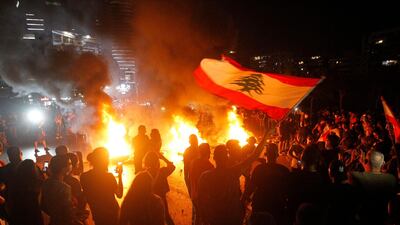
  • Anti-government protesters carry Lebanese flags and burn tyres as they block the main highway in north of Beirut during a protest over deteriorating living conditions. EPA
    Anti-government protesters carry Lebanese flags and burn tyres as they block the main highway in north of Beirut during a protest over deteriorating living conditions. EPA
  • Lebanon has been seeing months of protests against the current government fuelled by the dire state of the domestic economy. EPA
    Lebanon has been seeing months of protests against the current government fuelled by the dire state of the domestic economy. EPA
  • Many citizens fear that the combination of rising unemployment, poverty, sectarian tensions, the devaluation of the Lebanese pound and the ongoing pandemic disease may spark another violent conflict. EPA
    Many citizens fear that the combination of rising unemployment, poverty, sectarian tensions, the devaluation of the Lebanese pound and the ongoing pandemic disease may spark another violent conflict. EPA
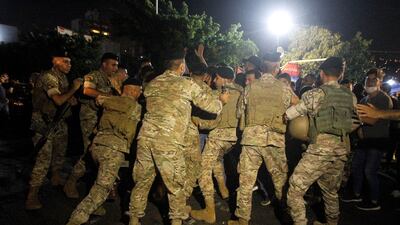
  • Lebanese army soldiers intervene as anti-government protesters attempt to block the main highway but with crashing currencies salaries have lost most of their value with soldiers reportedly earning the equivalent of as little as $110 a month. EPA
    Lebanese army soldiers intervene as anti-government protesters attempt to block the main highway but with crashing currencies salaries have lost most of their value with soldiers reportedly earning the equivalent of as little as $110 a month. EPA
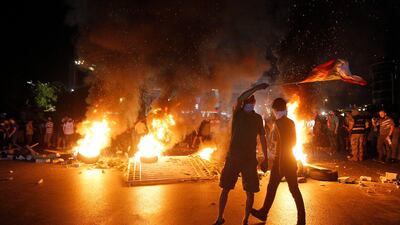
  • Anti-Government protestors burn tyres as they block the main highway during a protest over deteriorating living conditions after the government raised subsidized bread prices. EPA
    Anti-Government protestors burn tyres as they block the main highway during a protest over deteriorating living conditions after the government raised subsidized bread prices. EPA
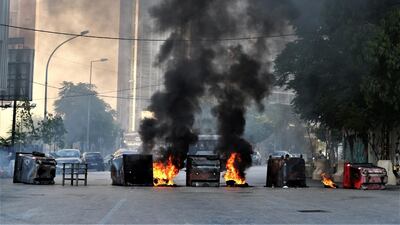
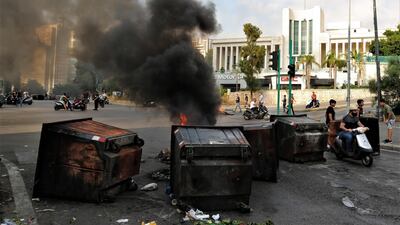
  • Anti-Government protestors set garbage bins on fire and block the majority of the main roads during a protest over deteriorating living conditions. EPA
    Anti-Government protestors set garbage bins on fire and block the majority of the main roads during a protest over deteriorating living conditions. EPA
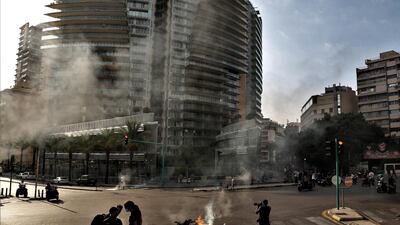
  • Anti-Government protestors set garbage bins on fire and block the majority of the main roads. EPA
    Anti-Government protestors set garbage bins on fire and block the majority of the main roads. EPA
  • Anti-Government protestors set garbage bins on fire and block the majority of the main roads. EPA
    Anti-Government protestors set garbage bins on fire and block the majority of the main roads. EPA
  • Anti-Government protestors set garbage bins on fire and block the majority of the main roads. EPA
    Anti-Government protestors set garbage bins on fire and block the majority of the main roads. EPA
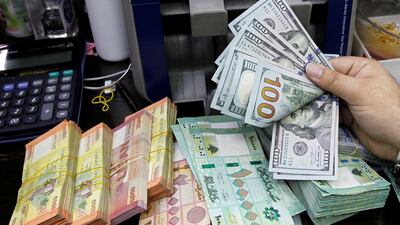
  • A man counts US dollar banknotes next to Lebanese pounds at a currency exchange shop in Beirut. Reuters, file
    A man counts US dollar banknotes next to Lebanese pounds at a currency exchange shop in Beirut. Reuters, file

"We get almost two requests a week," lawyer Fouad Debs told The National. "Until four months ago, we only received two a year."

His firm, Debs and Associates, does not specialise in emigration but is on a list of suggested lawyers on the website of the US embassy in Beirut.

“The brain drain is happening and is going to increase because I don’t see the situation getting better any time soon," Mr Debs said.

"People are getting really desperate. The only way out is to leave."

Emigration might be easier for dual nationals but many others are also trying their luck.

“This is the first time that I leave Lebanon,” said a Lebanese nurse, 26, as he walked towards the departure gate at Beirut airport.

“I’m going to start [afresh] in Turkey with my wife. It’s safer.”

He said the main factor pushing him to leave was that his monthly salary in Lebanon was now worth “$100 to $200".

The national currency has lost almost 80 per cent on the black market since banks started limiting cash withdrawals last November.

Finding US dollars, which used to be used alongside Lebanese pounds, has become nearly impossible.

“This crisis was the signal for me to anchor my children in Europe instead of Beirut,” said Hala, a charity worker with French residency who was flying out of Beirut that morning with her daughter, 16.

“I am afraid of insecurity and that schools won’t open like before. I don’t mind living that but I don’t know why my children should."

Private universities and schools are becoming unaffordable for many Lebanese families since they started adjusting their rates to the black market.

“Long-term emigration is becoming a better option than studying here,” political researcher Nizar Hassan said.

“If you get a degree here, you don’t have a competitive advantage in the job market and you probably won’t find work.”

Famines and security crises have pushed the Lebanese to emigrate since the 19th century.

The country now has a diaspora that is nearly three times larger than the number of inhabitants.

But emigration also persisted in times of peace because the structure of the Lebanese economy does not produce enough jobs for its graduates, Mr Hassan said.

This only accelerated with the latest economic collapse.

“It’s a very concerning social phenomenon,” Mr Hassan said.

Leaving Lebanon is not an easy choice, said Mr Saab, a hairstylist.

He will probably soon shut down his three branches of hair salons in Lebanon and move to Dubai, where one remains open, and then consider his options of reunion with his family.

“I’d rather not go to Canada because it’s far," Mr Saab said. "My family is here, my mum, and my brothers. It’s hard to move in these circumstances."

His wife, who moved to Lebanon after their marriage 12 years ago, was reluctant to leave.

“But I asked her one question: 'What’s the most important thing in your life? Is it your children? Then go. Here, there is no future',” Mr Saab said.