
Before his land was seized by forces loyal to the Syrian regime, pistachio and olive farmer Abu Jaber said he had a story to tell for every grain of sand.
His farmland was near the northern town of Kafr Zita, which was among those captured during an aggressive offensive to reclaim territory in the northern provinces of Hama and Idlib last year.
Almost a year later, much of the agricultural land in the area has been either plundered or burned.
“Years of work have gone to waste,” he said. “I had to leave and will never be able to return back after the crops were stolen and land burnt.”
“Every day I receive dozens of photos and videos … They burn our lands so we can’t return to cultivate for even just ourselves to live off the produce.”
Together with his six brothers, Abu Jaber grew enough food across 450 acres to feed 79 members of the family, as well as providing enough funds to keep them going. They say they have lost crops worth $250,000.
The family have now fled to Batbo in western Aleppo, where they are looking for jobs. Abu Jaber’s sons are at risk of dropping out of university because can no longer afford to keep them there, and finding work in a country ravaged by almost a decade of civil war is no easy feat.
Syrians are also contending with a collapsing economy and sharp fall in the value of their currency, compounded by the spread of the global coronavirus pandemic.
According to a Facebook statement by the local branch of President Bashar Al Assad’s ruling Baath Party in Mahardah, northern Hama, proceeds from this year’s pistachio crop will be put towards a fund to assist the families of the regime forces’ dead. Yet there is no system to compensate the farmers for the loss of their land or their income.
Abdulnasser Hoshan, a lawyer from Kafr Zita, said the proceeds from seized crops were likely to go to intelligence services officers rather than the “martyrs” fund.
“The number of civilians affected is more than 50,000,” Mr Hoshan said.
-
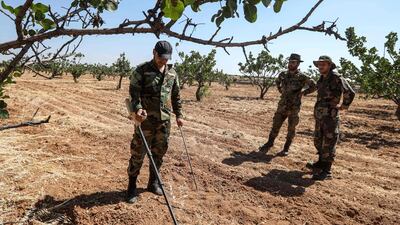
Syrian army soldiers use detectors to find and clear landmines in a field at a pistachio orchard in the village of Maan, north of Hama in west-central Syria. AFP -

A landmine is remotely detonated in a field at a pistachio orchard in the village of Maan, north of Hama in west-central Syria. AFP -
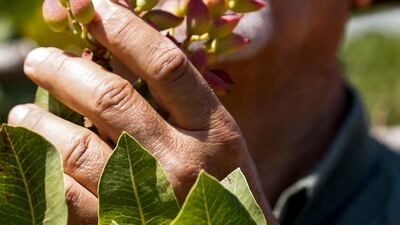
A pistachio farmer tends to a tree at a pistachio orchard in the village of Maan, north of Hama in west-central Syria. AFP -
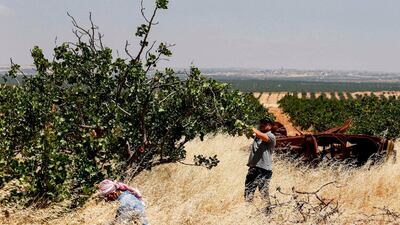
Pistachio farmers tend to a tree at a pistachio orchard in the village of Maan, north of Hama in west-central Syria. AFP -
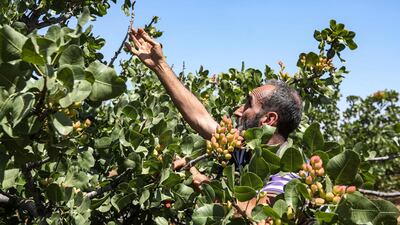
A pistachio farmer tends to a tree at a pistachio orchard in the village of Maan, north of Hama in west-central Syria. AFP -
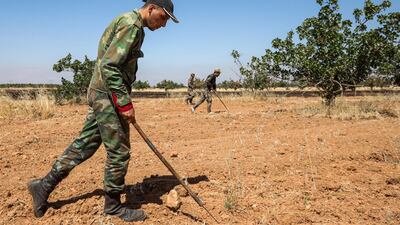
A Syrian army soldier uses a detector to find and clear landmines in a field at a pistachio orchard in the village of Maan, north of Hama in west-central Syria. AFP -
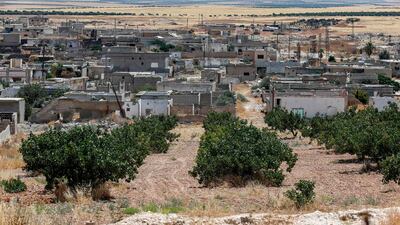
A view of pistachio trees growing at a pistachio orchard in the village of Maan, north of Hama in west-central Syria. AFP -

Syrian army soldiers use detectors to find and clear landmines in a field at a pistachio orchard in the village of Maan, north of Hama in west-central Syria. AFP -
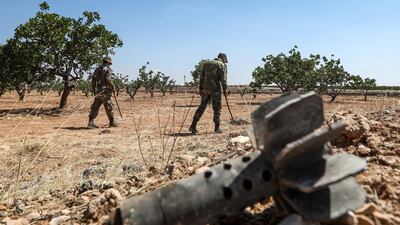
Syrian army soldiers use detectors to find and clear landmines in a field at a pistachio orchard in the village of Maan, north of Hama in west-central Syria. AFP -
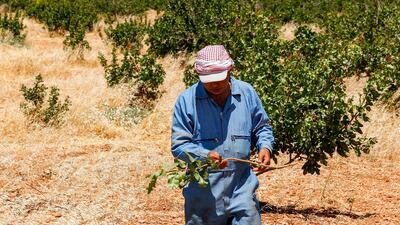
A pistachio farmer walks with a clipped branch amongst trees at a pistachio orchard in the village of Maan, north of Hama in west-central Syria. AFP -
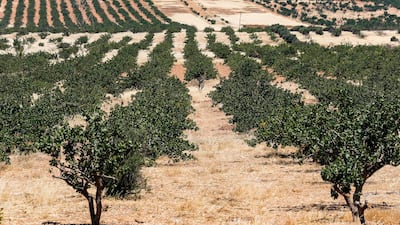
A view of pistachio trees growing at a pistachio orchard in the village of Maan, north of Hama in west-central Syria. AFP


“It is not currently possible for civilians to claim compensation for their losses because the Assad regime’s judiciary is corrupt, and rights cannot be restored to its people.”
This year’s fires began appearing at the beginning of June and were started by volunteers for state-funded militias. Mr Hoshan said that between 9,000 and 15,000 acres of land that hosted various crops, including pistachios, olives, wheat and lentils, have so far been burned.
“These crimes must be documented for justice after the fall of the Syrian regime,” Mr Hosham said.
Attacking crops in opposition-affiliated areas is a tactic the regime has used before, notably in 2018 and 2019, when huge areas of barley were incinerated. Critics say the attacks are designed to starve civilians, and the loss of food and income makes life very difficult, especially during the hot summer months.
Extremist group ISIS also chose to burn crops in areas they retreated from or where they had been defeated.
Idlib is the last rebel stronghold in Syria, and about half of its three million population has been displaced at least once from other parts of the country. Food and shelter is already scarce, with even displacement camps too full to take people.
Ghassan Aboud, engineer and head of Hama’s opposition agriculture department, said the burning of the fields could also impact the area’s chances of recovery.
As well as killing the soil’s micro-organisms and exposing it to the damaging effects of the sun, the fires damage the ecosystem by killing the insects needed for pollination.
“In the short term, pistachio trees are irreparable agricultural wealth because they need 12 to 15 years to enter the fruit phase,” Mr Aboud said, with olive trees needing between four and five years.
-
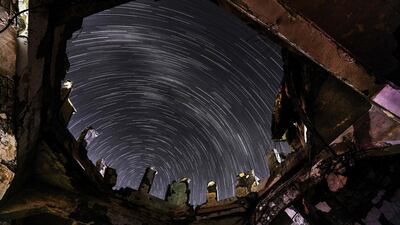
This long-exposure picture taken shows a view of star trails in the sky through a hole left by a collapsed dome of a destroyed mosque in the town of Binnish in Syria's northwestern Idlib province. AFP -
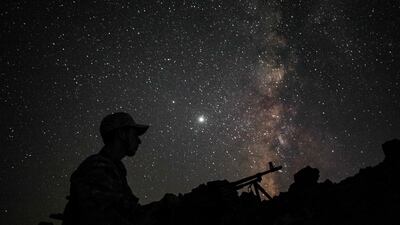
This long-exposure picture taken shows the Milky Way galaxy rising in the sky above a Syrian fighter of the Turkish-backed National Front for Liberation group on watch duty at an outpost in the town of Taftanaz along the frontlines in the country's rebel-held northwestern Idlib province. AFP -

This long-exposure picture taken shows a view of the Milky Way galaxy rising in the sky above the rubble of a building in the town of Ihsim in Syria's rebel-held northwestern Idlib province, with a graffiti depicting silhouettes of children with roots standing before a fist clenching a flag of the Syrian opposition with apples instead of stars. AFP -

This long-exposure picture taken shows a view of the Milky Way galaxy rising in the sky above a graffiti painted on the rubble of a building the name of the town of Ihsim, in Syria's rebel-held northwestern Idlib province. AFP -
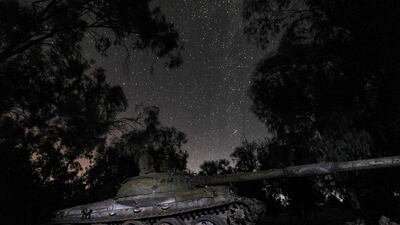
This long-exposure picture taken shows a view of the Milky Way galaxy rising in the sky above a destroyed Russian-built T-55 tank in Syria's rebel-held city of Idlib, as the Milky Way galaxy is seen in the night sky above. /AFP -

This long-exposure picture taken shows a view of star trails along the celestial equator behind a children's ride at an abandoned amusement park near al-Nayrab, a village ravaged by pro-government forces bombardment, in Syria's northwestern Idlib province. AFP -

This long-exposure picture taken early shows a view of the Milky Way galaxy rising in the sky behind a children's ride above an abandoned amusement park near al-Nayrab, a village ravaged by pro-government forces bombardment, in Syria's northwestern Idlib province. AFP -
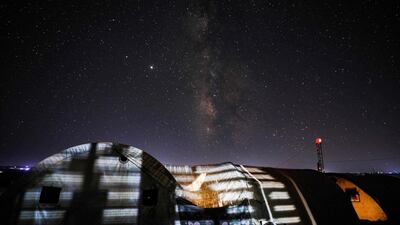
This long-exposure picture taken early shows a view of the Milky Way galaxy rising in the sky above the Ahl al-Tah camp for displaced persons near the town of Maaret Misrin in Syria's northwestern Idlib province. AFP -
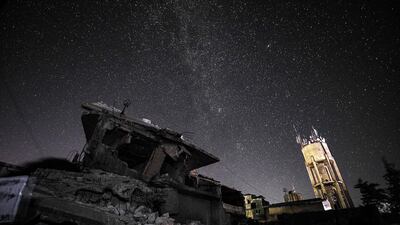
This long-exposure picture taken early on shows a view of the Milky Way galaxy rising in the sky above the rubble of a building in the town of Binnish in the country's northwestern Idlib province. AFP -
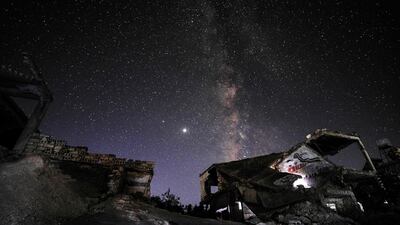
This long-exposure picture shows a view of the Milky Way galaxy rising in the sky above the rubble of a building in the town of Binnish in the country's northwestern Idlib province, with graffiti painted on the collapsed roof showing a dove holding an olive branch in its beak flying over a Syrian opposition flag in the shape of the eastern Arabic numeral "9" while being targeted by the silhouette of a military aircraft with the Arabic word "years" below as silhouettes of children stand by a border fence and a tent with the letters "UN". AFP -

This long-exposure picture taken shows the Milky Way galaxy rising in the sky above a Syrian fighter of the Turkish-backed National Front for Liberation group on a motorcycle in the town of Taftanaz along the frontlines in the country's rebel-held northwestern Idlib province. AFP -
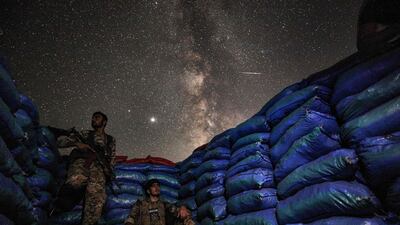
This long-exposure picture taken shows the Milky Way galaxy rising in the sky above Syrian fighters of the Turkish-backed National Front for Liberation group while on watch duty between sandbags in the town of Taftanaz along the frontlines in the country's rebel-held northwestern Idlib province. AFP


For Abu Jaber, the future of his farm or his family’s whereabouts now seem uncertain.
“I’m afraid that the Assad regime will transfer ownership of the land to another person, as he did with many displaced civilians from the rest of Syria,” he said.
“I’m also afraid of being displaced again from Batabo – the news is spreading that Assad and Russia’s are planning to launch a new military campaign in the region.”

