
The Middle East’s most populous country, Egypt, and Syria will impose nightly curfews this week to try to stop the spread of the coronavirus, their governments announced on Tuesday.
And the International Monetary Fund warned that a shortage of medical supplies could affect the Middle East’s poorest nations.
There are more than 31,000 confirmed cases of the virus across the Middle East, by far the most in Iran.
While most recover from Covid-19, low crude oil prices have put additional strain on the region.
Already, countries have reacted by either urging or ordering hundreds of millions of people to stay home.
Egypt, home to more than 100 million, and war-torn Syria became the latest on Tuesday.
Egyptian Prime Minister Moustafa Madbouly said the national curfew, from 7pm to 6am, would go into effect on Wednesday, during which some transport would also be halted.
Egypt has 402 confirmed cases and 22 deaths, including two senior military officers.
Mr Madbouly announced the continued closure of airports, schools and universities until April 12.
He said shops and malls would close on Fridays and Saturdays, Egypt’s weekend.
Groceries, bakeries and pharmacies would be excluded from the closure order.
-

The Ritz hotel in London. EPA -

A nearly empty Times Square is seen on March 23, 2020 in New York City. AFP -

A nearly empty Times Square is seen on March 23, 2020 in New York City. AFP -
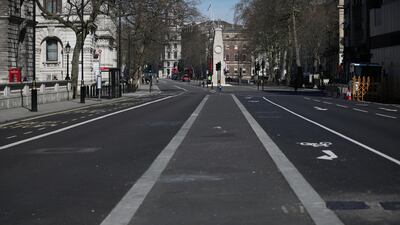
Empty streets in Trafalgar Square as the spread of the coronavirus disease (COVID-19) continues, in London. Reuters -
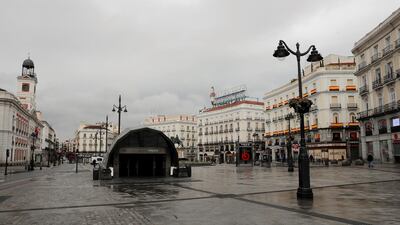
View of the empty Sol square in Madrid, Spain as lockdown continues in the Spanish capital. EPA -

The empty Neumarkt square in front of the Frauenkirche (Church of Our Lady) is seen during a partial lockdown in Dresden, Germany. Reuters -

Aerial view of the empty 9 de Julio avenue in Buenos Aires after the Argentine government ordered a "preventive and mandatory" isolation, effective until the end of the month. AFP -

A view of an empty square in downtown Wroclaw, western Poland. EPA -

The empty street facing the Ponte Vecchio in Florence during a strict lockdown put in place by Italian government to fight against the spread of the COVID-19. AFP -

A man walks along the empty Champs-Elysees in Paris. AFP -
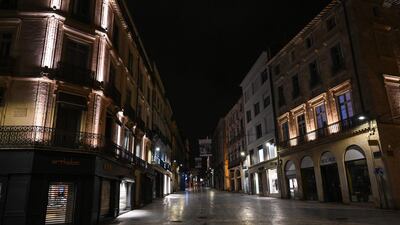
The empty Loge street in the city of Montpellier, southern France, on the seventh day of a lockdown. AFP -
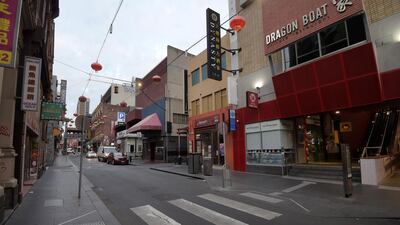
A street stands empty in the Chinatown area of Melbourne, Australia. The Australian government said it will enforce more stringent controls to slow the virus spread, closing pubs, casinos, restaurants and other venues after the number of infections surged. Bloomberg -

A man stands outside the Bondi Pavilion at a near-empty Bondi Beach in Sydney, Australia. Bloomberg -
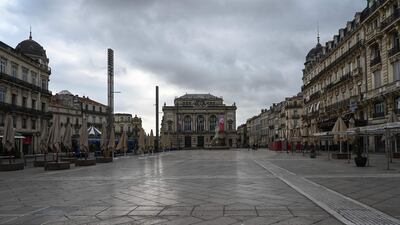
The empty "Place de la Comedie " in the city of Montpellier, southern France. AFP -
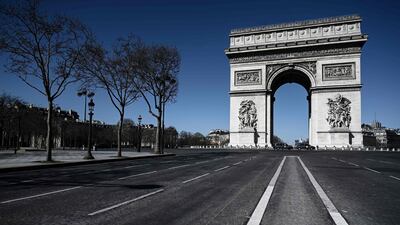
An empty street leading to the Arc de Triomphe in Paris. AFP -
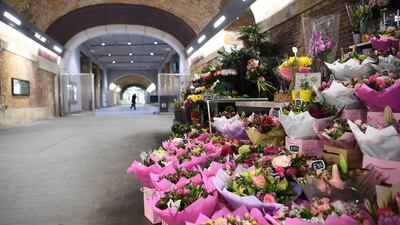
A florist stall at an empty London Bridge in London, Britain. EPA -

Pigeons gather outside the Metropolitan Cathedral of San Salvador during the 40th anniversay of San Oscar Arnulfo Romero (1917-1980) assassination. AFP -
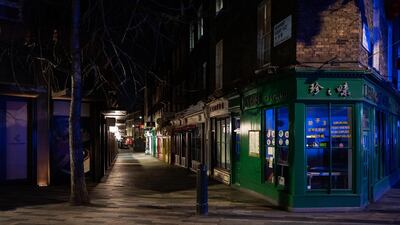
Empty streets and alleyways are seen around Chinatown at what would usually be a busy period of Friday night revelry in London, England. Getty Images -
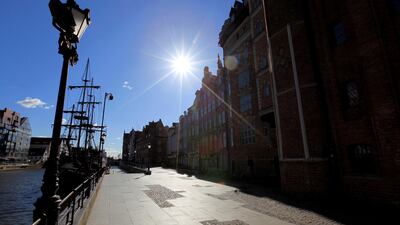
An empty street is seen in the usually crowded Main Town in Gdansk, during the spread of the coronavirus disease (COVID-19) in Poland. Reuters


Mr Madbouly said further restrictions would be implemented “according to developments".
President Abdel Fattah El Sisi tweeted that he expected Egyptians to “respond positively to these measures, to protect the security and safety of our beloved Egypt".
Mr El Sisi warned that attempts to ignore the measures would be met with “the utmost firmness and decisiveness".
In the Mediterranean city of Alexandria, dozens of people took to their balconies before dawn to pray for help against the virus, online videos showed.
Other footage showed about three dozen chanting people marching in a side street.
Egypt’s Interior Ministry said it had arrested some organisers of the Alexandria gathering.
Mr El Sisi’s government has banned large gatherings, closed all its museums and archaeological sites, including the famed Giza Pyramids, and locked down tourist cities in the south and the Red Sea area.
Religious authorities have closed churches and mosques.
In Syria, where the healthcare system has been damaged by nearly a decade of civil war, the government said a 12-hour curfew starting at 6pm would go into effect on Wednesday.
State news agency Sana did not say how long the curfew would continue but it appeared to be open-ended.
Syria has reported only one case of the coronavirus so far, but strict measures have been taken in government-held areas.
They include halting commercial flights, closing borders and shutting down restaurants and public transport.
Even before the curfew was announced, lines had formed outside grocery stores, banks and petrol stations across the Syrian capital, Damascus, as people braced for wider closures.
The IMF, which has traditionally told countries to implement greater austerity measures, was urging Middle East governments to offer temporary tax relief and cash transfers.
It warned that a lack of medical supplies could hurt Iraq, Sudan and Yemen if it led to a surge in prices.
“Given the large numbers of people employed in the service sector, there will be wide reverberations if unemployment rises and wages and remittances fall,” said the IMF director for the Middle East, Jihad Azour.
In the impoverished Gaza Strip, Hamas-run religious authorities announced all mosques would close for two weeks starting on Wednesday. Schools had already closed.
An Israeli-Egyptian blockade of Gaza, in place since the militant group took power in 2007, has slowed the arrival of the new virus to the densely populated Palestinian enclave.
After detecting two coronavirus cases this week among those returning from abroad and already in quarantine, the enclaves rulers, Hamas, imposed further precautions and closures.
Gaza’s Health Ministry said it opened more than 20 quarantine centres already housing 1,400 people.
-

David Vazquez, a street performer dressed as the Joker, waits in hopes of pedestrians who will pay to take pictures with him in Mexico City. AP Photo -

Pallbearers pull the coffin of a deceased person for a funeral ceremony into the cemetery of Grassobbio, Lombardy. AFP -

American Airlines passenger planes crowd a runway where they are parked due to flight reductions to slow the spread of coronavirus disease. Reuters -

People wearing face masks arrive at the South Municipal cemetery in Madrid. AFP -

A youth artist S.F. paints a mural about the Covid-19 crisis on the roof of his building in Athens. AFP -

A picture taken from the roof the Emile Muller Hospital shows tents of a military field hospital during its setting up in Mulhouse, eastern France. AFP -

An elderly person with an undisclosed illness arrives on a stretcher, and is admitted to NYU Langone Health Center hospital. AFP -

French soldiers prepare medical gear during the setting up of an intensive care unit at a military field hospital at the Emile Muller Hospital in Mulhouse, eastern France. AFP -

A researcher works on a vaccine against the new coronavirus at the Copenhagen University research lab. AFP -

The USNS Mercy, a Navy hospital ship, departs the Naval Station San Diego and heads to the Port of Los Angeles to aid local medical facilities dealing with coronavirus disease patients, in San Diego, California. Reuters -

A man wearing a face mask displays a sign for takeaway services at an eatery after New South Wales began shutting down non-essential businesses and moving toward harsh penalties to enforce self-isolation as the spread of coronavirus disease reached a "critical stage" in Sydney, Australia. Reuters -

A health worker vaccinates a woman against the flu, as advised by health officials to facilitate diagnosis for coronavirus, amid the coronavirus disease (COVID-19) outbreak, in Brasilia, Brazil. Reuters


The arrival of the pandemic in Syria and the impoverished Gaza Strip has raised concerns that the virus could spread swiftly in some of the most vulnerable areas in the Middle East.
War-torn Libya and Yemen, which have yet to report any cases, are also a source of concern.
The worst outbreak in the Middle East is in Iran, where authorities reported another 122 deaths on Tuesday, bringing the total to more than 1,900 of more than 24,800 confirmed cases.
The dead included the mother-in-law of the son of supreme leader Ayatollah Ali Khamenei, the state-run Irna news agency said on Monday.
Health Ministry spokesman Kianoush Jahanpour warned the public that infections would probably rise further, as Iran now had more ability to test and screen suspected cases.
The ministry launched a website for the public to report if they suspect they have the virus so medical staff could administer tests.
So far, 41 million people have used the site, Mr Jahanpour said. Iran is home to about 80 million people.
Oman announced it would halt all passenger flights starting on Sunday, although cargo flights would continue.
Saudi Arabia announced on Tuesday that its number of cases jumped from 562 to 767, and included its first death.

