
The Oxford-AstraZeneca Covid-19 vaccine can cut the spread of coronavirus by two thirds, raising hopes the illness will eventually morph into a common cold.
The new Oxford study also found that one shot of the vaccine offered 76 per cent effective protection against symptomatic infection, supporting the UK government’s decision to allow a longer gap of 12 weeks between two shots.
The results come as the number of vaccine doses administered in the UK passed 10 million, with 9,646,715 first doses and 496,796 second doses given to healthcare workers and vulnerable groups.
The vaccine is also being delivered worldwide – the first doses arrived in Dubai on Tuesday.
It is the first time a study has shown a Covid-19 vaccine can reduce transmission of the virus.
Prof Andrew Pollard, chief investigator at the Oxford Vaccine Group, said the findings showed the Oxford vaccine should have "a huge impact on transmission" in the UK.
"There is about a two-thirds reduction in the number of people who have been vaccinated who have a positive PCR [polymerase chain reaction], and who therefore are infected," he told BBC's Radio 4 Today programme.
"Because they are no longer infected, they can’t transmit the virus to other people. That should have a huge impact on transmission."
However, Prof Pollard said that the study did not take into account new variants of the virus, such as the mutations first identified in South Africa and Brazil.
"This virus is absolutely trying to find ways of continuing to transmit despite human immunity," he said.
A new mutation found in parts of the UK is adding to the concerns of scientists.
The mutation, called E484K, is "highly likely" to have an effect on the existing suite of vaccines, Prof Pollard said, but he said developers were already looking at updating their vaccines and that it was a "relatively short process" to do so.
He said the illness could eventually transform into a disease that still transmits but does not cause severe illness, such as the common cold.
"Hopefully it will be like other coronaviruses that are around all the time … that will cause colds and mild infections, and we will have built up enough immunity to prevent the severe disease we’ve seen over the past year," Prof Pollard said.
UK Health Secretary Matt Hancock said the results of the study were "really encouraging", raising hopes coronavirus restrictions can be lifted by Easter.
"It does show the world that the Oxford jab works, it works well, it protects you because there were no hospitalisations among those who had the jab and it slows transmission by around two thirds," he said on Tuesday.
"It’s good news for the whole world because this is the vaccine that is most accessible and AZ are producing it at cost."
Asked about French President Emmanuel Macron's remarks labelling the Oxford vaccine as "quasi-ineffective for people over 65", Mr Hancock said: "The science on this one was already pretty clear and with this publication overnight it’s absolutely crystal clear that the Oxford vaccine works."
Prof Pollard said of Mr Macron's comments: "I don’t understand what the statement means."
Two-shot 'sweet spot'
The study measured the effect on transmission by testing for asymptomatic infections, swabbing participants every week, in addition to recording when anyone fell ill with Covid-19.
The results, gathered from trials in Britain, Brazil and South Africa, also showed that immune responses were boosted with a longer interval to the second dose among participants aged 18 to 55 years.
AstraZeneca's research chief said 8-12 weeks between doses seems to be the "sweet spot" for efficacy, contrasting with US drugmaker Pfizer, which warned that the vaccine it developed with Germany's BioNTech was not trialled with such an interval.
The new study did not address concerns about a lack of data on efficacy among the oldest people, who the British government have given highest priority in their vaccine campaign.
Prof Pollard said the data showed the 12-week interval between doses was "the optimal approach to roll out, and reassures us that people are protected from 22 days after a single dose".
The findings of the pre-print paper, which had not been peer-reviewed, supported Britain's decision to extend the interval between initial and booster doses of the shot to 12 weeks, Oxford said.
"Vaccine efficacy after a single standard dose of vaccine from day 22 to day 90 post vaccination was 76 per cent, and modelled analysis indicated that protection did not wane during this initial three-month period," Oxford academics said in the pre-print.
The paper said that vaccine efficacy was 82.4 per cent with 12 or more weeks until the second dose, compared with 54.9 per cent for those where the booster was given less than six weeks after the first dose.
The longest interval between doses for those aged 56 and over was between six and eight weeks, so there was no data for the efficacy of a 12-week dosing gap in that cohort.
Europe's medicine regulator said there is not enough data to determine how well the vaccine will work in people aged over 55, but Britain expressed confidence the vaccine works in all age groups.
The study said none of the 12,408 people vaccinated with a single dose of the vaccine was admitted to hospital with Covid-19 from 22 days after immunisation.
In another study, almost 90 per cent of people who tested positive for Covid-19 were found to have protective antibodies against the virus six months after their initial infection.
The UK Biobank study, which looked at 1,699 people who had caught the virus, was one of the largest follow-up studies in the world.
In pictures – coronavirus in the UK
-

People receive the Covid-19 vaccine at the Derby Arena velodrome in Derby. Reuters -
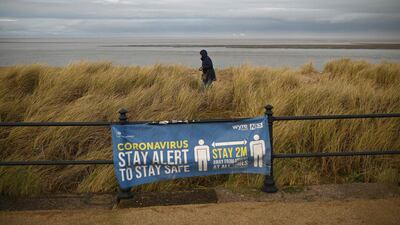
A sign reminding beach-users of the guidance to keep 2 metres away from other people is seen in Fleetwood, northwest England. AFP -
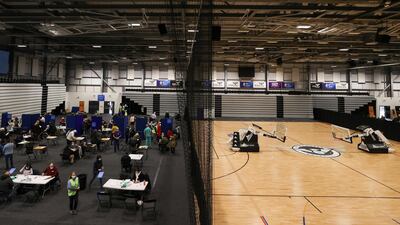
The vaccination centre in the Newcastle Eagles Community Arena, in Newcastle upon Tyne. Reuters -
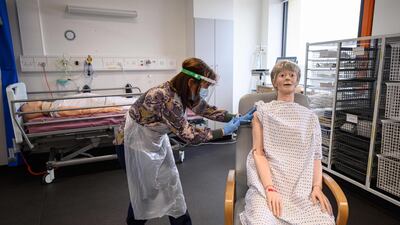
Volunteers practices administering an intramuscular injection with a training model during vaccinator training to prepare volunteers to be deployed to assist in the national Covid-19 vaccination programme, at the University of Hull. AFP -

People practice social distancing as they wait to receive a dose of a Covid-19 vaccine at a community vaccination centre at Hartlepool Town Hall. Reuters -
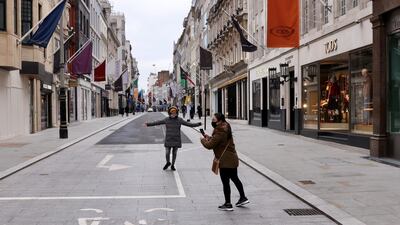
People take pictures in a deserted Old Bond Street in London. Reuters -
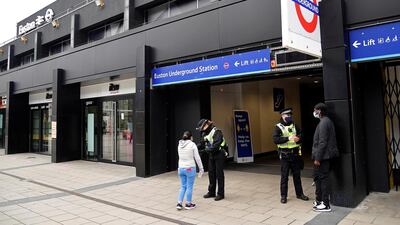
British Transport Police officers check on travellers as they arrive at Euston rail station in London. Reuters -

A health official prepares a dose of Covid-19 vaccine at a community vaccination centre at Hartlepool Town Hall. Reuters -
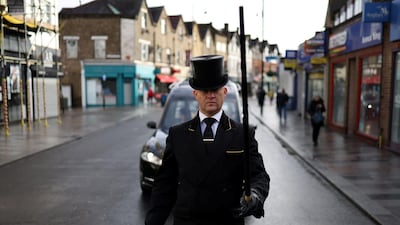
W. Uden & Sons Funeral Conductor Spencer Baxter leads the procession of a funeral service in Sidcup, amid the coronavirus disease pandemic, in south east London. Reuters



