

Heavy snowfall disrupted air and road traffic on Monday in the Greek capital of Athens and most of Greece, including – unusually – several Aegean Islands.
The storm, named in Greece Elpida, or “hope”, caused traffic snarl in Athens.
Authorities urged the public to avoid non-essential movements on Monday and Tuesday, while schools in many areas remained closed.
Government spokesman Giannis Oikonomou said more than 46,000 school classes were being held online.
The snow came down thick and fast throughout the day in central Athens, settling on the marble columns of the ancient Acropolis.
Authorities sent emergency alerts to mobile phones in the wider Athens area warning of severe snowfall.
Snow chains were mandatory for cars on many roads, while lorries were banned from the motorway heading north from Athens.
The icy conditions and lack of snow chains on some vehicles left traffic snarled for hours on many of the Greek capital’s roads, including a motorway ring road and one of the main avenues in Athens.
Several drivers reported being stuck in their cars for hours.
-
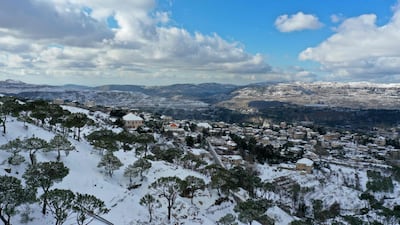
A snow-clad village in the Chouf district of Mount Lebanon governorate, about 52km south-east of Beirut. AFP -
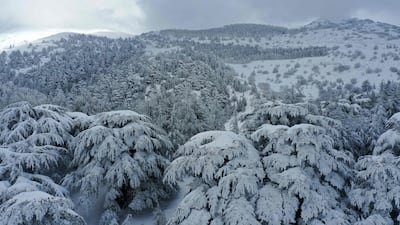
Cedar trees are blanketed in snow in Lebanon. AFP -

A man walks in the snow in Erbil, Iraq. AP Photo -
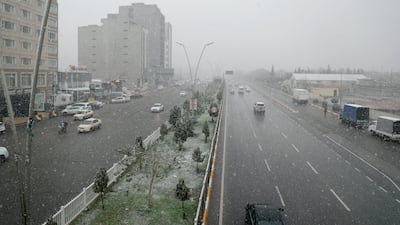
Snow fills the air in Erbil. AP Photo -
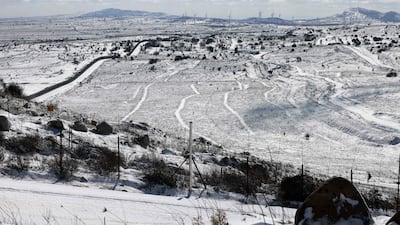
Israel's border with Syria is covered with snow, near the Druze town of Masada. AFP -
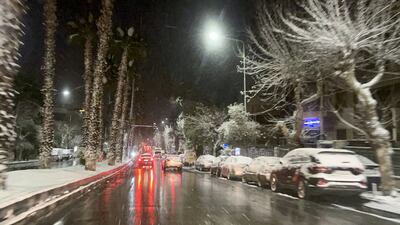
Syrians drive their cars on a street as snow falls over Damascus. AFP -
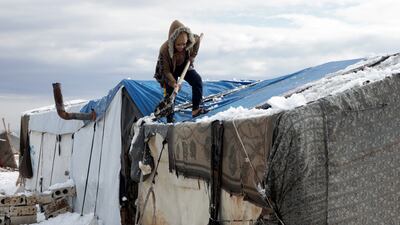
A child removes snow from the top of a tent at a camp for internally displaced people in the northern Aleppo countryside, Syria. Reuters -
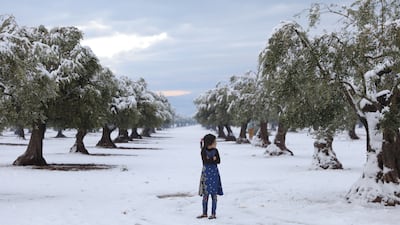
A child stands in the snow in Salat Zagrous, a camp for internally displaced people, in northern Syria. EPA -
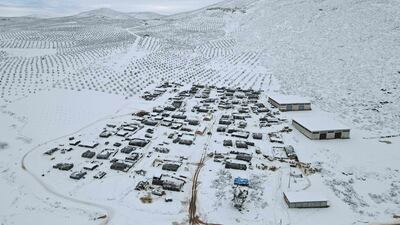
A camp for internally displaced people in the town of Raju in the rebel-controlled northern countryside of Syria's Aleppo province. AFP -
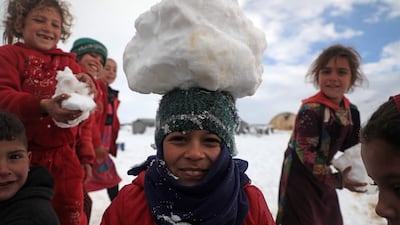
Children at a camp for internally displaced people in Raju have fun in the snow. AFP -
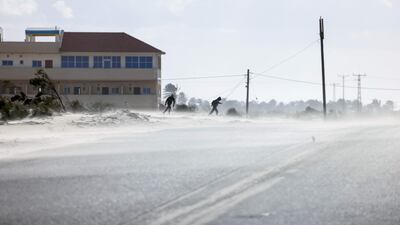
A windy day in Khan Younis, in the southern Gaza Strip. AFP -

Reindeer in the Israel-annexed Golan Heights. AFP -
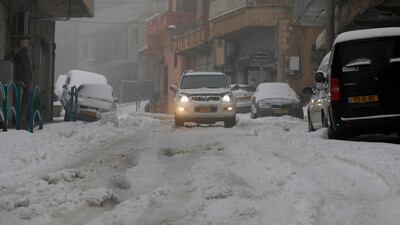
The Druze town of Majdal Shams in the Golan Heights. AFP -
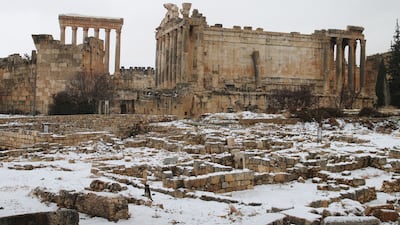
The Roman ruins at Baalbek in the eastern Bekaa Valley, Lebanon. AFP -

Snow-covered houses in the town of Sohmor, western Bekaa, Lebanon. Reuters -
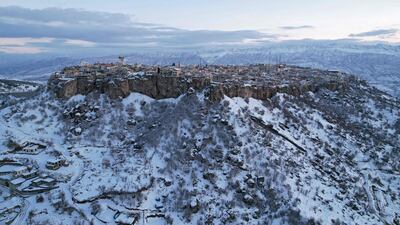
Amadiyah, a town built 1,400 metres above sea level and located about 75km north of the city of Dohuk, in the autonomous Iraqi Kurdistan region. AFP -
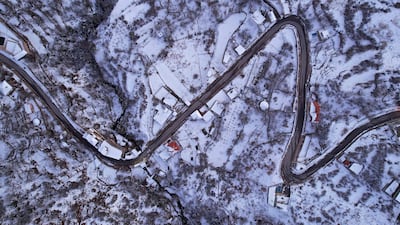
Snow-covered mountains around the town of Amadiyah. AFP -
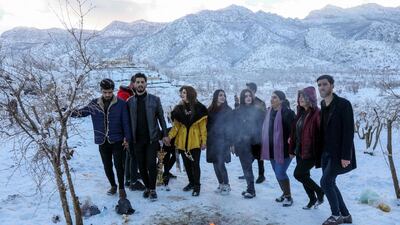
Iraqi Kurds perform a traditional dance near Safin Mountain, close to the city of Irbil, the capital of Iraq's northern Kurdish autonomous region. AFP -
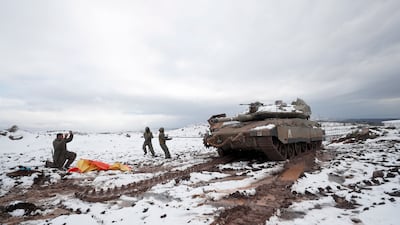
Israeli armored corps soldiers, fix their tank chains during snowstorm near the Israel-Syrian border in the annexed Golan Heights, near the Druze village of Majdal Shams. EPA -
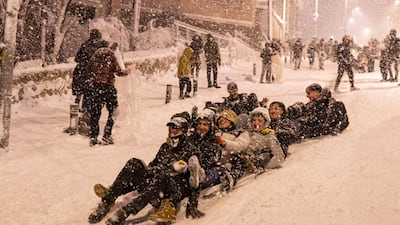
Children slide on the snow at the Kucukcekmece district in Istanbul. AFP -
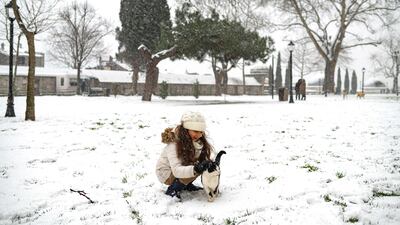
A child plays with a cat in a snowy park near of the Suleymaniye mosque in Istanbul. AFP -
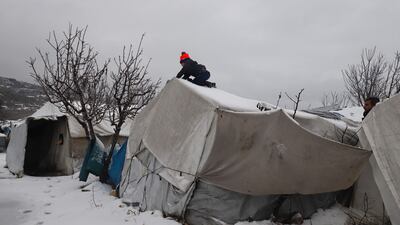
A young Syrian boy clears the snow covering a tent at a camp for internally displaced people, near the city of Jisr al-Shugur on the border with Turkey, in the Idlib governorate of northwestern Syria. AFP


Climate Change and Civil Protection Minister Christos Stylianides apologised for the problems on the ring road, and said explanation would be sought from its private operators.
He said efforts were being made to keep all major motorways open.
Mr Stylianides said power disruptions, mostly on the island of Evia, were marginal and were expected to be resolved soon.
Several domestic and international flights to Athens airport were cancelled, while the metro service to the airport was partially suspended as some of it runs above ground.
The health ministry announced that Covid-19 vaccination centres in the wider Athens region and Evia would remain closed on Monday and Tuesday.
Authorities expect the snowfall to continue on Tuesday.
Snow is common in the Greek mountains and in northern Greece but is less frequent in central Athens and on Aegean Islands.
Last year, the Greek capital was hit by a major snowstorm that caused severe problems, knocking out power for days in certain neighbourhoods and making all streets impassable without snow chains.
Thousands of trees collapsed from the weight of the snow and ice.

