



India's government on Saturday offered more concessions in its new military recruitment scheme, as violent protests against the proposed changes entered a fourth day.
The policy, called Agnipath, limits the term of service for recruits to non-commissioned military ranks to four years, after which only a quarter would be retained while the rest would be discharged with a one-time payout but no other benefits.
Along with the short tenure and lack of benefits, aspiring recruits were also angered by a new age limit of 21 for candidates, as many would have crossed that threshold while recruitment was suspended during two years of the coronavirus pandemic.
Home Minister Amit Shah on Saturday announced that 10 per cent of posts in India's Central Armed Police Forces and the Assam Rifles, another paramilitary force, would be reserved for Agniveers — soldiers recruited under the Agnipath scheme who complete their four-year military service.
The recruitment age limit for these posts would be relaxed by five years for the first batch of Agniveers, and by three years for subsequent batches, he said.
“The Ministry of Home Affairs decides to reserve 10 per cent of vacancies for recruitment in CAPFs and Assam Rifles for Agniveers,” Mr Shah said on Twitter.
“The MHA also decides to give three years age relaxation beyond the prescribed upper age limit to Agniveers for recruitment in CAPFs and Assam Rifles. Further, for the first batch of Agniveers, the age relaxation will be for five years beyond the prescribed upper age limit,” he said.
Despite the announcement, protests intensified on Saturday. Demonstrators clashed with police and set vehicles on fire in the eastern state of Bihar, while a march against the scheme was staged in the southern state of Kerala.
About 250 people were arrested in Uttar Pradesh, and more than 100 in the southern city of Secunderabad, where one protester was killed on Friday when police fired on crowds.
The protests, which were focused on railways and public buses, led to the cancellation of two dozen train services on the Northern Railway and Eastern Railway.
-
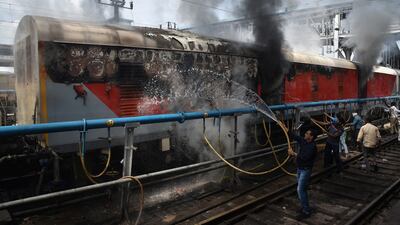
Indian railway workers try to douse the flames after protesters set a passenger train on fire in Secunderabad, Andhra Pradesh. Reuters -
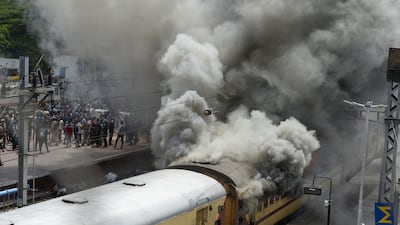
Hundreds of angry youths protested on Friday against a new short-term government recruitment scheme for the military. AFP -
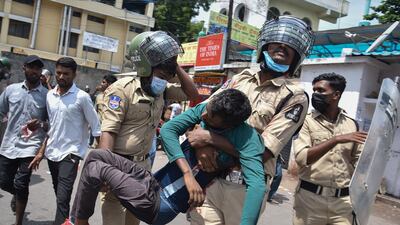
Policemen carry a wounded protester in Secunderabad. Reuters -
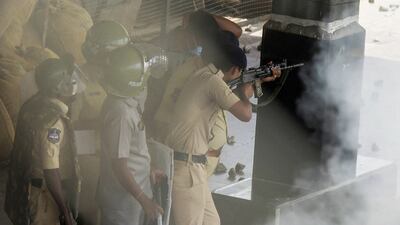
Policemen open fire to disperse protesters in Secunderabad. AFP -
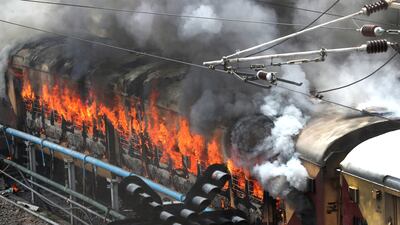
Flames engulf a train at Secunderabad railway station. AP -
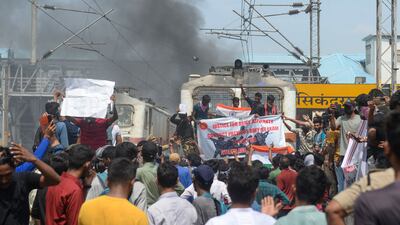
Protesters shout slogans after setting the train on fire. AFP -
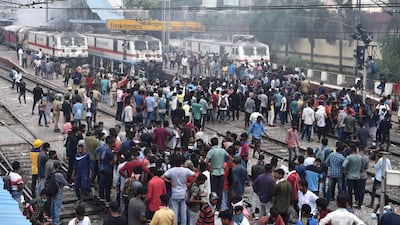
Protesters block railway tracks in Secunderabad. Reuters -
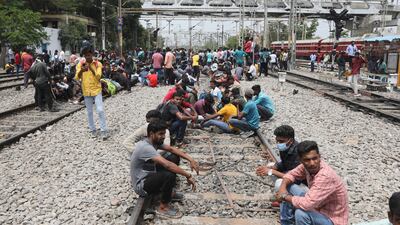
Protesters sit on railway tracks at Secunderabad station. AP -
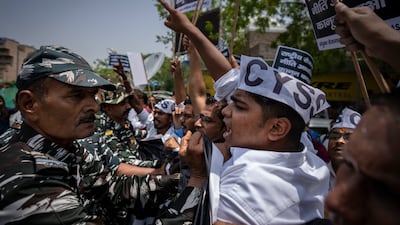
Indian paramilitary personnel try to stop students and activists in New Delhi. AP -
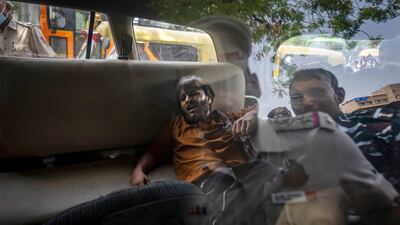
A student activist reacts after being tossed into a police vehicle in New Delhi. AP -
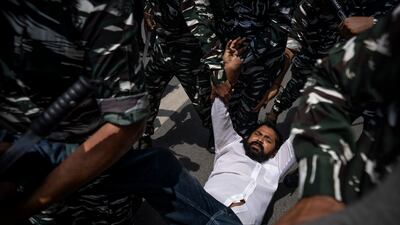
An activist is carried by paramilitary personnel in New Delhi. AP -
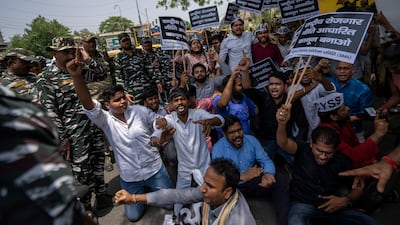
Hundreds of angry youths protest as the backlash continued for a third straight day on Friday. AP


The government said the new military recruitment policy is “transformative”, and on Saturday Defence Minister Rajnath Singh called it “revolutionary”, blaming the violence on political opponents.
“This scheme has brought revolutionary changes to the recruitment process. We wanted there to be a sense of discipline and pride for the country among the people,” Mr Singh said after meeting with the army, navy and air force chiefs.
Several opposition leaders have drawn a parallel between Agnipath and the three controversial farm laws that were introduced by Prime Minister Narendra Modi’s government in 2020 without consulting farmers.
The government was forced to repeal those laws in November last year after sustained protests by hundreds of thousands of farmers, whose tactics included blocking main highways into the capital, New Delhi.
Rahul Gandhi, leader of the main opposition Congress party, said Mr Modi would have to apologise to the people again for the new law.
“I had said earlier also that the prime minister will have to withdraw the black Agriculture Act. In the same way, he will have to obey the youth of the country by becoming 'mafiveer' [apologiser] and Agnipath will have to be taken back,” he said.
Several retired high-ranking officers have also spoken out against the scheme.
Nitin Gokhale, a leading national security analyst, believes the scheme will be beneficial for the armed forces and recruits.
“Veterans were angry as they thought of this as giving up old tradition. They are not being open-minded, but I have no doubt that this would eventually turn out to be a beneficial and important step in the reform process,” Mr Gokhale told The National.
“The scheme brings down the age profile of the bulk of the force. It is a trend the world over and is desirable,” he said.
“Secondly, this will raise the technical threshold, as the younger lots keep in tune with technology and are quick learners compared to older people. Adaptability is an important attribute in the army.”
The government planned to recruit about 46,000 men and women for all the military wings this year, jobs that are sought after as unemployment is at record levels.
Military service has traditionally been considered a lifelong career in India, where government jobs are preferred for their stability and benefits.

