Qasr Al Hosn - in pictures
-
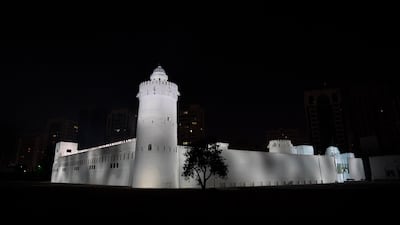
Qasr Al Hosn is the oldest stone building in Abu Dhabi and one of its most important landmarks. -
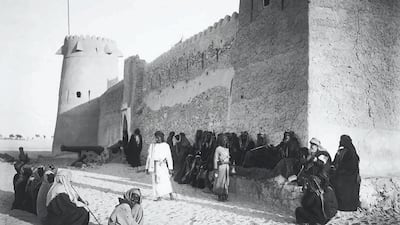
Sheikh Zayed bin Khalifa, grandfather of the UAE's Founding Father, the late Sheikh Zayed bin Sultan Al Nahyan, at his majlis in front of Qasr Al Hosn. -
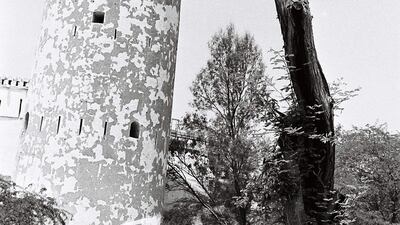
Undated image of Qasr Al Hosn from Al Ittihad Archive. Photo: Al Ittihad -
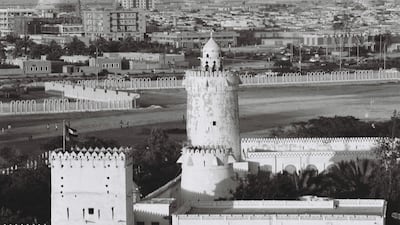
Undated image of Qasr Al Hosn from Al Ittihad Archive. Photo: Al Ittihad -
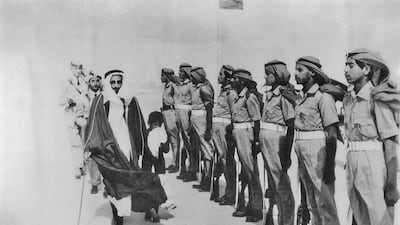
Sheikh Shakhbut bin Sultan Al Nahyan and Sheikh Tahnoon bin Saeed Al Nahyan inspect troops at Qasr Al Hosn. Photo: The Ruling Family -
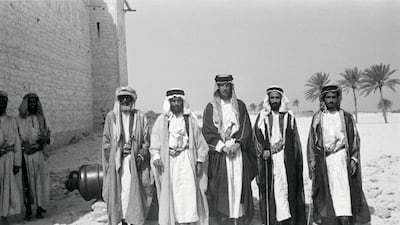
From left, unidentified sheikh of the Naim tribe, Sheikh Hazaa bin Sultan Al Nahyan, Wilfred Thesiger, Sheikh Shakhbut bin Sultan Al Nahyan, and Sheikh Khalid bin Sultan Al Nahyan. Photo: Wilfred Patrick Thesiger / Pitt Rivers Museum, University of Oxford -
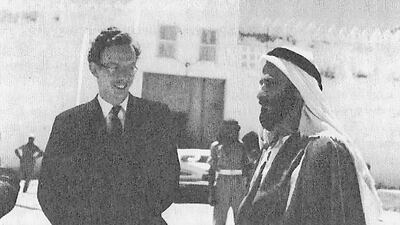
Sheikh Shakhbut bin Sultan with British anthropologist Peter Lienhardt outside Qasr Al Hosn (possibly in 1961). -
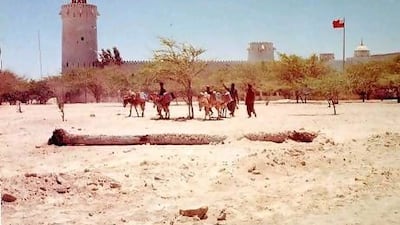
Men drive their donkeys past Qasr Al Hosn. Photo: John Vale -
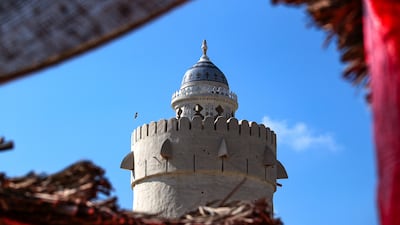
Qasr Al Hosn was initially as a single watchtower built in the second half of the 18th century. Victor Besa / The National -
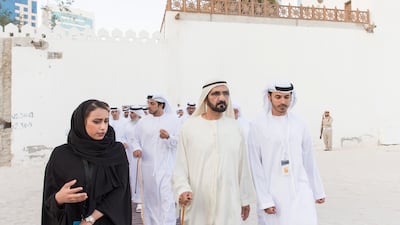
Sheikh Mohamed bin Rashid, Vice President and Ruler of Dubai with Sheikh Mansour bin Zayed, Deputy Prime Minister and Minister of the Presidential Court touring Qasr Al Hosn in 2015. Photo: Crown Prince Court Abu Dhabi -
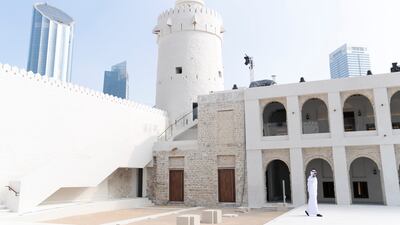
Qasr Al Hosn is the ancestral home of the Al Nahyan family in Abu Dhabi. Reem Mohammed / The National -
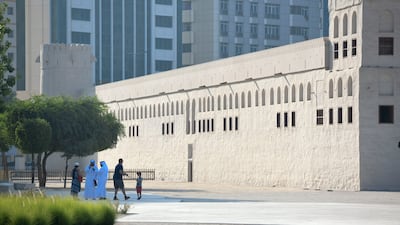
The shimmering white walls and parapets we see today are the result of a major expansion in the 1940s. Khushnum Bhandari / The National -

Al Hosn Festival has grown significantly in the past decade. Khushnum Bhandari / The National -
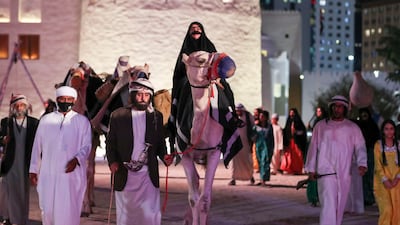
The festival features Al Freej, a re-created Emirati village with its own market, blacksmith, palm weaving stations and goat pen. Khushnum Bhandari / The National -

Al-Ayyala dancers move in unison to a drummed rhythm at Al Hosn Festival. Khushnum Bhandari / The National -
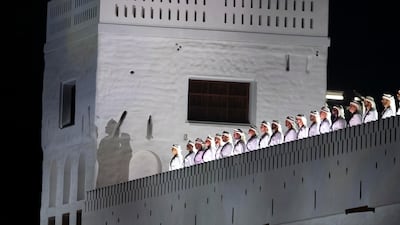
The government of Abu Dhabi restored the historical building and in 2018 reopened it to the public as museum.


Most popular today
1

