


One day in the near future, passengers may need to prove they have been vaccinated against Covid-19 to board an aircraft.
The concept has gained traction in recent months, especially since the emergence of new mutant strains.
Some airlines, including Qantas, have already said they plan to make vaccinations a prerequisite for flyers.
Last month, the International Air Transport Association (Iata) unveiled an app, the Travel Pass, that it said would allow travellers to share their vaccination status with airlines, airport authorities and governments.
"Within the industry, there has been a lot of debate surrounding the potential for countries and/or transport operators to mandate proof of a Covid-19 vaccine before travel," Gus Gardner, a travel and tourism analyst at GlobalData, a UK-based business information company, told The National.
Experts said evidence of Covid-19 vaccination will likely be required in the future.
“Otherwise, airlines will simply refuse to carry passengers in the future, if instructed by governments,” said Saj Ahmad, chief analyst at StrategicAero Research, an aviation consultancy.
“It’s all very well having a negative PCR test 72 hours before departure, but a person could easily pick up the virus within hours of a flight – so what happens then?”
Experts said Iata’s Travel Pass is a “step in the right direction” to open borders again.
But will countries accept it? The National explains.

What is the Travel Pass?
It's a mobile app that will allow passengers to store and manage certifications for Covid-19 tests or vaccines. The app should be available in iOS and Android stores by March.
The information provided through the app can be used by governments that require testing or vaccination proof as a condition of international travel during and after the pandemic.
Iata said it will use blockchain technology to encrypt users' data and eliminate the possibility of it being tampered with.
The industry body said the system will ensure users remain in control of their data and decide the amount of information they would like to share.
Iata, the trade association for 290 airlines, is looking to partner with carriers to trial the travel pass to revive travel without imposing quarantine on inbound passengers and help countries keep their borders open.
Aviation experts said the programme may give governments the confidence not to close their borders.

Which airlines have signed up for the trial?
Several so far, including, Etihad, Emirates, Qatar and Singapore Airlines have signed up for the trial.
Experts believe a majority of the 120 member countries of Iata will follow eventually.
Will countries accept such a digital health passport?
Most likely, in order to get the aviation and travel sector moving again.
"The scheme is likely to be widely adopted by most countries in the interest of public health and economic recovery,” said Mr Gardner.
“Border requirements have only been introduced in the interest of protecting a nation from a surge of inbound Covid-19 cases. The Travel Pass meets the needs of many governments.”
Mr Ahmed said there were strong incentives for countries to sign up to the scheme.
Airlines could be "banned from certain countries if they don’t operate using Iata’s Travel Pass system, to ensure the only people who fly are those who do not have Covid-19 and have been vaccinated,” he said.
Will the travel pass be enough?
Proof of vaccination could help many countries to remain open but it will not mean the end of imported cases.
David Taylor, professor emeritus of pharmaceutical and public health policy at University College London, said it will be “useful” to know who has been vaccinated and tested negative recently, “but no more than that”.
“Governments that are relatively relaxed about the risks of importing the disease may not wish to impose quarantine restrictions or ask for evidence of vaccination and negative testing,” he said.
“But at present this may not be considered adequate by those wishing to reduce importation risks to as near zero as possible.”
When will countries start asking for vaccination proof?
That is hard to say, but certainly not until more people have had a chance to be vaccinated against the virus.
It is unlikely to be introduced in the short term as vaccination in many countries is currently limited to those in the vulnerable category. Inoculating entire populations will take a long time.
“However, as the rollout continues, with more of the global population being vaccinated, countries with lower rates of infection could opt to introduce such requirements to ensure case rates do not rise,” said Mr Gardner.
World's top Covid-19 compliant airlines - in pictures
-
Latvia's Air Baltic scored 7 out of 7 for its Covid-19 compliance rating by airlineratings.com. AAFP -

Air New Zealand also ranked in the top 20. AFP -

Alaska Airlines also took the top rating for Covid-19 compliance. Image courtesy Tomas Del Coro -

Japan's All Nippon Airways made the cut. Reuters -
Low-cost airline Air Asia is one of few budget airlines in the top 20. Bloomberg -
British Airways scored big for its Covid-19 compliance. Airlines are scored out of seven categories by airlineratings.com. Reuters -

Hong Kong's Cathay Pacific also ranked in the top 20. Reuters -
Delta Air Lines ranks as one of the top 20 airlines for Covid-19 compliance. Getty Images -
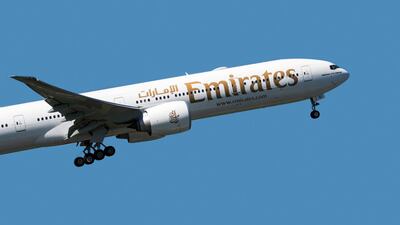
Emirates scored 7 out of 7 for its Covid-19 compliance. Getty Images -

Etihad Airways also took the highest score. Courtesy Etihad -
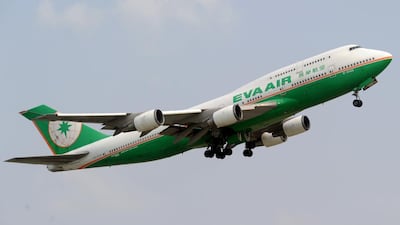
Taiwan's Eva Air was noted for its Covid-19 regulations. AFP -

Japan Airlines ranked in the top 20 Covid-safe airlines. -

JetBlue's Covid-19 policies held up to scrutiny. James Darcy / Airbus -

The Netherlands' KLM also led the way in Covid-19 compliance. Courtesy KLM -
Korean Air scoreed seven stars for implementing Covid-19 policies. Courtesy Wikimedia Commons -
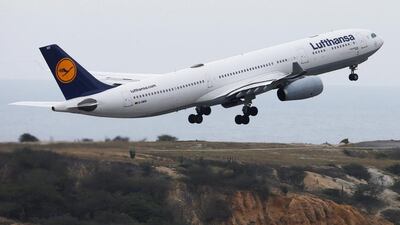
Germany's Lufthansa also ranked high for its policies to protect travellers against the coronavirus. Reuters -
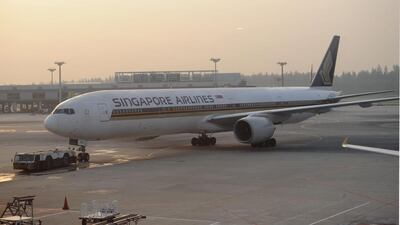
Singapore Airlines was listed in the top 20. AFP -
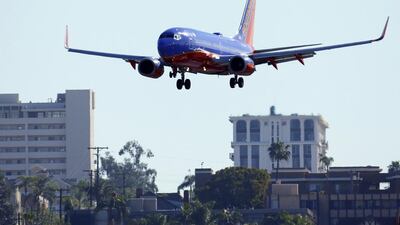
Southwest Airlines from the US also made the cut. Reuters -
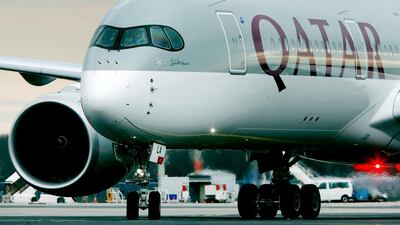
Qatar Airways ranked in the top 20 airlines for Covid-19 compliance. AP -

Westjet rounds out the top 20 airlines leading the way for Covid-19 compliance. Getty Images



