• Two Danish space architects, Sebastian Aristotelis and Karl-Johan Sorensen, lived inside a Moon habitat prototype in northern Greenland for 60 days to simulate harsh lunar conditions. Speaking to 'The National', Mr Aristotelis said he would be keen on designing a Mars habitat prototype for a Dubai desert next. All photos courtesy of Lunark
    Two Danish space architects, Sebastian Aristotelis and Karl-Johan Sorensen, lived inside a Moon habitat prototype in northern Greenland for 60 days to simulate harsh lunar conditions. Speaking to 'The National', Mr Aristotelis said he would be keen on designing a Mars habitat prototype for a Dubai desert next. All photos courtesy of Lunark
  • The Lunark mission took place from October 2 to November 30. The dup survived temperatures of minus 30 degrees Celsius and carried rifles for protection against polar bears and foxes in the arctic
    The Lunark mission took place from October 2 to November 30. The dup survived temperatures of minus 30 degrees Celsius and carried rifles for protection against polar bears and foxes in the arctic
  • Thawed ice in Greenland helped secure a water source, but getting water in a Dubai desert would be a challenge unless the prototype had a recycling and filtration system
    Thawed ice in Greenland helped secure a water source, but getting water in a Dubai desert would be a challenge unless the prototype had a recycling and filtration system
  • The goal is to build habitats that could be used for space tourism or other missions in future, but with a design that helps counteract monotony, claustrophobia and psychological stress
    The goal is to build habitats that could be used for space tourism or other missions in future, but with a design that helps counteract monotony, claustrophobia and psychological stress
  • Elon Musk announced plans of taking a million people to the Red Planet by 2050 and sold multiple tickets for a lunar tourism mission. Nasa is also trying to get astronauts back on the lunar surface. The UAE announced plans for a city on Mars by the year 2117 and is currently building a Mars Science City in Al Khawaneej for research purposes
    Elon Musk announced plans of taking a million people to the Red Planet by 2050 and sold multiple tickets for a lunar tourism mission. Nasa is also trying to get astronauts back on the lunar surface. The UAE announced plans for a city on Mars by the year 2117 and is currently building a Mars Science City in Al Khawaneej for research purposes
  • Lunark is battery-powered and has an aluminium frame that is covered in solar cells. It has a crew capacity of two people and weighs 1,738 kilograms
    Lunark is battery-powered and has an aluminium frame that is covered in solar cells. It has a crew capacity of two people and weighs 1,738 kilograms
  • A smart lighting system on the ceiling changes over the day to replicate a full day, helping maintain the body’s natural sleeping cycle. Lunark had built-in sensors that notified them when anything needed to be repaired or checked
    A smart lighting system on the ceiling changes over the day to replicate a full day, helping maintain the body’s natural sleeping cycle. Lunark had built-in sensors that notified them when anything needed to be repaired or checked

Space architects seek to replicate life on Mars in Dubai desert


Sarwat Nasir
  • English
  • Arabic

Two space architects who spent 60 days living in a compact shelter in Greenland to simulate harsh lunar conditions want to design a Mars habitat for the Dubai desert next.

Danes Sebastian Aristotelis and Karl-Johan Sorensen were part of the Lunark mission, where they endured Arctic temperatures of minus 30°C and carried rifles for protection against polar bears.

The pair work at Saga Space Architects, a company that aims to make space liveable for future travellers through approaching habitat design from a human perspective.

To this end, they are eyeing the Dubai desert, because the dry climate and sandstorms are comparable to Martian conditions.

"Our team would love to do that. It's a very interesting environment. I've been to the desert several times," Mr Aristotelis told The National.

“I lived in the desert in Jordan for 14 days because of the red sand. I wanted to experience that because it resembles Mars visually.”

The goal is to build habitats that could be used for space tourism or other missions in future, but with a design that helps counteract "monotony, claustrophobia and psychological stress", Mr Aristotelis said.

Sebastian Aristotelis pictured inside the Lunark habitat, which was created as a possible space home for future travellers. Courtesy: Lunark

Elon Musk announced plans to take one million people to the Red Planet by 2050 and has sold multiple tickets for a lunar tourism mission.

And Nasa is trying to get astronauts back on the Moon.

The UAE announced plans for a city on Mars by the year 2117, and is currently building a Mars Science City in Al Khawaneej for research purposes.

Bjarke Ingels, another Danish space design company, proposed a design for the science city a few years ago, including massive biodomes.

The habitat designed and used by the Saga Space Architects, however, involved a portable and compact-sized structure that can expand at its final location – an ideal solution for future space explorers.

“What we knew from the beginning was that we needed to create something that could be transported in a rocket, but that would unfold after landing,” Mr Aristotelis said.

“That was one of the biggest challenges and inventions of the projects, but the habitat does unfold by 750 per cent after landing and becomes habitable. There’s a lot of different things we did to enable comfortable living.”

Features of the Lunark habitat

Mr Aristotelis and Mr Sorensen lived in isolation inside the Lunark prototype in October and November last year.

Lunark is battery-powered and has an aluminum frame that is covered in solar cells.

It has capacity for two people and weighs 1,738 kilograms.

A smart lighting system on the ceiling changes over the day to replicate a day and night, helping maintain the body’s natural sleeping cycle.

Bjarke Ingels, another Danish space design firm, had proposed a design for the UAE's Mars simulation city. The Saga Space Architects, however, offer a portable space home. Courtesy: Bjarke Ingels

The team carried satellite phones with them and texting was limited to 160 characters.

Lunark had built-in sensors that notified them when anything needed to be repaired or checked.

“When we woke up, we immediately checked the dashboard and interface to ensure that nothing had happened overnight,” said Mr Aristotelis.

“We ended up monitoring everything constantly throughout the day, because during that time the habitat ends up becoming your entire universe. So, you become very sensitive to changes, like humidity and temperature.”

Life in the Arctic

They used thawed Greenland ice for water and also survived on protein shakes, soup and protein bars.

Similar to the toilet on the International Space Station, the Lunark had one that separates urine and faeces. It was built inside the habitat and had no running water.

Mr Aristotelis and Mr Sorensen alternated their sleeping schedules, so they could have privacy.

They also feared attacks from polar bears.

Ice provided a water source in Greenland, but a more creative solution would be needed for a Mars habitat prototype in the Dubai desert. Lunark

“In order to protect ourselves from the threat of a polar bear we carried rifles at all times when outside of the habitat,” Mr Aristotelis said.

“Thankfully, we never came face to face with one, but one morning when we woke up, we found fresh polar bear tracks in the snow that led right up to the door of the habitat. That was a really scary moment. It was difficult to concentrate that day when we knew it may still be roaming about nearby.”

What would a Mars habitat prototype look like?

While Mr Aristotelis has expressed interest in designing a Mars habitat for the Dubai desert, he did not reveal what features it could include.

However, because of the dry climate and sandstorms, challenges would include finding a water source  and keeping the solar panels from being covered in sand.

UAE's mission to Mars – in pictures 

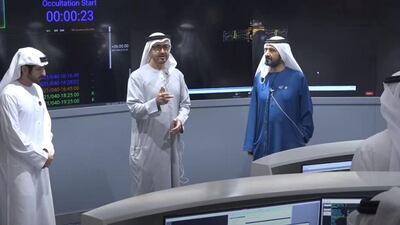
  • Sheikh Mohamed bin Zayed and Sheikh Mohammed bin Rashid personally thank staff from mission control in Dubai after Hope probe's successful orbit entry on February 9. The National
    Sheikh Mohamed bin Zayed and Sheikh Mohammed bin Rashid personally thank staff from mission control in Dubai after Hope probe's successful orbit entry on February 9. The National
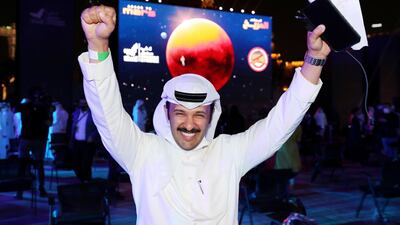
  • A man celebrates at an event at Burj Park in Dubai to celebrate the Hope probe going into orbit around Mars. Chris Whiteoak / The National
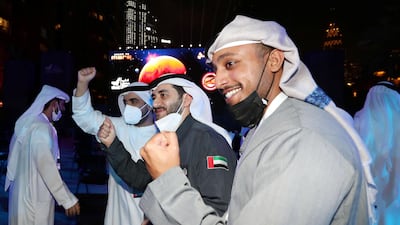
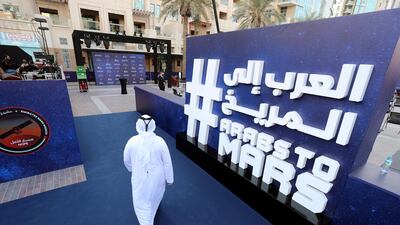
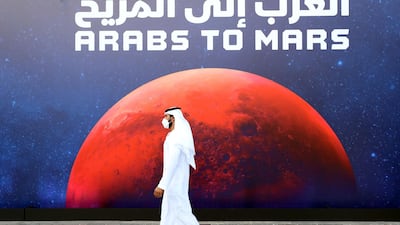
    A man celebrates at an event at Burj Park in Dubai to celebrate the Hope probe going into orbit around Mars. Chris Whiteoak / The National
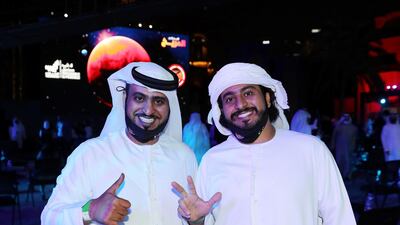
  • People celebrate at an event at Burj Park to celebrate the Hope probe going into orbit around Mars. Chris Whiteoak / The National
    People celebrate at an event at Burj Park to celebrate the Hope probe going into orbit around Mars. Chris Whiteoak / The National
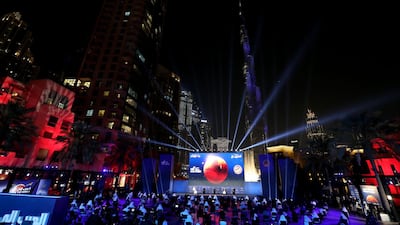
  • An event at Burj Park to celebrate the Hope probe going into orbit around Mars. Chris Whiteoak / The National
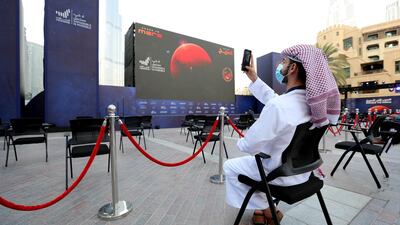
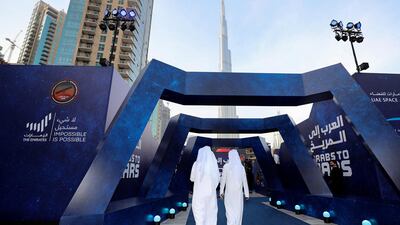
    An event at Burj Park to celebrate the Hope probe going into orbit around Mars. Chris Whiteoak / The National
  • People celebrate at an event at Burj Park to celebrate the Hope probe going into orbit around Mars. Chris Whiteoak / The National
    People celebrate at an event at Burj Park to celebrate the Hope probe going into orbit around Mars. Chris Whiteoak / The National
  • Guests arrive at the Burj Park event to mark the arrival of the Hope probe to Mars. Chris Whiteoak / The National
    Guests arrive at the Burj Park event to mark the arrival of the Hope probe to Mars. Chris Whiteoak / The National
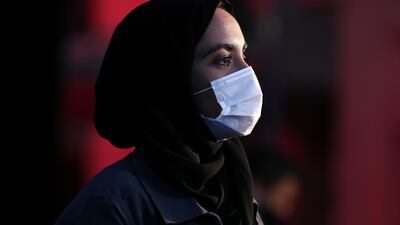
  • A guest attending the Burj Park event to mark the arrival of the Hope probe to Mars. Chris Whiteoak / The National
    A guest attending the Burj Park event to mark the arrival of the Hope probe to Mars. Chris Whiteoak / The National
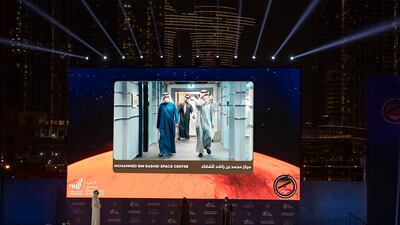
  • Burj Park was set up for people to watch the Hope probe attempt its Mars orbit insertion. Courtesy: UAE Government Twitter
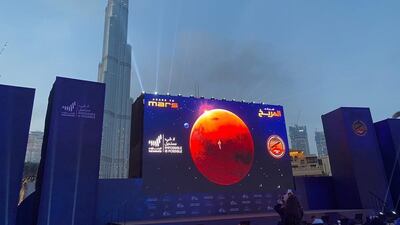
    Burj Park was set up for people to watch the Hope probe attempt its Mars orbit insertion. Courtesy: UAE Government Twitter
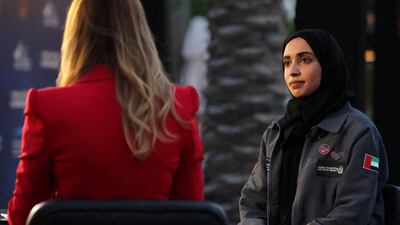
  • UAE Mars Mission engineer, Hessa Al Matroushi, was interviewed at a Burj Park event to mark the arrival of the Hope probe to Mars. Chris Whiteoak / The National
    UAE Mars Mission engineer, Hessa Al Matroushi, was interviewed at a Burj Park event to mark the arrival of the Hope probe to Mars. Chris Whiteoak / The National
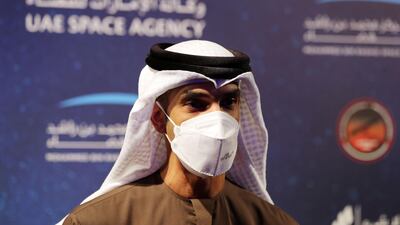
  • Dr Thani Al Zeyoudi, Minister of State for Foreign Trade, attended the event at Burj Park to mark the arrival of the Hope probe to Mars. Chris Whiteoak / The National
    Dr Thani Al Zeyoudi, Minister of State for Foreign Trade, attended the event at Burj Park to mark the arrival of the Hope probe to Mars. Chris Whiteoak / The National
  • Engineer Hessa Al Matroushi attended the event at Burj Park to mark the arrival of the Hope probe to Mars. Chris Whiteoak / The National
    Engineer Hessa Al Matroushi attended the event at Burj Park to mark the arrival of the Hope probe to Mars. Chris Whiteoak / The National
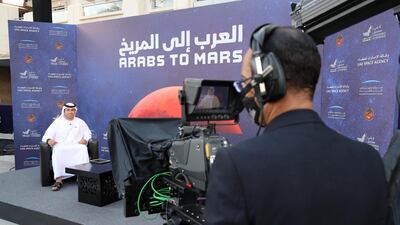
  • TV crews get ready at an event at Burj Park in Dubai to celebrate the Hope probe going into orbit around Mars. Chris Whiteoak / The National
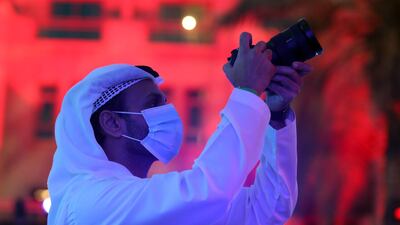
    TV crews get ready at an event at Burj Park in Dubai to celebrate the Hope probe going into orbit around Mars. Chris Whiteoak / The National
  • An event at Dubai's Burj Park to celebrate the Hope probe's Mars orbit insertion attempt. Chris Whiteoak / The National
    An event at Dubai's Burj Park to celebrate the Hope probe's Mars orbit insertion attempt. Chris Whiteoak / The National
  • Guests arrive at an event at Burj Park to mark the Hope probe's Mars orbit insertion attempt. Chris Whiteoak / The National
    Guests arrive at an event at Burj Park to mark the Hope probe's Mars orbit insertion attempt. Chris Whiteoak / The National
  • Guests and media arrive at an event at Burj Park to witness Hope probe's Mars orbit insertion attempt. Chris Whiteoak / The National
    Guests and media arrive at an event at Burj Park to witness Hope probe's Mars orbit insertion attempt. Chris Whiteoak / The National
  • Guests arrive at an event at Burj Park to mark the Hope probe's Mars orbit insertion attempt. Chris Whiteoak / The National
    Guests arrive at an event at Burj Park to mark the Hope probe's Mars orbit insertion attempt. Chris Whiteoak / The National
  • Guests arrive at an event at Burj Park to mark the Hope probe's Mars orbit insertion attempt. Chris Whiteoak / The National
    Guests arrive at an event at Burj Park to mark the Hope probe's Mars orbit insertion attempt. Chris Whiteoak / The National
  • Guests arrive at an event at Burj Park to mark the Hope probe's Mars orbit insertion attempt. Chris Whiteoak / The National
    Guests arrive at an event at Burj Park to mark the Hope probe's Mars orbit insertion attempt. Chris Whiteoak / The National
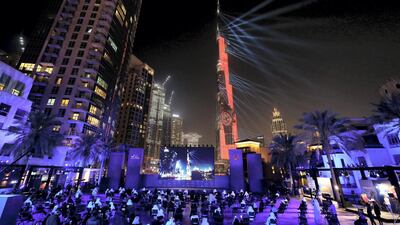
  • The Burj Khalifa lights up at an event at Burj Park in Dubai to celebrate the Hope probe going into orbit around Mars. Chris Whiteoak / The National
    The Burj Khalifa lights up at an event at Burj Park in Dubai to celebrate the Hope probe going into orbit around Mars. Chris Whiteoak / The National
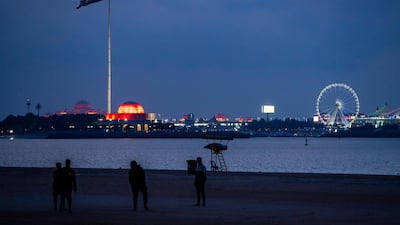
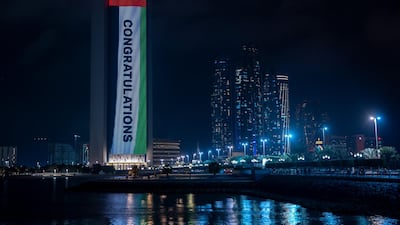
  • The UAE Flag area on the Corniche in Abu Dhabi lights up in red to celebrate the success of the Hope probe going into orbit around Mars. Victor Besa / The National
    The UAE Flag area on the Corniche in Abu Dhabi lights up in red to celebrate the success of the Hope probe going into orbit around Mars. Victor Besa / The National
  • The ADNOC Headquarters lights up in Abu Dhabi to celebrate the success of the Hope probe going into orbit around Mars. Victor Besa / The National
    The ADNOC Headquarters lights up in Abu Dhabi to celebrate the success of the Hope probe going into orbit around Mars. Victor Besa / The National
  • Sheikh Mohamed bin Zayed celebrates with Sheikh Mohammed bin Rashid at an event at Burj Park in Dubai to celebrate the Hope probe going into orbit around Mars. Chris Whiteoak / The National
    Sheikh Mohamed bin Zayed celebrates with Sheikh Mohammed bin Rashid at an event at Burj Park in Dubai to celebrate the Hope probe going into orbit around Mars. Chris Whiteoak / The National
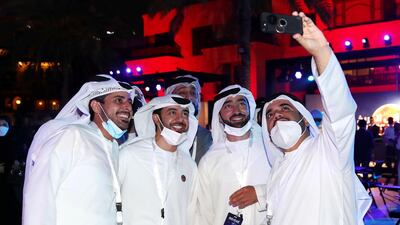
  • People celebrate at an event at Burj Park in Dubai to mark the Hope probe going into orbit around Mars. Chris Whiteoak / The National
    People celebrate at an event at Burj Park in Dubai to mark the Hope probe going into orbit around Mars. Chris Whiteoak / The National

Mercer, the investment consulting arm of US services company Marsh & McLennan, expects its wealth division to at least double its assets under management (AUM) in the Middle East as wealth in the region continues to grow despite economic headwinds, a company official said.

Mercer Wealth, which globally has $160 billion in AUM, plans to boost its AUM in the region to $2-$3bn in the next 2-3 years from the present $1bn, said Yasir AbuShaban, a Dubai-based principal with Mercer Wealth.

Within the next two to three years, we are looking at reaching $2 to $3 billion as a conservative estimate and we do see an opportunity to do so,” said Mr AbuShaban.

Mercer does not directly make investments, but allocates clients’ money they have discretion to, to professional asset managers. They also provide advice to clients.

“We have buying power. We can negotiate on their (client’s) behalf with asset managers to provide them lower fees than they otherwise would have to get on their own,” he added.

Mercer Wealth’s clients include sovereign wealth funds, family offices, and insurance companies among others.

From its office in Dubai, Mercer also looks after Africa, India and Turkey, where they also see opportunity for growth.

Wealth creation in Middle East and Africa (MEA) grew 8.5 per cent to $8.1 trillion last year from $7.5tn in 2015, higher than last year’s global average of 6 per cent and the second-highest growth in a region after Asia-Pacific which grew 9.9 per cent, according to consultancy Boston Consulting Group (BCG). In the region, where wealth grew just 1.9 per cent in 2015 compared with 2014, a pickup in oil prices has helped in wealth generation.

BCG is forecasting MEA wealth will rise to $12tn by 2021, growing at an annual average of 8 per cent.

Drivers of wealth generation in the region will be split evenly between new wealth creation and growth of performance of existing assets, according to BCG.

Another general trend in the region is clients’ looking for a comprehensive approach to investing, according to Mr AbuShaban.

“Institutional investors or some of the families are seeing a slowdown in the available capital they have to invest and in that sense they are looking at optimizing the way they manage their portfolios and making sure they are not investing haphazardly and different parts of their investment are working together,” said Mr AbuShaban.

Some clients also have a higher appetite for risk, given the low interest-rate environment that does not provide enough yield for some institutional investors. These clients are keen to invest in illiquid assets, such as private equity and infrastructure.

“What we have seen is a desire for higher returns in what has been a low-return environment specifically in various fixed income or bonds,” he said.

“In this environment, we have seen a de facto increase in the risk that clients are taking in things like illiquid investments, private equity investments, infrastructure and private debt, those kind of investments were higher illiquidity results in incrementally higher returns.”

The Abu Dhabi Investment Authority, one of the largest sovereign wealth funds, said in its 2016 report that has gradually increased its exposure in direct private equity and private credit transactions, mainly in Asian markets and especially in China and India. The authority’s private equity department focused on structured equities owing to “their defensive characteristics.”