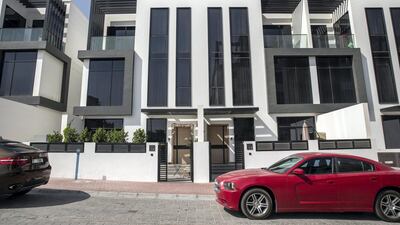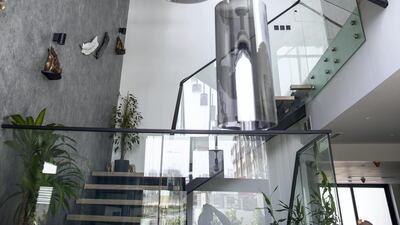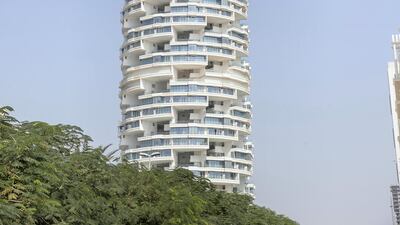
Chandra and Sujatha Dake bought their home after property prices dropped during the pandemic. Chris Whiteoak / The National

First-time buyers snap up properties in Dubai after pandemic drives prices down


Patrick Ryan
  • English
  • Arabic

Savvy Dubai residents are taking advantage of falling property prices caused by the Covid-19 pandemic to buy their first homes in the emirate.

The National spoke to first-time buyers who benefited from the unexpected opportunity to put down roots in Dubai.

Property prices were 8 per cent lower year-on-year in Dubai and 4 per cent lower in Abu Dhabi during the fourth quarter of 2020, in part because of the wide-ranging economic effects of coronavirus.

It turned out that having a mortgage and renting a property would end up costing me around the same anyway

“I was initially thinking of upgrading by renting a bigger apartment than the one I was living in but then the pandemic happened,” said Australian Tariq Rao, 51.

“When I saw how the property market was going I thought I might be able to get a villa.

"It turned out that having a mortgage and renting a property would end up costing me about the same anyway."

In November, Mr Rao and his family bought a three-bedroom townhouse in Dubai's Town Square community for Dh1.3 million, a price he said was too good to refuse, given that similar properties were selling at Dh1.5 million just a few months previously.

'It took me eight years to buy a property in Dubai," said Mr Rao, who works in the cultural section of the British Council.

“I just never trusted the market enough before and didn’t feel confident enough to invest until the prices came down with the pandemic.”

Property experts predicted there would be more bargains in Dubai in the coming months with prices expected to fall further.

Property surplus a boost for bargain hunters

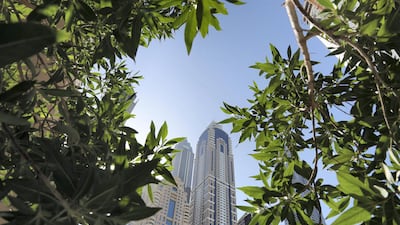
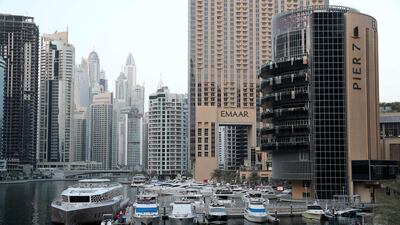
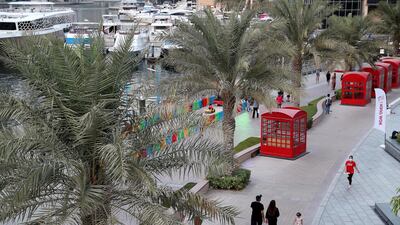
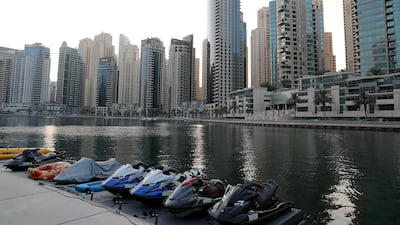
  • The impressive skyline in Dubai Marina is made up of 152 imposing towers. Pawan Singh / The National
    The impressive skyline in Dubai Marina is made up of 152 imposing towers. Pawan Singh / The National
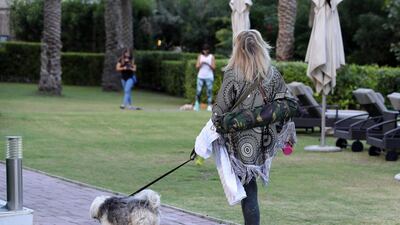
  • Dubai Marina has some pet-friendly areas where owners can walk their pets on a leash.
    Dubai Marina has some pet-friendly areas where owners can walk their pets on a leash.
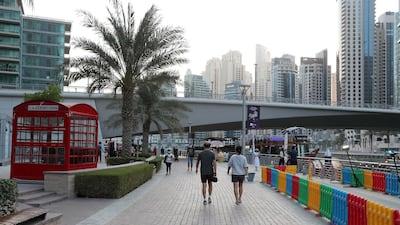
  • The winding marina walk, which snakes 3.6km through the impressive residential and commercial towers, is home to more than 600 boats and yachts. Pawan Singh / The National
    The winding marina walk, which snakes 3.6km through the impressive residential and commercial towers, is home to more than 600 boats and yachts. Pawan Singh / The National
  • A view of one of the Careem bike stations in Dubai Marina.
    A view of one of the Careem bike stations in Dubai Marina.
  • The total length of the promenade in Dubai Marina is just shy of 8km and there are plenty of stopping points along the way, from coffee shops to cafes and more.
    The total length of the promenade in Dubai Marina is just shy of 8km and there are plenty of stopping points along the way, from coffee shops to cafes and more.
  • The majority of residential towers in Dubai Marina offer incredible views, have their own swimming pools, gyms, parks and sometimes BBQ areas for residents to enjoy.
    The majority of residential towers in Dubai Marina offer incredible views, have their own swimming pools, gyms, parks and sometimes BBQ areas for residents to enjoy.
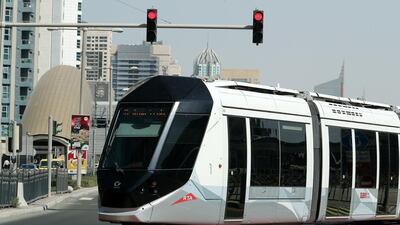
  • Dubai Marina is one of the most well connected neighbourhoods in the city. If boasts great public transport options including Dubai Metro, Dubai Tram and Dubai Water Bus
    Dubai Marina is one of the most well connected neighbourhoods in the city. If boasts great public transport options including Dubai Metro, Dubai Tram and Dubai Water Bus
  • This popular bustling neighbourhood bagged the title of Top 10 most Instagrammable spots in the city by Bayut.com in 2018.
    This popular bustling neighbourhood bagged the title of Top 10 most Instagrammable spots in the city by Bayut.com in 2018.

Analysts at property company JLL said an oversupply in residential units had put downward pressure on the market, which would create a decline of between 5 per cent and 8 per cent to eight per cent.

JLL forecast that 53,000 new builds would be added to Dubai’s property market in 2021, representing a 9 per cent increase on the 595,000 properties registered at the end of 2020.

Another Dubai resident said the lower property prices provided the ideal opportunity for him, and his family, to buy their own home.

“We were living here for six years before we decided to take the plunge,” said corporate lawyer Chris Walters, 36.

‘We had been toying with the idea for some time and have often had issues with landlords we were renting from, so when the property prices dropped it felt like a good time to make a home for ourselves in the UAE.”

Mr Walters, from Scotland, has just bought a villa in the Springs, Dubai, for Dh2.4 million, but has already noticed neighbouring properties being sold for as much as Dh3 million.

‘It’s already looking like a wise investment,” Mr Walters said.

“We saw that prices had dropped [at the start of the pandemic] but had started to creep back up already and we didn’t want to miss out just as the market turned.”

Chandra and Sujatha Dake at their villa in Al Furjan, Dubai with nephew Panav 11. Chris Whiteoak / The National

Chandra Dake, 42, from India, believed he had secured a bargain when he bought a five-bedroom villa in Al Furjan, Dubai, for Dh3.9 million.

“I saved about 20 per cent to 30 per cent by buying it when I did,” said Mr Dake, who runs a desert farming company.

“We wouldn’t get value for money like this in any other country.”

Mr Dake said the property would have been even cheaper if he and his wife had bought it in the early months of the pandemic, instead of October.

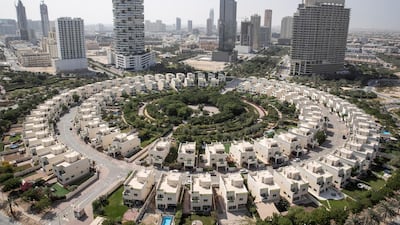
  • View of the Nakheel Villas in Jumeirah Village Circle. All photos by Antonie Robertson/The National
    View of the Nakheel Villas in Jumeirah Village Circle. All photos by Antonie Robertson/The National
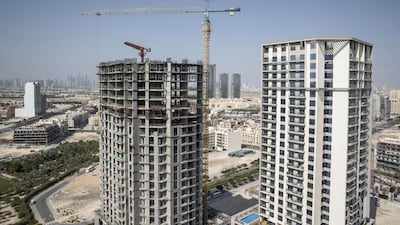
  • Commonly known as JVC, the district is home to more than 25,000 residents. Construction of some buildings are ongoing, but completed ones quickly attracted people
    Commonly known as JVC, the district is home to more than 25,000 residents. Construction of some buildings are ongoing, but completed ones quickly attracted people
  • This is one of the newer buildings in the neighbourhood. There is a mix of developers, so rents vary from each residential structure
    This is one of the newer buildings in the neighbourhood. There is a mix of developers, so rents vary from each residential structure
  • Rents for a one-bedroom apartment start at Dh25,000, but ones in newer buildings like this can cost between Dh65,000 to Dh75,000
    Rents for a one-bedroom apartment start at Dh25,000, but ones in newer buildings like this can cost between Dh65,000 to Dh75,000
  • Flats in new buildings come with equipped kitchens, wooden flooring and a more modern look
    Flats in new buildings come with equipped kitchens, wooden flooring and a more modern look
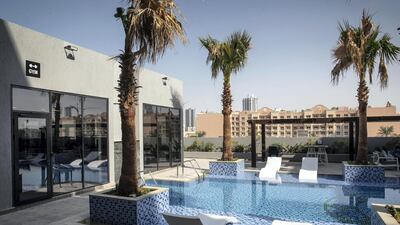
  • Most buildings in JVC have their own swimming pool and gymnasium
    Most buildings in JVC have their own swimming pool and gymnasium
  • A view of a living room in a one-bedroom flat
    A view of a living room in a one-bedroom flat
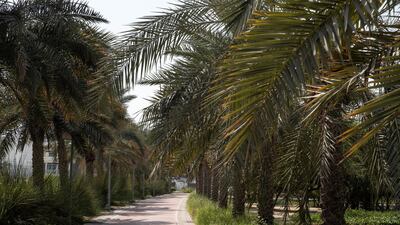
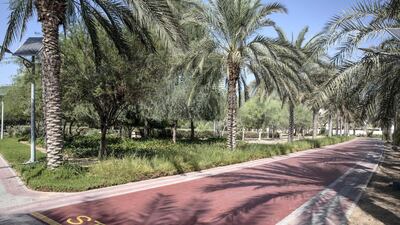
  • Halfa park is one among many other parks in JVC
    Halfa park is one among many other parks in JVC
  • Most of them have a running track and kids play area
    Most of them have a running track and kids play area
  • JVC is also known for its unique townhouses and villas
    JVC is also known for its unique townhouses and villas
  • This is a three-storey townhouse that comes with its own private lift
    This is a three-storey townhouse that comes with its own private lift
  • This is the signature structure in JVC -- the Five hotel. It has 269 infinitey pools - nearly one for each room
    This is the signature structure in JVC -- the Five hotel. It has 269 infinitey pools - nearly one for each room

“We wanted to see if the market would begin to pull back and if prices were going back up before we invested,” he said.

“We were confident the lowest dip had already happened and it wouldn’t drop any more and that we had chosen the right time to pick up the property.”

Mr Dake said he had rented a villa in Dubai since 2018 and had been monitoring the market for the perfect moment to buy his first property in the emirate.

Dubai's hot spots for buyers

The top five areas in Dubai in terms of property sales in 2020 were Dubai Marina and Jumeirah Beach Residences, Jumeirah Village Circle, Town Square, Downtown Dubai and Business Bay, according to an annual report from Core Middle East.

Gil Van Gelder, director of sales at Espace Real Estate, said the pandemic had helped make properties more affordable to first time buyers in Dubai. Courtesy: Espace Real Estate

Gil Van Gelder, sales director with Dubai real estate company Espace, said demand was especially high among first-time buyers in The Springs, The Meadows and The Lakes.

He said this was because residents were putting a premium on space and their surroundings as they spent significantly longer at home because of remote working and travel restrictions.

“Most of the people purchasing property right now are first-time buyers,” he said.

“A lot of people who had been renting for years saw the opportunity to buy and took it.”

He said incentives from the Central Bank of the UAE had played a significant role in allowing first-time buyers to get their feet on the property ladder.

“Since the pandemic, first-time buyers are able to borrow up to 85 per cent of the capital required when before that it was capped at 75 per cent,” Mr Van Gelder said.

It was not just first-time buyers who were snapping up deals during the pandemic, with investors picking up relative bargains in some of Dubai’s most illustrious locations.

"One investor bought a villa in Palm Jumeirah for Dh10 million in April that had been valued at Dh25 million before the pandemic," Mr Van Gelder said.

“He sold it for Dh15.6 million a few months later and the person who bought it from him then sold it for Dh16.8 million.

“Now its value is back up to Dh25 million.”

Ten tax points to be aware of in 2026

1. Domestic VAT refund amendments: request your refund within five years

If a business does not apply for the refund on time, they lose their credit.

2. E-invoicing in the UAE

Businesses should continue preparing for the implementation of e-invoicing in the UAE, with 2026 a preparation and transition period ahead of phased mandatory adoption. 

3. More tax audits

Tax authorities are increasingly using data already available across multiple filings to identify audit risks. 

4. More beneficial VAT and excise tax penalty regime

Tax disputes are expected to become more frequent and more structured, with clearer administrative objection and appeal processes. The UAE has adopted a new penalty regime for VAT and excise disputes, which now mirrors the penalty regime for corporate tax.

5. Greater emphasis on statutory audit

There is a greater need for the accuracy of financial statements. The International Financial Reporting Standards standards need to be strictly adhered to and, as a result, the quality of the audits will need to increase.

6. Further transfer pricing enforcement

Transfer pricing enforcement, which refers to the practice of establishing prices for internal transactions between related entities, is expected to broaden in scope. The UAE will shortly open the possibility to negotiate advance pricing agreements, or essentially rulings for transfer pricing purposes. 

7. Limited time periods for audits

Recent amendments also introduce a default five-year limitation period for tax audits and assessments, subject to specific statutory exceptions. While the standard audit and assessment period is five years, this may be extended to up to 15 years in cases involving fraud or tax evasion. 

8. Pillar 2 implementation 

Many multinational groups will begin to feel the practical effect of the Domestic Minimum Top-Up Tax (DMTT), the UAE's implementation of the OECD’s global minimum tax under Pillar 2. While the rules apply for financial years starting on or after January 1, 2025, it is 2026 that marks the transition to an operational phase.

9. Reduced compliance obligations for imported goods and services

Businesses that apply the reverse-charge mechanism for VAT purposes in the UAE may benefit from reduced compliance obligations. 

10. Substance and CbC reporting focus

Tax authorities are expected to continue strengthening the enforcement of economic substance and Country-by-Country (CbC) reporting frameworks. In the UAE, these regimes are increasingly being used as risk-assessment tools, providing tax authorities with a comprehensive view of multinational groups’ global footprints and enabling them to assess whether profits are aligned with real economic activity. 

Contributed by Thomas Vanhee and Hend Rashwan, Aurifer

Mercer, the investment consulting arm of US services company Marsh & McLennan, expects its wealth division to at least double its assets under management (AUM) in the Middle East as wealth in the region continues to grow despite economic headwinds, a company official said.

Mercer Wealth, which globally has $160 billion in AUM, plans to boost its AUM in the region to $2-$3bn in the next 2-3 years from the present $1bn, said Yasir AbuShaban, a Dubai-based principal with Mercer Wealth.

Within the next two to three years, we are looking at reaching $2 to $3 billion as a conservative estimate and we do see an opportunity to do so,” said Mr AbuShaban.

Mercer does not directly make investments, but allocates clients’ money they have discretion to, to professional asset managers. They also provide advice to clients.

“We have buying power. We can negotiate on their (client’s) behalf with asset managers to provide them lower fees than they otherwise would have to get on their own,” he added.

Mercer Wealth’s clients include sovereign wealth funds, family offices, and insurance companies among others.

From its office in Dubai, Mercer also looks after Africa, India and Turkey, where they also see opportunity for growth.

Wealth creation in Middle East and Africa (MEA) grew 8.5 per cent to $8.1 trillion last year from $7.5tn in 2015, higher than last year’s global average of 6 per cent and the second-highest growth in a region after Asia-Pacific which grew 9.9 per cent, according to consultancy Boston Consulting Group (BCG). In the region, where wealth grew just 1.9 per cent in 2015 compared with 2014, a pickup in oil prices has helped in wealth generation.

BCG is forecasting MEA wealth will rise to $12tn by 2021, growing at an annual average of 8 per cent.

Drivers of wealth generation in the region will be split evenly between new wealth creation and growth of performance of existing assets, according to BCG.

Another general trend in the region is clients’ looking for a comprehensive approach to investing, according to Mr AbuShaban.

“Institutional investors or some of the families are seeing a slowdown in the available capital they have to invest and in that sense they are looking at optimizing the way they manage their portfolios and making sure they are not investing haphazardly and different parts of their investment are working together,” said Mr AbuShaban.

Some clients also have a higher appetite for risk, given the low interest-rate environment that does not provide enough yield for some institutional investors. These clients are keen to invest in illiquid assets, such as private equity and infrastructure.

“What we have seen is a desire for higher returns in what has been a low-return environment specifically in various fixed income or bonds,” he said.

“In this environment, we have seen a de facto increase in the risk that clients are taking in things like illiquid investments, private equity investments, infrastructure and private debt, those kind of investments were higher illiquidity results in incrementally higher returns.”

The Abu Dhabi Investment Authority, one of the largest sovereign wealth funds, said in its 2016 report that has gradually increased its exposure in direct private equity and private credit transactions, mainly in Asian markets and especially in China and India. The authority’s private equity department focused on structured equities owing to “their defensive characteristics.”