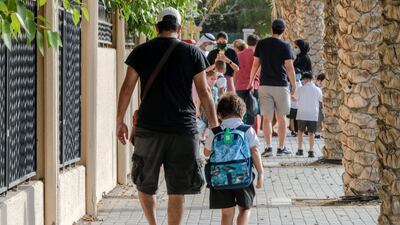

Education chiefs in Abu Dhabi have urged parents to avoid large gatherings and ensure children's play dates are closely monitored to combat the spread of Covid-19.
The Department of Education and Knowledge (Adek), the emirate's private school regulator, said "best judgement" should be used when deciding to send a pupil to class.
Officials advised that children should remain at home if anyone in their household is feeling unwell or displaying symptoms of the virus.
While the majority of children aged between four and 11 returned to in-person classes on August 30 in Abu Dhabi, pupils in high school are expected to return to class in late September or early October under a staggered plan.
Parents have the option of continuing distance learning for the duration of the first term of the academic year.
-
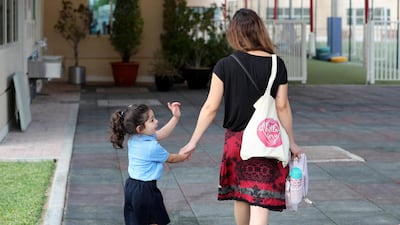
Parents see off their children off to classes for the first time since March in August 2020. Chris Whiteoak / The National -

Naividh Pillai, aged 3, looks a little bewildered as he arrives for his first day at Gems Wellington Academy with sister Alaikha and parents Meera and Deepesh. Antonie Robertson / The National -
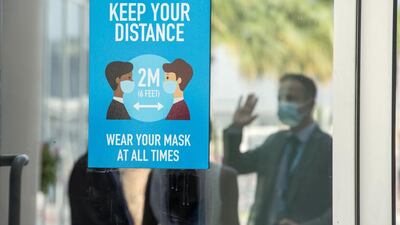
Gems Wellington Academy in Al Khail opens for the start of the school year. Antonie Robertson/The National -
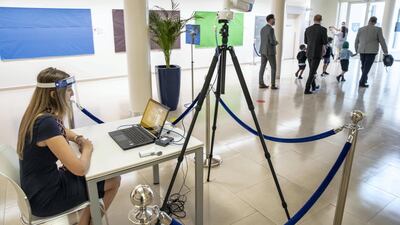
Gems Wellington Academy in Al Khail opens for the start of the school year. Thermal monitors at the entrance scan people for signs of fever or high temperature. Antonie Robertson/The National -
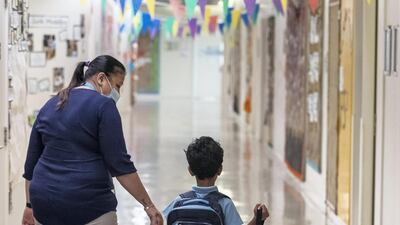
Gems Wellington Academy in Al Khail opens for the start of the school year. Antonie Robertson / The National -

A pupil wearing a colourful face shield arrives at Horizon International School in Dubai on Sunday. Chris Whiteoak / The National -
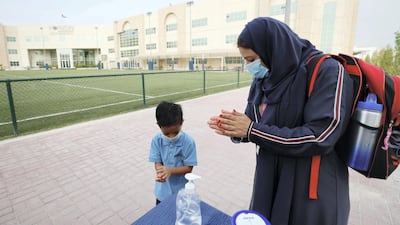
A mother helps her son sanitise his hands as he arrives at Horizon school. Chris Whiteoak / The National -
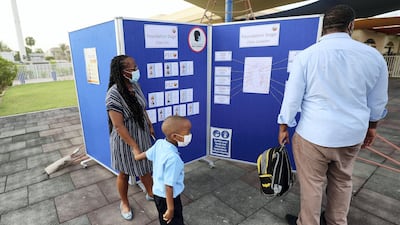
Children arrive for school at Horizon International School in Dubai. Chris Whiteoak / The National -
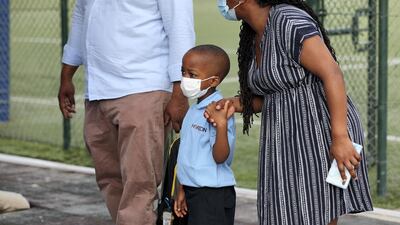
Children arrive for school at Horizon International School in Dubai. Chris Whiteoak / The National -
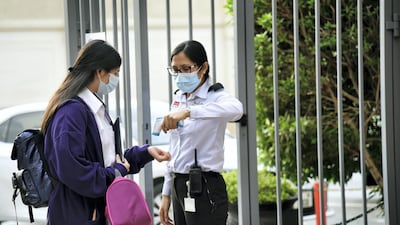
A pupil gets her temperature checked at the entrance of Al Mizhar American Academy. Shruti Jain for The National -
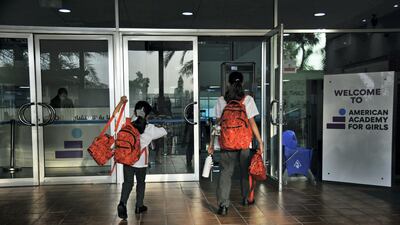
Pupils return to Al Mizhar American Academy in Dubai. Shruti Jain for The National -
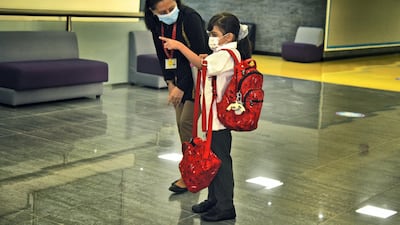
A staff member assists a pupil as Al Mizhar American Academy. Shruti Jain for The National -
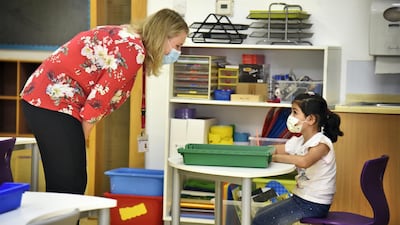
Tarryn Patel, a homeroom teacher from South Africa, attends to her grade 1 pupil at Al Mizhar American Academy. Shruti Jain for The National -
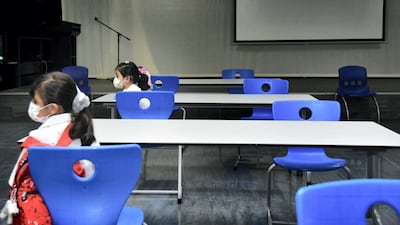
Pupils are spaced apart at the cafetaria at Al Mizhar American Academy. Shruti Jain for The National


"Parents can [show] support by ensuring that they limit any potential exposure to Covid-19. This means staying away from crowded areas and avoiding large gatherings," an Adek spokesperson told The National.
"If your child is participating in extra-curricular activities or play dates, please ensure that they follow hygiene and social-distancing measures diligently.
"We ask parents to use their best judgement on the health status of their children every single day before going to school. If anyone in a family is unwell, or displaying any symptoms of Covid-19, please stay at home."
If children feel unwell, or have been in contact with anyone who has tested positive for Covid-19, parents have been asked to inform the school immediately.
"It is best when in doubt to stay home and see a doctor until you get better or are cleared by a medical professional to be healthy enough to go to school."
Adek is also asking parents to show caution regarding potential Covid-19 cases at schools.
"We ask parents to avoid the spread of misinformation within parent groups and the wider community as we do not want to cause unnecessary panic," said the Adek spokesperson.
"We also trust parents to remain vigilant and continue practicing social distancing and wearing their masks in public."
Parents have been asked to monitor their children's temperature and check if they are have any Covid-19 symptoms such as cough, breathing difficulty or body aches.
"Ensuring the safety and wellbeing of pupils and staff is a collective responsibility and we rely on parents to maintain social distancing, wear masks and fully adhere to safety protocols and procedures," said the spokesperson.
To reduce risk, parents are not allowed inside the school building, and must adhere to strict guidelines for drop-off and pick-up in designated areas such as outside of the school gates or on sports fields.
-
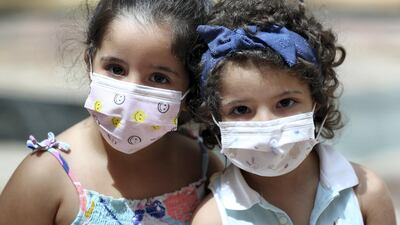
Twins Ghazal (left) and Yara Ghnimat pictured shopping for masks at Mall of the Emirates before their return to school earlier this month. Chris Whiteoak / The National -
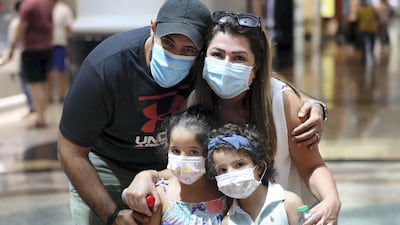
The Ghnimat family shops for back-to-school equipment at Mall of the Emirates. Chris Whiteoak / The National -
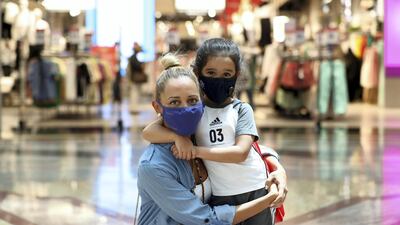
Dorsai Khaghani says she spent hundreds of dirhams on colourful face masks for her five-year-old daughter Karla. Chris Whiteoak / The National -
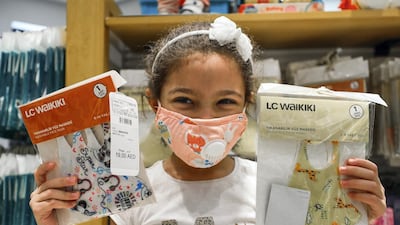
Patricia, aged 6, with her newly purchased face masks at the LC Waikiki shop in Al Wahda Mall, Abu Dhabi. Victor Besa /The National -
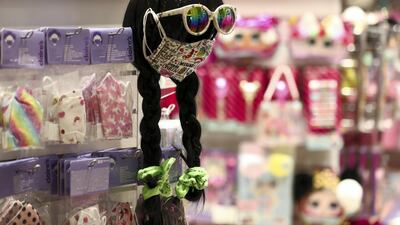
Masks on sale at Claire's Accessories in Mall of the Emirates. Retailers said they had sold thousands of child-sized masks in recent days. Chris Whiteoak / The National -
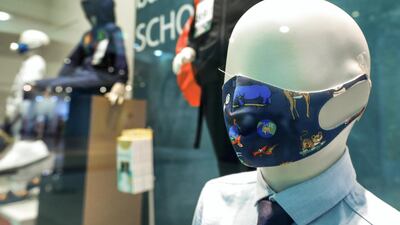
Children's face masks and face sheilds for sale at LC Waikiki shop in Al Wahda Mall, Abu Dhabi. Victor Besa /The National -
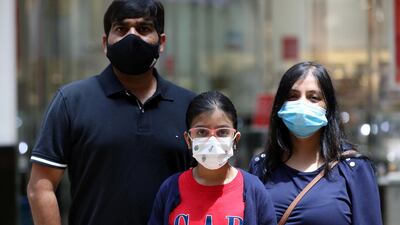
Visa Singh with parents Vijai and Sarika pictured shopping for back to school supplies. Chris Whiteoak / The National -
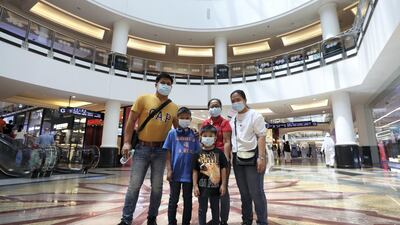
The Ubaldo family were among the many families to spend hundreds on masks and gloves, along with the usual back to school supplies. Chris Whiteoak / The National -
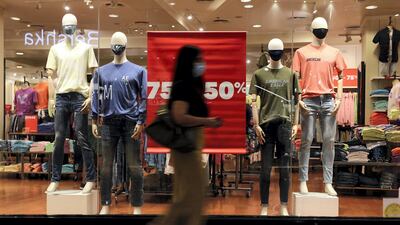
A shopper passes sale posters at Mall of the Emirates. Chris Whiteoak / The National -
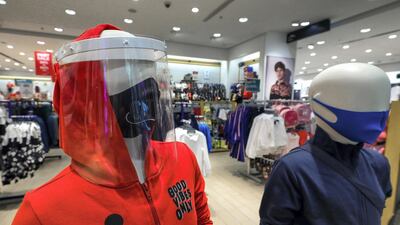
Children's face masks and face sheilds for sale at LC Waikiki shop in Al Wahda Mall, Abu Dhabi. Victor Besa /The National -
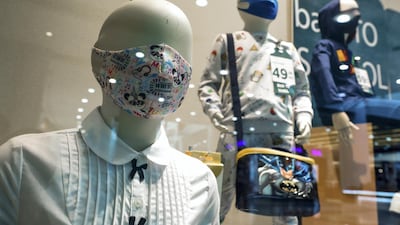
Children's face masks and face sheilds for sale at LC Waikiki shop in Al Wahda Mall, Abu Dhabi. Victor Besa /The National -

A girl with a face mask on passes a mannequin promoting face mask sales at the LC Waikiki shop in Al Wahda Mall, Abu Dhabi. Victor Besa /The National -
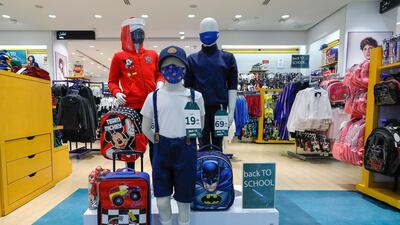
Children's face masks and face sheilds for sale at LC Waikiki shop in Al Wahda Mall, Abu Dhabi. Victor Besa /The National -

Children's face masks for sale at LC Waikiki shop in Al Wahda Mall, Abu Dhabi. Victor Besa /The National


They may only enter the school building by appointment and with a negative Covid-19 test.
Last week, some schools across the UAE resumed distance learning as a precaution after some staff were suspected to have contracted Covid-19.
The schools, which are in different emirates, closed classrooms to protect staff and pupils.
On Tuesday, authorities renewed their warning against social gatherings after a Covid-19 carrier's "reckless behaviour" resulted in 45 others being infected.
The man displayed symptoms but did not report his condition to health officials, said Dr Omar Al Hammadi, the federal government's spokesman said at the regular media briefing.
The man infected his wife and 44 others from three families after socialising with them.
One of the man's relatives, aged 90, had underlying health conditions and died of complications after being admitted to the intensive care unit of a hospital, Dr Al Hammadi said.
The UAE recorded 883 new coronavirus cases on Wednesday, its highest daily total since May 27.
Daily figures dropped as low as 164 in early August but have steadily been climbing since, prompting calls from authorities for the public to adhere to safety measures.

