Badr Jafar, an Emirati businessman and social entrepreneur, says the initiative has the potential to create a 'golden age of philanthropy' in the region. The National

NYUAD initiative to boost 'impactful philanthropy' across Middle East


Gillian Duncan
  • English
  • Arabic

A programme to study and promote philanthropy in the UAE and the region has been started in Abu Dhabi.

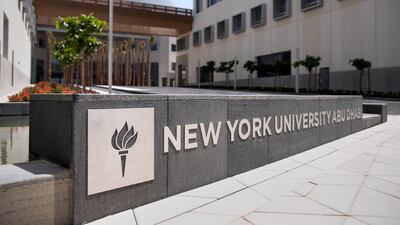
The Strategic Philanthropy Initiative is being run by New York University Abu Dhabi (NYUAD) in partnership with Emirati businessman and social entrepreneur Badr Jafar.

Mr Jafar said the initiative had the potential to create a “golden age of philanthropy” in the region.

In strategic philanthropy, instead of seeing the outcome as quantum of money, you see the outcome as impact generated
Badr Jafar,
an Emirati businessman and social entrepreneur

“This is particularly true in the Mena region, where 60 per cent of the population is under the age of 25,” he said.

“Equipping our youth with the tools, resources, and infrastructure needed to boost impact using their time, talent and treasure is a massive and timely opportunity, and this collaboration with NYUAD is well-positioned to champion this cause and make a real difference.”

A 2016 Wealth-X and Arton Capital report gives insights on the philanthropic trends of ultra high-net-worth people and it shows that they will pass on $3.9 trillion to the next generation over the next decade.

Mr Jafar said strategic philanthropy describes any form of “impact-driven giving” that is evidence based, planned and followed through to achieve the intended result.

“Rather than seeing the outcome as quantum of money, you see the outcome as impact generated. That’s a fundamental shift in thinking,” Mr Jafar said.

The initiative will focus on three areas: research to understand the past, present and possible future of philanthropy in the UAE and region; education for existing and aspiring philanthropists; and bringing people together to share ideas about the practice.

It will also run a student competition, as well as a prize in philanthropy to reward and inspire others to make donations that have an impact.

Somewhere between $400bn to $1tn is distributed throughout the Muslim world each year as a result of zakat and sadaqah donations, Mr Jafar said.

“That’s one figure, but another more depressing figure, on the other hand, is the fact that one in four Muslims lives below the poverty line,” he said.

“So one can’t help feel there is perhaps a better way to ensure this huge amount of philanthropic capital really meets the objectives that it is intended for, and maximise its impact.”

NYUAD Vice Chancellor Mariet Westermann said it was exciting to see economists and political scientists, social thinkers, next generational philanthropists, policymakers and NYUAD students join forces to make their communities better through strategic philanthropy.

“This partnership will advance the study, reach, and effectiveness of strategic philanthropy in the UAE, the wider region and the world, and drive collective action for change on the most pressing social and environmental issues,” she said.

NYUAD through the years - in pictures

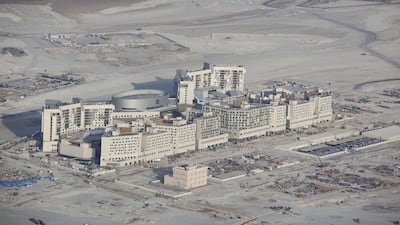
  • The New York University Abu Dhabi campus during construction on Saadiyat Island. The university is celebrating its 10th anniversary this year. Silvia Razgova / The National
    The New York University Abu Dhabi campus during construction on Saadiyat Island. The university is celebrating its 10th anniversary this year. Silvia Razgova / The National
  • Students attend NYU Abu Dhabi's summer academy in July, 2011. Andrew Henderson / The National
    Students attend NYU Abu Dhabi's summer academy in July, 2011. Andrew Henderson / The National
  • The NYU Abu Dhabi campus under construction in July, 2009. Sammy Dallal / The National
    The NYU Abu Dhabi campus under construction in July, 2009. Sammy Dallal / The National
  • Work continues on the campus in September, 2009. Andrew Henderson / The National
    Work continues on the campus in September, 2009. Andrew Henderson / The National
  • Accessories and apparel during NYU Abu Dhabi's opening week in September, 2010. Lee Hoagland/ The National
    Accessories and apparel during NYU Abu Dhabi's opening week in September, 2010. Lee Hoagland/ The National
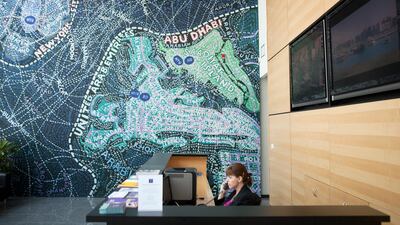
  • An abstract map of Abu Dhabi and New York on a wall at the campus. Lee Hoagland / The National
    An abstract map of Abu Dhabi and New York on a wall at the campus. Lee Hoagland / The National
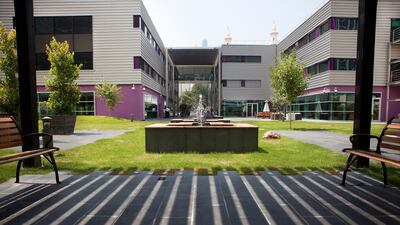
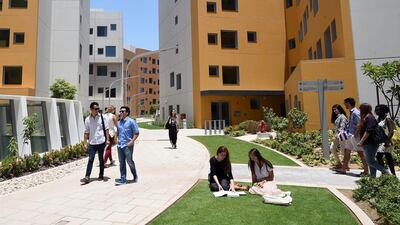
  • New York University Abu Dhabi's campus on Saadiyat Island. Photo: NYUAD
    New York University Abu Dhabi's campus on Saadiyat Island. Photo: NYUAD
  • The university used temporary premises, next to the Abu Dhabi Heritage foundation, until the campus on Saadiyat island was completed. Lee Hoagland / The National
    The university used temporary premises, next to the Abu Dhabi Heritage foundation, until the campus on Saadiyat island was completed. Lee Hoagland / The National
  • The first day of classes at the new campus on Saadiyat Island, in September 2014. Lee Hoagland/The National
    The first day of classes at the new campus on Saadiyat Island, in September 2014. Lee Hoagland/The National
  • NYU Abu Dhabi is a collaboration between New York University and the Abu Dhabi government. Photo: NYU Abu Dhabi
    NYU Abu Dhabi is a collaboration between New York University and the Abu Dhabi government. Photo: NYU Abu Dhabi
  • The Saadiyat Island campus in October 2014. Photo: Tamkeen
    The Saadiyat Island campus in October 2014. Photo: Tamkeen
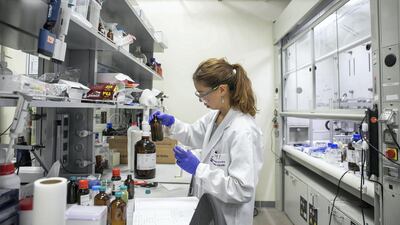
  • Yumi Gambrill in a laboratory at the university. She discovered that a UAE plant, Cleome rupicola, contains a substance that can be used against cataracts. Photo: NYU Abu Dhabi
    Yumi Gambrill in a laboratory at the university. She discovered that a UAE plant, Cleome rupicola, contains a substance that can be used against cataracts. Photo: NYU Abu Dhabi
  • Dr Ali Trabolsi, an associate professor of chemistry at NYU Abu Dhabi, led research that could help to improve cancer treatments. Chris Whiteoak / The National
    Dr Ali Trabolsi, an associate professor of chemistry at NYU Abu Dhabi, led research that could help to improve cancer treatments. Chris Whiteoak / The National
  • The High Line at the campus, named after a park in New York City. Photo: NYU Abu Dhabi
    The High Line at the campus, named after a park in New York City. Photo: NYU Abu Dhabi
  • Sheikh Mohamed bin Zayed, Crown Prince of Abu Dhabi and Deputy Supreme Commander of the Armed Forces, during a visit to the university. Hamad Al Kaabi / Crown Prince Court - Abu Dhabi
    Sheikh Mohamed bin Zayed, Crown Prince of Abu Dhabi and Deputy Supreme Commander of the Armed Forces, during a visit to the university. Hamad Al Kaabi / Crown Prince Court - Abu Dhabi
  • Graduands receive their degree certificates during the university's ceremony in 2016. Christopher Pike / The National
    Graduands receive their degree certificates during the university's ceremony in 2016. Christopher Pike / The National
  • Award-winning Ali Al Mansoori, 16, will develop her research methods under the eye of NYU Abu Dhabi scientist, Mohamed Al Sayegh. NYU Abu Dhabi
    Award-winning Ali Al Mansoori, 16, will develop her research methods under the eye of NYU Abu Dhabi scientist, Mohamed Al Sayegh. NYU Abu Dhabi
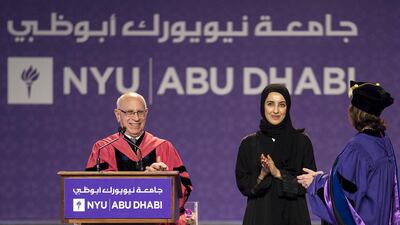
  • Shamma Al Mazrui, Minister of State for Youth, and Vice Chancellor Alfred Bloom announce the distinguished alumni award winner during a graduation ceremony. Christopher Pike / The National
    Shamma Al Mazrui, Minister of State for Youth, and Vice Chancellor Alfred Bloom announce the distinguished alumni award winner during a graduation ceremony. Christopher Pike / The National
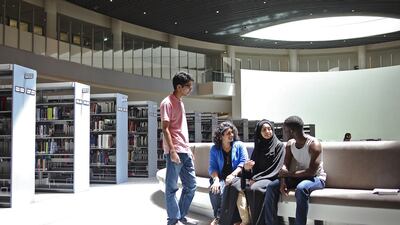
  • From left: Mohammad Mirza, Sangeetha Mahadevan, Hayat Hassan and Rodger Iradukunda in the university’s library on the first day of term. Lee Hoagland / The National
    From left: Mohammad Mirza, Sangeetha Mahadevan, Hayat Hassan and Rodger Iradukunda in the university’s library on the first day of term. Lee Hoagland / The National
  • The main library is designed with three oculi, which seep natural light throughout the premises and down through an elevated glass platform to the swimming pool and gym below. Lee Hoagland / The National
    The main library is designed with three oculi, which seep natural light throughout the premises and down through an elevated glass platform to the swimming pool and gym below. Lee Hoagland / The National
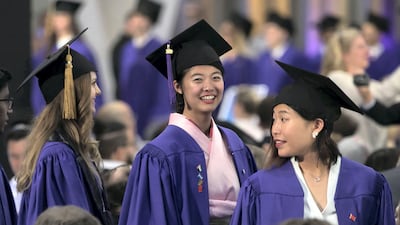
  • Graduands at the university's graduation ceremony in 2019. Leslie Pableo for The National
    Graduands at the university's graduation ceremony in 2019. Leslie Pableo for The National
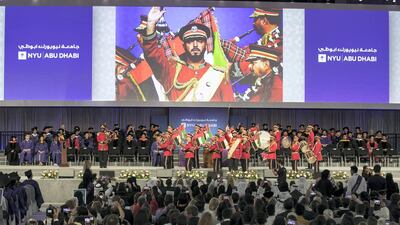
  • A graduation ceremony at NYUAD. Leslie Pableo for The National
    A graduation ceremony at NYUAD. Leslie Pableo for The National
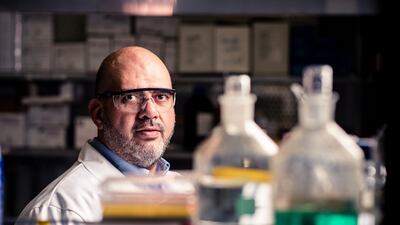
  • Dr Wael Rabeh, an associate professor of chemistry at the university. Photo: NYU Abu Dhabi
    Dr Wael Rabeh, an associate professor of chemistry at the university. Photo: NYU Abu Dhabi
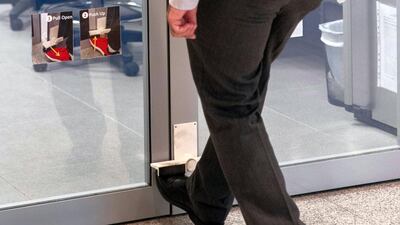
  • Mohammad Qasaimeh, assistant professor of mechanical and biomedical engineering at NYUAD, demonstrates how the 3D-printed mechanical door opening mechanism works. Photo: Deepthi Unnikrishnan
    Mohammad Qasaimeh, assistant professor of mechanical and biomedical engineering at NYUAD, demonstrates how the 3D-printed mechanical door opening mechanism works. Photo: Deepthi Unnikrishnan
  • Social distancing signs on campus as part of Covid-19 safety measures. Courtesy: NYU Abu Dhabi
    Social distancing signs on campus as part of Covid-19 safety measures. Courtesy: NYU Abu Dhabi
Email sent to Uber team from chief executive Dara Khosrowshahi

From: Dara

To: Team@

Date: March 25, 2019 at 11:45pm PT

Subj: Accelerating in the Middle East

Five years ago, Uber launched in the Middle East. It was the start of an incredible journey, with millions of riders and drivers finding new ways to move and work in a dynamic region that’s become so important to Uber. Now Pakistan is one of our fastest-growing markets in the world, women are driving with Uber across Saudi Arabia, and we chose Cairo to launch our first Uber Bus product late last year.

Today we are taking the next step in this journey—well, it’s more like a leap, and a big one: in a few minutes, we’ll announce that we’ve agreed to acquire Careem. Importantly, we intend to operate Careem independently, under the leadership of co-founder and current CEO Mudassir Sheikha. I’ve gotten to know both co-founders, Mudassir and Magnus Olsson, and what they have built is truly extraordinary. They are first-class entrepreneurs who share our platform vision and, like us, have launched a wide range of products—from digital payments to food delivery—to serve consumers.

I expect many of you will ask how we arrived at this structure, meaning allowing Careem to maintain an independent brand and operate separately. After careful consideration, we decided that this framework has the advantage of letting us build new products and try new ideas across not one, but two, strong brands, with strong operators within each. Over time, by integrating parts of our networks, we can operate more efficiently, achieve even lower wait times, expand new products like high-capacity vehicles and payments, and quicken the already remarkable pace of innovation in the region.

This acquisition is subject to regulatory approval in various countries, which we don’t expect before Q1 2020. Until then, nothing changes. And since both companies will continue to largely operate separately after the acquisition, very little will change in either teams’ day-to-day operations post-close. Today’s news is a testament to the incredible business our team has worked so hard to build.

It’s a great day for the Middle East, for the region’s thriving tech sector, for Careem, and for Uber.

Uber on,

Dara

SPEC%20SHEET
%3Cp%3E%3Cstrong%3EProcessor%3A%3C%2Fstrong%3E%20Apple%20M2%2C%208-core%20CPU%2C%20up%20to%2010-core%20CPU%2C%2016-core%20Neural%20Engine%3C%2Fp%3E%0A%3Cp%3E%3Cstrong%3EDisplay%3A%3C%2Fstrong%3E%2013.6-inch%20Liquid%20Retina%2C%202560%20x%201664%2C%20224ppi%2C%20500%20nits%2C%20True%20Tone%2C%20wide%20colour%3C%2Fp%3E%0A%3Cp%3E%3Cstrong%3EMemory%3A%3C%2Fstrong%3E%208%2F16%2F24GB%3C%2Fp%3E%0A%3Cp%3E%3Cstrong%3EStorage%3A%3C%2Fstrong%3E%20256%2F512GB%20%2F%201%2F2TB%3C%2Fp%3E%0A%3Cp%3E%3Cstrong%3EI%2FO%3A%3C%2Fstrong%3E%20Thunderbolt%203%20(2)%2C%203.5mm%20audio%2C%20Touch%20ID%3C%2Fp%3E%0A%3Cp%3E%3Cstrong%3EConnectivity%3A%3C%2Fstrong%3E%20Wi-Fi%206%2C%20Bluetooth%205.0%3C%2Fp%3E%0A%3Cp%3E%3Cstrong%3EBattery%3A%3C%2Fstrong%3E%2052.6Wh%20lithium-polymer%2C%20up%20to%2018%20hours%2C%20MagSafe%20charging%3C%2Fp%3E%0A%3Cp%3E%3Cstrong%3ECamera%3A%3C%2Fstrong%3E%201080p%20FaceTime%20HD%3C%2Fp%3E%0A%3Cp%3E%3Cstrong%3EVideo%3A%3C%2Fstrong%3E%20Support%20for%20Apple%20ProRes%2C%20HDR%20with%20Dolby%20Vision%2C%20HDR10%3C%2Fp%3E%0A%3Cp%3E%3Cstrong%3EAudio%3A%3C%2Fstrong%3E%204-speaker%20system%2C%20wide%20stereo%2C%20support%20for%20Dolby%20Atmos%2C%20Spatial%20Audio%20and%20dynamic%20head%20tracking%20(with%20AirPods)%3C%2Fp%3E%0A%3Cp%3E%3Cstrong%3EColours%3A%3C%2Fstrong%3E%20Silver%2C%20space%20grey%2C%20starlight%2C%20midnight%3C%2Fp%3E%0A%3Cp%3E%3Cstrong%3EIn%20the%20box%3A%3C%2Fstrong%3E%20MacBook%20Air%2C%2030W%20or%2035W%20dual-port%20power%20adapter%2C%20USB-C-to-MagSafe%20cable%3C%2Fp%3E%0A%3Cp%3E%3Cstrong%3EPrice%3A%3C%2Fstrong%3E%20From%20Dh4%2C999%3C%2Fp%3E%0A
What is dialysis?

Dialysis is a way of cleaning your blood when your kidneys fail and can no longer do the job.

It gets rid of your body's wastes, extra salt and water, and helps to control your blood pressure. The main cause of kidney failure is diabetes and hypertension.

There are two kinds of dialysis — haemodialysis and peritoneal.

In haemodialysis, blood is pumped out of your body to an artificial kidney machine that filter your blood and returns it to your body by tubes.

In peritoneal dialysis, the inside lining of your own belly acts as a natural filter. Wastes are taken out by means of a cleansing fluid which is washed in and out of your belly in cycles.

It isn’t an option for everyone but if eligible, can be done at home by the patient or caregiver. This, as opposed to home haemodialysis, is covered by insurance in the UAE.

How to wear a kandura

Dos

  • Wear the right fabric for the right season and occasion 
  • Always ask for the dress code if you don’t know
  • Wear a white kandura, white ghutra / shemagh (headwear) and black shoes for work 
  • Wear 100 per cent cotton under the kandura as most fabrics are polyester

Don’ts 

  • Wear hamdania for work, always wear a ghutra and agal 
  • Buy a kandura only based on how it feels; ask questions about the fabric and understand what you are buying
Updated: September 28, 2021, 4:15 AM