

Two and a half years after US administration began drafting a plan for a lasting peace between Israel and Palestinians, it is finally here. On January 28, Donald Trump unveiled his vision for peace in the Middle East in a 181-page report called Peace to Prosperity: A Vision to Improve the Lives of the Palestinian and Israeli People.
Welcomed by Israeli Prime Minister Benjamin Netanyahu, it has been rejected by Palestinian officials.
On this week’s episode of Beyond the Headlines, we delve into the plan, what it means and what its rejection by Palestinians means for the region.
-

Palestinian demonstrators burn tyres during a protest against the US brokered Middle East peace plan, in Rafah in the southern Gaza Strip, on January 29, 2020. AFP -
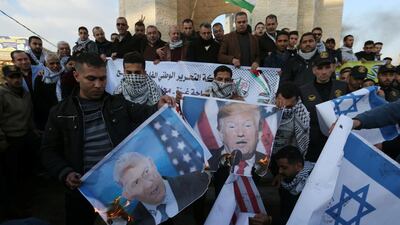
Palestinian demonstrators burn pictures depicting US President Donald Trump and Israeli Prime Minister Benjamin Netanyahu, and repsentations of US and Israeli flags during a protest in the southern Gaza Strip January 29, 2020. Reuters -

Palestinian demonstrators in Rafah in the southern Gaza Strip, on January 29, 2020. AFP -
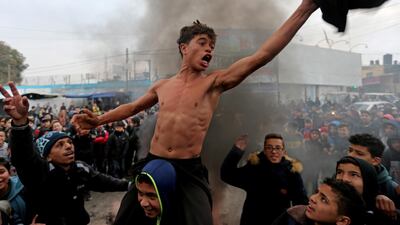
Palestinian students take part in a protest in the southern Gaza Strip January 29, 2020. Reuters -
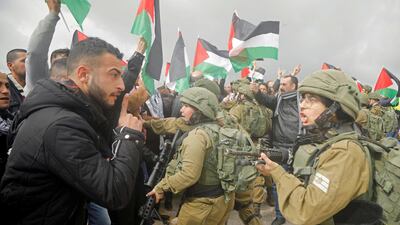
A Palestinian demonstrator argues with Israeli forces during a protest in Jordan Valley in the Israeli-occupied West Bank January 29, 2020. Reuters -
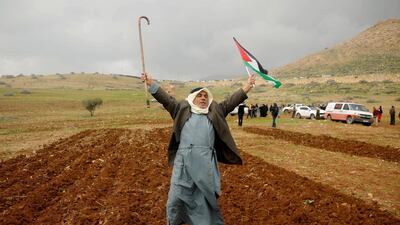
A demonstrator holds up a cane and a Palestinian flag in Jordan Valley in the Israeli-occupied West Bank January 29, 2020. Reuters -
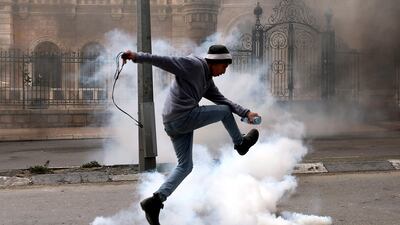
Palestinians clash with Israeli security forces following a protest in the West Bank city of Bethlehem, 29 January 2020. EPA -
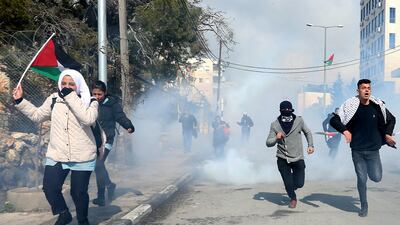
Palestinians clash with Israeli security forces following a protest in the West Bank city of Bethlehem, 29 January 2020. EPA -
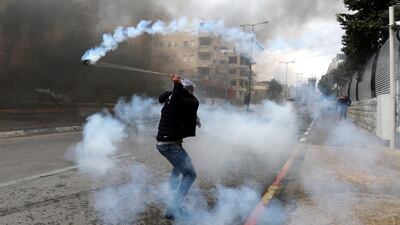
Palestinians clash with Israeli security forces following a protest in the West Bank city of Bethlehem, 29 January 2020. EPA -
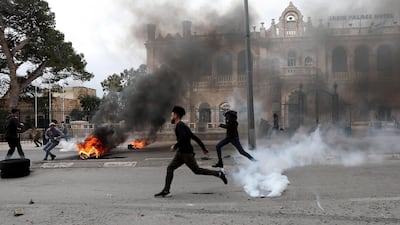
Palestinians clash with Israeli security forces following a protest in the West Bank city of Bethlehem, 29 January 2020. EPA -
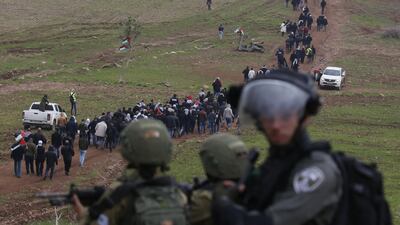
Israeli security forces monitor Palestinian demonstrators protesting near the West Bank village of Tubas, near the Jordan Valley, in the occupied West Bank on January 29, 2020. AFP -
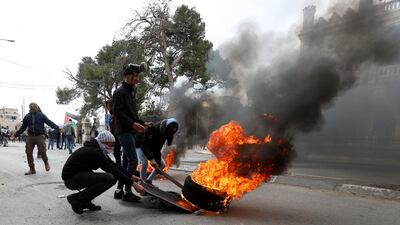
Palestinians clash with Israeli security forces following a protest in the West Bank city of Bethlehem, 29 January 2020. EPA -
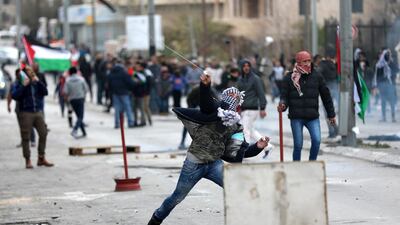
Palestinians clash with Israeli security forces following a protest in the West Bank city of Bethlehem, 29 January 2020. EPA -

An Israeli border policeman fires tear gas during clashes with Palestinian demonstrators following a protest in the West Bank city of Bethlehem, on January 29, 2020. AFP


The peace process has been ongoing for 27 years, since the Oslo accords in the early 1990s. No vision has made it to a final deal that sees the formation of an independent Palestine and an end to one of the longest-running conflicts in the world.
Mr Trump’s announcement is still just a vision, but unlike past proposals, it starts off with a final deal that Israel accepts and the administration will now have to work backwards to get Palestinians to agree.
But there’s a catch – the US closed the Palestinian diplomatic mission in Washington and cut ties. It already recognised Jerusalem as the capital of Israel, upending decades of US policy that the final status of the holy city should be agreed in talks.
It also lays the groundwork for the US to recognise the annexation of parts of the West Bank and Jordan Valley by recognising the Jewish settlements that much of the world deem illegal under international law.
For Palestinians, it might offer a route to statehood, but it is not on territory they accept.
Listen to this week's episode to hear from The National's Washington correspondent Joyce Karam, Omar Shaban, an analyst at the Gaza-based think tank PalThink for Strategic Studies and Hugh Lovatt, a Policy Fellow at the European Council on Foreign Relations and an expert on the Israel-Palestine conflict.
If you’ve not listened to last week’s Beyond the Headlines, we revisited Beirut, where three months of demonstrations have brought down a government, a financial crisis is in full swing and protests on the street have turned violent.



