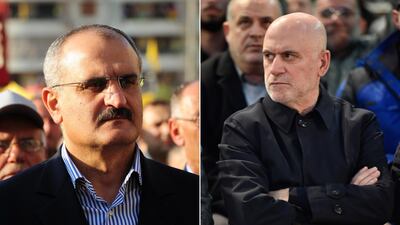
The US Treasury has imposed sanctions on two former Lebanese officials: Ali Hassan Khalil, a former finance minister, and Youssef Fenianos, a former transport minister.
They are accused of corruption and enabling Hezbollah, which the US and a host of European and Arab nations consider to be a terrorist organisation.
By targeting two former ministers, the US is making a statement that it is serious about combating militia rule and Iranian influence in the Middle East.
The list of crimes both men are accused of having committed is staggering. Mr Khalil belongs to the Amal movement, a close ally of Hezbollah, and Mr Fenianos is a member of the Marada movement, a Christian group that is close to Hezbollah and the Syrian regime.
The US Treasury claims that Mr Fenianos helped Hezbollah to siphon government funds, awarded public tenders to Hezbollah-owned companies and received hundreds of thousands of dollars from the group in exchange for political favours.
He is also accused of giving Hezbollah access to sensitive documents from the Special Tribunal for Lebanon, set up to investigate the 2005 assassination of former prime minister Rafik Hariri.
Four Hezbollah operatives were suspected in the killing of the Lebanese statesman, although none have been handed over, even after one was found guilty.
Mr Khalil, meanwhile, has been accused of using his position as minister of finance to help Hezbollah avoid US sanctions, exempt a Hezbollah affiliate from paying most of its taxes and solicit kickbacks from government suppliers.
For the past year, protesters have taken to Lebanon's streets to demonstrate against these types of politicians and officials who are responsible for poor living conditions amid widespread corruption.
The US has repeatedly said it backed their demands, chief among which is the end of a sectarian political system that has allowed corruption to fester.
The US move comes at a pivotal time for Lebanon. In a visit to Beirut this month, French President Emmanuel Macron set a notional deadline of two weeks for the Lebanese establishment to form a competent government, and four more to enact reforms.
Less than a week away from the first deadline, the US is sending a warning to Prime Minister designate Mustapha Adib, should he be considering filling his Cabinet with pro-Hezbollah ministers.
The sanctions also aim to discourage Lebanese politicians from siding with the group.
As their patience wears thin, Lebanon's true allies in the international community may feel they are running out of options
The international community has pressured Lebanon’s elite to reform for years. In 2018, international donors pledged $11 billion in funds for Lebanon, which could only be unlocked after reforms.
Yet even after a devastating economic crisis, a public health emergency and a chemical explosion that wiped out much of the Lebanese capital, meaningful reform has never materialised.
Politicians must wake up to the reality of Lebanon's situation and recognise that an administration tethered to the misguided interests of Hezbollah cannot save the country.
International co-operation is the best path towards that outcome. But as their patience wears thin, Lebanon’s true allies in the international community may feel that they are running out of options.

What is the FNC?
The Federal National Council is one of five federal authorities established by the UAE constitution. It held its first session on December 2, 1972, a year to the day after Federation.
It has 40 members, eight of whom are women. The members represent the UAE population through each of the emirates. Abu Dhabi and Dubai have eight members each, Sharjah and Ras al Khaimah six, and Ajman, Fujairah and Umm Al Quwain have four.
They bring Emirati issues to the council for debate and put those concerns to ministers summoned for questioning.
The FNC’s main functions include passing, amending or rejecting federal draft laws, discussing international treaties and agreements, and offering recommendations on general subjects raised during sessions.
Federal draft laws must first pass through the FNC for recommendations when members can amend the laws to suit the needs of citizens. The draft laws are then forwarded to the Cabinet for consideration and approval.
Since 2006, half of the members have been elected by UAE citizens to serve four-year terms and the other half are appointed by the Ruler’s Courts of the seven emirates.
In the 2015 elections, 78 of the 252 candidates were women. Women also represented 48 per cent of all voters and 67 per cent of the voters were under the age of 40.
SPEC%20SHEET%3A%20APPLE%20IPHONE%2015%20PRO%20MAX
%3Cp%3E%3Cstrong%3EDisplay%3A%3C%2Fstrong%3E%206.7%22%20Super%20Retina%20XDR%20OLED%2C%202796%20x%201290%2C%20460ppi%2C%20120Hz%2C%202000%20nits%20max%2C%20HDR%2C%20True%20Tone%2C%20P3%2C%20always-on%3C%2Fp%3E%0A%3Cp%3E%3Cstrong%3EProcessor%3A%3C%2Fstrong%3E%20A17%20Pro%2C%206-core%20CPU%2C%206-core%20GPU%2C%2016-core%20Neural%20Engine%3C%2Fp%3E%0A%3Cp%3E%3Cstrong%3EMemory%3A%3C%2Fstrong%3E%208GB%3C%2Fp%3E%0A%3Cp%3E%3Cstrong%3ECapacity%3A%3C%2Fstrong%3E%20256%2F512GB%20%2F%201TB%3C%2Fp%3E%0A%3Cp%3E%3Cstrong%3EPlatform%3A%3C%2Fstrong%3E%20iOS%2017%3C%2Fp%3E%0A%3Cp%3E%3Cstrong%3EMain%20camera%3A%3C%2Fstrong%3E%20Triple%3A%2048MP%20main%20(f%2F1.78)%20%2B%2012MP%20ultra-wide%20(f%2F2.2)%20%2B%2012MP%205x%20telephoto%20(f%2F2.8)%3B%205x%20optical%20zoom%20in%2C%202x%20optical%20zoom%20out%3B%2010x%20optical%20zoom%20range%2C%20digital%20zoom%20up%20to%2025x%3B%20Photonic%20Engine%2C%20Deep%20Fusion%2C%20Smart%20HDR%204%2C%20Portrait%20Lighting%3C%2Fp%3E%0A%3Cp%3E%3Cstrong%3EMain%20camera%20video%3A%3C%2Fstrong%3E%204K%20%40%2024%2F25%2F30%2F60fps%2C%20full-HD%20%40%2025%2F30%2F60fps%2C%20HD%20%40%2030fps%2C%20slo-mo%20%40%20120%2F240fps%2C%20ProRes%20(4K)%20%40%2060fps%3B%20night%2C%20time%20lapse%2C%20cinematic%2C%20action%20modes%3B%20Dolby%20Vision%2C%204K%20HDR%3C%2Fp%3E%0A%3Cp%3E%3Cstrong%3EFront%20camera%3A%3C%2Fstrong%3E%2012MP%20TrueDepth%20(f%2F1.9)%2C%20Photonic%20Engine%2C%20Deep%20Fusion%2C%20Smart%20HDR%204%2C%20Portrait%20Lighting%3B%20Animoji%2C%20Memoji%3C%2Fp%3E%0A%3Cp%3E%3Cstrong%3EFront%20camera%20video%3A%3C%2Fstrong%3E%204K%20%40%2024%2F25%2F30%2F60fps%2C%20full-HD%20%40%2025%2F30%2F60fps%2C%20slo-mo%20%40%20120%2F240fps%2C%20ProRes%20(4K)%20%40%2030fps%3B%20night%2C%20time%20lapse%2C%20cinematic%2C%20action%20modes%3B%20Dolby%20Vision%2C%204K%20HDR%3C%2Fp%3E%0A%3Cp%3E%3Cstrong%3EBattery%3A%3C%2Fstrong%3E%204441mAh%2C%20up%20to%2029h%20video%2C%2025h%20streaming%20video%2C%2095h%20audio%3B%20fast%20charge%20to%2050%25%20in%2030min%20(with%20at%20least%2020W%20adaptor)%3B%20MagSafe%2C%20Qi%20wireless%20charging%3C%2Fp%3E%0A%3Cp%3E%3Cstrong%3EConnectivity%3A%3C%2Fstrong%3E%20Wi-Fi%2C%20Bluetooth%205.3%2C%20NFC%20(Apple%20Pay)%2C%20second-generation%20Ultra%20Wideband%20chip%3C%2Fp%3E%0A%3Cp%3E%3Cstrong%3EBiometrics%3A%3C%2Fstrong%3E%20Face%20ID%3C%2Fp%3E%0A%3Cp%3E%3Cstrong%3EI%2FO%3A%3C%2Fstrong%3E%20USB-C%3C%2Fp%3E%0A%3Cp%3E%3Cstrong%3EDurability%3A%3C%2Fstrong%3E%20IP68%2C%20water-resistant%20up%20to%206m%20up%20to%2030min%3B%20dust%2Fsplash-resistant%3C%2Fp%3E%0A%3Cp%3E%3Cstrong%3ECards%3A%3C%2Fstrong%3E%20Dual%20eSIM%20%2F%20eSIM%20%2B%20eSIM%20(US%20models%20use%20eSIMs%20only)%3C%2Fp%3E%0A%3Cp%3E%3Cstrong%3EColours%3A%3C%2Fstrong%3E%20Black%20titanium%2C%20blue%20titanium%2C%20natural%20titanium%2C%20white%20titanium%3C%2Fp%3E%0A%3Cp%3E%3Cstrong%3EIn%20the%20box%3A%20%3C%2Fstrong%3EiPhone%2015%20Pro%20Max%2C%20USB-C-to-USB-C%20woven%20cable%2C%20one%20Apple%20sticker%3C%2Fp%3E%0A%3Cp%3E%3Cstrong%3EPrice%3A%3C%2Fstrong%3E%20Dh5%2C099%20%2F%20Dh5%2C949%20%2F%20Dh6%2C799%3C%2Fp%3E%0A
UAE SQUAD
Omar Abdulrahman (Al Hilal), Ali Khaseif, Ali Mabkhout, Salem Rashed, Khalifa Al Hammadi, Khalfan Mubarak, Zayed Al Ameri, Mohammed Al Attas (Al Jazira), Khalid Essa, Ahmed Barman, Ryan Yaslam, Bandar Al Ahbabi (Al Ain), Habib Fardan, Tariq Ahmed, Mohammed Al Akbari (Al Nasr), Ali Saleh, Ali Salmin (Al Wasl), Adel Al Hosani, Ali Hassan Saleh, Majed Suroor (Sharjah), Ahmed Khalil, Walid Abbas, Majed Hassan, Ismail Al Hammadi (Shabab Al Ahli), Hassan Al Muharrami, Fahad Al Dhahani (Bani Yas), Mohammed Al Shaker (Ajman)
