


A recently released video by k-pop group BTS performing their song "Permission to Dance" in the UN General Assembly (UNGA) hall has garnered millions of views. It is intended to raise awareness ahead of the 76th annual meeting of UNGA, for which over 100 heads of government and state, in addition to many more officials, are gathered in New York this week. Fears over Covid-19 mean this year’s assembly has been scaled down, but it is the biggest global gathering of officials since the pandemic, as last year's UNGA was mainly virtual. Of course, the issues up for discussion are as big as ever.
Instability in the Middle East and further afield are at the forefront of the agenda and, as is often the case, risk dominating it. There are other, longer-term but nonetheless vital issues on the world’s plate. One is climate change. Keeping the environment at the top of delegates' minds is crucial. In a matter of weeks, the UK will hold the UN Climate Change Conference (Cop26), where countries are set to gather to discuss ways to achieve a zero-carbon future by 2050.
-
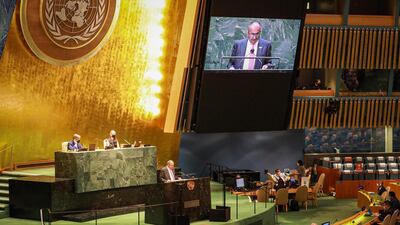
Khalifa Shaheen Al Marar, Minister of State, delivers a speech before the 76th session United Nations General Assembly. Photo: UAE Mission to the UN -
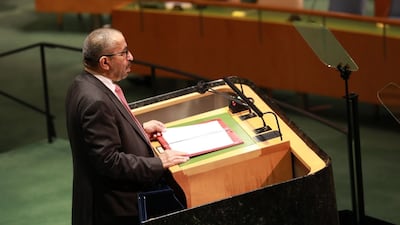
Khalifa Shaheen Al Marar, Minister of State, delivers a speech before the 76th session United Nations General Assembly. Photo: UAE Mission to the UN -
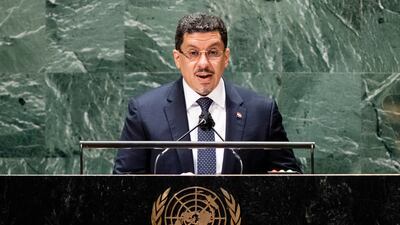
Yemen's Foreign Minister Ahmad Awad bin Mubarak addresses the 76th Session of the United Nations General Assembly in New York. EPA -
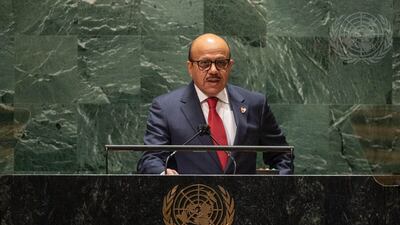
Abdullatif bin Rashid Alzayani, minister for Foreign Affairs of Bahrain, addresses the general debate of the General Assembly’s seventy-sixth session. Photo: United Nations -
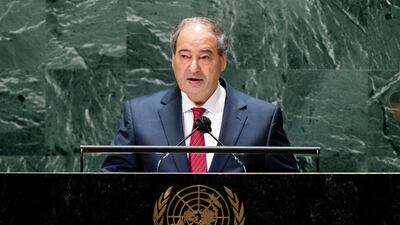
Syria's foreign minister Faisal Mekdad addresses the 76th Session of the United Nations General Assembly. AP Photo -
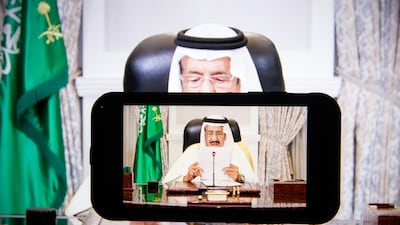
Saudi Arabia's King Salman bin Abdulaziz speaks in a prerecorded video during the United Nations General Assembly in New York. Bloomberg -
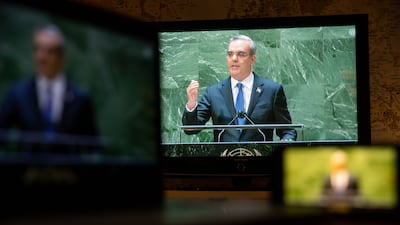
Luis Abinader, the Dominican Republic's president, also speaks via live stream. Bloomberg -
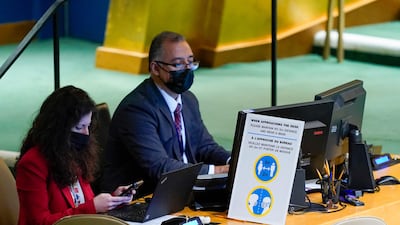
A sign informs United Nations employees of coronavirus protocols. AFP -
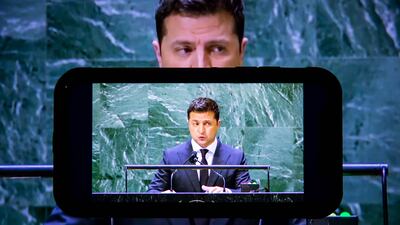
Ukraine President Volodymyr Zelenskiy speaks during the scaled-back meeting. Bloomberg -
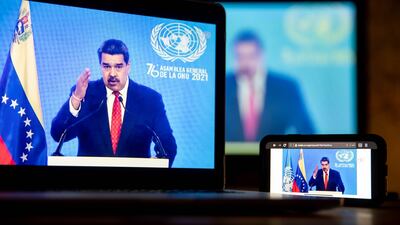
Nicolas Maduro, Venezuela's president, speaks in a prerecorded video. Bloomberg -
Turkish President Recep Tayyip Erdogan addresses the UN General Assembly. AP Photo -
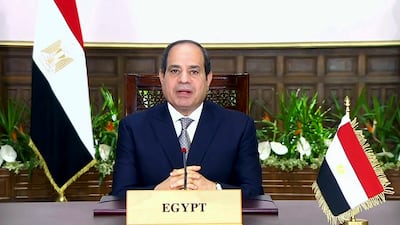
Egypt's President Abdel Fattah El Sisi sent a recorded message. AP Photo -
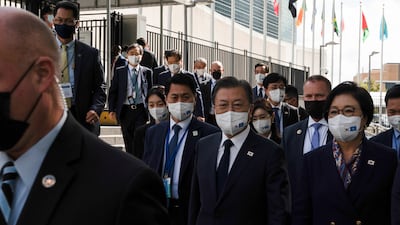
South Korea's President Moon Jae-in and First Lady Kim Jung-sook outside the UN headquarters in New York. Reuters -
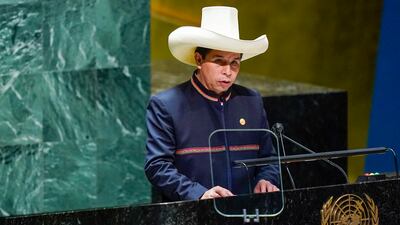
Peruvian President Pedro Castillo speaks at the assembly. AP Photo -
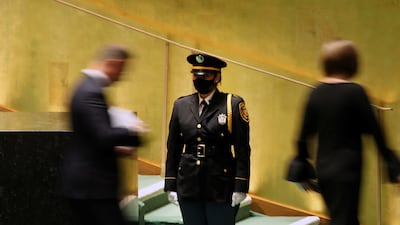
Poland's President Andrzej Duda leaves the stage after delivering his speech. Reuters -
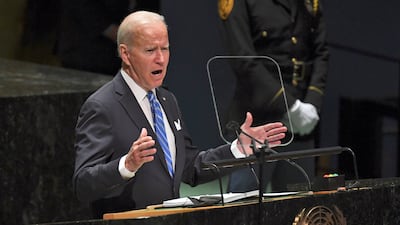
US President Joe Biden addresses the session. AP Photo -
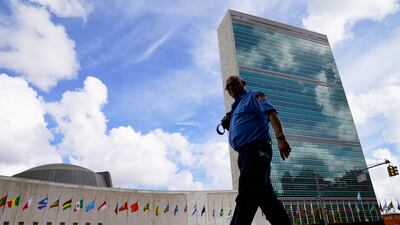
A member of the New York City Fire Department outside the UN headquarters. AP Photo -
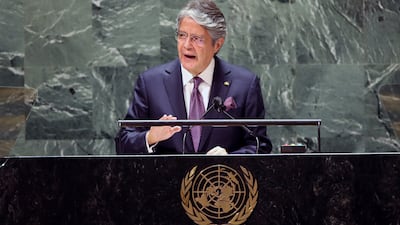
Ecuador's President Guillermo Lasso speaks during the meeting. Reuters -
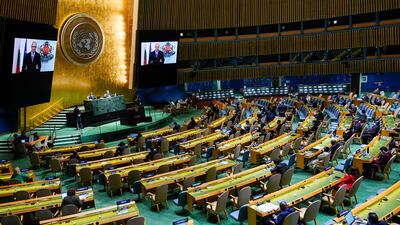
Bulgaria's President Rumen Radev addresses world leaders by video. Reuters -
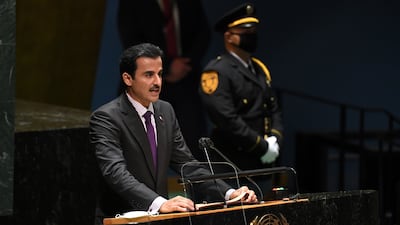
Qatari ruler Sheikh Tamim addresses the session. AP Photo -
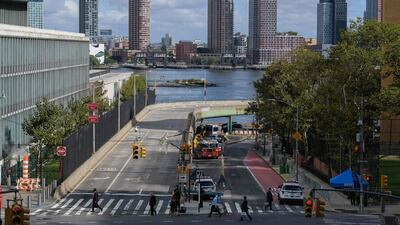
Streets near the UN headquarters in New York were closed ahead of the meeting. AFP -
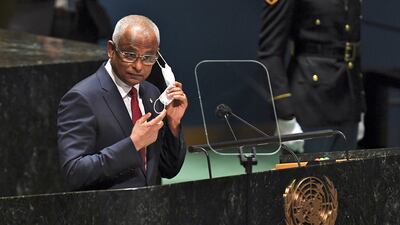
Maldives President Ibrahim Mohamed Solih gets ready to address the annual UN General Assembly. AP Photo -
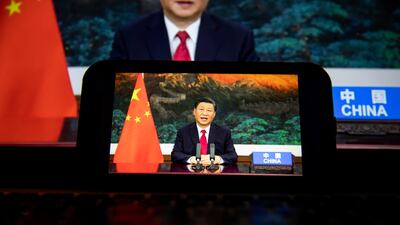
Xi Jinping, the Chinese president, addresses the UN General Assembly. Bloomberg -
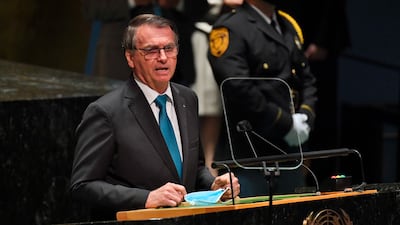
Brazil's President Jair Bolsonaro speaks to world leaders. AP Photo -
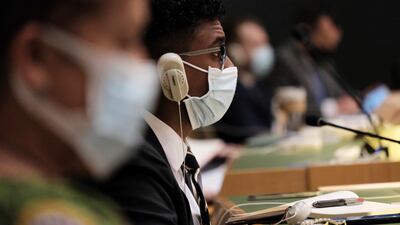
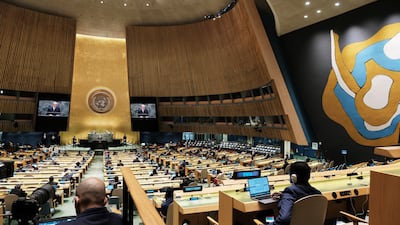
Delegates listen to speeches. AP Photo -
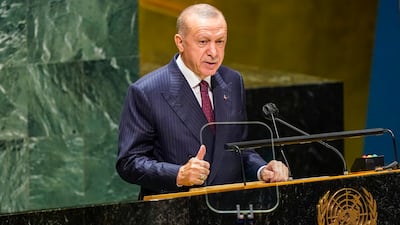
President Recep Tayyip Erdogan announces Turkey's willingness to ratify the Paris Agreement on climate change. EPA -
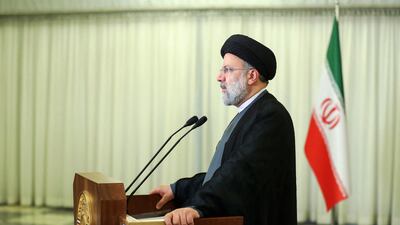
Iranian President Ebrahim Raisi attended the session by video from Tehran. AFP -
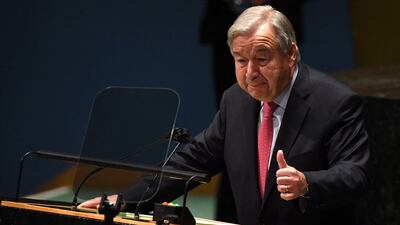
UN Secretary General Antonio Guterres speaks. AFP -
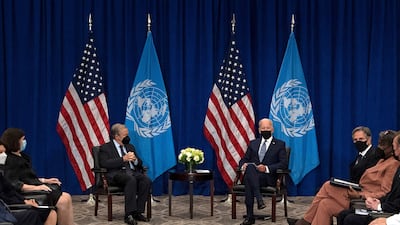
US President Joe Biden and UN Secretary General Antonio Guterres meet at the UN General Assembly. AFP -

US Secretary of State Antony Blinken meets British Foreign Secretary Liz Truss. AP -
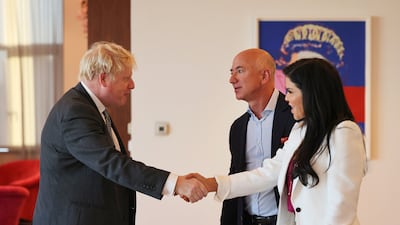
UK Prime Minister Boris Johnson greets Amazon founder Jeff Bezos and his girlfriend, Lauren Sanchez. AP -
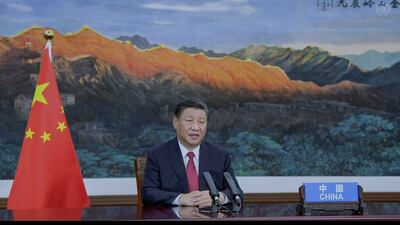
China's President Xi Jinping addresses the UN General Assembly session in a recorded video. AP -
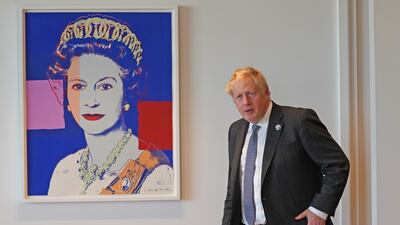
UK Prime Minister Boris Johnson arrives to meet Amazon founder Jeff Bezos. AP -
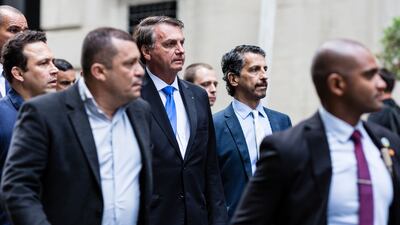
Brazil's President Jair Bolsonaro, centre, walks outside his hotel while in New York for the UN General Assembly. Reuters -
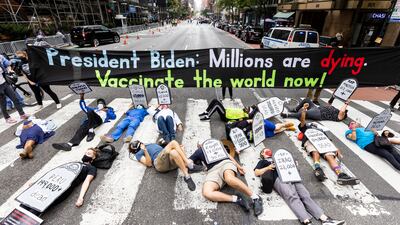
Protesters block 2nd Avenue near the UN's headquarters, calling on US President Joe Biden and the international community to help provide wider access to Covid-19 vaccines. EPA -
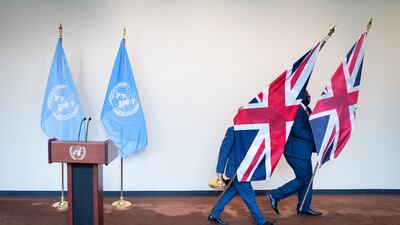
UN staff remove British flags from a podium after UK Prime Minister Boris Johnson addressed the media at the UN General Assembly. AP -
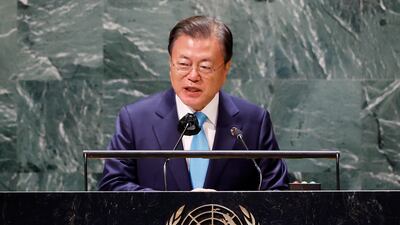
President of South Korea, Moon Jae-in, speaks during the General Debate in the UN General Assembly Hall. EPA -

Members of South Korean K-pop band BTS appear at a Sustainable Development Goals meeting during the UN General Assembly. AP -
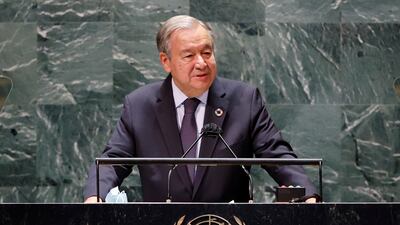
UN Secretary General Antonio Guterres speaks at a Sustainable Development Goals event. Reuters


In an interview with The National, President of Cop26 Alok Sharma said that climate change is “the biggest security risk for the world”. And yet, as British Prime Minister Boris Johnson recently expressed, determination to tackle the issue is flagging among countries with the biggest responsibility to do so. "It is the biggest economies in the world that are causing the problem, while the smallest suffer the worst consequences. And while progress is being made all over the world, the gulf between what has been promised, what is actually being delivered remains vast," Mr Johnson said.
Many of the countries with most to lose from international disengagement are smaller ones, unable to forge ahead on climate action without the initiative of larger economies. The Middle East's location already makes it an early flashpoint for many different environmental crises, including decreasing soil quality – a risk to food security – water shortages and rising summer temperatures. Of the 17 most water-stressed countries in the world, 11 are in the Mena region. It is also warming at twice the global average rate.
Similar challenges extend across the developing world. We will have to wait and see if great powers listen –including those that call publicly for dramatic change.
Geopolitical tensions among powerful countries will not help to create the necessary atmosphere of collaboration. An ongoing dispute over Australia's plans to acquire nuclear submarine technology with the help of the US and UK has destabilised further the West's relations with China. It is even driving a significant wedge between France and its old anglophone allies. It is, however, too early to be sure that this year's climate progress is well and truly scuppered. Countries should remember, as Mr Sharma stressed, that climate change, with its huge ramifications, ultimately trumps all strategic interests, even military ones.

