


No matter what the world throws at it, the Middle East will continue to play an increasingly essential role in providing energy security and price stability for the world, particularly amid today’s volatile global geopolitics. But the region also has huge potential to facilitate an accelerated transition to greener energy.
As the geopolitical impacts of the war in Ukraine spread, energy supply and price volatility crises are affecting economies worldwide. They are highlighting the need for greater resilience in global supply. For example, in 2021, Germany imported more than 63 per cent percent of its energy. About 98 per cent of oil consumed in the country is imported. Most of its oil and gas imports come from Russia. As a result, Berlin now plans to spend more than $217 billion on fostering renewable sources to improve its energy security and wean itself off foreign suppliers.
This drastic change offers three important lessons for other countries that are trying to increase their energy sovereignty. The first is the need to have more diversity in national energy systems. The second is the importance of infrastructure and storage facilities, many of which will have to be expanded massively in a number of countries. The third is the faster speed at which governments need to enact measures to bring about the energy transition.
It is not only the war in Ukraine that is massively changing the energy sector. We’ve also got to tackle the climate crisis by switching to cleaner sources. On a practical level, more than just cutting-edge innovation, the next generation of energy supplies will also need to be affordable and reliable for all.
Regionally, countries such as the UAE, Saudi Arabia and Qatar are already some of the world’s most stable and leading energy suppliers. They are also at the forefront of the energy transition, as a result of their heavy investment in renewables and the energy technologies of the future, such as hydrogen.
Although global renewable energies must be expanded much faster, the transition cannot happen overnight. As the cleanest burning and fastest-growing fossil fuel, natural gas will be a key component of any future switch. It is a bridge fuel that will be needed in many areas, as even cleaner fuels are researched and rolled out.
-
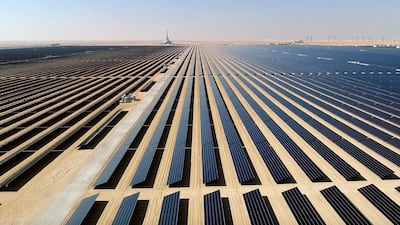
The Mohammed bin Rashid Al Maktoum Solar Park is located about 50 kilometres south of Dubai. AP -
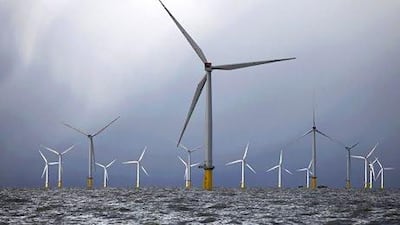
Masdar, the Abu Dhabi clean energy company, owns a one-fifth stake in London Array, the offshore wind farm in the Thames estuary. Chris Ratcliffe / Bloomberg News -
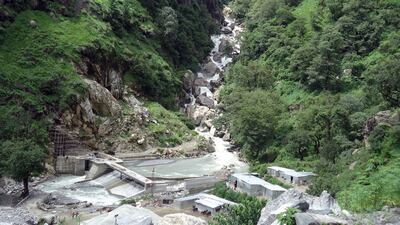
A hydro plant in Himachal Pradesh, India. Photo: Abu Dhabi National Energy Company (TAQA) -
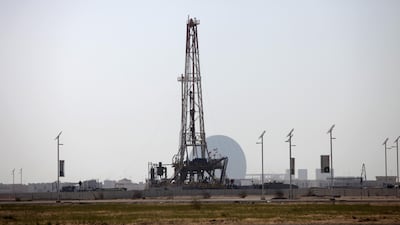
The Geothermal Pilot Project drills 4km beneath Masdar City in search of boiling temperatures to generate electricity and fuel the city's cooling system. Nicole Hill /The National -
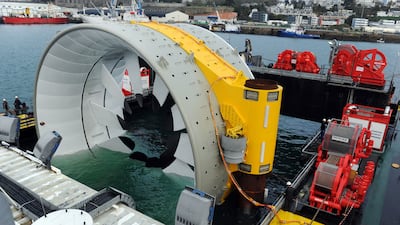
A hydroelectric motor at a tidal farm in the harbour of Brest, in western France. AFP


Climate change isn't going away. Record carbon dioxide emissions worldwide were documented last year. Despite the war, certain states will require gas for a long time to come. Countries, primarily in Europe, will need to diversify the supply of it and make greater use of liquefied natural gas (LNG). Gas fuelled 24 per cent of total global power generation in 2020 and will play a key role in displacing coal-fired generation until the 2030s.
Middle Eastern countries will play a vital role in ensuring this energy supply, and by investing in modern, state-of-the-art technologies they will make sure that the energy produced and exported will be the cleanest possible. The Gulf states are an important energy region today, and they will continue to be so in the future, even beyond the days of carbon sources. As the region leverages its vast oil, gas, chemicals and energy trading expertise, along with the development of less costly electricity from renewables and infrastructure to export molecules, it will most likely become one of the key green energy-exporting regions in the future.
But in the meantime, where electricity cannot be covered by renewables, highly efficient power plants based on natural gas can help halve carbon dioxide emissions compared to coal-fired power plants. Converting gas turbines to green hydrogen would facilitate climate-neutral operations in the future. Today, our gas turbines tested in our new Zero Emission Hydrogen Turbine Centre are ready to burn up to 75 per cent hydrogen in the fuel mix. We will hit 100 per cent by 2030.
All this will only work if infrastructure and storage facilities are massively expanded and adapted to cope with these new conditions: from modern high-voltage direct-current transmission grids and high-performance pipelines, to LNG terminals and extensive gas storage facilities.
The growing share of renewable energies also requires a fundamental strengthening of the existing power grid.
As we move towards increased reliance on renewable energy, the storage of that energy for when the sun doesn’t shine and the wind doesn’t blow will be crucial. We also need to upgrade grids to make sure they can handle the new strains that will be put on them, to ensure stability and resilience. New fuels make little difference if power surges cut them off. With this in place, Middle Eastern countries can further cement their status as reliable suppliers and partners for the world.
Time is limited. Investments, approval and permits have long timescales. Governments must look responsibly at the risk-reward profiles to remove obstacles and regulations that can prevent promising ventures from moving forward. One way this can be done is by direct investment and loan programmes. Sustainability must be given a price and floated on markets; only then will it be attractive to invest in. Investment in innovation and progressive policies to reduce carbon emissions will also be required to ensure that much-needed progress is made.
Ambitious targets by governments are at the core of change. We must all be prepared to adapt. If we are, we can make tomorrow different, today.

