UAE commuters have had to contend with heavy fog in recent weeks but, despite the sense that it is a bigger problem in 2026 than in previous years, the weather is consistent with seasonal trends.
While Tuesday's heavy fog felt particularly severe, with speed limits lowered and police cautioning drivers to take extra care, it was just the latest of several foggy episodes in recent weeks and months.
Dr Diana Francis, an assistant professor at Khalifa University in Abu Dhabi who studies the UAE’s weather and climate, said that “this winter has certainly felt foggy”, with frequent weather warnings and periods of low visibility in parts of the country.
“However, based on the information currently available, there is no clear evidence that this season is an extreme outlier compared to a typical UAE winter,” Dr Francis told The National.
“Fog is a well-known feature of the country’s cooler months, especially under calm, humid conditions, and what we’ve seen so far fits within that established seasonal pattern.”
How much fog have we had?
Since September, there have been 12 fog days in Dubai and six in Abu Dhabi, Dr Francis said.
The fog season is far from over, so it is too early to determine the final tally of fog days for the current season, but this year is actually on track to fall below the average.
A fog day involves fog any time between sunset and noon the next day. If there is no fog at the measurement location, the day is not recorded as a fog day even if there is fog elsewhere.
Most fog events take place between September and March, with the peak months being December and January.
What is the history?
When data from 1983 to 2018 at Abu Dhabi International Airport was looked at, there was an average of just under 24 fog days per year, with the number per year ranging from eight to 51, according to a 2021 Journal of Applied Meteorology and Climatology study by Dr Michael Weston, then of Khalifa University and now of the National Centre of Meteorology.
Abu Dhabi International Airport has more fog days than any other UAE airport. The most fog days ever in a single month was 13, in March 2004.
“Fog occurs any time from 7pm to 11am local time, and the frequency increases as night progresses, peaking around sunrise,” the 2021 study said.
“Fog events most frequently last one hour or less. Events of nine hours or more were recorded in January and December, with the longest event lasting 16 hours.”
What is the science?
Most UAE fog is radiation fog, forming when the land surface rapidly loses heat overnight because of thermal radiation. This cooling of the ground causes low-level moisture to condense and form fog.
The sea breeze is important, Dr Francis said, because during the day it transports humid air inland, and this becomes trapped under cooler air, creating a night-time temperature inversion.
“Urbanisation, land-use change and evolving aerosol concentrations also influence how easily fog droplets form and how thick the fog becomes,” Dr Francis said.
Fog involves visibility of less than 1km, while with mist there is also suspended water in the air, but visibility is greater than 1km.
Research by Khalifa University’s Environmental and Geophysical Sciences (Engeos) Lab, which Dr Francis heads, indicates that foggy episodes lasting several days are now more common and tend to last longer, although they are less intense on average. The findings were published in Atmospheric Research in 2022.
“Consecutive fog events in the UAE have become more frequent and tend to last longer than they did in the past,” Dr Francis said.
-
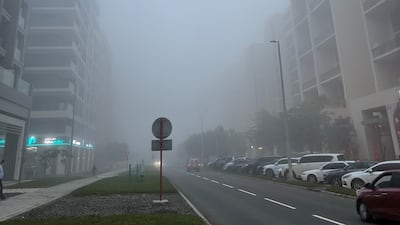
Al Zeina, Abu Dhabi. Reena Ratan / The National -
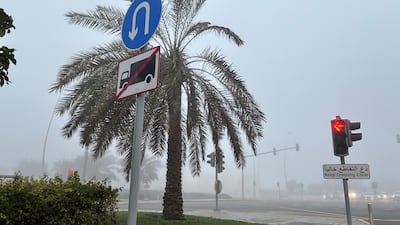
Fog blanketed the UAE on Wednesday, seen here in Abu Dhabi. Reena Ratan / The National -
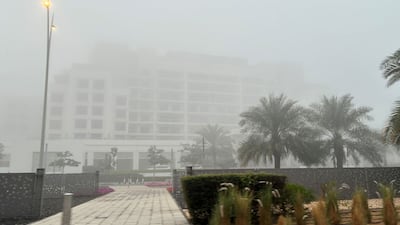
Hilton Abu Dhabi Yas Island hotel. Reena Ratan / The National -
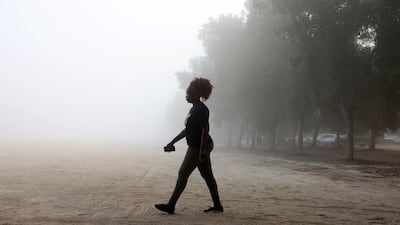
Remraam, Dubai. Chris Whiteoak / The National -
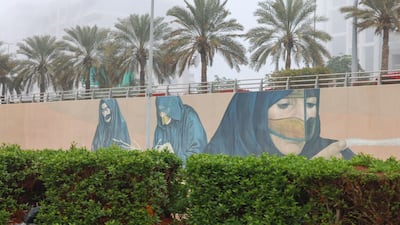
The E11 motorway at Al Raha Beach, Abu Dhabi. Victor Besa / The National -
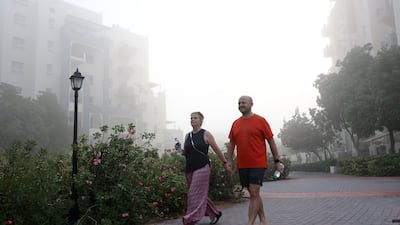
Out for a walk in Remraam, Dubai. Chris Whiteoak / The National -
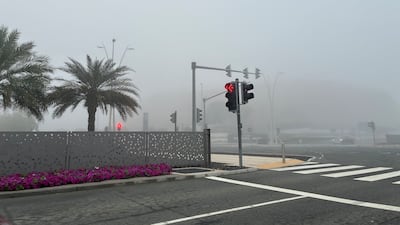
Yas Island. Reena Ratan / The National -
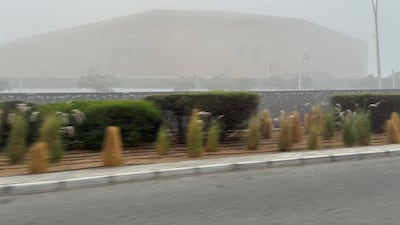
Etihad Arena. Reena Ratan / The National -
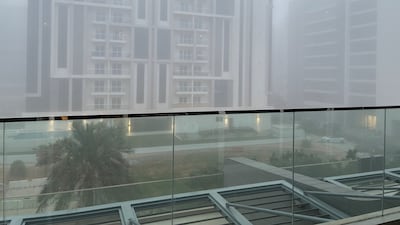
Al Zeina. Reena Ratan / The National -
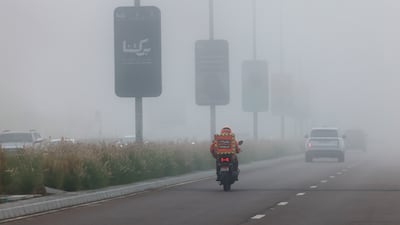
Khalifa City, Abu Dhabi. Victor Besa / The National -
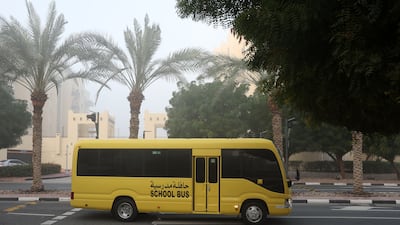
Off to school in Remraam, Dubai. Chris Whiteoak / The National -
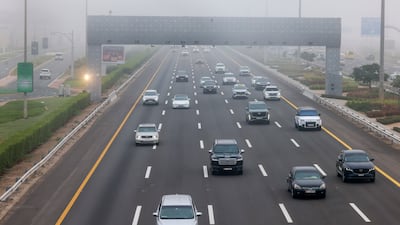
Commuters negotiate the tricky conditions on the E11 motorway in Abu Dhabi. Victor Besa / The National


Circulation changes in the region and in the Northern Hemisphere are factors behind the rise, according to the research.
Dr Francis said that when stable high-pressure systems, light winds and enhanced radiative cooling aligned with high regional humidity, “fog can persist for several days”.
Overlaying all of this is regional climate change, Dr Francis said, with the Arabian Peninsula warming faster than the global average.
“Warmer surrounding seas increase the amount of moisture available in the lower atmosphere, which can favour fog formation when nights are still cool enough for saturation to occur,” she said.
“At the same time, rising night-time temperatures and urban heat island effects can counteract that cooling in some locations. The net result appears to be a shift toward more frequent but generally thinner fog events rather than a simple increase in extreme, dense fog.”