80th Anniversary of Hiroshima and Nagasaki atomic bombings - in pictures
-
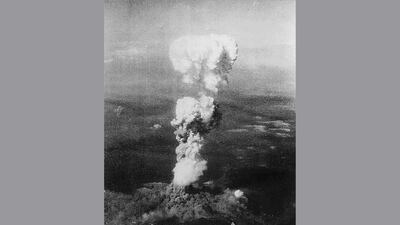
Smoke billowing 20,000 feet above Hiroshima while smoke from the burst of the first atomic bomb had spread over 10,000 feet on the target at the base of the rising column. The US nuclear bombing of Hiroshima on August 6, 1945 left around 140,000 people dead. AFP -
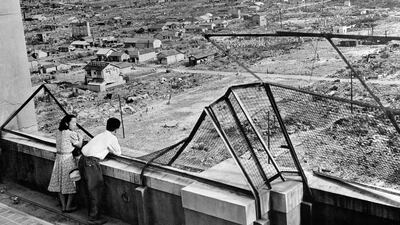
This photo taken in 1948 shows a view of the devastated city of Hiroshima in Japan, three years after the first atomic bomb was dropped on a population. AFP -
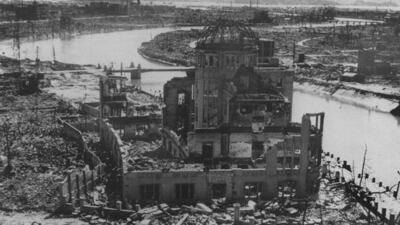
The remains of the Prefectural Industry Promotion Building after the bombing of Hiroshima, which was later preserved as a monument. AFP -

The city of Hiroshima before (L) and after (R) the first atomic bomb was dropped by a US Air Force B-29 aircraft on the city on August 6, 1945. AFP -
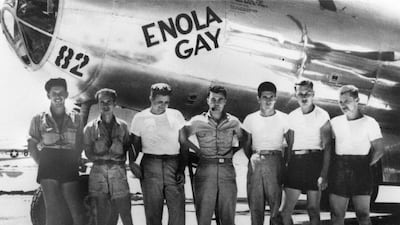
The crew of the B-29 bomber "Enola Gay" including pilot Paul W. Tibbets (C), who named the aircraft after his mother, which dropped the atomic bomb on Hiroshima during World War II. AFP -
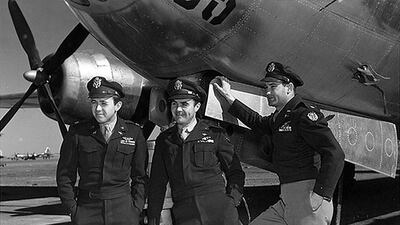
Maj. Theodore Van Kirk (L), navigator, Col. Paul Tibbets (C), pilot, and Maj. Thomas Ferebee, bombardier, after dropping the first atom bomb on Japan. AFP -
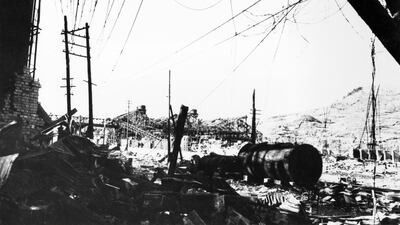
The Urakami river in Nagasaki shows a wrecked brick wall and a Mitsubishi steel factory after the US bombing of the city. AFP -
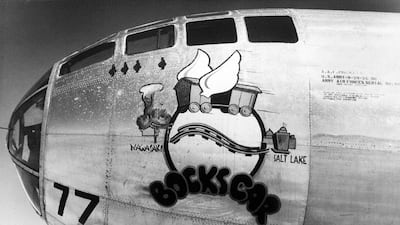
The US military airplane nicknamed Bockscar, which dropped the atomic bomb on Nagasaki, Japan on August 9, 1945 at the end of World War II. AFP


Most popular today

