The latest from the Israel-Gaza war - in pictures
-
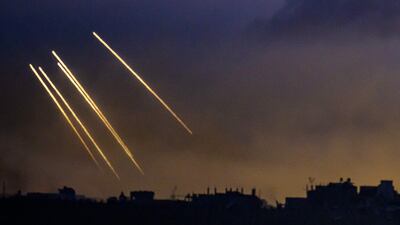
Smoke ammunition fired by Israeli troops near the border with the Gaza Strip, in southern Israel. AFP -

Israeli soldiers react during the funeral of Capt Liron Snir at the Mount Herzl military cemetery, Jerusalem. Reuters -
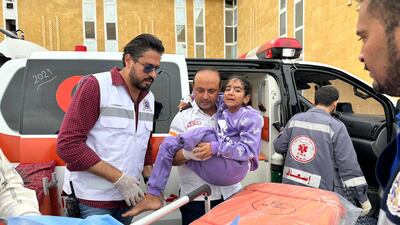
Egyptian paramedics transport a Palestinian child arriving from Gaza to an ambulance at the Rafah border crossing. AFP -

An Israeli tank appears through a soldier's night vision scope near the Gaza Strip in southern Israel. Getty Images -
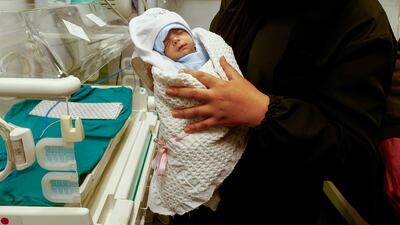
A Palestinian mother holds her newborn in a maternity hospital in Rafah, after he was evacuated from Al Shifa Hospital in Gaza city. Reuters -

Israeli artillery train its guns towards the Gaza Strip in Southern Israel. Getty Images -

A family watch news updates on the Israeli hostages and Palestinian prisoners swap deal, near Hebron in the Israeli-occupied West Bank. Reuters -
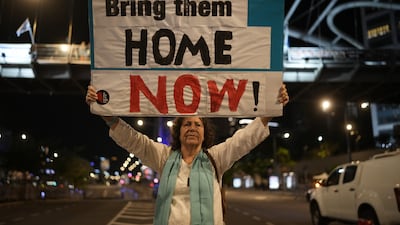
People demonstrate outside the Kyria defence complex as the political cabinet hold a meeting in Tel Aviv, Israel. Getty Images -
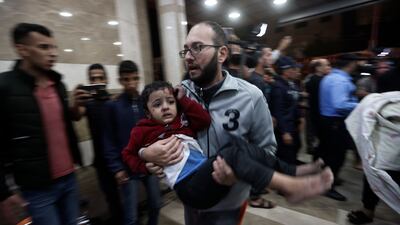
A wounded Palestinian child is carried into Nasser Hospital following an Israeli bombardment on Khan Younis refugee camp, southern Gaza Strip. AP -
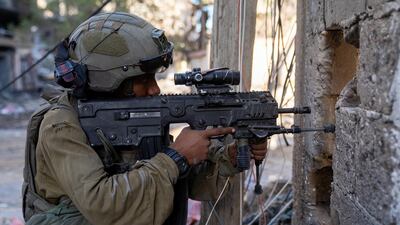
An Israeli soldier takes position behind a wall in Gaza, as Israel's war against Hamas continues. Reuters -
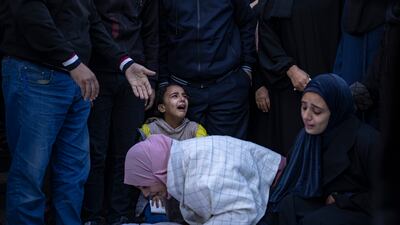
Palestinians mourn their relatives killed in the Israeli bombardment of the Gaza Strip, at a hospital in Khan Younis. AP -
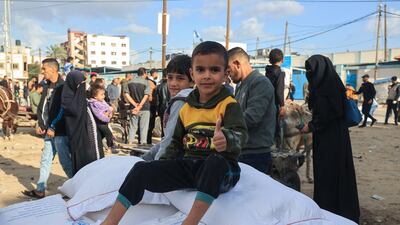
People receive bags of flour at a distribution centre of the UN agency for Palestinian refugees (UNRWA), in the Rafah refugee camp. AFP -
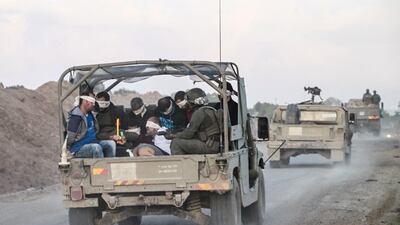
Israel's military transports Palestinian detainees from the Gaza Strip, near Israel's border with Gaza, in southern Israel. Reuters -
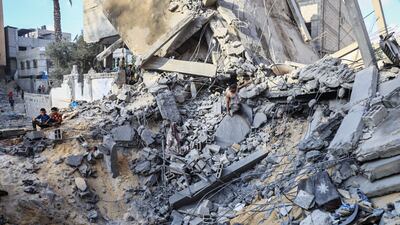
Palestinians amongst the rubble of a building destroyed by an Israeli air strike in Khan Younis, Gaza. Bloomberg -

Thomas Hand, father of Emily Hand, during a press conference by family members of hostages in Gaza, at the Israeli embassy, London. Getty Images -
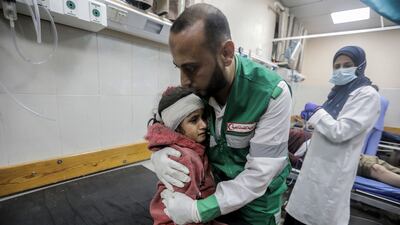
A man consoles a young Palestinian girl at Nasser Medical Hospital, Khan Yunis, Gaza. Getty Images -
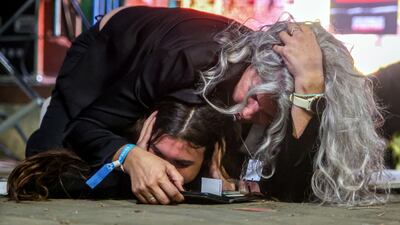
A mother covers her daughter as a siren signals incoming rockets launched from the Gaza Strip towards Israel, in Tel Aviv. Reuters -
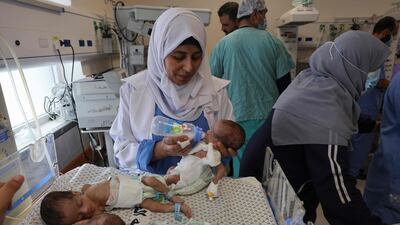
Palestinian medics care for babies evacuated from Al Shifa Hospital to the Emirates Hospital in Rafah in the southern Gaza Strip. AFP -
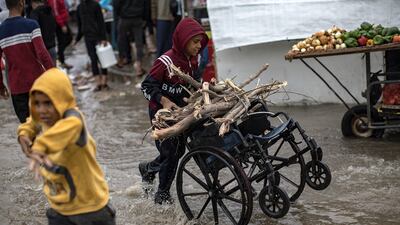
A child collects firewood in a camp provided by the UN for displaced Palestinians who lost their homes in Israeli raids, in Khan Yunis. EPA -
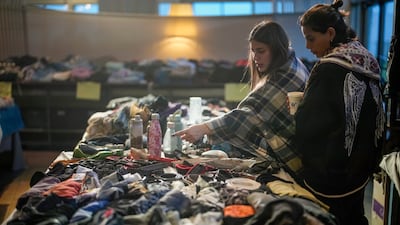
Personal items recovered from the Supernova music festival on display for family and relatives to collect in Caesarea, Israel. Getty Images -

Palestinians flee the Zeitoun district, southern Gaza Strip, as battles between Israel and Hamas continue. AFP -

Thousands gathered at the State Library for the weekly protest in support of Palestinians in Melbourne, Australia. Paul Stafford / The National -
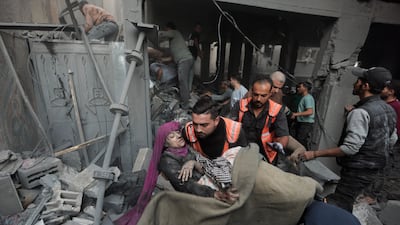
Palestinian rescuers evacuate an injured woman following an Israeli air strike in Khan Younis refugee camp. AP -

A rally to call for a ceasefire held at Dorchester Square in Montreal, Quebec, Canada. AFP -

Palestinians flee to the southern Gaza Strip along Salah al-Din Street, during the ongoing Israeli bombardment. AP -
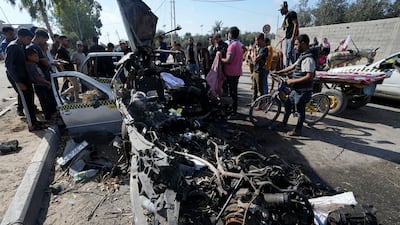
Palestinians check taxis that were hit by the Israeli military along Salah al-Din Street, on the outskirts of Gaza city. AP -
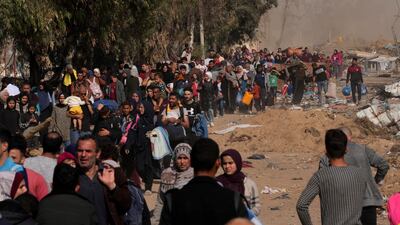
Thousands of Palestinians flee to the southern Gaza Strip along Salah al-Din Street. AP -
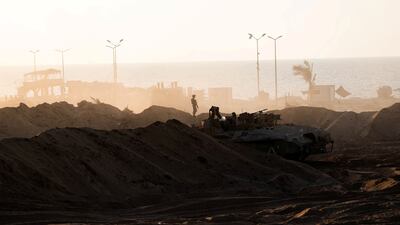
Israeli soldiers in the Gaza Strip amid the continuing ground operation against Hamas. Reuters -
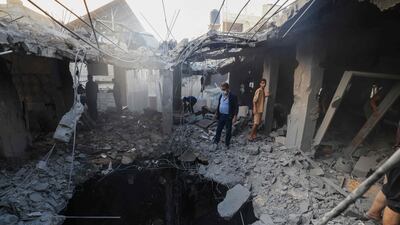
Palestinians search for survivors in the rubble of a building following Israeli bombardment in Khan Yunis. AFP -

Palestinians injured in air strikes arrive at Nasser Medical Hospital in Khan Younis, Gaza. Getty Images -
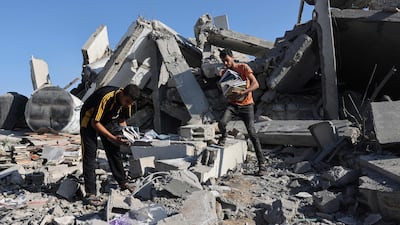
Palestinians collect books from the rubble of a cultural centre following an Israeli strike in Rafah. AFP -

Notices dropped by the Israeli military over Rafah in the southern Gaza Strip calling for those remaining to leave the area. AFP -
A man walks among debris at the site of an Israeli strike in Khan Younis, amid the ongoing conflict between Israel and Hamas. Reuters -
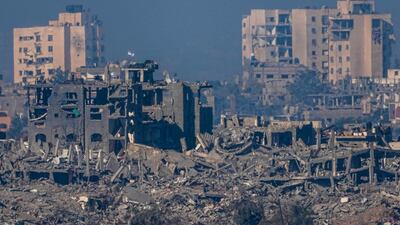
Israeli flags on the top of destroyed buildings in the Gaza Strip. AP -
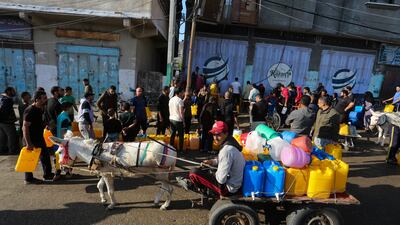
Palestinians line to collect water in Rafah on Saturday, November 18. AP


Smart words at Make Smart Cool
Make Smart Cool is not your usual festival. Dubbed “edutainment” by organisers Najahi Events, Make Smart Cool aims to inspire its youthful target audience through a mix of interactive presentation by social media influencers and a concert finale featuring Example with DJ Wire. Here are some of the speakers sharing their inspiration and experiences on the night.
Prince Ea
With his social media videos accumulating more half a billion views, the American motivational speaker is hot on the college circuit in the US, with talks that focus on the many ways to generate passion and motivation when it comes to learning.
Khalid Al Ameri
The Emirati columnist and presenter is much loved by local youth, with writings and presentations about education, entrepreneurship and family balance. His lectures on career and personal development are sought after by the education and business sector.
Ben Ouattara
Born to an Ivorian father and German mother, the Dubai-based fitness instructor and motivational speaker is all about conquering fears and insecurities. His talk focuses on the need to gain emotional and physical fitness when facing life’s challenges. As well managing his film production company, Ouattara is one of the official ambassadors of Dubai Expo2020.
ETFs explained
Exhchange traded funds are bought and sold like shares, but operate as index-tracking funds, passively following their chosen indices, such as the S&P 500, FTSE 100 and the FTSE All World, plus a vast range of smaller exchanges and commodities, such as gold, silver, copper sugar, coffee and oil.

ETFs have zero upfront fees and annual charges as low as 0.07 per cent a year, which means you get to keep more of your returns, as actively managed funds can charge as much as 1.5 per cent a year.
There are thousands to choose from, with the five biggest providers BlackRock’s iShares range, Vanguard, State Street Global Advisors SPDR ETFs, Deutsche Bank AWM X-trackers and Invesco PowerShares.
Ten tax points to be aware of in 2026
1. Domestic VAT refund amendments: request your refund within five years
If a business does not apply for the refund on time, they lose their credit.
2. E-invoicing in the UAE
Businesses should continue preparing for the implementation of e-invoicing in the UAE, with 2026 a preparation and transition period ahead of phased mandatory adoption.
3. More tax audits
Tax authorities are increasingly using data already available across multiple filings to identify audit risks.
4. More beneficial VAT and excise tax penalty regime
Tax disputes are expected to become more frequent and more structured, with clearer administrative objection and appeal processes. The UAE has adopted a new penalty regime for VAT and excise disputes, which now mirrors the penalty regime for corporate tax.
5. Greater emphasis on statutory audit
There is a greater need for the accuracy of financial statements. The International Financial Reporting Standards standards need to be strictly adhered to and, as a result, the quality of the audits will need to increase.
6. Further transfer pricing enforcement
Transfer pricing enforcement, which refers to the practice of establishing prices for internal transactions between related entities, is expected to broaden in scope. The UAE will shortly open the possibility to negotiate advance pricing agreements, or essentially rulings for transfer pricing purposes.
7. Limited time periods for audits
Recent amendments also introduce a default five-year limitation period for tax audits and assessments, subject to specific statutory exceptions. While the standard audit and assessment period is five years, this may be extended to up to 15 years in cases involving fraud or tax evasion.
8. Pillar 2 implementation
Many multinational groups will begin to feel the practical effect of the Domestic Minimum Top-Up Tax (DMTT), the UAE's implementation of the OECD’s global minimum tax under Pillar 2. While the rules apply for financial years starting on or after January 1, 2025, it is 2026 that marks the transition to an operational phase.
9. Reduced compliance obligations for imported goods and services
Businesses that apply the reverse-charge mechanism for VAT purposes in the UAE may benefit from reduced compliance obligations.
10. Substance and CbC reporting focus
Tax authorities are expected to continue strengthening the enforcement of economic substance and Country-by-Country (CbC) reporting frameworks. In the UAE, these regimes are increasingly being used as risk-assessment tools, providing tax authorities with a comprehensive view of multinational groups’ global footprints and enabling them to assess whether profits are aligned with real economic activity.
Contributed by Thomas Vanhee and Hend Rashwan, Aurifer
Credit Score explained
What is a credit score?
In the UAE your credit score is a number generated by the Al Etihad Credit Bureau (AECB), which represents your credit worthiness – in other words, your risk of defaulting on any debt repayments. In this country, the number is between 300 and 900. A low score indicates a higher risk of default, while a high score indicates you are a lower risk.
Why is it important?
Financial institutions will use it to decide whether or not you are a credit risk. Those with better scores may also receive preferential interest rates or terms on products such as loans, credit cards and mortgages.
How is it calculated?
The AECB collects information on your payment behaviour from banks as well as utilitiy and telecoms providers.
How can I improve my score?
By paying your bills on time and not missing any repayments, particularly your loan, credit card and mortgage payments. It is also wise to limit the number of credit card and loan applications you make and to reduce your outstanding balances.
How do I know if my score is low or high?
By checking it. Visit one of AECB’s Customer Happiness Centres with an original and valid Emirates ID, passport copy and valid email address. Liv. customers can also access the score directly from the banking app.
How much does it cost?
A credit report costs Dh100 while a report with the score included costs Dh150. Those only wanting the credit score pay Dh60. VAT is payable on top.
While you're here
Gavin Esler:Â The Good Friday Agreement teaches us some important lessons
Damien McElroy:Â Boris must listen to Churchill's comments on Irish divisions
Janine di Giovanni:Â Track 2 diplomacy key to lasting peace in 21st century

