“Are you nuts? You’re not going to be able to do that,” says my friend Anna as we exercise in her living room.
It's been 10 months since we each gave birth to our daughters, and we're fighting to regain our figures, mainly so we can embrace one of autumn's hippest trends – high-waisted jeans. It's a look that's been sold to us by the fashion bloggers we follow on Instagram.
I’ve just told Anna that I plan to embark on a six-month challenge of consuming no new clothing, and her reaction is one of incredulous scepticism.
That was one year ago. And though some may not view this type of abstinence as a difficult task, it’s one I’m perpetually failing at.
For me, a shopping mall is a dangerous abyss of temptation, filled with high-street and high-end sinkholes. Mannequins bait me with their cool nonchalance and covetable, new-season enticements. E-commerce is an even deadlier snare.
Though I’ve vowed repeatedly to buy no new clothes over the past year, I have not yet made it through a single month of the challenge. A pastel rainbow-striped Gucci bag from the brand’s pre-autumn campaign, which featured a hedgehog, seduced me like no suitor ever could. As did a silk pyjama suit by Dubai label Wear The House, emblazoned with bold, floral postage stamps.
Upon being virtually introduced to Acid Banana, a UK brand that has a waiting list of customers seeking its kitschy jewellery made of repurposed vintage Chanel buttons, I stayed up late to ensure I’d be online when its latest products launched. Though my favourite necklace sold out within seconds, I didn’t hesitate before buying an alternative design.
My wardrobe now contains a handful of trending, knitted sweater vests – the type my grandmother has been wearing for decades – despite being thoroughly impractical in a desert climate. Then, there’s the excessive amount of high-waisted “mum jeans” I’ve purchased, even though the bulk of the year has been void of social gatherings and outings owing to the coronavirus pandemic.
For the most part, my legs have remained happily housed in leggings and drawstring jogging bottoms, with the new denims collecting a layer of dust over their baby blue, stone grey, salmon pink and lilac hues.
Covid-19 may, in fact, have been a catalyst for my overindulgent shopping habits, Dr Saliha Afridi, clinical psychologist and managing director of The LightHouse Arabia, tells me. "It is not a surprise to me that some people may have opted for 'retail therapy' during the pandemic to alleviate their low mood," she says.
Admittedly privileged from my home in Dubai, I can't say that I've been particularly glum over the past few months. But Afridi raises another point: "Many people are used to spending money – they have budgeted for going out, travelling, and day-to-day spending. However, because people's lifestyle spending came to a halt during Covid, they may have decided to spend it on shopping for items."

Some fashion enthusiasts have managed to avoid catching the shopping bug during this tumultuous time, however. I’m in awe to learn that Fadila Patel, fashion blogger and founder of BTF, a branding and design consultancy, has refrained from shopping for fashion for this entire year.
“We have been on lockdown for more than half the year, most shopping malls have been closed or restricted and many online shopping sites had delivery restrictions. So, it was easier than it sounds,” says Patel, who splits her time between Doha and London.
“2020 has definitely been an eye opener. We were all forced to pause and re-evaluate how we were living. For me, it was realising how consumption had become a commodity – I had a wardrobe full of clothes but nowhere to wear them.”
Across the globe, eco-friendly movements are calling for less consumption and more minimalist approaches to fashion. But as altruistic as I'd like to be, my own recurring challenge stems not from a saintly desire to align with sustainability, boycott fast fashion retailers or even save money. I'm motivated, rather, by a pressing need to exercise self-control when it comes to shopping – because I seem to have lost it.
Afridi explains the internal goings-on of my shopaholic tendencies. “Neurologically, while a person shops or purchases items, dopamine, the pleasure chemical, is released into the brain. This same chemical is involved in all addictive behaviour.
“If shopping is done to an extreme, where a person is experiencing financial and relationship problems due to their behaviour, then it has moved into the ‘shopping addiction’ space,” she explains. “It is a form of escapism.” Although I’m hooked to an extent that’s certainly unhealthy, I’m not yet classified as an addict.
Nonetheless, being consumed by fashion has changed me – and for the worse. I used to say a prayer every night before sleeping, invoking a sense of inner peace and otherworldliness. Now, I scroll through the new-in page of my Asos, Shopbop and Mytheresa apps, ensnared by worldly allurements. I'm clearly inflicted with a shopping obsession, if not addiction.
When it's clear I'm not making any headway in my challenge, I take a more drastic step, and delete the shopping apps that persistently eat up my time and money. I'd check them while in the car, while waiting at the microwave as my food reheats, and even while queuing at the cashier during parallel shopping trips. Scrolling through the new-in pages was therapeutic, ritualistic and provided a way to pass the time for a millennial like me who feels unproductive if not tuned in and multitasking.
Then, there's Instagram. Most of my purchases are fuelled by this app, which presents new, beautiful reasons to shop daily.
A phone, today, is "a portal to a thousand other places," writes Jenny Odell, author of How To Do Nothing: Resisting the Attention Economy. "But the villain here is not necessarily the internet, or even the idea of social media; it is the invasive logic of commercial social media and its financial incentive to keep us in a profitable state of anxiety, envy and distraction," she explains.
I experience this first-hand when an image of fashion blogger Monica Chang pops up on my Instagram feed, sucking me back into the treacherous quagmire of luxury fashion. Slung across Chang's torso is a cross-body bag featuring Louis Vuitton's iconic logo print – it's actually three bags in one, all connected with gold links and chains, suspended by a utilitarian strap in pastel pink. A further 15 minutes of intensive research informs me that this bag is called the Multi Pochette Accessoires. There are more than 1,000 posts with its hashtag, and I see the "It bag" in all its glory on fashion bloggers – female and male – across the globe.
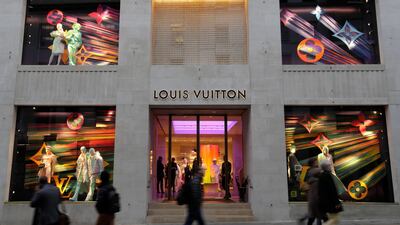
A few days later, I strut into the Louis Vuitton store. The bag isn't on display, so I sit in one of the plush seats as a sales assistant comes over – but when the name of the bag rolls off of my tongue, he scoffs.
“You won’t find that anywhere,” he tells me smugly. “It’s a blogger craze. Makes everyone crazy. Like you.” I leave the store feeling disheartened. I had officially been “influenced” by Instagram, ironically at a time when people worldwide are being cautioned to save their money, and not spend it, least of all on frivolous fashion accessories that may be decked in designer logos, but are highly impractical.
“The amount of social media use has increased during the pandemic,” Afridi says. “The algorithms are such that if you like a particular item or an influencer, it will feed you more of the same type of content. Soon, your online world becomes infused with suggestions of things a person could have and should have. Given that most people are spending many hours a day on some social media platform, it is not surprising that social media has become the new go-to for retailers to have a captive audience.”
Patel says that while she maintains an active social media presence, she has managed to evade the shopping traps that lie waiting for vulnerable prey on Instagram. “I never let influencers tempt me into anything,” she says. “Trends are short lived, sometimes it’s better to watch them from the comfort of your home, in your lockdown pyjamas, and it doesn’t cost a thing.”
Instead, she urges me to look at my belongings with a fresh set of eyes, and seek out the enchanting, butterflies-in-my-stomach feelings that led to those initial swipes of the credit card.
“Reworking my wardrobe and restyling pieces that I hadn’t previously worn has helped me overcome the temptation. Seeing my clothing collection from a new perspective and working with what I have has made me fall in love with pieces all over again,” she says.
“The decision to stop consuming was definitely more circumstantial than inspiring, but one thing I have learnt whilst not consuming is that when I eventually do, I will be more conscious as it will be a luxury.”
It’s nearing midnight and I can’t sleep. I pick up my phone and start scrolling through Instagram, before quickly switching to Twitter as I realise the latter is less likely to tempt me into spending money at this hour. “Dear God, please save me from the midnight online shopping itch, Ameen,” I type, before sending the tweet out into the everlasting expanse of the internet. When I wake up the next morning, I’m relieved to have not received any notifications from the bank. I made it through the night – but will I make it through 29 more, and then a further five months?
Perhaps my decision to go cold-turkey on fashion expenditure was as rash as my late-night “add to cart” clicks. When I first embarked on this journey, I naively believed that I would be able to withstand the impulse to shop, for a period of six months straight. But now, on the cusp of a new year, one filled with uncertainties, promises of vaccines, possible prolongments of travel restrictions and overall prescriptions of precaution, I’m throwing in the towel. Fashion, temporal as it may be, is a source of happiness, and indulging in it can even be an act of self-care, as long as it’s in moderation.
Enlightened by my discussion with Afridi, inspired by the self-restraint of Patel, disgusted by the sway social media has over me and wary of the avalanche that may eventuate if I try stuffing any more clothing into my wardrobe, I’m entering the new year with a new approach. A New Year seems like as good a time as any to revisit a vow, and this time, it’s to become a more conscious consumer, who will now think twice – no, thrice – before accumulating more fashion.
Perhaps, like Patel, I can shift my focus, embrace the infinite instances of inspiration offered by Instagram and celebrate the possibilities posed by the pieces I already own.

