


A Covid-19 antibody test that detects if animals were exposed to the coronavirus has been developed by a team of scientists in the UAE.
More than 500 samples of blood from different species of animals, stored at the Central Veterinary Research Laboratory in Dubai, were selected for testing.
The oldest sample, which was in a deep freeze, was taken from a camel 34 years ago, and the most recent on Wednesday.
Researchers hope the antibody test will help detect which species contracted Covid-19 and which later developed antibodies against the virus.
veterinary microbiologist at CVRL
Dr Ulrich Wernery, a veterinary microbiologist at CVRL, said the findings could eventually lead to vital answers in helping doctors to treat infected patients.
“We have samples from about 18 different animal species including lions, tigers, gazelles, sheep, goats, camels, horses, cats and dogs,” he said.
“If we find antibodies in samples of the animals, then we know that, at one point, they would have been exposed to the virus.
“Interestingly, 34 years ago, we collected blood samples from 50 camels and tested them against the Mers virus.
“Mers was only discovered in the 2000s, but our samples showed that some camels had antibodies against the virus, which meant they had developed it decades before.”
-
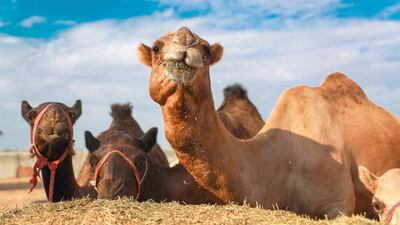
Camels can cost millions of dirhams in the UAE, depending on the breed and whether they can be used for racing or as show animals. Victor Besa / The National -

There were more than 408,000 camels in Abu Dhabi emirate in 2017, a rise of almost 50 per cent since 2010. Victor Besa / The National -
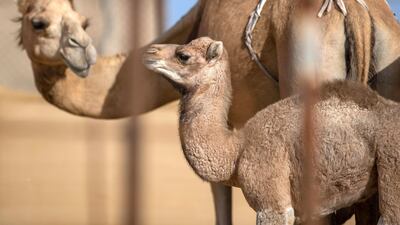
A camel farm in Al Si'a'a, Abu Dhabi, Lucrative prizes and prestige won at camel races have encouraged owners to increase the size of their herds. Families who once owned a single camel will now have dozens. Victor Besa/The National -

A baby camel in Al Sila'a, a city in the Al Dhafra region of Abu Dhabi emirate. Victor Besa / The National -
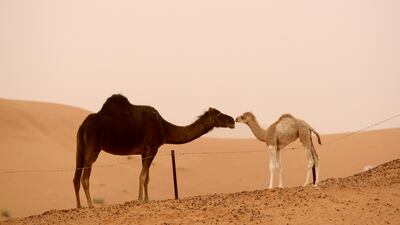
An adult and a young camel at a farm near the eastern city of Al Ain, during a sandstorm. Ryan Carter / The National -
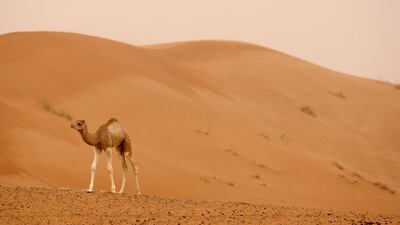
A young camel at a farm in Al Ain. Ryan Carter / The National -
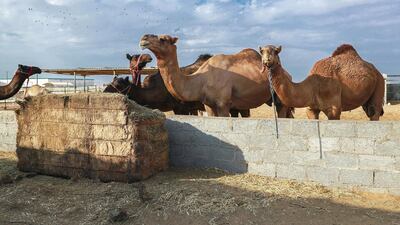
Northern emirate Ras Al Khaimah is home to about 9,000 camels. Victor Besa / The National


There is no solid evidence that animals play a significant role in spreading SARS-CoV-2, the virus that causes Covid-19, to people.
Based on available information, the risk of animals spreading the virus to people is considered low but possible with close contact.
As part of the research, Dr Wernery said he wanted to understand how Covid-19 spreads across both human and animal kingdoms as well as which animals can catch the virus.
All 500 samples were removed from frozen storage to be prepared for testing. The full process will start next week and will take 14 days to complete.
The “antibody ELISA test” will produce results from each sample on the same day.
“For each sample we remove the cells and leave only the fluid, because cells can disturb the results,” he said.
“It is quite a complicated process but for this specific test we need to use traces of the Covid-19 virus, so we are using a dead version of it.
“We then load the dead virus on to the ELISA plate and if an antibody shows up in the serum sample it will attach to the virus.
“That is how we will measure the results and learn if an animal previously had Covid-19 or not.
“I cannot hypothesise what the results will be but it is likely we might find some positive cases in cats, so we have a lot of cat serum. Some dog serum might be positive too, let’s see.”

Dr Wernery said a “positive and negative control” was required for such tests to provide accurate results.
A positive control should confirm the target antigen is expressed on the relevant cells and tissues, while the negative control should consist of tissues or cells in which the target protein is known to be absent.
“Recently, we immunised camels with the dead virus and they produced antibodies against Covid-19,” he said.
“We have taken samples from these camels and are incorporating them with this study as it is the positive control for our test.
“Camels are actually the best antibody producer in the animal kingdom as they have best immunity, so they are the perfect candidate for this research.”
Could test results help treat humans?
Dr Wernery said he hoped to develop small antibodies – or nanobodies – that could be used in therapy to cure severe Covid-19 infection in people.
“I have 40 camels at the lab and if we immunise them four to six times, they develop high, or peak, antibodies,” he said.
“You can then take some blood from these animals and they can be used to help treat Covid-19 infection in people.
The research requires about Dh1.5 million ($408,363) investment, ideally from pharmaceutical companies.
“It’s a long process and obviously you cannot take camel blood and give it to humans," he said.
“You can extract the nanobodies, treat them so that they are pure and have nothing to do with camels any more, then administer into the bloodstream through IV to neutralise Covid-19. We call it serum therapy.”

