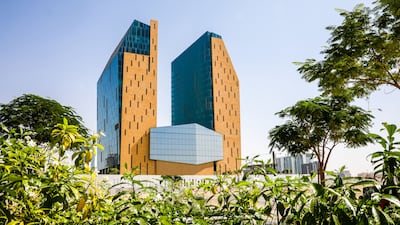
Tecom Group, the operator of business districts in Dubai, recorded a 54 per cent annual surge in net profit in the second quarter on “continued buoyancy” in the emirate's economy.
Profit for the three months that ended in June rose to Dh237 million ($64.5m), compared with Dh153.9m during the same period last year, Tecom said in a statement on Wednesday to the Dubai Financial Market (DFM), where its shares are traded.
Tecom, which made its stock market debut on the DFM on July 5 after raising Dh1.7 billion from its initial public offering, also reported a more than 18 per cent rise in revenue for the second quarter to Dh504m.
For the first half of 2022, net profit climbed more than 43 per cent to Dh427.5m, while revenue rose nearly 16 per cent to Dh989.4m.
The company attributed its profit growth to a sustained increase in occupancy rates on the back of “continued buoyancy in Dubai’s economy and improving business sentiment”.
“Our strong performance in the first half of the year builds on our solid performance in 2021 and underscores the strength of our well-balanced business model and the resilience of our diversified portfolio of quality, strategically located assets and value-added services,” Abdulla Belhoul, chief executive of Tecom Group, said.
The results also came on the back of the “constructive demand-supply dynamics of the commercial and industrial real estate market” in Dubai, he said.
Dubai's economy has recovered strongly from the Covid-19 pandemic-induced slowdown.
The emirate's economy grew 6.3 per cent in the first nine months of 2021, according to preliminary data from the Dubai Statistics Centre. Emirates NBD, Dubai's biggest bank, estimates that it grew about 5.5 per cent for the full year 2021 — an increase from its earlier forecast of 4 per cent.
Business activity in Dubai's non-oil private sector economy also improved at the quickest pace in three years in June, as new orders rose sharply despite inflationary pressures.
The headline seasonally adjusted S&P Global UAE Purchasing Managers' Index rose to 56.1 in June from 55.7 in May to its highest reading since June 2019.
Economic growth in the emirate has also supported the real estate market, with prices rebounding since last year.
At the end of the first six months of 2022, the consolidated occupancy level at Tecom's operating assets was 82 per cent, up from 78 per cent at the end of December 2021, “reflecting positive business sentiment”, the company said.
Earnings before interest, taxes, depreciation and amortisation for the first six months of 2022 rose 22.4 per cent annually to Dh722.8m on the growth of its top line and enhanced operational efficiencies across all business segments.
“We are optimistic in our ability to sustain a steady increase in our occupancy levels and high customer retention levels for the upcoming period. This will add further stability to our revenue and cash flow for the midterm,” Mr Belhoul said.
“Furthermore, our well-defined strategy for growth will enable us to take advantage of a broad spectrum of growth drivers from secular trends pertaining to each of the six vital sectors we cater to,” he said, referring to the group's clusters of technology, media, education, science, design and manufacturing.
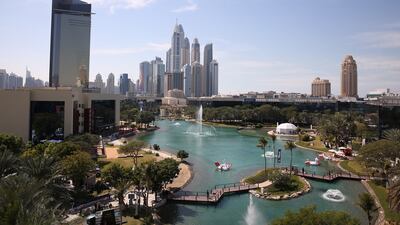
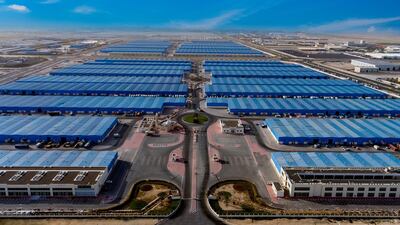
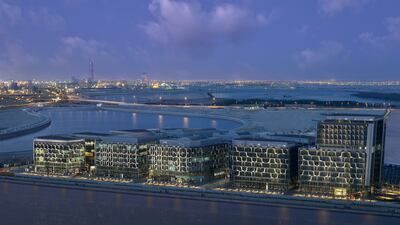
Tecom's portfolio consists of Dubai Internet City, Dubai Outsource City, Dubai Media City, Dubai Studio City, Dubai Production City, Dubai International Academic City, Dubai Knowledge Park, Dubai Science Park, Consists of Dubai Design District and Dubai Industrial City.
The group has more than 7,800 customers in Dubai and provides real estate solutions across commercial, land and industrial segments.

Mercer, the investment consulting arm of US services company Marsh & McLennan, expects its wealth division to at least double its assets under management (AUM) in the Middle East as wealth in the region continues to grow despite economic headwinds, a company official said.
Mercer Wealth, which globally has $160 billion in AUM, plans to boost its AUM in the region to $2-$3bn in the next 2-3 years from the present $1bn, said Yasir AbuShaban, a Dubai-based principal with Mercer Wealth.
“Within the next two to three years, we are looking at reaching $2 to $3 billion as a conservative estimate and we do see an opportunity to do so,” said Mr AbuShaban.
Mercer does not directly make investments, but allocates clients’ money they have discretion to, to professional asset managers. They also provide advice to clients.
“We have buying power. We can negotiate on their (client’s) behalf with asset managers to provide them lower fees than they otherwise would have to get on their own,” he added.
Mercer Wealth’s clients include sovereign wealth funds, family offices, and insurance companies among others.
From its office in Dubai, Mercer also looks after Africa, India and Turkey, where they also see opportunity for growth.
Wealth creation in Middle East and Africa (MEA) grew 8.5 per cent to $8.1 trillion last year from $7.5tn in 2015, higher than last year’s global average of 6 per cent and the second-highest growth in a region after Asia-Pacific which grew 9.9 per cent, according to consultancy Boston Consulting Group (BCG). In the region, where wealth grew just 1.9 per cent in 2015 compared with 2014, a pickup in oil prices has helped in wealth generation.
BCG is forecasting MEA wealth will rise to $12tn by 2021, growing at an annual average of 8 per cent.
Drivers of wealth generation in the region will be split evenly between new wealth creation and growth of performance of existing assets, according to BCG.
Another general trend in the region is clients’ looking for a comprehensive approach to investing, according to Mr AbuShaban.
“Institutional investors or some of the families are seeing a slowdown in the available capital they have to invest and in that sense they are looking at optimizing the way they manage their portfolios and making sure they are not investing haphazardly and different parts of their investment are working together,” said Mr AbuShaban.
Some clients also have a higher appetite for risk, given the low interest-rate environment that does not provide enough yield for some institutional investors. These clients are keen to invest in illiquid assets, such as private equity and infrastructure.
“What we have seen is a desire for higher returns in what has been a low-return environment specifically in various fixed income or bonds,” he said.
“In this environment, we have seen a de facto increase in the risk that clients are taking in things like illiquid investments, private equity investments, infrastructure and private debt, those kind of investments were higher illiquidity results in incrementally higher returns.”
The Abu Dhabi Investment Authority, one of the largest sovereign wealth funds, said in its 2016 report that has gradually increased its exposure in direct private equity and private credit transactions, mainly in Asian markets and especially in China and India. The authority’s private equity department focused on structured equities owing to “their defensive characteristics.”
The National Archives, Abu Dhabi
Founded over 50 years ago, the National Archives collects valuable historical material relating to the UAE, and is the oldest and richest archive relating to the Arabian Gulf.
Much of the material can be viewed on line at the Arabian Gulf Digital Archive - https://www.agda.ae/en
UAE and Russia in numbers
UAE-Russia ties stretch back 48 years
Trade between the UAE and Russia reached Dh12.5 bn in 2018
More than 3,000 Russian companies are registered in the UAE
Around 40,000 Russians live in the UAE
The number of Russian tourists travelling to the UAE will increase to 12 percent to reach 1.6 million in 2023
Eyasses squad
Charlie Preston (captain) – goal shooter/ goalkeeper (Dubai College)
Arushi Holt (vice-captain) – wing defence / centre (Jumeriah English Speaking School)
Olivia Petricola (vice-captain) – centre / wing attack (Dubai English Speaking College)
Isabel Affley – goalkeeper / goal defence (Dubai English Speaking College)
Jemma Eley – goal attack / wing attack (Dubai College)
Alana Farrell-Morton – centre / wing / defence / wing attack (Nord Anglia International School)
Molly Fuller – goal attack / wing attack (Dubai College)
Caitlin Gowdy – goal defence / wing defence (Dubai English Speaking College)
Noorulain Hussain – goal defence / wing defence (Dubai College)
Zahra Hussain-Gillani – goal defence / goalkeeper (British School Al Khubairat)
Claire Janssen – goal shooter / goal attack (Jumeriah English Speaking School)
Eliza Petricola – wing attack / centre (Dubai English Speaking College)
Sholto Byrnes on Myanmar politics
The bio
Who inspires you?
I am in awe of the remarkable women in the Arab region, both big and small, pushing boundaries and becoming role models for generations. Emily Nasrallah was a writer, journalist, teacher and women’s rights activist
How do you relax?
Yoga relaxes me and helps me relieve tension, especially now when we’re practically chained to laptops and desks. I enjoy learning more about music and the history of famous music bands and genres.
What is favourite book?
The Perks of Being a Wallflower - I think I've read it more than 7 times
What is your favourite Arabic film?
Hala2 Lawen (Translation: Where Do We Go Now?) by Nadine Labaki
What is favourite English film?
Mamma Mia
Best piece of advice to someone looking for a career at Google?
If you’re interested in a career at Google, deep dive into the different career paths and pinpoint the space you want to join. When you know your space, you’re likely to identify the skills you need to develop.
APPLE IPAD MINI (A17 PRO)
Display: 21cm Liquid Retina Display, 2266 x 1488, 326ppi, 500 nits
Chip: Apple A17 Pro, 6-core CPU, 5-core GPU, 16-core Neural Engine
Storage: 128/256/512GB
Main camera: 12MP wide, f/1.8, digital zoom up to 5x, Smart HDR 4
Front camera: 12MP ultra-wide, f/2.4, Smart HDR 4, full-HD @ 25/30/60fps
Biometrics: Touch ID, Face ID
Colours: Blue, purple, space grey, starlight
In the box: iPad mini, USB-C cable, 20W USB-C power adapter
Price: From Dh2,099
Pakistan T20 series squad
Sarfraz Ahmed (captain), Fakhar Zaman, Ahmed Shahzad, Babar Azam, Shoaib Malik, Mohammed Hafeez, Imad Wasim, Shadab Khan, Mohammed Nawaz, Faheem Ashraf, Hasan Ali, Amir Yamin, Mohammed Amir (subject to fitness clearance), Rumman Raees, Usman Shinwari, Umar Amin