After a string of bad news, the oil market needed a shot in the arm. It got it last Monday, when pharmaceutical company Pfizer announced its new vaccine against coronavirus had shown 90 percent effectiveness in initial trials. Oil prices gained $3 per barrel on hopes of ends to lock-downs and a resumption of flights. The vaccine is good news, but for now the market needs to come down off its high.
Oil has been among the worst-hit sectors from the pandemic, and the prospect of an end to the outbreak consequently has favoured it. While the S&P stock index gained just 1 per cent, US petroleum firms were up from 11-20 per cent on the day of the announcement.
The news from Pfizer and its partner BioNTech has been almost the only recent ray of light for the oil market. A surge in virus cases in the US and Europe has led to the threat of renewed restrictions. The prospect of the US presidency and senate being held by opposing parties risks gridlock on a badly-needed economic stimulus.
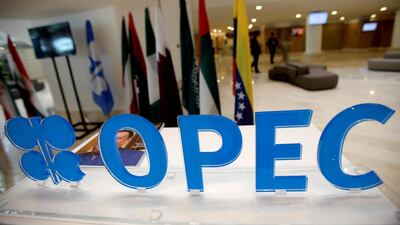
Opec’s latest monthly report suggests lower demand for its crude next year than previously expected, because of a weaker world economy. The exporters’ organisation sees a drop of oil demand this year by 9.8 million barrels per day, and a rise of 6.2 million bpd next year, 0.3 million bpd less than it expected last month. That means global oil sales are 3.6 million bpd lower next year than they were last.
And this market will be more contested: output from Libya, an Opec member not bound by the group’s current quotas, has swiftly rebounded to 1.215 million bpd from almost nothing after a blockade of its ports was lifted. Iraq has returned to over-producing to ease its desperate financial situation. Iran too, under strict US sanctions, could see some recovery next year if new American president Joe Biden returns to engagement with Tehran.
Under these strains, the next scheduled Opec meeting, on November 30, will consider whether to go ahead with the previous plan to reduce cuts by 2 million bpd as of this coming January. More likely, it will decide to maintain the current cuts through the first quarter, and maybe the second quarter too.
This would be sensible. I have advocated that Opec should move to regain its lost market share as fast as possible – but not faster. This winter in Europe and the US will likely be grim – Covid-19 cases, hospitalisations and deaths are all soaring. Never mind a second or third wave: for many countries, now is the wave.
The Pfizer vaccine is very promising, and the company hopes to have it authorised for emergency use in the US before the end of this year, but questions remain over the data from the initial trials.
The mRNA approach, different from traditional vaccines made from deactivated, weakened or dead infectious agents, would be the first ever of its type. It remains to be proved whether the vaccine also prevents asymptomatic infections, though BioNTech’s chief executive is confident it will.
Perhaps more daunting are the logistics. The mRNA does have the advantage of being quicker to manufacture. Pfizer hopes to produce 1.3 billion doses by the end of next year. Of those, almost one billion have been snapped up by the EU, UK and USA. Other states may have to wait more than a year. And anti-vaccine pseudoscience and conspiracy theories may also deter take-up.
In September, more than half of adults in the US said they would definitely or probably take a vaccine to prevent Covid-19 if it were available, down from 72 per cent in May, according to a survey by the Washington-based Pew Research Centre. In June, 71.5 per cent of participants in 19 countries said they would probably take a Covid-19 vaccine, according to a survey published last month. About 90 per cent on respondents in China said they would take it and 55 per cent in Russia.
The Pfizer vaccine is given in two doses, 21 days apart, and has to be stored at -70 degrees Celsius, which complicates distribution and may be a challenge for many developing nations. Immunity might not be long-lasting, with top-up shots perhaps required annually.
Other vaccines are also in trial, including one from China’s Sinopharm and Russia’s Sputnik 5, both being tested in the UAE, and another mRNA type from Moderna. The vaccine under development by Oxford University and AstraZeneca requires just a single dose, is a tenth of the price of Pfizer’s and only must be kept cool, above freezing. These alternatives could be crucial if problems emerge with Pfizer’s product or if it struggles to produce enough.
So, it could be well into next year before enough people have been vaccinated in major countries for the pandemic to recede. Then economic activity will revive as people go out to work, shop and dine. Those people lucky enough to have kept their jobs may have substantial savings and be ready to spend. Flying abroad for holidays will be a welcome relief.
But some habits, such as conducting most international business by teleconference instead of in-person, and working from home more than commuting, will remain. Heavy debt burdens will weigh on many people and countries, and some governments will turn to austerity, as they did after the 2008-9 financial crisis, leading to years of slow growth.
Perhaps surprisingly, when the Pfizer news broke, the contango in oil prices narrowed, prompt prices rising more than prices for future delivery. Yet as discussed, the vaccine will probably only help revive demand later in next year. This may partly reflect a growing conviction that Opec will keep the lid on output for now.
We should be hopeful that one or more vaccines are a brilliant success, but wary of all the possible pitfalls. This makes it prudent for Opec to avoid over-supply early next year, but to be ready to react quickly as and when demand revives. The oil market has had a bad bout – it should not rush its convalescence.
Robin M. Mills is CEO of Qamar Energy, and author of The Myth of the Oil Crisis

Ten tax points to be aware of in 2026
1. Domestic VAT refund amendments: request your refund within five years
If a business does not apply for the refund on time, they lose their credit.
2. E-invoicing in the UAE
Businesses should continue preparing for the implementation of e-invoicing in the UAE, with 2026 a preparation and transition period ahead of phased mandatory adoption.
3. More tax audits
Tax authorities are increasingly using data already available across multiple filings to identify audit risks.
4. More beneficial VAT and excise tax penalty regime
Tax disputes are expected to become more frequent and more structured, with clearer administrative objection and appeal processes. The UAE has adopted a new penalty regime for VAT and excise disputes, which now mirrors the penalty regime for corporate tax.
5. Greater emphasis on statutory audit
There is a greater need for the accuracy of financial statements. The International Financial Reporting Standards standards need to be strictly adhered to and, as a result, the quality of the audits will need to increase.
6. Further transfer pricing enforcement
Transfer pricing enforcement, which refers to the practice of establishing prices for internal transactions between related entities, is expected to broaden in scope. The UAE will shortly open the possibility to negotiate advance pricing agreements, or essentially rulings for transfer pricing purposes.
7. Limited time periods for audits
Recent amendments also introduce a default five-year limitation period for tax audits and assessments, subject to specific statutory exceptions. While the standard audit and assessment period is five years, this may be extended to up to 15 years in cases involving fraud or tax evasion.
8. Pillar 2 implementation
Many multinational groups will begin to feel the practical effect of the Domestic Minimum Top-Up Tax (DMTT), the UAE's implementation of the OECD’s global minimum tax under Pillar 2. While the rules apply for financial years starting on or after January 1, 2025, it is 2026 that marks the transition to an operational phase.
9. Reduced compliance obligations for imported goods and services
Businesses that apply the reverse-charge mechanism for VAT purposes in the UAE may benefit from reduced compliance obligations.
10. Substance and CbC reporting focus
Tax authorities are expected to continue strengthening the enforcement of economic substance and Country-by-Country (CbC) reporting frameworks. In the UAE, these regimes are increasingly being used as risk-assessment tools, providing tax authorities with a comprehensive view of multinational groups’ global footprints and enabling them to assess whether profits are aligned with real economic activity.
Contributed by Thomas Vanhee and Hend Rashwan, Aurifer
Our legal consultant
Name: Dr Hassan Mohsen Elhais
Position: legal consultant with Al Rowaad Advocates and Legal Consultants.
Formula Middle East Calendar (Formula Regional and Formula 4)
Round 1: January 17-19, Yas Marina Circuit – Abu Dhabi
Round 2: January 22-23, Yas Marina Circuit – Abu Dhabi
Round 3: February 7-9, Dubai Autodrome – Dubai
Round 4: February 14-16, Yas Marina Circuit – Abu Dhabi
Round 5: February 25-27, Jeddah Corniche Circuit – Saudi Arabia
INFO
Jetour T1 specs
Engine: 2-litre turbocharged
Power: 254hp
Torque: 390Nm
Price: From Dh126,000
Available: Now
Blue%20Beetle
%3Cp%3E%3Cstrong%3EDirector%3A%3C%2Fstrong%3E%20Angel%20Manuel%20Soto%3Cbr%3E%3Cstrong%3EStars%3A%20%3C%2Fstrong%3EXolo%20Mariduena%2C%20Adriana%20Barraza%2C%20Damian%20Alcazar%2C%20Raoul%20Max%20Trujillo%2C%20Susan%20Sarandon%2C%20George%20Lopez%3Cbr%3E%3Cstrong%3ERating%3A%20%3C%2Fstrong%3E4%2F5%C2%A0%3C%2Fp%3E%0A
Itcan profile
Founders: Mansour Althani and Abdullah Althani
Based: Business Bay, with offices in Saudi Arabia, Egypt and India
Sector: Technology, digital marketing and e-commerce
Size: 70 employees
Revenue: On track to make Dh100 million in revenue this year since its 2015 launch
Funding: Self-funded to date
Name: Peter Dicce
Title: Assistant dean of students and director of athletics
Favourite sport: soccer
Favourite team: Bayern Munich
Favourite player: Franz Beckenbauer
Favourite activity in Abu Dhabi: scuba diving in the Northern Emirates
Company: Instabug
Founded: 2013
Based: Egypt, Cairo
Sector: IT
Employees: 100
Stage: Series A
Investors: Flat6Labs, Accel, Y Combinator and angel investors
Frankenstein in Baghdad
Ahmed Saadawi
Penguin Press
COMPANY PROFILE
Name: Lamsa
Founder: Badr Ward
Launched: 2014
Employees: 60
Based: Abu Dhabi
Sector: EdTech
Funding to date: $15 million
UPI facts
More than 2.2 million Indian tourists arrived in UAE in 2023
More than 3.5 million Indians reside in UAE
Indian tourists can make purchases in UAE using rupee accounts in India through QR-code-based UPI real-time payment systems
Indian residents in UAE can use their non-resident NRO and NRE accounts held in Indian banks linked to a UAE mobile number for UPI transactions
Mercer, the investment consulting arm of US services company Marsh & McLennan, expects its wealth division to at least double its assets under management (AUM) in the Middle East as wealth in the region continues to grow despite economic headwinds, a company official said.
Mercer Wealth, which globally has $160 billion in AUM, plans to boost its AUM in the region to $2-$3bn in the next 2-3 years from the present $1bn, said Yasir AbuShaban, a Dubai-based principal with Mercer Wealth.
“Within the next two to three years, we are looking at reaching $2 to $3 billion as a conservative estimate and we do see an opportunity to do so,” said Mr AbuShaban.
Mercer does not directly make investments, but allocates clients’ money they have discretion to, to professional asset managers. They also provide advice to clients.
“We have buying power. We can negotiate on their (client’s) behalf with asset managers to provide them lower fees than they otherwise would have to get on their own,” he added.
Mercer Wealth’s clients include sovereign wealth funds, family offices, and insurance companies among others.
From its office in Dubai, Mercer also looks after Africa, India and Turkey, where they also see opportunity for growth.
Wealth creation in Middle East and Africa (MEA) grew 8.5 per cent to $8.1 trillion last year from $7.5tn in 2015, higher than last year’s global average of 6 per cent and the second-highest growth in a region after Asia-Pacific which grew 9.9 per cent, according to consultancy Boston Consulting Group (BCG). In the region, where wealth grew just 1.9 per cent in 2015 compared with 2014, a pickup in oil prices has helped in wealth generation.
BCG is forecasting MEA wealth will rise to $12tn by 2021, growing at an annual average of 8 per cent.
Drivers of wealth generation in the region will be split evenly between new wealth creation and growth of performance of existing assets, according to BCG.
Another general trend in the region is clients’ looking for a comprehensive approach to investing, according to Mr AbuShaban.
“Institutional investors or some of the families are seeing a slowdown in the available capital they have to invest and in that sense they are looking at optimizing the way they manage their portfolios and making sure they are not investing haphazardly and different parts of their investment are working together,” said Mr AbuShaban.
Some clients also have a higher appetite for risk, given the low interest-rate environment that does not provide enough yield for some institutional investors. These clients are keen to invest in illiquid assets, such as private equity and infrastructure.
“What we have seen is a desire for higher returns in what has been a low-return environment specifically in various fixed income or bonds,” he said.
“In this environment, we have seen a de facto increase in the risk that clients are taking in things like illiquid investments, private equity investments, infrastructure and private debt, those kind of investments were higher illiquidity results in incrementally higher returns.”
The Abu Dhabi Investment Authority, one of the largest sovereign wealth funds, said in its 2016 report that has gradually increased its exposure in direct private equity and private credit transactions, mainly in Asian markets and especially in China and India. The authority’s private equity department focused on structured equities owing to “their defensive characteristics.”
Most sought after workplace benefits in the UAE
- Flexible work arrangements
- Pension support
- Mental well-being assistance
- Insurance coverage for optical, dental, alternative medicine, cancer screening
- Financial well-being incentives
The%20specs
%3Cp%3E%3Cstrong%3EEngine%3A%3C%2Fstrong%3E%201.8-litre%204-cyl%20turbo%0D%3Cbr%3E%3Cstrong%3EPower%3A%20%3C%2Fstrong%3E190hp%20at%205%2C200rpm%0D%3Cbr%3E%3Cstrong%3ETorque%3A%3C%2Fstrong%3E%20320Nm%20from%201%2C800-5%2C000rpm%0D%3Cbr%3E%3Cstrong%3ETransmission%3A%20%3C%2Fstrong%3ESeven-speed%20dual-clutch%20auto%0D%3Cbr%3E%3Cstrong%3EFuel%20consumption%3A%3C%2Fstrong%3E%206.7L%2F100km%0D%3Cbr%3E%3Cstrong%3EPrice%3A%3C%2Fstrong%3E%20From%20Dh111%2C195%0D%3Cbr%3E%3Cstrong%3EOn%20sale%3A%20%3C%2Fstrong%3ENow%3C%2Fp%3E%0A
