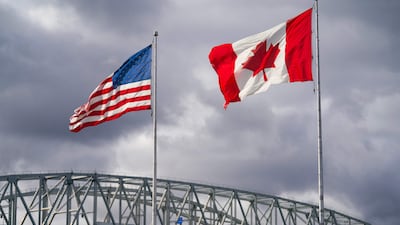

The US imposed 50 per cent tariffs on $20 billion (Dh73.4 billion) worth of Canadian products, in the latest escalation of the trade rift between the historic allies.
The import taxes that came into effect on Saturday will apply to hundreds of products from Canada, such as plywood, liquor, electrical equipment and hockey gear.
Canada said it would retaliate "dollar for dollar", with Prime Minister Mark Carney announcing that new duties on US goods would take effect from September 8.

"In the coming days, we will release details of these new tariff measures, measures, which will come into force the Tuesday after Labour Day," Mr Carney said.
US President Donald Trump announced the 50 per cent levy on Canadian goods in July, with a deadline of August 19, but he paused the tariffs hours before they were set to take effect. The three-day pause led to last-ditch negotiations for what would have been a salve to the strained trade relations between the two countries.
Why did the trade talks fail?
In a statement, Mr Carney blamed Washington for the breakdown, saying “last-minute changes in the US proposed terms were unfair, uneconomic, and called into question the reliability of any deal”.
He said he suspended talks and directed Canada’s negotiating team to return to Ottawa.

US trade representative Jamieson Greer blamed Canadian negotiators and said the team made last-minute demands that overturned the terms of a draft deal worked out over days of negotiations.
“Despite the US offer to Canada to receive the best treatment of any major exporter to our market, new demands and walk-backs of other commitments by Canada have upended the careful balance reached in the past days,” Mr Greer said.
Depression-era tariff act
The new tariffs are being imposed under Section 338 of the Tariff Act of 1930, a provision that has never been used. The law gives the President the power to impose duties on countries considered to be discriminating against US commerce.
The two sides had been discussing a deal that included lowering tariffs on certain Canadian steel and aluminium to 25 per cent, cutting duties on Canadian cars to 15 per cent and eliminating a 10 per cent lumber tariff.
But the new levies won’t apply to the most important natural resources the US imports from Canada, such as oil, potash and critical minerals. Canada is the US’s most important foreign supplier of crude oil and petroleum products — more than 4 million barrels per day.
Impact on trade and jobs
If these tariffs remain in place, Canada could lose almost 90,000 jobs, University of Calgary economist Trevor Tombe told Bloomberg. The impact is most sharply felt in machinery and electronics, plastics and rubber, furniture, wood, paper, and chemicals and cosmetics, he added. BC, Ontario and Quebec would be the worst-hit provinces, he said.
While the new measures affect a relatively small share of Canadian exports, about 5 per cent, they add to existing US tariffs on steel, lumber and autos.
The combined pressure could slow Canada's fragile economic recovery and affect broader negotiations for a free-trade pact between the neighbours.
What's expected next?
Mr Carney said on Saturday that retaliatory duties could be placed on US goods in industries including steel and dairy. Further details have yet to be announced.
The recent escalation has affected negotiations to renew the US-Mexico-Canada Agreement. Mr Trump declined to renew the treaty earlier this year.
The new duties apply regardless of whether Canadian goods qualify for preferential treatment under the trade agreement, which has shielded much of Canadian industry from earlier US tariffs.
Mr Carney said, "The retaliation escalates the trade conflict and calls into question the future of a North American trade pact between the United States, Canada and Mexico that is crucial to industry in all three countries."