Deepak Chopra's new book Mindful Moments offers an alternative to living in 'fight or flight'. AFP

Deepak Chopra's five tips for living healthier, including more sleep and stress management


Saeed Saeed
  • English
  • Arabic

Forget the grand declarations and signing up for ambitious goals. If you really want to start the new year on the right note, try getting more sleep and frequently practising your breathing.

These are some simple and effective tips Deepak Chopra recommends for those seeking a healthier lifestyle.

The Indian-American author and leading voice in the self-help movement says New Year’s Eve resolutions often focus on grandiose goals, while neglecting smaller yet critical ones.

While many appear simple on the surface, these incremental steps all serve to expand our sense of self-awareness, a catalyst for self-growth.

Chopra further expands on this idea in Mindful Moments, a new book dedicated to younger generations.

“Mindfulness is an old term and it is basically about being conscious of the choices, of the decisions we are making as opposed to simply reacting to our reptilian brain," he tells The National.

"This is an important concept we need to learn because many people are going through a whole lifetime between the fight and flight reactive responses and it doesn't have to be that way."

While the book offers more deep analysis, Chopra has provided five steps to kickstart your own personal awareness campaign.

1. Get a good night’s sleep

It may be age-old advice but it is more important than ever.

When it comes to how long a healthy night’s sleep is, Chopra is pragmatic. He states that it needs to include at least 90 minutes of deep sleep, in addition to another 90 minutes of dream or REM sleep.

Without it, we face a groggy start to the day.

“A lack of sleep or disruptive sleep is the number one cause of premature death and that can come from a range of cardiovascular illnesses,” he says.

“It also causes an inflammation of the body as well as fatigue and a lack of creativity.”

2. Manage your stress levels

Following the pandemic, many feel more anxious than normal these days.

Fortunately, the skills to alleviate those tensions can be learnt.

"When it comes to stress management, what we are really trying to do is quiet the mind and that doesn't mean replacing it with positive thinking; because if you try to do that and you don't feel positive it will result in you in being more stressed," he says.

“While meditation is one of the most reliable ways of relieving stress, there are other options also such as watching comedies as humour is a way to tap into the paradox of ambiguity, uncertainty and contradiction while being comfortable.”

Chopra also encourages regular bouts of gentle reflection to reorient the mind.

“This can be done by asking some questions such as: 'Who am I? What is it that I want? What’s my purpose and what am I grateful for?'” he says.

3. Get your mind and body aligned

Practice mindfulness through yoga or t’ai chi exercises.

“They also incorporate breathing exercises they are useful in coordinating the mind and body,” Chopra says.

“These kinds of activities stimulate a part of our nervous system which has the vagus nerve. Taken from the Latin word meaning vagabond in English, it is a nerve that goes everywhere within your body and it is often viewed as the ‘healing nerve’.”

4. Build your interpersonal skills

As many industries adopt a hybrid model of working from home and the office, building skills to adapt are paramount.

"Your professional relationship is a reflection of how you deal with your personal relationships and you can't separate the two," Chopra says.

An important step in melding both together is understanding what makes you tick emotionally.

"You have to be in touch with your emotions and feel in your body what you are going through. Ask yourself if you are feeling angry, hostility, shame, mistrust, fear or depression. These are dysfunctional emotions that separate us from others," he says.

"To build that compassion and empathy in order to connect with others, we need to consciously communicate our needs. This way we limit conflict because hostility comes from the notion that you have your idea of how things should be and everyone else should feel the same.

“All conflict is ideological and this inability to consciously communicate or ask for forgiveness creates a state of emotional belligerence.”

5. Understand what true love is

Chopra disagrees with the portrayal of love in media, describing many of the relationships seen on screen as rooted in insecurity.

“People think of love as a mere sentiment or emotion or melodrama,” he says. “That's not really love. That's self-importance and self-pity and self-concern and insecurity that it often follows this idea of: 'I love you, so do you love me?'”

Chopra says a more accurate description of love is found in the ancient traditions, in that it often follows several stages of emotional growth.

“At the source of it all is awareness,” he says. “The more we understand that the more we can expand our awareness, show more compassion and empathy and become less judgemental.

"True and authentic love is attained when you only grow together and go through these stages. And no, you cannot skip the queue."

Top 12 contemporary novels by Arab writers worth reading

  • These contemporary Arab novels cover a range of themes from immigration, broken families, identity and lost histories
    These contemporary Arab novels cover a range of themes from immigration, broken families, identity and lost histories
  • 'Bird Summons' by Leila Aboulela
    'Bird Summons' by Leila Aboulela
  • 'Against the Loveless World' by Susan Abulhawa
    'Against the Loveless World' by Susan Abulhawa
  • 'An Unlasting Home' by Mai Al-Nakib
    'An Unlasting Home' by Mai Al-Nakib
  • 'The Arsonists' City' by Hala Alyan
    'The Arsonists' City' by Hala Alyan
  • 'Mother of Strangers' by Suad Amiry
    'Mother of Strangers' by Suad Amiry
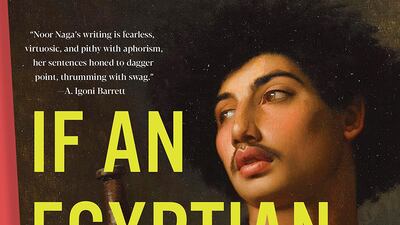
  • If An Egyptian Cannot Speak English by Noor Naga.
    If An Egyptian Cannot Speak English by Noor Naga.
  • 'Country of Origin' by Dalia Azim
    'Country of Origin' by Dalia Azim
  • 'The Watermelon Boys' by Ruqaya Izzidien
    'The Watermelon Boys' by Ruqaya Izzidien
  • 'Shad Hadid and the Alchemists of Alexandria' by George Jreije
    'Shad Hadid and the Alchemists of Alexandria' by George Jreije
  • 'As Long as the Lemon Trees Grow' by Zoulfa Katouh
    'As Long as the Lemon Trees Grow' by Zoulfa Katouh
  • 'The Beauty of Your Face' by Sahar Mustafah
    'The Beauty of Your Face' by Sahar Mustafah
  • 'Bride of the Sea' by Eman Quotah
    'Bride of the Sea' by Eman Quotah
  • 'No Land to Light On' by Yara Zgheib
    'No Land to Light On' by Yara Zgheib
The Melbourne Mercer Global Pension Index

The Melbourne Mercer Global Pension Index

Mazen Abukhater, principal and actuary at global consultancy Mercer, Middle East, says the company’s Melbourne Mercer Global Pension Index - which benchmarks 34 pension schemes across the globe to assess their adequacy, sustainability and integrity - included Saudi Arabia for the first time this year to offer a glimpse into the region.

The index highlighted fundamental issues for all 34 countries, such as a rapid ageing population and a low growth / low interest environment putting pressure on expected returns. It also highlighted the increasing popularity around the world of defined contribution schemes.

“Average life expectancy has been increasing by about three years every 10 years. Someone born in 1947 is expected to live until 85 whereas someone born in 2007 is expected to live to 103,” Mr Abukhater told the Mena Pensions Conference.

“Are our systems equipped to handle these kind of life expectancies in the future? If so many people retire at 60, they are going to be in retirement for 43 years – so we need to adapt our retirement age to our changing life expectancy.”

Saudi Arabia came in the middle of Mercer’s ranking with a score of 58.9. The report said the country's index could be raised by improving the minimum level of support for the poorest aged individuals and increasing the labour force participation rate at older ages as life expectancies rise.

Mr Abukhater said the challenges of an ageing population, increased life expectancy and some individuals relying solely on their government for financial support in their retirement years will put the system under strain.

“To relieve that pressure, governments need to consider whether it is time to switch to a defined contribution scheme so that individuals can supplement their own future with the help of government support,” he said.

Ten tax points to be aware of in 2026

1. Domestic VAT refund amendments: request your refund within five years

If a business does not apply for the refund on time, they lose their credit.

2. E-invoicing in the UAE

Businesses should continue preparing for the implementation of e-invoicing in the UAE, with 2026 a preparation and transition period ahead of phased mandatory adoption. 

3. More tax audits

Tax authorities are increasingly using data already available across multiple filings to identify audit risks. 

4. More beneficial VAT and excise tax penalty regime

Tax disputes are expected to become more frequent and more structured, with clearer administrative objection and appeal processes. The UAE has adopted a new penalty regime for VAT and excise disputes, which now mirrors the penalty regime for corporate tax.

5. Greater emphasis on statutory audit

There is a greater need for the accuracy of financial statements. The International Financial Reporting Standards standards need to be strictly adhered to and, as a result, the quality of the audits will need to increase.

6. Further transfer pricing enforcement

Transfer pricing enforcement, which refers to the practice of establishing prices for internal transactions between related entities, is expected to broaden in scope. The UAE will shortly open the possibility to negotiate advance pricing agreements, or essentially rulings for transfer pricing purposes. 

7. Limited time periods for audits

Recent amendments also introduce a default five-year limitation period for tax audits and assessments, subject to specific statutory exceptions. While the standard audit and assessment period is five years, this may be extended to up to 15 years in cases involving fraud or tax evasion. 

8. Pillar 2 implementation 

Many multinational groups will begin to feel the practical effect of the Domestic Minimum Top-Up Tax (DMTT), the UAE's implementation of the OECD’s global minimum tax under Pillar 2. While the rules apply for financial years starting on or after January 1, 2025, it is 2026 that marks the transition to an operational phase.

9. Reduced compliance obligations for imported goods and services

Businesses that apply the reverse-charge mechanism for VAT purposes in the UAE may benefit from reduced compliance obligations. 

10. Substance and CbC reporting focus

Tax authorities are expected to continue strengthening the enforcement of economic substance and Country-by-Country (CbC) reporting frameworks. In the UAE, these regimes are increasingly being used as risk-assessment tools, providing tax authorities with a comprehensive view of multinational groups’ global footprints and enabling them to assess whether profits are aligned with real economic activity. 

Contributed by Thomas Vanhee and Hend Rashwan, Aurifer

Ferrari 12Cilindri specs

Engine: naturally aspirated 6.5-liter V12

Power: 819hp

Torque: 678Nm at 7,250rpm

Price: From Dh1,700,000

Available: Now

THE%20HOLDOVERS
%3Cp%3E%3Cstrong%3EDirector%3A%20%3C%2Fstrong%3EAlexander%20Payne%3C%2Fp%3E%0A%3Cp%3E%3Cstrong%3EStarring%3A%3C%2Fstrong%3E%20Paul%20Giamatti%2C%20Da'Vine%20Joy%20Randolph%2C%20Dominic%20Sessa%3C%2Fp%3E%0A%3Cp%3E%3Cstrong%3ERating%3A%3C%2Fstrong%3E%204.5%2F5%3C%2Fp%3E%0A
GIANT REVIEW

Starring: Amir El-Masry, Pierce Brosnan

Director: Athale

Rating: 4/5

Teams

Punjabi Legends Owners: Inzamam-ul-Haq and Intizar-ul-Haq; Key player: Misbah-ul-Haq

Pakhtoons Owners: Habib Khan and Tajuddin Khan; Key player: Shahid Afridi

Maratha Arabians Owners: Sohail Khan, Ali Tumbi, Parvez Khan; Key player: Virender Sehwag

Bangla Tigers Owners: Shirajuddin Alam, Yasin Choudhary, Neelesh Bhatnager, Anis and Rizwan Sajan; Key player: TBC

Colombo Lions Owners: Sri Lanka Cricket; Key player: TBC

Kerala Kings Owners: Hussain Adam Ali and Shafi Ul Mulk; Key player: Eoin Morgan

Venue Sharjah Cricket Stadium

Format 10 overs per side, matches last for 90 minutes

Timeline October 25: Around 120 players to be entered into a draft, to be held in Dubai; December 21: Matches start; December 24: Finals

If you go

The flights
Emirates and Etihad fly direct to Nairobi, with fares starting from Dh1,695. The resort can be reached from Nairobi via a 35-minute flight from Wilson Airport or Jomo Kenyatta International Airport, or by road, which takes at least three hours.

The rooms
Rooms at Fairmont Mount Kenya range from Dh1,870 per night for a deluxe room to Dh11,000 per night for the William Holden Cottage.

RACE CARD

6.30pm Mazrat Al Ruwayah – Group 2 (PA) $36,000 (Dirt) 1,600m

7.05pm Handicap (TB) $68,000 (Turf) 2,410m

7.40pm Meydan Trophy – Conditions (TB) $50,000 (T) 1,900m

8.15pm Al Maktoum Challenge Round 2 - Group 2 (TB) $293,000 (D) 1,900m

8.50pm Al Rashidiya – Group 2 (TB) $163,000 (T) 1,800m

9.25pm Handicap (TB) $65,000 (T) 1,000m

Who has been sanctioned?

Daniella Weiss and Nachala
Described as 'the grandmother of the settler movement', she has encouraged the expansion of settlements for decades. The 79 year old leads radical settler movement Nachala, whose aim is for Israel to annex Gaza and the occupied West Bank, where it helps settlers built outposts.

Harel Libi & Libi Construction and Infrastructure
Libi has been involved in threatening and perpetuating acts of aggression and violence against Palestinians. His firm has provided logistical and financial support for the establishment of illegal outposts.

Zohar Sabah
Runs a settler outpost named Zohar’s Farm and has previously faced charges of violence against Palestinians. He was indicted by Israel’s State Attorney’s Office in September for allegedly participating in a violent attack against Palestinians and activists in the West Bank village of Muarrajat.

Coco’s Farm and Neria’s Farm
These are illegal outposts in the West Bank, which are at the vanguard of the settler movement. According to the UK, they are associated with people who have been involved in enabling, inciting, promoting or providing support for activities that amount to “serious abuse”.

Our legal consultant

Name: Hassan Mohsen Elhais

Position: legal consultant with Al Rowaad Advocates and Legal Consultants.

Who's who in Yemen conflict

Houthis: Iran-backed rebels who occupy Sanaa and run unrecognised government

Yemeni government: Exiled government in Aden led by eight-member Presidential Leadership Council

Southern Transitional Council: Faction in Yemeni government that seeks autonomy for the south

Habrish 'rebels': Tribal-backed forces feuding with STC over control of oil in government territory

Key figures in the life of the fort

Sheikh Dhiyab bin Isa (ruled 1761-1793) Built Qasr Al Hosn as a watchtower to guard over the only freshwater well on Abu Dhabi island.

Sheikh Shakhbut bin Dhiyab (ruled 1793-1816) Expanded the tower into a small fort and transferred his ruling place of residence from Liwa Oasis to the fort on the island.

Sheikh Tahnoon bin Shakhbut (ruled 1818-1833) Expanded Qasr Al Hosn further as Abu Dhabi grew from a small village of palm huts to a town of more than 5,000 inhabitants.

Sheikh Khalifa bin Shakhbut (ruled 1833-1845) Repaired and fortified the fort.

Sheikh Saeed bin Tahnoon (ruled 1845-1855) Turned Qasr Al Hosn into a strong two-storied structure.

Sheikh Zayed bin Khalifa (ruled 1855-1909) Expanded Qasr Al Hosn further to reflect the emirate's increasing prominence.

Sheikh Shakhbut bin Sultan (ruled 1928-1966) Renovated and enlarged Qasr Al Hosn, adding a decorative arch and two new villas.

Sheikh Zayed bin Sultan (ruled 1966-2004) Moved the royal residence to Al Manhal palace and kept his diwan at Qasr Al Hosn.

Sources: Jayanti Maitra, www.adach.ae

Tips for taking the metro

- set out well ahead of time

- make sure you have at least Dh15 on you Nol card, as there could be big queues for top-up machines

- enter the right cabin. The train may be too busy to move between carriages once you're on

- don't carry too much luggage and tuck it under a seat to make room for fellow passengers

Dhadak

Director: Shashank Khaitan

Starring: Janhvi Kapoor, Ishaan Khattar, Ashutosh Rana

Stars: 3

Winners

Ballon d’Or (Men’s)
Ousmane Dembélé (Paris Saint-Germain / France)

Ballon d’Or Féminin (Women’s)
Aitana Bonmatí (Barcelona / Spain)

Kopa Trophy (Best player under 21 – Men’s)
Lamine Yamal (Barcelona / Spain)

Best Young Women’s Player
Vicky López (Barcelona / Spain)

Yashin Trophy (Best Goalkeeper – Men’s)
Gianluigi Donnarumma (Paris Saint-Germain and Manchester City / Italy)

Best Women’s Goalkeeper
Hannah Hampton (England / Aston Villa and Chelsea)

Men’s Coach of the Year
Luis Enrique (Paris Saint-Germain)

Women’s Coach of the Year
Sarina Wiegman (England)

Our legal consultant

Name: Hassan Mohsen Elhais

Position: legal consultant with Al Rowaad Advocates and Legal Consultants.

Updated: January 05, 2023, 7:30 AM