
Billionaire Marc Lore has unveiled plans for Telosa, a $400 billion megacity to be built somewhere in the US desert with space for up to five million residents.
Telosa is being billed as a new metropolis that will set “a global standard for urban living, expand human potential and become a blueprint for future generations”, with city planning focused on citizen involvement, equitability and sustainability.
Telosa's location has yet to be decided, though planners have said it will likely be built somewhere in the American West, taking advantage of low land prices in the region.
Possible locations include Nevada, Utah, Idaho, Arizona and Texas but also the Appalachian region, the project's official website said.
One possible complication could be the fast-shrinking water levels across the western US, which has been gripped by two decades of drought.
Mr Lore, who was chief executive of Walmart's eCommerce from 2016-2021, has said Telosa is based on the concept of “equitism” -- an economic system in which citizens have a stake in the city’s land.
“Cities that have been built to date from scratch are more like real estate projects,” Mr Lore said in a promotional video for the project.
“They don't start with people at the centre. Because if you started with people at the centre, you would immediately think, 'OK, what's the mission and what are the values?'"

The new project will allow residents to “participate in the decision-making and budgeting process” for the city and project organisers promise complete transparency in governance.
The city's website says the aim is to create an “open, fair, inclusive” and sustainable city of the future.
City parks will be home to native flora and also act as water storage areas while streets will “prioritise bikes and pedestrians” and also feature automated cars.
An image released by organisers depicts a proposed skyscraper, Equitism Tower, which will feature elevated water storage, aeroponic farms and an energy-producing photovoltaic roof that will allow it to “share and distribute all it produces”, CNN reported.

The project's promoters say the city will take about 40 years to develop and will cost about $400 billion, but added it will be built in phases, with the first phase opening to about 50,000 residents by 2030.
As to funding, CNN reported that project organisers have said it will come from “various sources”, including private investors, philanthropists, federal and state grants, and economic development subsidies.
The project has drawn comparisons to Saudi Arabia's planned smart megacity of Neom, which is being built on the Red Sea coast is estimated to cost about $689 billion. It is hoped that the first section of the city will be completed by 2025.
-
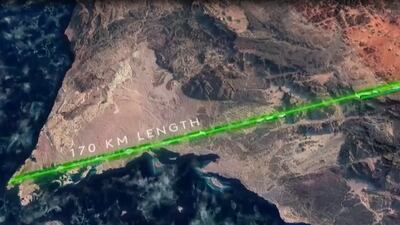
Saudi Crown Prince Mohammed bin Salman has announced The Line, a 170km belt of hyper-connected future communities, without cars and roads. Images courtesy Neom -

Plans for the city include "zero carbon emissions", Prince Mohammed said. Construction will begin before the end of March. -

Prince Mohammed, who is chairman of the board of the Neom Company, said that The Line has been designed to allow residents to "fulfil all of their daily requirements within a five-minute walk". -
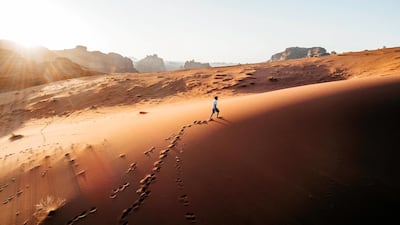
Neom is the flagship project of Saudi Arabia's post-oil diversification plan, known as Vision 2030, that seeks to reduce the country's reliance on hydrocarbons. -

The city will be 100 per cent powered by renewable energy and the cost of infrastructure will be 30 per cent cheaper than more traditional cities. -
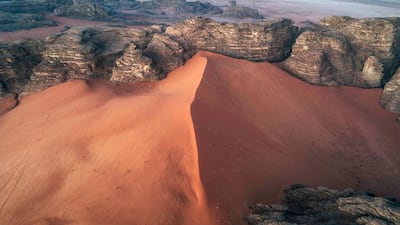
It is being overseen by the Public Investment Fund and is set to create hundreds of thousands of jobs and contribute tens of billions of dollars to the kingdom's GDP. -

Neom spans 26,500 square kilometres. -

It will contain towns and cities, ports and enterprise zones, research centres, sports venues, entertainment sites and tourist destinations. -

The bulk of construction will take place over the next decade, with a target of hosting one million residents by 2030. -
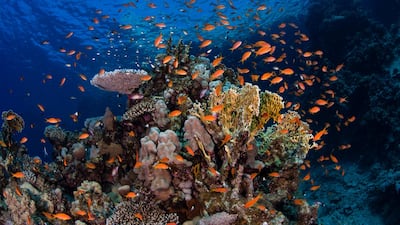
A coral reef with anthias fish at Yub'a island dive site, off the northwest of the island, in Neom.



