
It would be “unconscionable” for any US President to make a new deal with Iran that didn’t see Western hostages freed to return home, US Special Representative for Iran Elliott Abrams said on Thursday.
In a wide-ranging interview with The National on US policy towards Tehran and its regional context, he said that the last four years had given America leverage to stop Iran's destabilising activities in the Middle East.
“This is a regime in Tehran that is using people, their families, in the cruellest ways. There are three American hostages in Iran – Baquer Namazi, Siamak Namazi and Morad Tahbaz. Baquer is 84 years old. Why are they holding him? Why can’t he go back to his family?” he said.
“I think that it would be unconscionable to have any kind of agreement next year, no matter who is president, that does not include the return home of the three American hostages.
“Several other countries are dealing, certainly the UK, with hostages that remain in Iran. We can only hope that there is a unified international demand that these people be returned to their families.”
Mr Abrams stressed that America’s increasing actions against Iran in recent months had not been unilateral, nor were they devised in the twilight of President Donald Trump’s administration, contrary to what critics claim.
Iranian Foreign Minister Mohammed Javad Zarif accused the US of “reckless unilateralism” after Mr Trump’s administration withdrew from the Joint Comprehensive Plan of Action, commonly known as the “nuclear deal”, in 2018 and starting a “maximum pressure” sanctions campaign.
-
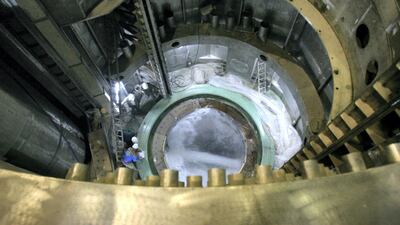
Russian contractors work at the Bushehr nuclear reactor site in 2007. The plant opened four years later. Bloomberg -
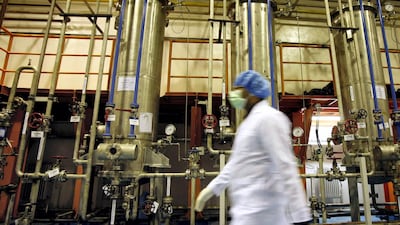
An Iranian technician at the International Atomic Energy Agency inspects the country's Isfahan plant in 2007. Tehran is no longer co-operating with the agency at nuclear sites across the country. EPA -

Workers wait to begin constructing a second reactor at the Bushehr nuclear power plant in 2019. AFP -
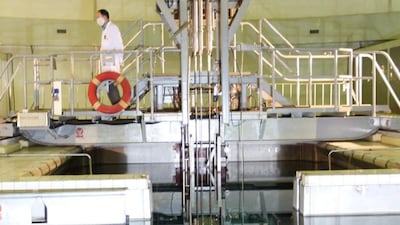
A metal-encased rod with 20 per cent enriched nuclear fuel is inserted into a reactor in Tehran in 2012. AFP -
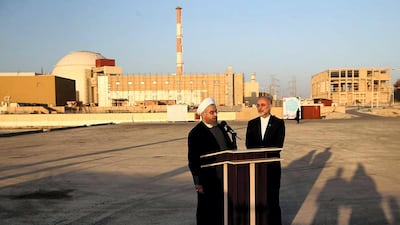
Fomer Iranian President Hassan Rouhani and the country's Atomic Energy Organisation chief Ali Akbar Salehi speak at the Bushehr nuclear site in 2015. AFP -
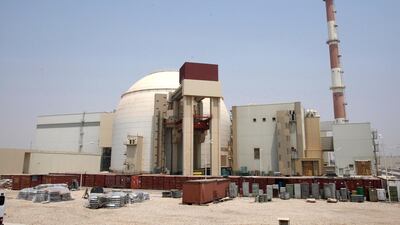
Iran's Bushehr nuclear plant has been restarted. EPA -
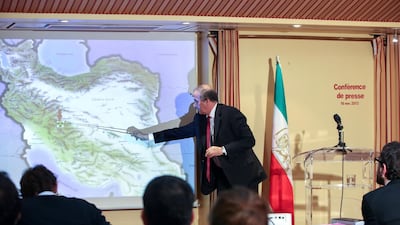
Mehdi Abrichamtchi, chairman of the Peace and Security Committee at the National Council of Resistance of Iran, shows journalists the location of a secret nuclear site in Iran in 2013. AFP -
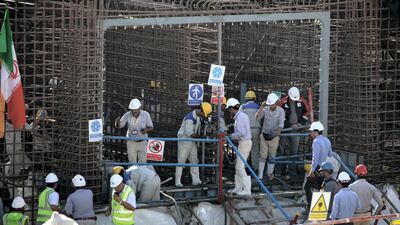
Workers prepare to begin the construction of a second reactor at the Bushehr site. AFP


“Maximum pressure is a campaign to build leverage. Years later, we have a lot of leverage. We have done tremendous damage to regime revenues,” said Mr Abrams.
“They can’t take four more years of it. Now is the moment to use that that leverage. Get Iran to stop the missile programme and the sabotage and the nuclear violations. Otherwise, they don’t want to do these things. We’ve built the pressure. Now we have the leverage.”
Mr Abrams explained that one reason for the far-reaching sanctions is the overlap between the Iranian military and the economy.
“I do hear people saying from time to time, ‘surely there is nothing left to sanction’. And that is an outright fact. But sadly, it is because of the pervasiveness of the IRGC [Islamic Revolutionary Guard Corps] in the Iranian economy,” he said.
“So many companies and activities produce funding for the IRGC. In fact, under counterterrorism sanctions, there are many more targets that deserve to be sanctioned, and this is in addition to the nuclear sanctions.”
Since the start of the maximum pressure campaign, sanctions on Iran have cost the country $70 billion, curtailing Tehran’s ability to fund regional militias.
But Tehran has also scaled up its prohibited nuclear activities and lashed out at countries in the region either directly or through its proxies, attacking oil infrastructure in Saudi Arabia, sabotaging oil tankers and stepping up arms transfers to militias in Iraq, Yemen and Lebanon.
Human rights
Mr Abrams described how new sanctions focusing on human rights abuses and conventional missiles refocus the narrative on issues where US allies could find common ground.
“There is a focus on human rights right now because it is November and in November last year there was a great uprising of the Iranian people that was brutally suppressed by the Iranian regime.”
Mr Abrams believes that while sanctions to prevent Iran from obtaining a nuclear weapon are important, its human rights abuses must not be forgotten.
Nuclear programmes
-
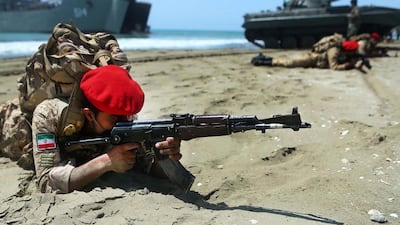
Iranian soldiers during a military exercise in the Gulf, near the strategic strait of Hormuz in southern Iran during a three-day exercise. AFP, HO via Iranian Army website -
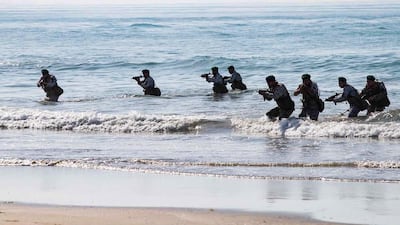
Iranian soldiers during a military exercise in the Gulf, near the strategic strait of Hormuz in southern Iran during a three-day exercise. AFP, HO via Iranian Army website -
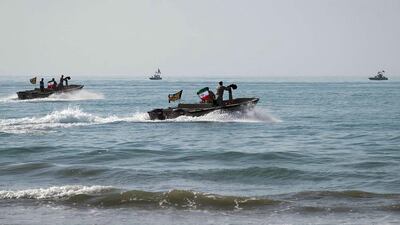
Iranian soldiers during a military exercise in the Gulf, near the strategic strait of Hormuz in southern Iran during a three-day exercise. AFP, HO via Iranian Army website -
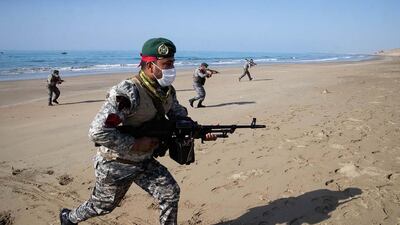
Iranian soldiers during a military exercise in the Gulf, near the strategic strait of Hormuz in southern Iran during a three-day exercise. AFP, HO via Iranian Army website -
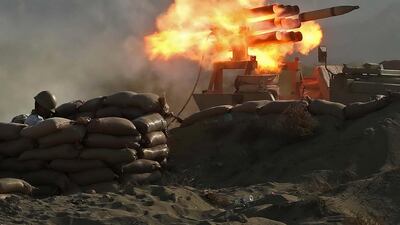
Iranian rockets being fired during a military exercise in the Gulf, near the strategic strait of Hormuz in southern Iran during a drill. AFP, HO via Iranian Army website -
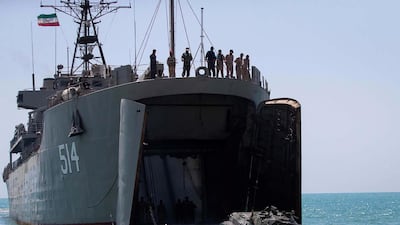
An Iranian tank exiting from a navy warship during a military exercise in the Gulf, near the strategic strait of Hormuz in southern Iran during a drill. AFP, HO via Iranian Army website -
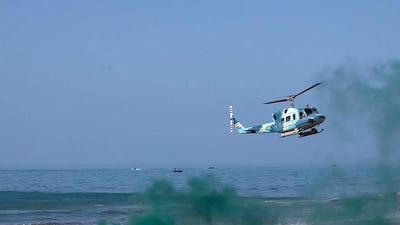
An Iranian helicopter during a military exercise in the Gulf. AFP, HO via Iranian Army website -

Iranian rockets being fired during a military exercise in the Gulf, near the strategic strait of Hormuz in southern Iran during a drill. AFP, HO via Iranian Army website -
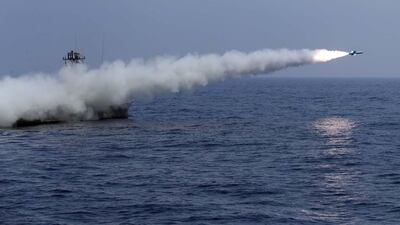
Iranian rockets being fired during a military exercise in the Gulf, near the strategic strait of Hormuz in southern Iran during a drill. AFP, HO via Iranian Army website -
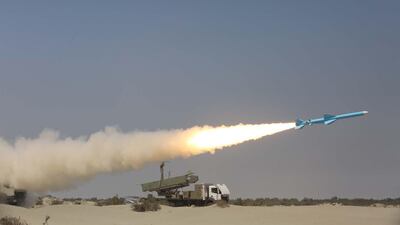
Iranian rockets being fired during a military exercise in the Gulf, near the strategic strait of Hormuz in southern Iran during a drill. AFP, HO via Iranian Army website -
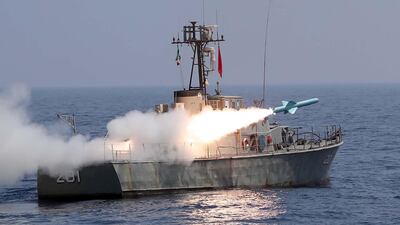
Iranian rockets being fired during a military exercise in the Gulf, near the strategic strait of Hormuz in southern Iran during a drill. Reuters, HO via Iranian Army website -
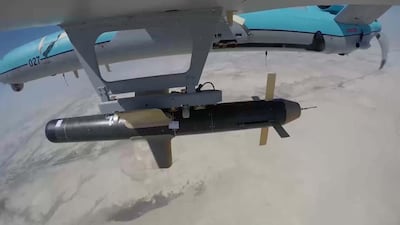
An Iranian Simorgh drone carrying a weapon during the second day of a military exercise in the Gulf. AFP, HO via Iranian Army website -
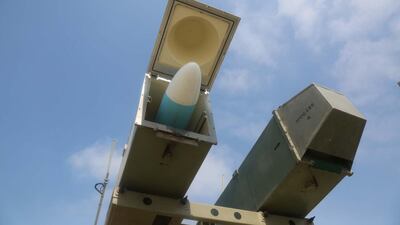
An Iranian Ghader missile before its launch during the second day of a military exercise in the Gulf. AFP, HO via Iranian Army website -
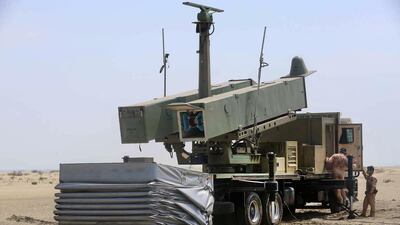
An Iranian missile Ghader before firing during the second day of a military exercise in the Gulf. AFP, HO via Iranian Army website -
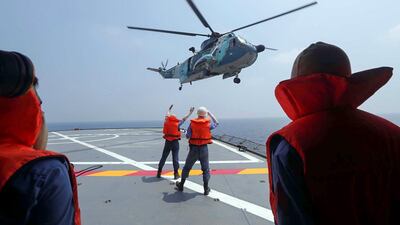
An Iranian army helicopter landing on a navy warship during the last day of a military exercise in the Gulf. AFP, HO via Iranian Army website -
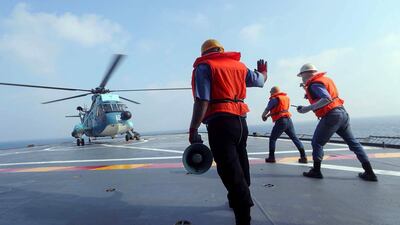
An Iranian army helicopter landing on a navy warship during the last day of a military exercise in the Gulf. AFP, HO via Iranian Army website -
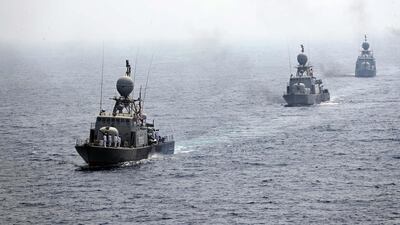
Iranian navy warships parade during the last day of military exercise in Gulf. EPA, HO Iranian military -
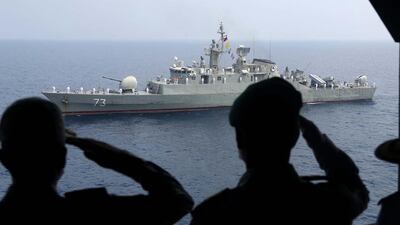
Iranian navy warships parade during the last day of military exercise in Gulf. EPA, HO Iranian military


When pressed on whether focusing sanctions on human rights, terrorism and missiles could sidetrack US policy on nuclear non-proliferation, Mr Abrams said he did not think this was the case.
“In June, there was a unanimous IAEA resolution including Russia and China, demanding that Iran allow access to two suspicious sites. I hope we can return to closer unanimity in the IAEA because here, we’re not just talking about the JCPOA. We’re talking about older and more fundamental safeguard agreements, and we’re talking about pledges that Iran made many years ago to the international community,” he said.
“Now we have, on November 11, a report by the IAEA which says that the explanation that Iran has given for the existence of suspicious things found by the IAEA, such as the presence of suspicious particles that appear to be manufactured, the explanations are not technically credible.”
“If I escape from diplomatic language, that means they’re lying to the IAEA again. And there were long delays in access. In the case of a request from the IAEA to access a site in January, it took about nine months. This is really not acceptable. There is a board meeting coming in late November and it is our hope that every member will speak up about the need to hold Iran up to the Nuclear Non Proliferation Treaty pledges it has made.”
Regional pressure
-
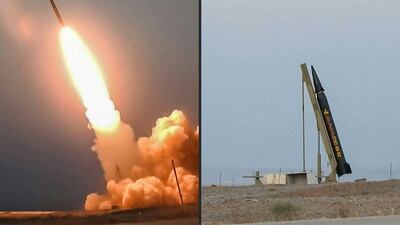
The ballistic missile named after Qassem Suleimani is being tested in an undisclosed location in Iran. AFP / Iranian Defence Ministry -
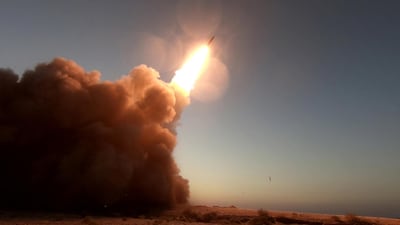
A missile unveiled by Iran is launched in an unknown location in Iran. Wana via Reuters -

A missile unveiled by Iran is launched in an unknown location in Iran. Wana via Reuters -

A missile unveiled by Iran is launched in an unknown location in Iran. Wana via Reuters -

A missile unveiled by Iran is launched in an unknown location in Iran. Wana via Reuters -
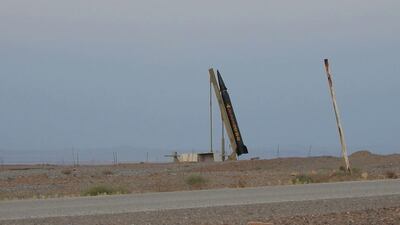
The ballistic missile named after Qassem Suleimani is being tested in an undisclosed location. EPA / Iranian Defence Ministry -
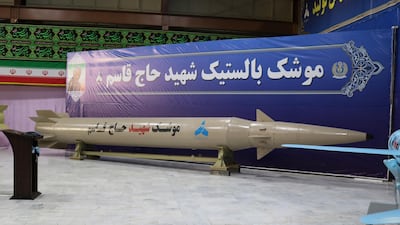
A new cruise missile named after Qassem Suleimani at in an unknown location in Iran. Wana via Reuters -

A new cruise missile named after Abu Mahdi Al Muhandis is seen in an unknown location in Iran. Wana via Reuters -
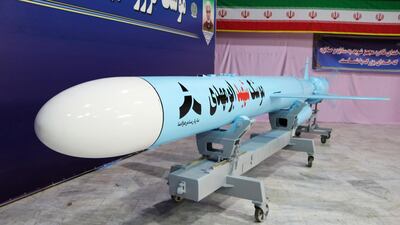
A new cruise missile named after Abu Mahdi Al Muhandis is seen in an unknown location in Iran. Wana via Reuters -
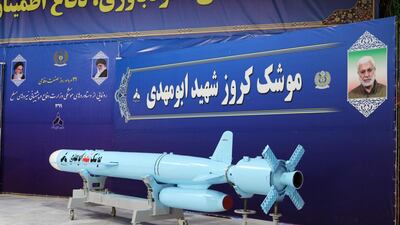
A new cruise missile named after Abu Mahdi Al Muhandis is seen in an unknown location in Iran. Wana via Reuters -

A new cruise missile unveiled by Iran is seen at an unknown location in Iran. Wana via Reuters


Going back to the regional picture, Mr Abrams noted how the US still sought to place pressure on Iran’s regional militias and economic interests.
On November, Christian Lebanese politician Gebran Bassil was sanctioned for his ties to Lebanon's Iran-back Hezbollah movement.
Notably, Mr Bassil was also sanctioned due to allegations of corruption, under an act passed in 2012 by Barack Obama’s administration, the Global Magnitsky Act.
“We’d like to see a profusion of Global Magnitsky statutes by other countries,” said Mr Abrams.
“The UK has one. We’d like to see the EU, and every democratic country adopts something like it, because it’s an effective way for all of us together to fight corruption.”
Asked how the US should respond in Iraq if more American soldiers are killed by Iran-backed militias, after two were killed in attacks in March, Mr Abrams said, “I hope that the Iranians get the message that the United States will defend itself and will defend its people. And I think that this will continue in 2021 no matter who is president.”

