


UK towns and cities with fewer trees and green spaces are up to 5°C warmer during the hottest days, analysis has suggested, and people of colour make up the largest part of the population in such areas.
The findings, from mapping experts TerraSulis and environmental group Friends of the Earth, found that neighbourhoods with higher levels of tree cover, green space or both were much cooler than those without.
People of colour make up 65 per cent of the population in neighbourhoods with the least cooling, demonstrating how marginalised communities can be the most affected by the climate crisis in the UK.
Those living on lower incomes are also disproportionately affected by a lack of cooling near their homes, while air pollution is worse in the hottest areas.
It is the first time research on the cooling abilities of green spaces and trees in built-up areas has been modelled, according to FOE.
New heat maps show the temperature variation in five English cities – London, Birmingham, Manchester, Bristol and Newcastle – during the UK’s hottest day on record a year ago, on July 19.
Recent years have seen an increase in initiatives and funding to improve green spaces in urban areas, such as the government’s Levelling Up Parks Fund, London Mayor Sadiq Khan’s push for more urban greening and Birmingham’s plan to double green spaces by 2040.
But last month, the Climate Change Committee’s annual report to the UK Parliament warned of the government’s “worryingly slow” progress on tackling climate change.
Hot weather puts older people, very young children and those with pre-existing medical conditions particularly at risk.
According to the UK Health Security Agency, 2,803 excess deaths occurred during the summer of 2022.
Summer 2022 heatwave – in pictures
-
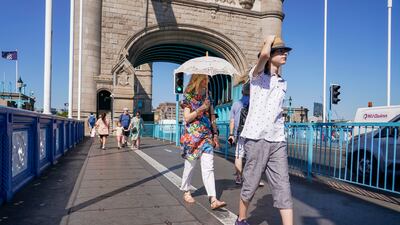
A woman shelters from the sun on Tower Bridge, in London. AP -
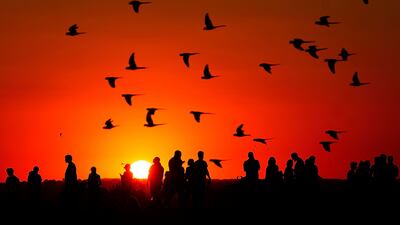
A crowd of people watch the setting sun from a hill in Ealing, west London. AP -
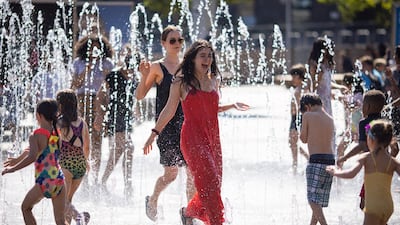
People enjoy the water fountains in King's Cross, London. EPA -

The low water level at Pontsticill Reservoir near Merthyr Tydfil, Wales. Getty Images -
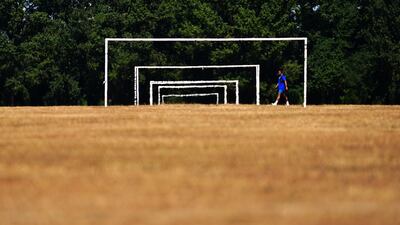
Dry grass on the football pitches at Hackney Marshes in east London. PA -
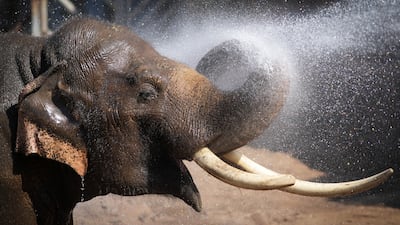
Aung-Bo, a 21-year-old Asian elephant, is cooled down by a keeper at Chester Zoo. Getty Images -

People walk on parched grass of The Long Walk towards Windsor Castle. Reuters -
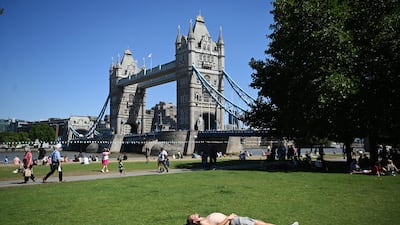
A sunbather enjoys the warm weather in London. EPA -
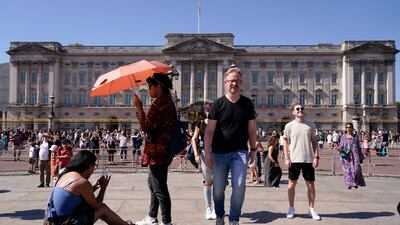
Tourists shelter from the sun as they stand outside Buckingham Palace in London. AP -

People enjoy the hot weather as they zorb on the canal at Paddington Basin in London. PA -
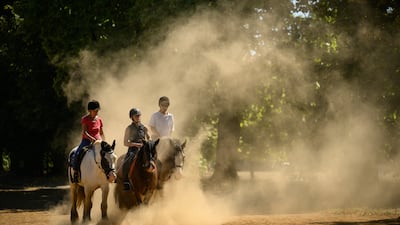
Horses from Hyde Park stables are surrounded by clouds of dust as they are ridden along a dry bridleway in the London park. Getty Images -
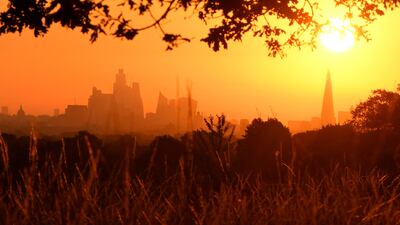
The sun rises above the London skyline on Thursday morning. Reuters -
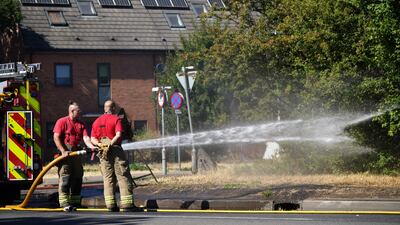
London Fire Brigade dealing with the aftermath of a grass fire in Rainham, east London. PA -
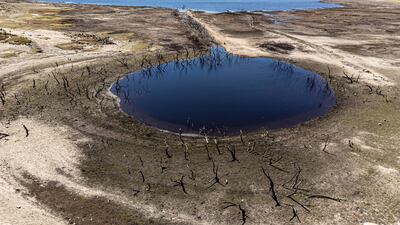
A water basin is cut off at Colliford Lake, where water levels have dropped to expose previously unseen trees at Cornwall's largest reservoir. AP -
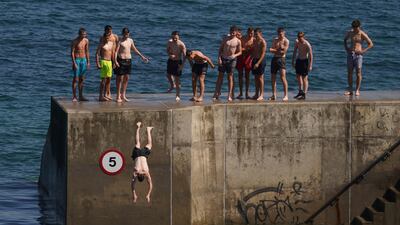
Men cool off by diving into the water at Cullercoats Bay in North Tyneside. AP -
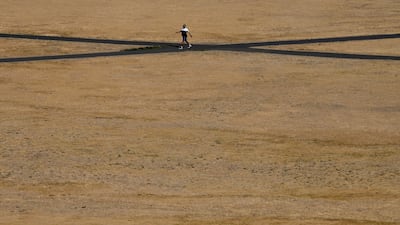
Scorched grass at Greenwich Park in London. AP -

A dog cools off in a pond at Richmond Park in London. AP -
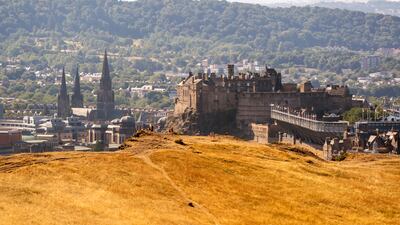
Large areas of grass have turned yellow due to the dry conditions in Edinburgh. AP -

A young man takes a dip in the Peover Eye, a small river that meanders through the Cheshire countryside. Getty Images -

Dry fairways at Chelsfield Lakes club in Orpington have made for bouncy, unpredictable golfing conditions. Getty Images


Chris Kilby, 70, an FOE Hackney and Tower Hamlets member who has chronic obstructive pulmonary disease and asthma, said: “When the weather is extremely hot, it completely knocks me sideways.
“Last year, I believed I had overcome the worst of it, but this year’s hot weather has made it nearly impossible for me to leave my house.
“Even little things like doing my regular exercises on my balcony have become really difficult.”
Rowha Mohid, founder of GuiltlessThreads, a social impact company that runs events like workshops for communities of colour on addressing eco-anxiety, said: “Historically, people living in low-income, urban areas have had to suffer from soaring pollution levels due to badly regulated factories and roads.
“Now, we are being robbed of green spaces by luxury developments that do nothing to benefit the people living in our communities.
“As we experience more extreme heat during summers, people have nowhere cool to shelter, which leaves the most vulnerable at risk of serious health complications. Working-class communities have as much of a right to clean air, green space and a healthy environment as wealthy ones.”
FOE is urging the government and local authorities to commit to no less than 20 per cent tree cover across urban areas as part of the government’s upcoming Urban Trees Standard.
It is calling for more than 3,000 of the most vulnerable neighbourhoods to be prioritised as part of a council-led, street-by-street insulation programme to help keep homes cool in summer and warm in winter.
It also wants London’s Ulez expansion plans rolled out as well as Clean Air Zones in cities around the country.
“It’s remarkable to see such a striking visual representation of the cooling power of trees and green spaces in our towns and cities,” said Mike Childs, FOE’s head of science, policy and research.
“We know that extreme weather, including heatwaves, is become more frequent and severe due to the climate crisis. But not everyone is affected equally, with the most marginalised communities the hardest hit in the UK and overseas.
“Boosting tree numbers is such a clear win for our communities and our planet, not just because of their ability to cool urban areas, but because they capture planet-warming carbon too.”

