


Liz Truss has promised to increase Britain's military spending if she is elected prime minister, staking out a firmer position than her rival Penny Mordaunt as they battle for a place in the final Tory leadership vote.
Ms Truss, the foreign secretary, said defence spending would rise to 3 per cent of GDP by 2030, from 2.1 per cent currently, to face down an “increased threat” from countries such as Russia and China.
Her promise came hours before the penultimate round of voting by Conservative MPs, in a contest in which Ms Truss is running out of time to overhaul Ms Mordaunt — a naval reservist who has made much of her military links.
Ms Truss failed to make the gains that some had expected in a ballot late on Monday, remaining in third after votes for Brexiteer Suella Braverman were redistributed. But Ms Mordaunt's momentum stalled as her vote tally fell by one.
Only one of the two is likely to make the final round and face former chancellor Rishi Sunak in a vote of the Conservative Party's 200,000 members that will determine the next prime minister.
The fourth candidate still standing, former equalities minister Kemi Badenoch, said it was “all to play for” after she made more substantial gains but she still faces an uphill battle to qualify for the final round.
Mr Sunak won 115 votes in the third round, five short of the threshold that will guarantee entry to the final round. Ms Mordaunt took 82, Ms Truss 71 and Ms Badenoch 58.
The next ballot on Tuesday will throw Tom Tugendhat's supporters into the mix — seen as more likely to break for Mr Sunak or Ms Mordaunt — after the backbench MP won only 31 votes and was eliminated from the contest.

Ms Mordaunt published a new campaign video after the vote celebrating her links with Portsmouth, a military city where she said she was inspired by watching British warships sail off to the Falklands War in 1982.
But setting out Ms Truss's defence pitch on Tuesday, her campaign said she would seek to make the British military “the most capable force in Europe” and “guarantee the nation's place as partner of choice to the United States”.
The Truss camp said she would update a strategic blueprint written last year, adding a “renewed focus” on Russia and China, and put money towards cutting-edge defence, cyber and space technology.
Allies of Ms Truss described her as the only candidate “who can be trusted to keep us safe”, citing her record at the Foreign Office where she has taken a relatively hard line on Russia over the war in Ukraine.
“We live in an increasingly dangerous world where the threat level is higher than a decade ago, and we need a stronger deterrent to face down those threats and ensure Britain leads on the global stage. Ultimately that requires more resources,” Ms Truss said.
“Britain and the free world face a defining moment. We need a prime minister capable of leading internationally, who can also drive the economic growth we need here at home.”
-

Conservative Party members will chose between Liz Truss and Rishi Sunak in the race to become Britain's next prime minister, after Penny Mordaunt was eliminated. PA -
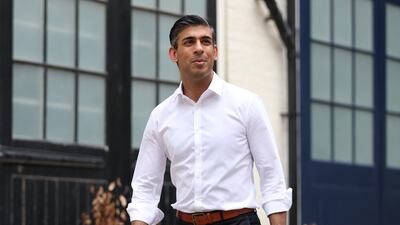
Rishi Sunak — former chancellor who resigned from his position last week. In a slick campaign video he said the government could not afford to fool voters about the difficulties ahead with ‘comforting fairy tales’. Getty Images -
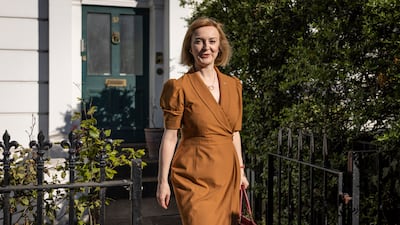
Liz Truss — the UK’s Foreign Secretary has pledged to start cutting taxes 'from day one' if she becomes prime minister, to tackle the cost-of-living crisis. She has also vowed to ‘take the vital steps necessary’ to protect the Good Friday Agreement. Getty Images -
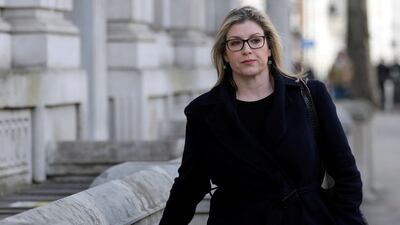
OUT OF THE RACE: Penny Mordaunt — Brexit-backing Trade Minister has insisted the Conservative Party was elected to ‘deliver a manifesto’. She played a prominent role in the Leave campaign in the 2016 referendum. Reuters -
OUT OF THE RACE: Kemi Badenoch — former equalities minister has promised 'limited government' and 'a focus on the essentials'. She has said Boris Johnson was 'a symptom of the problems we face, not the cause of them'. Photo: UK Parliament -
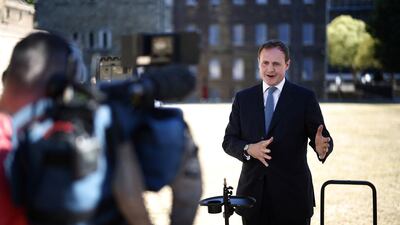
OUT OF THE RACE: Tom Tugendhat —Foreign Affairs Committee chairman and ‘Remainer’ aims to reverse the national insurance rise. He says the presence of Brexit party and Leave figures on his team is reassuring for Brexiteers. Reuters -
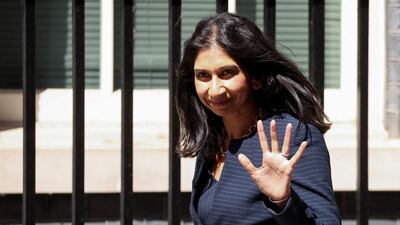
OUT OF THE RACE: Suella Braverman — current Attorney General has promised 'rapid and large tax cuts' to ease inflation. She has said the energy crisis means 'we must suspend the all-consuming desire to achieve net zero by 2050'. Reuters -
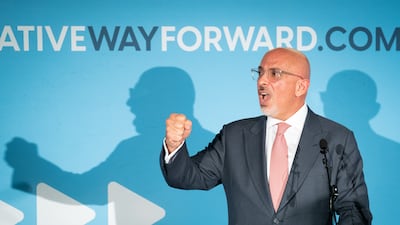
OUT OF THE RACE: Nadhim Zahawi — newly appointed Chancellor has promised to cut taxes and push ahead with the reforms he started in his previous role as education secretary, to ‘deliver a great education for every child’. PA -
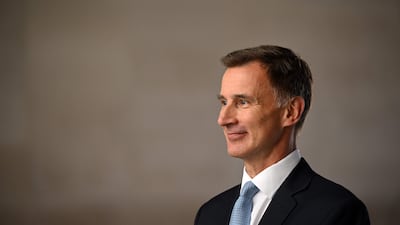
OUT OF THE RACE: Jeremy Hunt — runner-up to Boris Johnson in the 2019 leadership race, who has pledged to slash corporation tax to 15 per cent. He has also promised to back the Northern Ireland Protocol Bill. AFP -
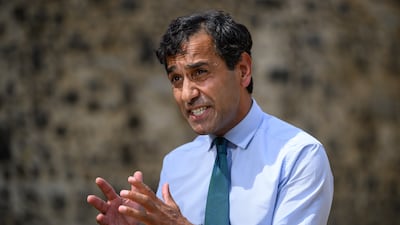
OUT OF THE RACE: Rehman Chishti — newly appointed Foreign Office minister had spoken of the importance of lower taxes and having a small state with a big society. 'It’s about aspirational conservatism, it’s about fresh ideas and then it comes down to having a fresh team.' Getty Images -
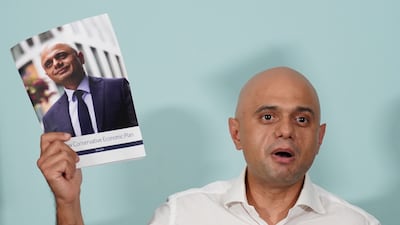
OUT OF THE RACE: Sajid Javid — experienced former health secretary had planned to scrap the government’s national insurance increase, bring forward the proposed 1p income tax cut to next year and introduce a further ‘significant’ temporary reduction on fuel duty. PA -
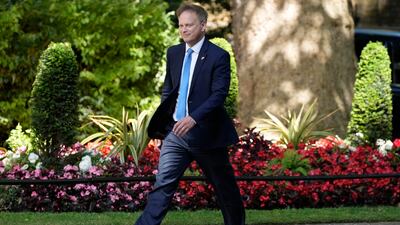
OUT OF THE RACE: Grant Shapps — the Transport Secretary had said on TV: 'I am interested in the bread-and-butter issues that your viewers will be thinking about every single day of the week.' AP


Ms Mordaunt, who was briefly defence secretary in 2019, said last week she would expect military spending to rise if she was prime minister but said she would not engage in “plucking figures out of the air” during the leadership contest.
“I have had a reservist career. I am absolutely committed to our armed forces and I know that it is the duty of any prime minister to make sure this nation is defended,” she told Sky News.
Several Nato members including Germany, Poland and Denmark have announced increases in defence spending since Russia invaded Ukraine. Allies have a target of spending at least 2 per cent of GDP on defence but not all achieve this.
Mr Tugendhat, a former soldier whose military record was one of the main themes of his campaign, has not yet revealed which of the remaining candidates he will support.
As they sought to win over his supporters, Ms Mordaunt said she had admired Mr Tugendhat for years while Ms Badenoch said he would be an asset to any future Tory government.
Mr Sunak meanwhile chose to focus on crime on Tuesday, making a series of promises including tougher sentences for criminals who fail to attend court and deny their victims “the chance to look their perpetrator in the eye”.
His campaign said he would focus on career criminals with increased GPS tagging and more reintegration efforts, as well as increasing the government's powers to overrule parole decisions for violent offenders.

