


When a severe typhoon barrelled towards the Philippines island of Samar last week, confused residents wondered whether to abide by lockdown orders or newly issued evacuation orders.
The small island was one of the world’s first regions to be forced to grapple with the dual crisis of a severe weather event and the ongoing coronavirus pandemic. Bangladesh may become the second as Cyclone Amphan is expected to make landfall on Wednesday.
When Typhoon Vongfong hit Samar island last week, it forced the local government to rethink how it responded to the disaster in light of the highly transmissible Covid-19 virus.
"In times like this people panic a lot," Michael Tan, the governor of Samar, told The National.
“We’ve had 'stay at home' orders coming from the president and when the typhoon hit us, we had to tell people they have to leave their houses, so some were confused,” he said.
More than 1,000 families in the province were evacuated from their homes due to the lashing winds and torrential rains brought on by the typhoon.
Mr Tan admits this made the evacuation “quite difficult” as the government had to prioritise physical distancing while urgently transporting families to safety.
Various schools across Samar province were used as evacuation centres, as has been done in previous years. But this year, instead of allowing free movement or crowding evacuees into the gymnasium, one family was assigned per classroom. Fortunately, many classrooms had their own washrooms.
-

Typhoon Vongfong in the western Pacific Ocean heading towards the Philippines. EPA -

Residents brave rains and strong wind as they walk past uprooted trees along a highway in Can-avid town, Eastern Samar province, central Philippines, as Typhoon Vongfong makes landfall. AFP -

Workers fold up a billboard to prepare for the coming of typhoon Vongfong, in Manila, Philippines. AP Photo -
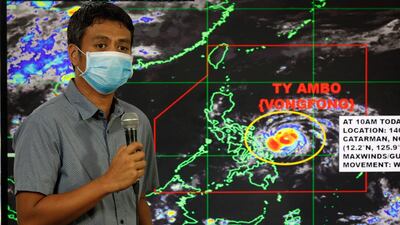
Weather forecaster Christopher Perez points to a projected track of Typhoon Vongfong. EPA -
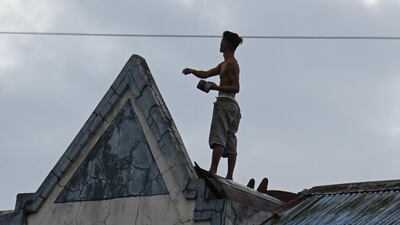
A resident flies his kite with rain clouds above atop his house inside a tenement building in Manila, as Typhoon Vongfong approaches. AFP -
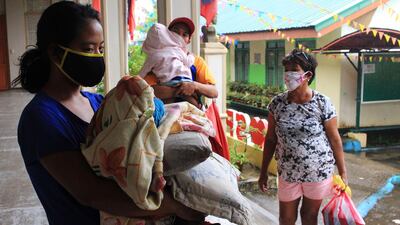
Residents carrying their belongings arrive at a school compound serving as temporary shelter in Sorsogon town, Bicol region, south of Manila, as Typhoon Vongfong approaches. AFP -
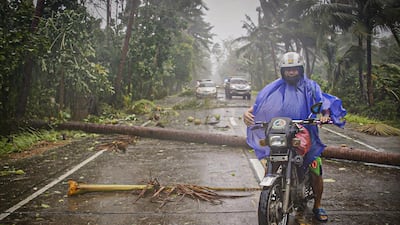
A motorist braving rains and strong wind maneuvers along a highway littered with fallen coconut trees in Can-avid town, Eastern Samar province. AFP -
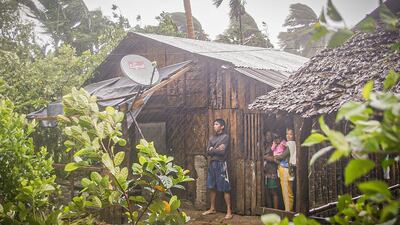
Residents take shelter by their house as they observe rain and wind in Can-avid town, Eastern Samar province, central Philippines, as Typhoon Vongfong makes landfall. AFP -
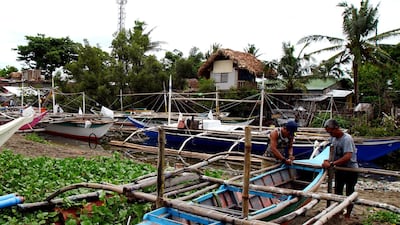
Filipino villagers secure a fishing boat in anticipation of an approaching typhoon in the coastal town of Bulan, Sorsogon province, Philippines. EPA -

Workers remove a billboard advertisement in preparation for typhoon Vongfong in Quezon City, Metro Manila, Philippines. EPA


“Police officers were on the clock, looking after those evacuated to make sure none of them go to other classrooms, to avoid the contamination of coronavirus,” said Mr Tan.
Evacuees in Samar will be expected to stay in the classrooms for one week while the province surveys the damage and prepares for residents to return home.
But the damage from the hurricane was so severe some residents have no homes to which they can return. Those residents were advised to shelter with relatives while the government allocates materials for the reconstruction.
None of the evacuated residents will be tested before returning home.
The island of Samar presents a glimpse into the way governments around the world will need to manage coming severe weather events as Covid-19 adds a new dimension to emergency response procedures.
So far, ministers in Bangladesh have moved to prepare storm shelters, lay in food supplies and make contingencies for electricity to be knocked out. Like the Philippines, the country is currently under lockdown to try and slow the spread of the virus. With 22,000 confirmed cases of Covid-19 and 328 deaths, there is a risk that clustering people together in shelters will cause a spike in infections.
Neighbouring India has already started transporting people ahead of the storm’s arrival with teams out across Odisha and West Bengal. Officials have made few public statements about how their plans differ due to the virus.
Flooding in the Middle East has already proven deadly this year, and in the coming months, extreme weather events will increase as typhoon season has started in Asia, the Atlantic hurricane season begins in June, and the risk of wildfires from Europe to the US increases in the summer months.
Cyprus is currently battling wildfires and has also had to evacuate dozens of homes as hundreds of acres of forest near the tip of Morphou Bay in the north burned. As well as the pandemic, the island is also split between the internationally recognised republic and breakaway north, complicating efforts. The government of the republic dispatched two aircraft for the first time to help the north battle the blazes, but borders remain closed due to the coronavirus.
New research from Colorado State University found that the severity of this year’s Atlantic hurricane season will be “above normal,” with an estimated eight hurricanes predicted for the 2020 season, four of which are expected to be major storms.
One of the biggest challenges for authorities preparing for potential disasters comes from the need to revise evacuation protocols. Not only do officials need to prepare to protect residents from the natural elements, but now they must also protect evacuees from each other and reduce virus transmission.
There is no leeway when it comes to evacuations, they are ordered because there is a serious risk to people’s lives, said Craig Fugate, who served as director of the US Federal Emergency Management Agency (FEMA) in the Obama administration.
"We have to balance the message between Covid-19 and the need to evacuate. I'm afraid we've said stay home so much, we're going to have a hard time breaking through the message to evacuate" Mr Fugate told The National.
“My fear is that people are going to delay evacuations, and that could actually be more deadly.”
Governments and residents will need to begin disaster response preparations much earlier this year to account for the delays brought on by physical distancing, temperature screenings and other measures used to combat Covid-19 transmission.
Evacuations are comprised of three main elements: transportation, sheltering and return.
Government buses are often used to transport individuals to evacuation shelters. "To maintain social distancing, you're going to need more buses," Gary Cecchine, a senior policy researcher at the RAND Corporation, told The National.
“In addition to having more assets, which means more resources, which means more money, you’re going to have to start this earlier because the wait time is going to be longer.”
But, the biggest changes will be made to the way individuals are sheltered as authorities must find creative new ways to house large numbers of evacuees given the reliance in the past on crowding thousands of people in large gymnasiums.
“The days of really large shelters, if you can help it, are gone,” said Mr Cecchine.
US municipalities along the Atlantic coast are sending out differing messages in regard to evacuation plans.
Miami Dade County has advised residents to stay with relatives who live outside of evacuation areas and to rely on shelters as a last resort. Columbia County in Georgia has said the gymnasiums typically used for shelters won’t be open this year.
The focus will likely shift to more decentralised and smaller shelters, which will help to reduce transmission, but also require more resources and larger budgets to maintain.
"Since tourism is so far down, hotels and motels are pretty vacant, so that may be a good option," Mr Fugate said. "The problem is, I don't know if hotels and motels can absorb all that, we might still need to do mass care shelters, and then there's the whole issue of how do we pay for this?"
-
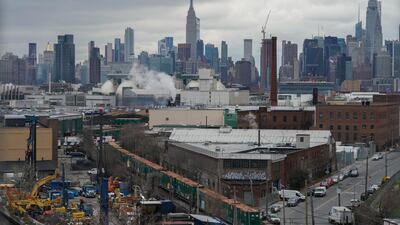
The Manhattan skyline rises over the Borough of Brooklyn on March 31, 2020 in New York. AFP -
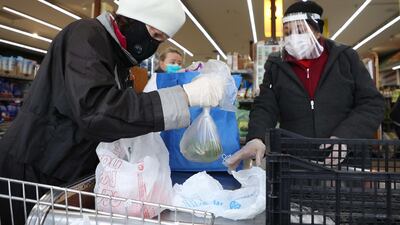
A shopper and cashier wear protective equipment at the checkout station at Pat's Farms grocery store in Merrick, New York. AFP -
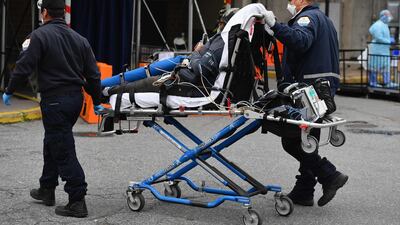
Paramedics push a gurney with a patient to Brooklyn Hospital Centre Emergency Room in the Brooklyn borough of New York. AFP -
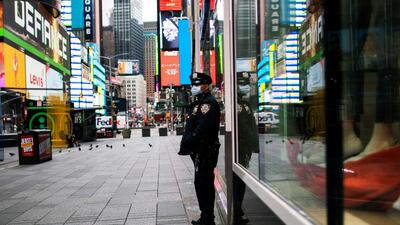
A New York Police officer stands guard in an almost empty Times Square during the outbreak of the coronavirus disease. Reuters -

A mounted police officer rides though a mostly deserted Times Square during the outbreak of the coronavirus disease in the Manhattan. Reuters -
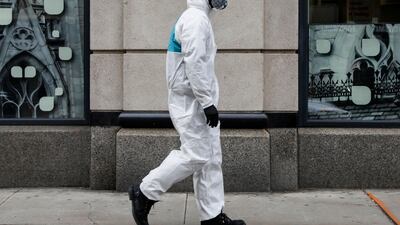
A man wears personal protective equipment as he walks on First Avenue, during the coronavirus disease outbreak in New York City. Reuters -
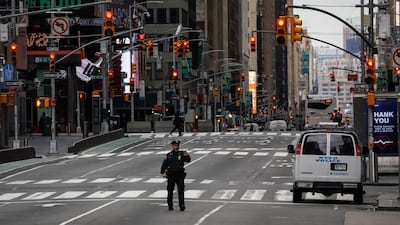
A New York City Police officer takes a selfie while in the middle of the street in an almost empty Times Square. Reuters -
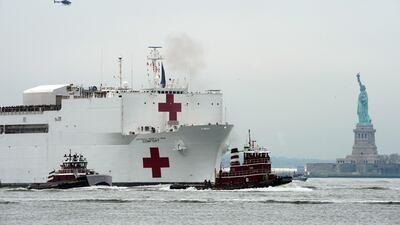
The US Navy hospital ship carrying 1,000 hospital beds moves past the Statue of Liberty as it arrives in New York. AFP -
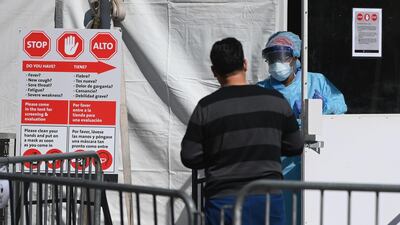
A medical worker walks out of a coronavirus testing tent at Brooklyn Hospital Centre in New York City. AFP -
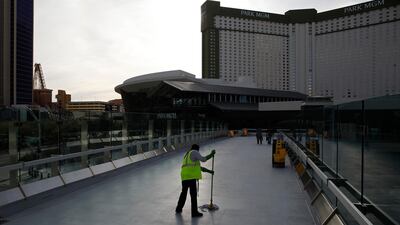
A worker cleans along the Las Vegas Strip devoid of the usual crowds as casinos and other business are shuttered due to the coronavirus outbreak. AP -

Members of the US Army Corps of Engineer Research Development Centre’s Directorate of Public Works construct two temporary hospital room prototypes in Vicksburg. The Vicksburg Post via AP -
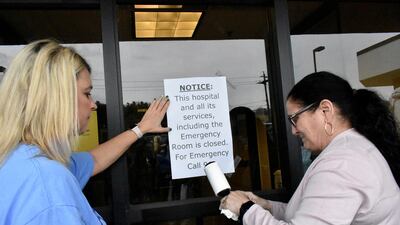
Carol Talkington helps Terri Bonasso tape a notice on the emergency room door following a vigil at the closing of the Fairmont Regional Medical Centre in Fairmont. Times-West Virginian via AP -

A motel sign is lit along a quiet Sunset Boulevard at dusk amid the coronavirus pandemic on March 31, 2020 in Los Angeles. AFP -

Democratic presidential candidate Joe Biden speaks during a virtual press briefing on March 25, 2020. Bloomberg


The mounting costs of disaster management in a period of economic downturn and rising unemployment is likely to increase the financial difficulties for both municipalities and individuals.
From the cost of food and hardening supplies, such as plywood or sandbags, to the fuel required to drive to distant evacuation centres, storm preparation comes at a cost. With nearly 40 million Americans having filed for unemployment benefits since mid-March, the financial strain of a natural disaster is a mounting burden for out of work individuals.
For governments, many resources have been centralised around the Covid-19 response and if a second crisis, such as a hurricane, were to occur, a delicate balance would need to be struck when considering resource allocation for issues such as mass care, feeding and shelter operations.
As Covid-19 has devoured many states' emergency response budgets, the federal government may be required to step in and provide added assistance to resource-strapped states.
“FEMA will pay, I’m not worried about that,” Mr Fugate said. “You’re just going to be in debt to the federal government for the rest of your life.”
Having already gone through a natural disaster, and anticipating more to come, Samar governor Mr Tan said authorities around the world preparing for extreme weather events need to begin planning now for the challenges that lie ahead.
But, more importantly, residents need to be educated about all the scenarios that may occur, so they are ready to act when the time comes.

