US Congress allows F-35 sale granting UAE major military upgrade


  • English
  • Arabic

A bill that would have blocked a $23 billion arms sale to the UAE failed in the US Senate on Wednesday, thereby granting the country 50 F-35 Lightning II aircraft.

The vote on the bill proposed by Bob Menendez, a Democratic senator, flopped by 47 to 49.

With the congressional hurdle cleared, the UAE will become the first Arab country to obtain the stealth fighters and the second country in the region after Israel.

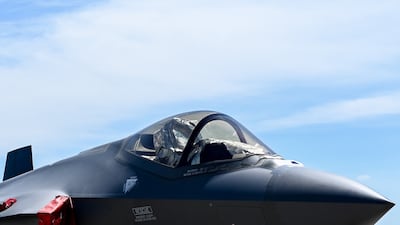
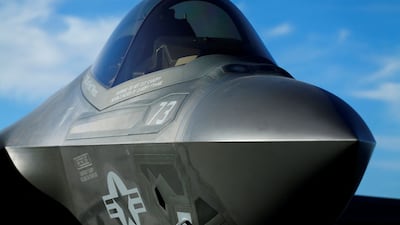
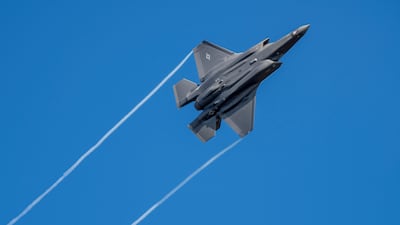
Manufactured by Lockheed Martin, the F-35 is America's next-generation stealth fighter jet. Reuters

The UAE ambassador to the US and Minister of State Yousef Al Otaiba thanked the Senate.

“The UAE deeply appreciates the consideration of all senators on today’s votes," Mr Al Otaiba said.

"Continued US support enables the UAE to take on more of the burden for our collective security – ours, yours and our partners. It makes us all safer.”

He said that the UAE was “committed to regional de-escalation and dialogue".

“We look forward to deepening our 49-year relationship with the US as we work together on pressing challenges like global health, climate, the proliferation of nuclear weapons, and regional conflicts,” Mr Al Otaiba said.

The sale of 50 of these jets is valued at $10.4bn and has long been sought by the UAE. But it was the signing of the Abraham Accord in September that brought the sale to a conclusion.

Israeli officials, including ambassador to the US Ron Dermer, went on the record to defend the sale this week.

“Israel is very comfortable with the sale of F-35 planes to the United Arab Emirates," Mr Dermer told MSNBC alongside Mr Al Otaiba.

"What keeps me up at night isn’t the sale of the F-35 to the UAE. It’s the idea that someone would return to the nuclear deal with Iran."

Last October, Mr Al Otaiba told The National  that the country had been trying to acquire the F-35 for years, and while progress on the sale was tied to the Abraham Accord, it was not a result of it.

“There are other items that we’ve been trying to acquire since [US president George W Bush] was in office," he said.

"So, these are things that we have operational requirements for that have simply been held up, largely because of either [Israel’s] qualitative military edge or other release ability issues.

"We have now, I think, cleared this bottleneck."

US President Donald Trump supported the move.

“I would have no problem in selling them the F-35, I would have absolutely no problem,” Mr Trump told Fox News in November.

On Wednesday, the White House threatened to veto any bill in Congress blocking the sale.

But with the vote falling short, the UAE is now expected to start technical negotiations with the US to finalise the deal.

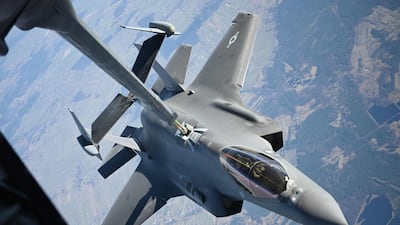
  • The US Department of Defence agreed with Lockheed Martin to build about 375 F-35 fighter jets over three years. This Pentagon-supplied photo shows a US Air Force F-35 Lightning II being refuelled over Poland in February 2022.
    The US Department of Defence agreed with Lockheed Martin to build about 375 F-35 fighter jets over three years. This Pentagon-supplied photo shows a US Air Force F-35 Lightning II being refuelled over Poland in February 2022.
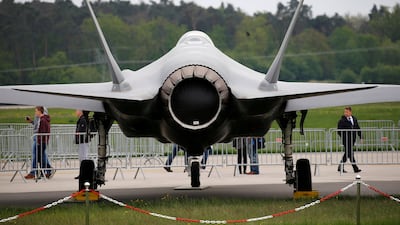
  • A Lockheed Martin F-35 Lightning jet at the ILA Berlin Air Show 2022 in Schoenefeld, Germany, 22 June 2022. EPA
    A Lockheed Martin F-35 Lightning jet at the ILA Berlin Air Show 2022 in Schoenefeld, Germany, 22 June 2022. EPA
  • A Lockheed Martin F-35C Joint Strike Fighter is shown on the deck of the USS Nimitz aircraft carrier. Reuters
    A Lockheed Martin F-35C Joint Strike Fighter is shown on the deck of the USS Nimitz aircraft carrier. Reuters
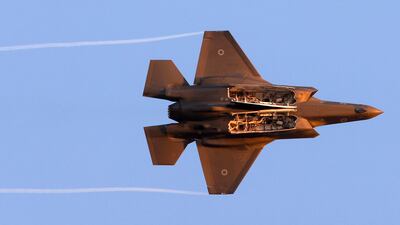
  • An Israeli Air Force F-35 Lightning II fighter jet performing at the Hatzerim base in the Negev desert, near the southern city of Beer Sheva, Israel. AFP
    An Israeli Air Force F-35 Lightning II fighter jet performing at the Hatzerim base in the Negev desert, near the southern city of Beer Sheva, Israel. AFP
  • A US F-35 fighter jet flies over the Eifel Mountains near Spangdahlem, Germany on February 23, 2022. AP
    A US F-35 fighter jet flies over the Eifel Mountains near Spangdahlem, Germany on February 23, 2022. AP
  • F-35C Lightning IIs on a test flight in the Atlantic test range. The programme is now the most expensive in US military history. Lockheed has pledged to cut costs. AFP
    F-35C Lightning IIs on a test flight in the Atlantic test range. The programme is now the most expensive in US military history. Lockheed has pledged to cut costs. AFP
  • Lockheed Martin's F-35 helped the company boost profit in the first quarter. Reuters
    Lockheed Martin's F-35 helped the company boost profit in the first quarter. Reuters
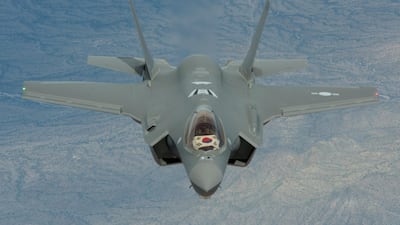
  • Manufactured by Lockheed Martin, the F-35 is America's next-generation stealth fighter jet. Reuters
    Manufactured by Lockheed Martin, the F-35 is America's next-generation stealth fighter jet. Reuters
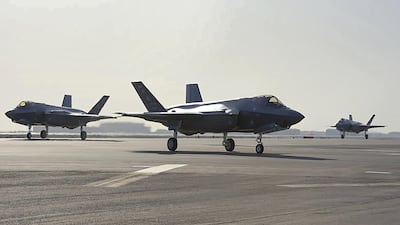
  • Three F-35A Lightning IIs assigned to the 4th Expeditionary Fighter Squadron taxi after landing at Al Dhafra Air Base, UAE. Photo: US Air Force
    Three F-35A Lightning IIs assigned to the 4th Expeditionary Fighter Squadron taxi after landing at Al Dhafra Air Base, UAE. Photo: US Air Force
  • A Lockheed Martin F-35A fighter jet on a training mission in Hill Air Force Base, Utah. Bloomberg
    A Lockheed Martin F-35A fighter jet on a training mission in Hill Air Force Base, Utah. Bloomberg
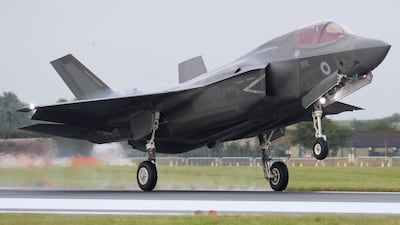
  • An RAF F-35B Lightning 11 supersonic stealth strike fighter, built by the US plane maker Lockheed Martin, touches down in the UK. Getty
    An RAF F-35B Lightning 11 supersonic stealth strike fighter, built by the US plane maker Lockheed Martin, touches down in the UK. Getty
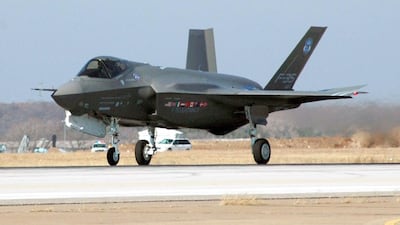
  • An F-35 Lightning II, built by Lockheed Martin, at the Joint Reserve Base, Fort Worth, Texas. AFP
    An F-35 Lightning II, built by Lockheed Martin, at the Joint Reserve Base, Fort Worth, Texas. AFP
  • A US F-35A stealth fighter jet at an unspecified location. EPA
    A US F-35A stealth fighter jet at an unspecified location. EPA
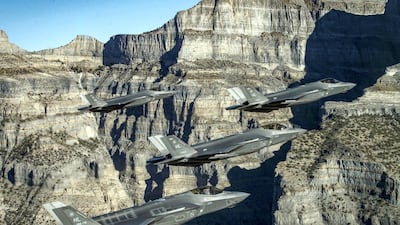
  • A formation of US Air Force F-35 Lightning II fighter jets perform aerial maneuvers during as part of a combat power exercise. Reuters
    A formation of US Air Force F-35 Lightning II fighter jets perform aerial maneuvers during as part of a combat power exercise. Reuters
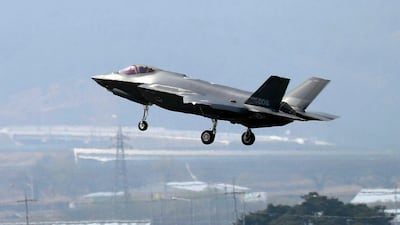
  • A US F-35A fighter jet prepares to land at Chungju Air Base in Chungju, South Korea. AP
    A US F-35A fighter jet prepares to land at Chungju Air Base in Chungju, South Korea. AP
Sarfira

Director: Sudha Kongara Prasad

Starring: Akshay Kumar, Radhika Madan, Paresh Rawal 

Rating: 2/5

The Byblos iftar in numbers

29 or 30 days – the number of iftar services held during the holy month

50 staff members required to prepare an iftar

200 to 350 the number of people served iftar nightly

160 litres of the traditional Ramadan drink, jalab, is served in total

500 litres of soup is served during the holy month

200 kilograms of meat is used for various dishes

350 kilograms of onion is used in dishes

5 minutes – the average time that staff have to eat
 

Ten tax points to be aware of in 2026

1. Domestic VAT refund amendments: request your refund within five years

If a business does not apply for the refund on time, they lose their credit.

2. E-invoicing in the UAE

Businesses should continue preparing for the implementation of e-invoicing in the UAE, with 2026 a preparation and transition period ahead of phased mandatory adoption. 

3. More tax audits

Tax authorities are increasingly using data already available across multiple filings to identify audit risks. 

4. More beneficial VAT and excise tax penalty regime

Tax disputes are expected to become more frequent and more structured, with clearer administrative objection and appeal processes. The UAE has adopted a new penalty regime for VAT and excise disputes, which now mirrors the penalty regime for corporate tax.

5. Greater emphasis on statutory audit

There is a greater need for the accuracy of financial statements. The International Financial Reporting Standards standards need to be strictly adhered to and, as a result, the quality of the audits will need to increase.

6. Further transfer pricing enforcement

Transfer pricing enforcement, which refers to the practice of establishing prices for internal transactions between related entities, is expected to broaden in scope. The UAE will shortly open the possibility to negotiate advance pricing agreements, or essentially rulings for transfer pricing purposes. 

7. Limited time periods for audits

Recent amendments also introduce a default five-year limitation period for tax audits and assessments, subject to specific statutory exceptions. While the standard audit and assessment period is five years, this may be extended to up to 15 years in cases involving fraud or tax evasion. 

8. Pillar 2 implementation 

Many multinational groups will begin to feel the practical effect of the Domestic Minimum Top-Up Tax (DMTT), the UAE's implementation of the OECD’s global minimum tax under Pillar 2. While the rules apply for financial years starting on or after January 1, 2025, it is 2026 that marks the transition to an operational phase.

9. Reduced compliance obligations for imported goods and services

Businesses that apply the reverse-charge mechanism for VAT purposes in the UAE may benefit from reduced compliance obligations. 

10. Substance and CbC reporting focus

Tax authorities are expected to continue strengthening the enforcement of economic substance and Country-by-Country (CbC) reporting frameworks. In the UAE, these regimes are increasingly being used as risk-assessment tools, providing tax authorities with a comprehensive view of multinational groups’ global footprints and enabling them to assess whether profits are aligned with real economic activity. 

Contributed by Thomas Vanhee and Hend Rashwan, Aurifer

PROFILE OF INVYGO

Started: 2018

Founders: Eslam Hussein and Pulkit Ganjoo

Based: Dubai

Sector: Transport

Size: 9 employees

Investment: $1,275,000

Investors: Class 5 Global, Equitrust, Gulf Islamic Investments, Kairos K50 and William Zeqiri

Specs

Engine: Dual-motor all-wheel-drive electric

Range: Up to 610km

Power: 905hp

Torque: 985Nm

Price: From Dh439,000

Available: Now

Water waste

In the UAE’s arid climate, small shrubs, bushes and flower beds usually require about six litres of water per square metre, daily. That increases to 12 litres per square metre a day for small trees, and 300 litres for palm trees.

Horticulturists suggest the best time for watering is before 8am or after 6pm, when water won't be dried up by the sun.

A global report published by the Water Resources Institute in August, ranked the UAE 10th out of 164 nations where water supplies are most stretched.

The Emirates is the world’s third largest per capita water consumer after the US and Canada.

Living in...

This article is part of a guide on where to live in the UAE. Our reporters will profile some of the country’s most desirable districts, provide an estimate of rental prices and introduce you to some of the residents who call each area home.

Mercer, the investment consulting arm of US services company Marsh & McLennan, expects its wealth division to at least double its assets under management (AUM) in the Middle East as wealth in the region continues to grow despite economic headwinds, a company official said.

Mercer Wealth, which globally has $160 billion in AUM, plans to boost its AUM in the region to $2-$3bn in the next 2-3 years from the present $1bn, said Yasir AbuShaban, a Dubai-based principal with Mercer Wealth.

Within the next two to three years, we are looking at reaching $2 to $3 billion as a conservative estimate and we do see an opportunity to do so,” said Mr AbuShaban.

Mercer does not directly make investments, but allocates clients’ money they have discretion to, to professional asset managers. They also provide advice to clients.

“We have buying power. We can negotiate on their (client’s) behalf with asset managers to provide them lower fees than they otherwise would have to get on their own,” he added.

Mercer Wealth’s clients include sovereign wealth funds, family offices, and insurance companies among others.

From its office in Dubai, Mercer also looks after Africa, India and Turkey, where they also see opportunity for growth.

Wealth creation in Middle East and Africa (MEA) grew 8.5 per cent to $8.1 trillion last year from $7.5tn in 2015, higher than last year’s global average of 6 per cent and the second-highest growth in a region after Asia-Pacific which grew 9.9 per cent, according to consultancy Boston Consulting Group (BCG). In the region, where wealth grew just 1.9 per cent in 2015 compared with 2014, a pickup in oil prices has helped in wealth generation.

BCG is forecasting MEA wealth will rise to $12tn by 2021, growing at an annual average of 8 per cent.

Drivers of wealth generation in the region will be split evenly between new wealth creation and growth of performance of existing assets, according to BCG.

Another general trend in the region is clients’ looking for a comprehensive approach to investing, according to Mr AbuShaban.

“Institutional investors or some of the families are seeing a slowdown in the available capital they have to invest and in that sense they are looking at optimizing the way they manage their portfolios and making sure they are not investing haphazardly and different parts of their investment are working together,” said Mr AbuShaban.

Some clients also have a higher appetite for risk, given the low interest-rate environment that does not provide enough yield for some institutional investors. These clients are keen to invest in illiquid assets, such as private equity and infrastructure.

“What we have seen is a desire for higher returns in what has been a low-return environment specifically in various fixed income or bonds,” he said.

“In this environment, we have seen a de facto increase in the risk that clients are taking in things like illiquid investments, private equity investments, infrastructure and private debt, those kind of investments were higher illiquidity results in incrementally higher returns.”

The Abu Dhabi Investment Authority, one of the largest sovereign wealth funds, said in its 2016 report that has gradually increased its exposure in direct private equity and private credit transactions, mainly in Asian markets and especially in China and India. The authority’s private equity department focused on structured equities owing to “their defensive characteristics.”