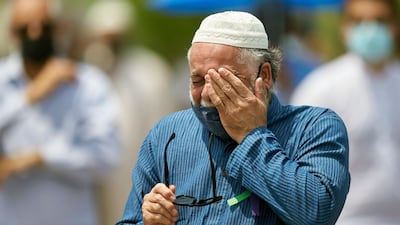

Many Canadians – particularly those from the country's Muslim community – are demanding that the government take action against Islamophobia, after a deadly attack against a Muslim family.
On June 6, a man slammed his pick-up truck into the Afzaal family, who were out for an evening walk in London, Ontario.
Salman Afzaal, 46, his wife Madiha Salman, 44, their daughter Yumna, 15, and Mr Afzaal's mother, Talat Afzaal, were all killed, while the couple's youngest son, Fayez, 9, survived and was released from hospital on Monday.
Condolences poured in from around the country. But words of sympathy are not enough to quell the fear many Canadian Muslims live with.
"The event signals the ongoing reality of Canada's deeply rooted systemic Islamophobia," said a letter written by dozens of Muslim groups and addressed to Canada's Prime Minister Justin Trudeau.
The groups are demanding the government hold an emergency National Action Summit on Islamophobia to enact “fundamental change at the federal, provincial and municipal level to prevent another attack".
The Ontario killings were the latest in a series of attacks motivated by anti-Muslim sentiments that shocked Canada.
“We feel that there has been an escalation and it has become more and more dangerous,” said Mohamed Labidi, former president of the Islamic Cultural Centre of Quebec.
In 2017, the mosque where Mr Labidi served as president was attacked by a gunman who killed six worshippers.
Late one night in August 2017, six months after the shooting, Mr Labidi's wife woke to get a drink of water. When she looked outside her Quebec City home, she saw her husband's car ablaze.
"It was a hate crime," Mr Labidi told The National.
He has spent much of the past four years promoting his community and speaking out against what he and many others consider to be a rising tide of Islamophobia.
He and fellow advocates believe the government is not doing enough.
"Community organisations rallied and asked for concrete action in the aftermath of the Quebec City Mosque shooting in 2017. Unfortunately, these efforts were often met with great resistance," the letter to Mr Trudeau says.
"With each successive event that we see, the stories across the country of women having their hijabs ripped off, and now this, each incident chips away at that level of security for our community," said Nawaz Tahir, a community leader in London, Ontario.
“Each successive incident creates a bit of a deeper scar, deeper angst and deeper concern about the safety of our community.”
-
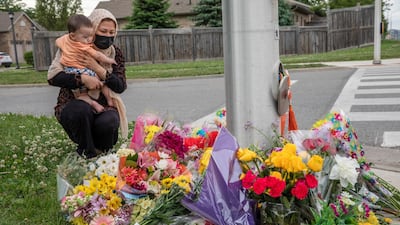
Four people were killed and one was injured in what police in London, Ontario, Canada, say was a hate crime against Muslims. Nafisa Azima and her daughter, Seena Safdari, visit a memorial at the place where a family of five was struck by a hit-and-run motorist. AP Photo -
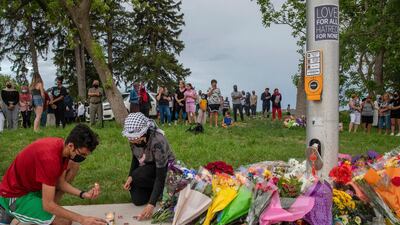
Abood, 18, left, and his sister Zeina Abdulhadi, 15, visit a memorial to the family of five hit by a driver, in London, Ontario, Canada. AP Photo -
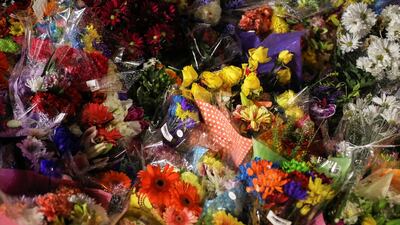
Floral tributes become a makeshift memorial on the street in London, Ontario, Canada, where a pick-up struck five members of a Muslim family in what police say was a hate crime. Four people were killed in the attack. Reuters -
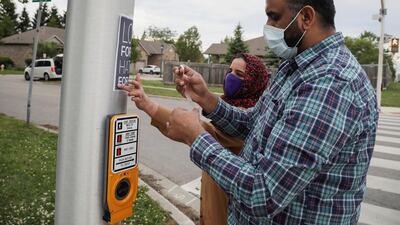
Zubair Ahmad and his wife put up a poster at the scene where pick-up jumped the kerb and ran over a Muslim family in London, Ontario, Canada. Four people were killed in the attack. Reuters -
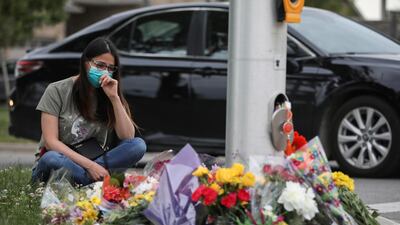
Flowers are laid at the scene where police in London, Ontario, Canada, say a man driving a pick-up jumped the kerb and ran over a Muslim family. Four people were killed. Reuters -
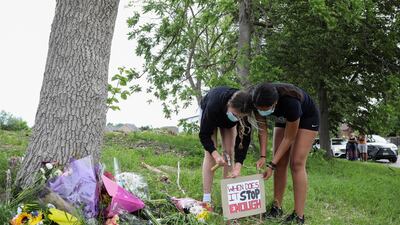
Clara Meagher, left, and Kelyalynn Detibeiro put up a sign at the scene in London, Ontario, Canada, where four of five members of a Muslim family were killed by what police say was a hit-and-run attacker. Reuters -
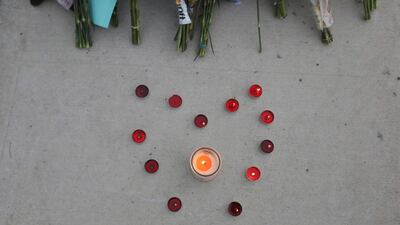
Candles are arranged in a heart shape at a makeshift memorial to the members of Muslim family killed by a hit-and-run driver in London, Ontario, Canada. Reuters -
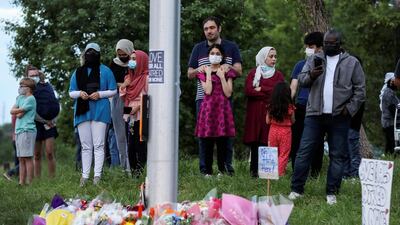
People gather at a makeshift memorial in London, Ontario, Canada, for four members of a Muslim family killed in what police say was a hit-and-run attack. Reuters -
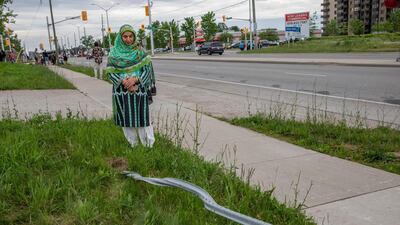
Torpenky Khan looks at a street sign flattened when four of five members of a Muslim family were killed by a hit-and-run driver in London, Ontario, Canada. AP Photo -
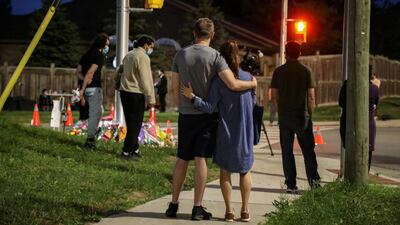
Visitors gather at a makeshift memorial to members of a Muslim family who were killed in a hit-and-run attack in London, Ontario, Canada. Police say the incident was a hate crime. Reuters -
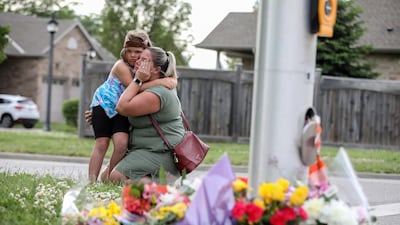
Misty Santerre and her daughter Jasmina visit the scene in London, Ontario, Canada, where a man driving a pick-up jumped the kerb and ran over a Muslim family in what police are calling a hate crime. Reuters -

A line of police officers look for evidence at the scene of a car crash in London, Ontario, Canada. Four of five members of a Muslim family were killed when a vehicle struck them in what investigators say was a hate crime. AP Photo


The most recent data available shows that Islamophobic incidents in Canada are on the rise.
In 2019, hate crimes against Muslims increased by nearly 10 per cent from the year before, although the number of incidents reported is still relatively low at 181.
In his address outside the London Mosque where the Afzaal family worshipped, Mr Trudeau acknowledged that “Islamophobia is real".
He had already called the incident a terrorist attack. Prosecutors this week added terrorism to the long list of charges facing the accused, Nathaniel Veltman.
But many say more must be done to address the root causes of Canada's Islamophobia and hope a conference involving several levels of government and community leaders would do that.
The Quebec provincial government passed a law in 2019 banning government and public employees from wearing religious symbols. Many believe Muslims to be the target of the law.
Bill 21 requires a person’s face to be uncovered while giving or receiving certain public services.
“It has specifically targeted Muslim women who wear headscarves and veils as part of their religious identity. For example, teachers wearing Muslim attire would not be able to get jobs or promotions,” said Jasmin Zine, a professor of sociology and Muslim studies at Wilfrid Laurier University in Waterloo, Ontario.
"They become forced to choose between their faith and their livelihood.”
She said the bill suggested Muslim attire was "not a legitimate part of Canadian society" and enforced the idea that Islam had "no place in the public sphere".
Bills such as that one add to the normalisation of Islamophobia in Canada, Prof Zine said.
According to a report submitted to the UN Special Rapporteur on Freedom of Religion or Belief, 46 per cent of Canadians have an unfavourable view of Islam and more than 50 per cent believe the religion suppresses women's rights.
Mr Labidi believes unchecked posts on social media created an increase in Islamophobia.
“A person navigating social media can find that Muslims did this, Muslims did that and they end up hating Muslims. It takes time to change people's minds,” he said.
He urged the Canadian media to lead the fight by countering misinformation.
Still, Mr Labidi and Mr Tahir were hopeful that Islamophobia could be tackled.
“We can never allow that small minority of people who traffic in hate to overshadow the substantial majority of humanity that is good,” Mr Tahir said.