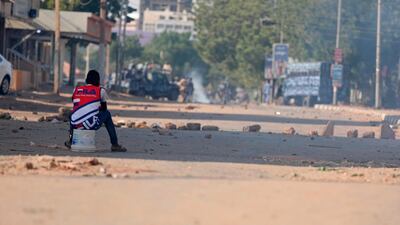
Except for a brief reprieve in the 2000s, the sight of car lines snaking around petrol stations has for decades been a fixture in the Sudanese capital, Khartoum.
A sprawling metropolis with unreliable public transport and dusty streets filled with cars, trucks, buses and tuk-tuks, the city has an insatiable demand for fuel.
But government subsidises, setting fuel at an incredibly low price, have led to soaring demand, far beyond the country’s capacity to refine new fuel.
For motorists, this means misery when it comes to refilling the tank and hour long waits.
In a move that could significantly impact the streets across the vast Afro-Arab nation and save the cash-strapped treasury about $1 billion annually, the government has decided to partially lift fuel subsidies, a politically bold and risky move that none of its predecessors going back a half century had the resolve to do.
State subsidies on bread and electricity, however, will continue but they are destined to eventually go as Sudan, experiencing its worst economic crisis in living memory, desperately seeks funds to redirect towards services.
State subsidies have consistently been more than just a government policy to cushion the Sudanese populace from the fluctuations of world prices.
Instead they have been politically loaded, and attempts to remove or even reduce them over the years have sparked street protests.
In some cases, those protests brought down authoritarian rulers, like Omar Al Bashir, removed by his generals in April 2019 after months of protests triggered by his decision to lift subsidies on bread.
The risk of street protests over the October 27 reduction of fuel subsidies remains high and could well prove a step too far for a transitional government already living precariously, following a series of seismic policy shifts.
These include normalising relations with one-time archenemy Israel and declaring the separation of state and religion in a conservative and mostly Muslim country that has been plagued by civil wars with strong ethnic and religious undercurrents.
But the much-heralded decision has created a cumbersome, two-tier pricing system.
Designated petrol stations now sell fuel at partially subsidised prices, with a litre of petrol sold at 56 pounds, around one US dollar, while diesel sells at 46 pounds, more than double the old prices of 28 and 18 pounds a litre respectively.
“The government has selected the easy solution to the economic crisis,” said economist Ahmed Khalil about the reduction of fuel subsidies.
“It reduced subsidies but did not put in place mechanisms to ensure subsidies reach those who need them.”
Another set of stations sell fuel at prices that reflect world market levels, with a litre of petrol going for 120 pounds and diesel at 106 pounds.
The fuel sold at these stations is imported by the private sector. A joint committee bringing together government representatives and importers was created to review the prices on weekly basis to ensure they reflect world market fluctuations.
“It is probably a step taken at a time when people are going through a tough phase, but what will come afterwards will be for the benefit of the country and its people,” Energy Minister Adel Ibrahim told a news conference on the day he announced the new prices.
The new system has meant that long lines for petrol endure at filling stations selling the subsidised fuel. Meanwhile, those who can afford the free market prices can drive into a station and refill their vehicle in a matter of minutes.
“I am a clerk at a private sector company,” said Khartoum resident Amen Hassan. “I cannot afford to buy petrol at the free market stations, so I have to wait two to three hours in line before I can fill my tank.”
The new system has another serious drawback; it has given a new lease to life to black market trading in fuel, an illicit career option many of the country’s unemployed take up to make ends meet.
Taking advantage of the two-tier system, racketeers now fill up at the stations offering lower prices and sell the fuel at a much higher price, that’s still lower than what’s offered at the free market stations.
While there were no violent protests over the decision to partially lift fuel subsidies, there has been an uproar on social media. In protest, dozens of motorists blocked Khartoum’s Nile bridges, snarling traffic across much of the city.
Curiously, Sudan’s energy woes have always been interwoven with its complex politics.
An Afro-Arab nation, its territory was significantly reduced when the country’s mainly animist and Christian south seceded in 2011 under a 2005 peace deal with Khartoum, ending more than 20 years of civil war.
With the south gone, most of Sudan’s oilfields were gone too, leaving the northern part of the country and its 40-plus million people a meagre 60,000 barrels per day, down from 500,000 that the entire nation had prior to the secession. That oil boom earned Sudan a reprieve from its chronic economic difficulties and bankrolled a construction boom that altered Khartoum’s landscape with streel-and-glass office towers and luxury hotels.
This came crashing down after 2011, a key factor in the end of Mr Al Bashir’s presidency. But things might change, albeit slowly, now that Washington has decided to remove Sudan’s name from the list of state sponsors of terrorism, following the Abraham Accords.
This will unlock hundreds of millions of dollars in foreign aid and restore Sudan’s links to international money markets.

The specs: 2018 Nissan Patrol Nismo
Price: base / as tested: Dh382,000
Engine: 5.6-litre V8
Gearbox: Seven-speed automatic
Power: 428hp @ 5,800rpm
Torque: 560Nm @ 3,600rpm
Fuel economy, combined: 12.7L / 100km
ANDROID%20VERSION%20NAMES%2C%20IN%20ORDER
%3Cp%3EAndroid%20Alpha%3C%2Fp%3E%0A%3Cp%3EAndroid%20Beta%3C%2Fp%3E%0A%3Cp%3EAndroid%20Cupcake%3C%2Fp%3E%0A%3Cp%3EAndroid%20Donut%3C%2Fp%3E%0A%3Cp%3EAndroid%20Eclair%3C%2Fp%3E%0A%3Cp%3EAndroid%20Froyo%3C%2Fp%3E%0A%3Cp%3EAndroid%20Gingerbread%3C%2Fp%3E%0A%3Cp%3EAndroid%20Honeycomb%3C%2Fp%3E%0A%3Cp%3EAndroid%20Ice%20Cream%20Sandwich%3C%2Fp%3E%0A%3Cp%3EAndroid%20Jelly%20Bean%3C%2Fp%3E%0A%3Cp%3EAndroid%20KitKat%3C%2Fp%3E%0A%3Cp%3EAndroid%20Lollipop%3C%2Fp%3E%0A%3Cp%3EAndroid%20Marshmallow%3C%2Fp%3E%0A%3Cp%3EAndroid%20Nougat%3C%2Fp%3E%0A%3Cp%3EAndroid%20Oreo%3C%2Fp%3E%0A%3Cp%3EAndroid%20Pie%3C%2Fp%3E%0A%3Cp%3EAndroid%2010%20(Quince%20Tart*)%3C%2Fp%3E%0A%3Cp%3EAndroid%2011%20(Red%20Velvet%20Cake*)%3C%2Fp%3E%0A%3Cp%3EAndroid%2012%20(Snow%20Cone*)%3C%2Fp%3E%0A%3Cp%3EAndroid%2013%20(Tiramisu*)%3C%2Fp%3E%0A%3Cp%3EAndroid%2014%20(Upside%20Down%20Cake*)%3C%2Fp%3E%0A%3Cp%3EAndroid%2015%20(Vanilla%20Ice%20Cream*)%3C%2Fp%3E%0A%3Cp%3E%3Cem%3E*%20internal%20codenames%3C%2Fem%3E%3C%2Fp%3E%0A
How it works
Each player begins with one of the great empires of history, from Julius Caesar's Rome to Ramses of Egypt, spread over Europe and the Middle East.
Round by round, the player expands their empire. The more land they have, the more money they can take from their coffers for each go.
As unruled land and soldiers are acquired, players must feed them. When a player comes up against land held by another army, they can choose to battle for supremacy.
A dice-based battle system is used and players can get the edge on their enemy with by deploying a renowned hero on the battlefield.
Players that lose battles and land will find their coffers dwindle and troops go hungry. The end goal? Global domination of course.
Founders: Abdulmajeed Alsukhan, Turki Bin Zarah and Abdulmohsen Albabtain.
Based: Riyadh
Offices: UAE, Vietnam and Germany
Founded: September, 2020
Number of employees: 70
Sector: FinTech, online payment solutions
Funding to date: $116m in two funding rounds
Investors: Checkout.com, Impact46, Vision Ventures, Wealth Well, Seedra, Khwarizmi, Hala Ventures, Nama Ventures and family offices
UAE%20Warriors%2033%20Results
%3Cp%3E%3Cstrong%3EFeatherweight%20title%3C%2Fstrong%3E%3Cbr%3EAli%20Al%20Qaisi%20by%20Jesse%20Arnett%20by%20submission%2C%20round%203%3Cbr%3E%3Cstrong%3EWelterweight%20title%3C%2Fstrong%3E%3Cbr%3EJosh%20Togo%20bt%20Tahir%20Abdullaev%20by%20unanimous%20decision%3Cbr%3E%3Cstrong%3EFlyweight%3C%2Fstrong%3E%3Cbr%3EIago%20Ribeiro%20bt%20Juan%20Puerta%20by%20unanimous%20decision%3Cbr%3E%3Cstrong%3EMiddleweight%3C%2Fstrong%3E%3Cbr%3EYerkin%20Darmen%20bt%20Tyler%20Ray%20by%20TKO%2C%20round%203%3Cbr%3E%3Cstrong%3EWelterweight%3C%2Fstrong%3E%3Cbr%3EAbdulla%20Al%20Bousheiri%20bt%20John%20Adajar%20by%20submission%2C%20round%201%3Cbr%3E%3Cstrong%3ECatchweight%20232lb%3C%2Fstrong%3E%3Cbr%3EAsylzhan%20Bakhytzhanuly%20bt%20Hasan%20Yousefi%20by%20submission%2C%20round%202%3Cbr%3E%3Cstrong%3ECatchweight%20176lb%3C%2Fstrong%3E%3Cbr%3EAlin%20Chirila%20bt%20Silas%20Robson%20by%20KO%2C%20round%201%3Cbr%3E%3Cstrong%3ECatchweight%20176lb%3C%2Fstrong%3E%3Cbr%3EArvin%20Chan%20bt%20Abdi%20Farah%20by%20TKO%2C%20round%201%3Cbr%3E%3Cstrong%3ELightweight%3C%2Fstrong%3E%3Cbr%3EOle-Jorgen%20Johnsen%20bt%20Nart%20Abida%20by%20TKO%2C%20round%201%3Cbr%3E%3Cstrong%3EBantamweight%3C%2Fstrong%3E%3Cbr%3EOtar%20Tanzilov%20bt%20Eduardo%20Dinis%20by%20TKO%2C%20round%203%3Cbr%3E%3Cstrong%3EStrawweight%3C%2Fstrong%3E%3Cbr%3EColine%20Biron%20bt%20Aysun%20Erge%20via%20submission%2C%20round%202%3Cbr%3E%3Cstrong%3EWelterweight%3C%2Fstrong%3E%3Cbr%3ESoslan%20Margiev%20bt%20Mathieu%20Rakotondrazanany%20by%20unanimous%20decision%3Cbr%3E%3Cstrong%3EBantamweight%3C%2Fstrong%3E%3Cbr%3EBakhromjon%20Ruziev%20bt%20Younes%20Chemali%20by%20majority%20decision%3C%2Fp%3E%0A
SPEC%20SHEET%3A%20SAMSUNG%20GALAXY%20S24%20ULTRA
%3Cp%3E%3Cstrong%3EDisplay%3A%3C%2Fstrong%3E%206.8%22%20quad-HD%2B%20dynamic%20Amoled%202X%2C%203120%20x%201440%2C%20505ppi%2C%20HDR10%2B%2C%20120Hz%3C%2Fp%3E%0A%3Cp%3E%3Cstrong%3EProcessor%3A%3C%2Fstrong%3E%204nm%20Qualcomm%20Snapdragon%208%20Gen%203%2C%2064-bit%20octa-core%3C%2Fp%3E%0A%3Cp%3E%3Cstrong%3EMemory%3A%3C%2Fstrong%3E%2012GB%20RAM%3C%2Fp%3E%0A%3Cp%3E%3Cstrong%3EStorage%3A%3C%2Fstrong%3E%20256%2F512GB%20%2F%201TB%3C%2Fp%3E%0A%3Cp%3E%3Cstrong%3EPlatform%3A%3C%2Fstrong%3E%20Android%2014%2C%20One%20UI%206.1%3C%2Fp%3E%0A%3Cp%3E%3Cstrong%3EMain%20camera%3A%3C%2Fstrong%3E%20quad%20200MP%20wide%20f%2F1.7%20%2B%2050MP%20periscope%20telephoto%20f%2F3.4%20with%205x%20optical%2F10x%20optical%20quality%20zoom%20%2B%2010MP%20telephoto%202.4%20with%203x%20optical%20zoom%20%2B%2012MP%20ultra-wide%20f%2F2.2%3B%20100x%20Space%20Zoom%3B%20auto%20HDR%2C%20expert%20RAW%3C%2Fp%3E%0A%3Cp%3E%3Cstrong%3EVideo%3A%3C%2Fstrong%3E%208K%4024%2F30fps%2C%204K%4030%2F60%2F120fps%2C%20full-HD%4030%2F60%2F240fps%2C%20full-HD%20super%20slo-mo%40960fps%3C%2Fp%3E%0A%3Cp%3E%3Cstrong%3EFront%20camera%3A%3C%2Fstrong%3E%2012MP%20f%2F2.2%3C%2Fp%3E%0A%3Cp%3E%3Cstrong%3EBattery%3A%3C%2Fstrong%3E%205000mAh%2C%20fast%20wireless%20charging%202.0%2C%20Wireless%20PowerShare%3C%2Fp%3E%0A%3Cp%3E%3Cstrong%3EConnectivity%3A%3C%2Fstrong%3E%205G%2C%20Wi-Fi%2C%20Bluetooth%205.3%2C%20NFC%3C%2Fp%3E%0A%3Cp%3E%3Cstrong%3EI%2FO%3A%3C%2Fstrong%3E%20USB-C%3B%20built-in%20Galaxy%20S%20Pen%3C%2Fp%3E%0A%3Cp%3E%3Cstrong%3EDurability%3A%3C%2Fstrong%3E%20IP68%2C%20up%20to%201.5m%20of%20freshwater%20up%20to%2030%20minutes%3B%20dust-resistant%26nbsp%3B%3C%2Fp%3E%0A%3Cp%3E%3Cstrong%3ESIM%3A%3C%2Fstrong%3E%20Nano%20%2B%20nano%20%2F%20nano%20%2B%20eSIM%20%2F%20dual%20eSIM%20(varies%20in%20different%20markets)%3C%2Fp%3E%0A%3Cp%3E%3Cstrong%3EColours%3A%3C%2Fstrong%3E%20Titanium%20black%2C%20titanium%20grey%2C%20titanium%20violet%2C%20titanium%20yellow%3C%2Fp%3E%0A%3Cp%3E%3Cstrong%3EIn%20the%20box%3A%20%3C%2Fstrong%3EGalaxy%20S24%20Ultra%2C%20USB-C-to-C%20cable%26nbsp%3B%3C%2Fp%3E%0A%3Cp%3E%3Cstrong%3EPrice%3A%3C%2Fstrong%3E%20Dh5%2C099%20for%20256GB%2C%20Dh5%2C599%20for%20512GB%2C%20Dh6%2C599%20for%201TB%3C%2Fp%3E%0A
GIANT REVIEW
Starring: Amir El-Masry, Pierce Brosnan
Director: Athale
Rating: 4/5
Vidaamuyarchi
Director: Magizh Thirumeni
Stars: Ajith Kumar, Arjun Sarja, Trisha Krishnan, Regina Cassandra
Rating: 4/5
Farage on Muslim Brotherhood
Nigel Farage told Reform's annual conference that the party will proscribe the Muslim Brotherhood if he becomes Prime Minister.
"We will stop dangerous organisations with links to terrorism operating in our country," he said. "Quite why we've been so gutless about this – both Labour and Conservative – I don't know.
“All across the Middle East, countries have banned and proscribed the Muslim Brotherhood as a dangerous organisation. We will do the very same.”
It is 10 years since a ground-breaking report into the Muslim Brotherhood by Sir John Jenkins.
Among the former diplomat's findings was an assessment that “the use of extreme violence in the pursuit of the perfect Islamic society” has “never been institutionally disowned” by the movement.
The prime minister at the time, David Cameron, who commissioned the report, said membership or association with the Muslim Brotherhood was a "possible indicator of extremism" but it would not be banned.
Who's who in Yemen conflict
Houthis: Iran-backed rebels who occupy Sanaa and run unrecognised government
Yemeni government: Exiled government in Aden led by eight-member Presidential Leadership Council
Southern Transitional Council: Faction in Yemeni government that seeks autonomy for the south
Habrish 'rebels': Tribal-backed forces feuding with STC over control of oil in government territory
Benefits of first-time home buyers' scheme
- Priority access to new homes from participating developers
- Discounts on sales price of off-plan units
- Flexible payment plans from developers
- Mortgages with better interest rates, faster approval times and reduced fees
- DLD registration fee can be paid through banks or credit cards at zero interest rates
MATCH INFO
Manchester City 3 (Silva 8' &15, Foden 33')
Birmginahm City 0
Man of the match Bernado Silva (Manchester City)
Paatal Lok season two
Directors: Avinash Arun, Prosit Roy
Stars: Jaideep Ahlawat, Ishwak Singh, Lc Sekhose, Merenla Imsong
Rating: 4.5/5
Groom and Two Brides
Director: Elie Semaan
Starring: Abdullah Boushehri, Laila Abdallah, Lulwa Almulla
Rating: 3/5
More from Rashmee Roshan Lall
Company profile
Name: Dukkantek
Started: January 2021
Founders: Sanad Yaghi, Ali Al Sayegh and Shadi Joulani
Based: UAE
Number of employees: 140
Sector: B2B Vertical SaaS(software as a service)
Investment: $5.2 million
Funding stage: Seed round
Investors: Global Founders Capital, Colle Capital Partners, Wamda Capital, Plug and Play, Comma Capital, Nowais Capital, Annex Investments and AMK Investment Office
Cinco in numbers
Dh3.7 million
The estimated cost of Victoria Swarovski’s gem-encrusted Michael Cinco wedding gown
46
The number, in kilograms, that Swarovski’s wedding gown weighed.
1,000
The hours it took to create Cinco’s vermillion petal gown, as seen in his atelier [note, is the one he’s playing with in the corner of a room]
50
How many looks Cinco has created in a new collection to celebrate Ballet Philippines’ 50th birthday
3,000
The hours needed to create the butterfly gown worn by Aishwarya Rai to the 2018 Cannes Film Festival.
1.1 million
The number of followers that Michael Cinco’s Instagram account has garnered.
What the law says
Micro-retirement is not a recognised concept or employment status under Federal Decree Law No. 33 of 2021 on the Regulation of Labour Relations (as amended) (UAE Labour Law). As such, it reflects a voluntary work-life balance practice, rather than a recognised legal employment category, according to Dilini Loku, senior associate for law firm Gateley Middle East.
“Some companies may offer formal sabbatical policies or career break programmes; however, beyond such arrangements, there is no automatic right or statutory entitlement to extended breaks,” she explains.
“Any leave taken beyond statutory entitlements, such as annual leave, is typically regarded as unpaid leave in accordance with Article 33 of the UAE Labour Law. While employees may legally take unpaid leave, such requests are subject to the employer’s discretion and require approval.”
If an employee resigns to pursue micro-retirement, the employment contract is terminated, and the employer is under no legal obligation to rehire the employee in the future unless specific contractual agreements are in place (such as return-to-work arrangements), which are generally uncommon, Ms Loku adds.
Al Jazira's foreign quartet for 2017/18
Romarinho, Brazil
Lassana Diarra, France
Sardor Rashidov, Uzbekistan
Mbark Boussoufa, Morocco
How to apply for a drone permit
- Individuals must register on UAE Drone app or website using their UAE Pass
- Add all their personal details, including name, nationality, passport number, Emiratis ID, email and phone number
- Upload the training certificate from a centre accredited by the GCAA
- Submit their request
What are the regulations?
- Fly it within visual line of sight
- Never over populated areas
- Ensure maximum flying height of 400 feet (122 metres) above ground level is not crossed
- Users must avoid flying over restricted areas listed on the UAE Drone app
- Only fly the drone during the day, and never at night
- Should have a live feed of the drone flight
- Drones must weigh 5 kg or less
F1 The Movie
Starring: Brad Pitt, Damson Idris, Kerry Condon, Javier Bardem
Director: Joseph Kosinski
Rating: 4/5
UPI facts
More than 2.2 million Indian tourists arrived in UAE in 2023
More than 3.5 million Indians reside in UAE
Indian tourists can make purchases in UAE using rupee accounts in India through QR-code-based UPI real-time payment systems
Indian residents in UAE can use their non-resident NRO and NRE accounts held in Indian banks linked to a UAE mobile number for UPI transactions
Women’s T20 World Cup Asia Qualifier
ICC Academy, November 22-28
UAE fixtures
Nov 22, v Malaysia
Nov 23, v Hong Kong
Nov 25, v Bhutan
Nov 26, v Kuwait
Nov 28, v Nepal
ICC T20I rankings
14. Nepal
17. UAE
25. Hong Kong
34. Kuwait
35. Malaysia
44. Bhutan
UAE squad
Chaya Mughal (captain), Natasha Cherriath, Samaira Dharnidharka, Kavisha Egodage, Mahika Gaur, Priyanjali Jain, Suraksha Kotte, Vaishnave Mahesh, Judit Peter, Esha Rohit, Theertha Satish, Chamani Seneviratne, Khushi Sharma, Subha Venkataraman
The specs
Engine: 3.8-litre twin-turbo flat-six
Power: 650hp at 6,750rpm
Torque: 800Nm from 2,500-4,000rpm
Transmission: 8-speed dual-clutch auto
Fuel consumption: 11.12L/100km
Price: From Dh796,600
On sale: now
Company%20profile
%3Cp%3E%3Cstrong%3ECompany%20name%3A%20%3C%2Fstrong%3EHakbah%0D%3Cbr%3E%3Cstrong%3EStarted%3A%20%3C%2Fstrong%3E2018%0D%3Cbr%3E%3Cstrong%3EFounder%3A%20%3C%2Fstrong%3ENaif%20AbuSaida%0D%3Cbr%3E%3Cstrong%3EBased%3A%20%3C%2Fstrong%3ESaudi%20Arabia%0D%3Cbr%3E%3Cstrong%3ESector%3A%20%3C%2Fstrong%3EFinTech%0D%3Cbr%3E%3Cstrong%3ECurrent%20number%20of%20staff%3A%20%3C%2Fstrong%3E22%20%0D%3Cbr%3E%3Cstrong%3EInitial%20investment%3A%20%3C%2Fstrong%3E%24200%2C000%0D%3Cbr%3E%3Cstrong%3EInvestment%20stage%3A%20%3C%2Fstrong%3Epre-Series%20A%0D%3Cbr%3E%3Cstrong%3EInvestors%3A%20%3C%2Fstrong%3EGlobal%20Ventures%20and%20Aditum%20Investment%20Management%0D%3Cbr%3E%3Cbr%3E%3C%2Fp%3E%0A
Real estate tokenisation project
Dubai launched the pilot phase of its real estate tokenisation project last month.
The initiative focuses on converting real estate assets into digital tokens recorded on blockchain technology and helps in streamlining the process of buying, selling and investing, the Dubai Land Department said.
Dubai’s real estate tokenisation market is projected to reach Dh60 billion ($16.33 billion) by 2033, representing 7 per cent of the emirate’s total property transactions, according to the DLD.
Mercer, the investment consulting arm of US services company Marsh & McLennan, expects its wealth division to at least double its assets under management (AUM) in the Middle East as wealth in the region continues to grow despite economic headwinds, a company official said.
Mercer Wealth, which globally has $160 billion in AUM, plans to boost its AUM in the region to $2-$3bn in the next 2-3 years from the present $1bn, said Yasir AbuShaban, a Dubai-based principal with Mercer Wealth.
“Within the next two to three years, we are looking at reaching $2 to $3 billion as a conservative estimate and we do see an opportunity to do so,” said Mr AbuShaban.
Mercer does not directly make investments, but allocates clients’ money they have discretion to, to professional asset managers. They also provide advice to clients.
“We have buying power. We can negotiate on their (client’s) behalf with asset managers to provide them lower fees than they otherwise would have to get on their own,” he added.
Mercer Wealth’s clients include sovereign wealth funds, family offices, and insurance companies among others.
From its office in Dubai, Mercer also looks after Africa, India and Turkey, where they also see opportunity for growth.
Wealth creation in Middle East and Africa (MEA) grew 8.5 per cent to $8.1 trillion last year from $7.5tn in 2015, higher than last year’s global average of 6 per cent and the second-highest growth in a region after Asia-Pacific which grew 9.9 per cent, according to consultancy Boston Consulting Group (BCG). In the region, where wealth grew just 1.9 per cent in 2015 compared with 2014, a pickup in oil prices has helped in wealth generation.
BCG is forecasting MEA wealth will rise to $12tn by 2021, growing at an annual average of 8 per cent.
Drivers of wealth generation in the region will be split evenly between new wealth creation and growth of performance of existing assets, according to BCG.
Another general trend in the region is clients’ looking for a comprehensive approach to investing, according to Mr AbuShaban.
“Institutional investors or some of the families are seeing a slowdown in the available capital they have to invest and in that sense they are looking at optimizing the way they manage their portfolios and making sure they are not investing haphazardly and different parts of their investment are working together,” said Mr AbuShaban.
Some clients also have a higher appetite for risk, given the low interest-rate environment that does not provide enough yield for some institutional investors. These clients are keen to invest in illiquid assets, such as private equity and infrastructure.
“What we have seen is a desire for higher returns in what has been a low-return environment specifically in various fixed income or bonds,” he said.
“In this environment, we have seen a de facto increase in the risk that clients are taking in things like illiquid investments, private equity investments, infrastructure and private debt, those kind of investments were higher illiquidity results in incrementally higher returns.”
The Abu Dhabi Investment Authority, one of the largest sovereign wealth funds, said in its 2016 report that has gradually increased its exposure in direct private equity and private credit transactions, mainly in Asian markets and especially in China and India. The authority’s private equity department focused on structured equities owing to “their defensive characteristics.”
UAE currency: the story behind the money in your pockets
