
Young people are less satisfied with democracy and more disillusioned than at any other time in the past century, especially those in Europe, North America, Africa and Australia, a study by the University of Cambridge has found.
Millennials, people born between 1981 and 1996, are more disillusioned than Generation X, those born between 1965 and 1980, or baby boomers, born between 1946 and 1964, and the interwar generation of 1918 to 1943.
"Around the world, younger generations are not only more dissatisfied with democratic performance than the old, but are also more discontented than previous generations at similar life stages," the study found.
Protests around the world
-
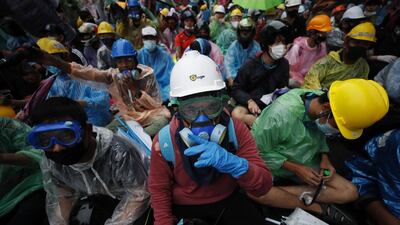
Pro-democracy protesters gather at the Victory Monument during an anti-government protest in Bangkok, Thailand on October 18, 2020. People have gathered for a fifth straight day of demonstrations, defying a government emergency decree banning the gathering of four or more people. EPA -
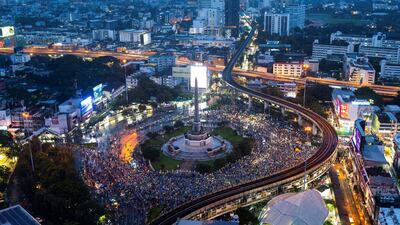
Pro-democracy demonstrators attend an anti-government protest in Bangkok, Thailand. Reuters -
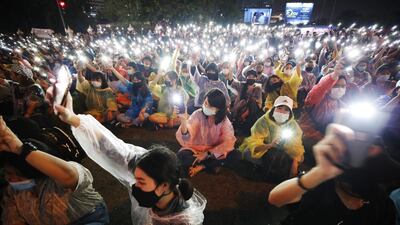
Pro-democracy protesters hold up lights from their mobile phones during an anti-government protest in Bangkok, Thailand. EPA -
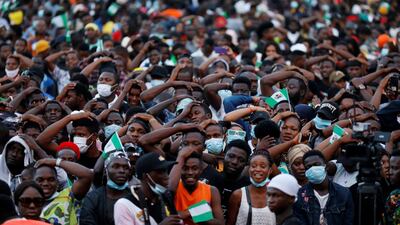
Demonstrators gesture during a protest over alleged police brutality in Lagos, Nigeria on October 17, 2020. Reuters -
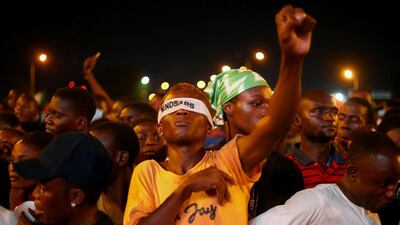
A demonstrator wearing a blindfold with an inscription "End Sars", gestures during a protest against alleged police brutality in Lagos, Nigeria. Reuters -
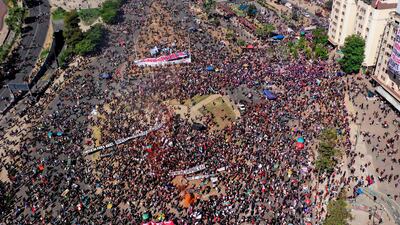
An aerial view of a demonstration with a banner reading “We will overcome” commemorating the anniversary of the social uprising in Chile, in Santiago. AFP -

Demonstrators set a riot police vehicle on fire during clashes on the commemoration of the first anniversary of the social uprising in Chile, in Santiago. AFP -
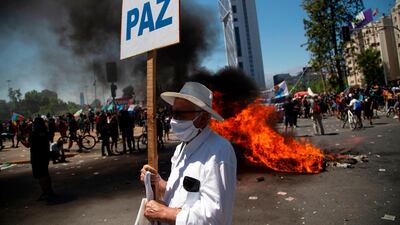
An elderly man holds a placard reading "Peace" in Santiago. AFP -

The dome of the church of Asuncion falls down burning in flames after being set on fire by demonstrators in Santiago. AFP -

Pro-Trump demonstrators remove a counter-protester during a rally in Boston, Massachusetts on October 18. Reuters -

Counter protesters and police clash outside of a gathering of the far right group 'Super Fun Happy America' as they hold a protest in Copley Square in Boston, Massachusetts. AFP -

Colombian indigenous people arrive in Bogota to demand a meeting with Colombian President Ivan Duque on October 18, 2020. AFP -
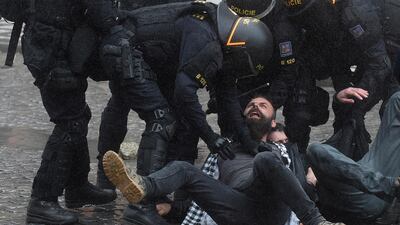
Riot police move in against protestors at the Old Town Square as hundreds of demonstrators, mostly football supporters, protest against the Czech government's new measures to slow the spread of the Covid-19 coronavirus in Prague. AFP -
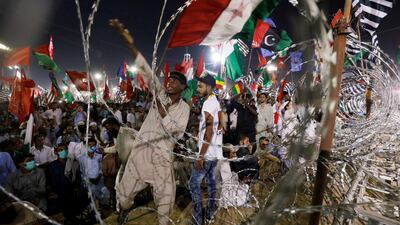
A supporter of the Pakistan Democratic Movement (PDM), an alliance of political opposition parties, reacts to a party song during an anti-government rally in Karachi, Pakistan. Reuters -

Supporters of the Pakistan Peoples Party (PPP) hold up masks depicting their leader Bilawal Bhutto Zardari, chairman of the PPP, during an anti-government protest rally organized by the Pakistan Democratic Movement (PDM) in Karachi, Pakistan. Reuters -

People with old Belarusian national flags march during an opposition rally to protest the official presidential election results in Minsk, Belarus. AP Photo -
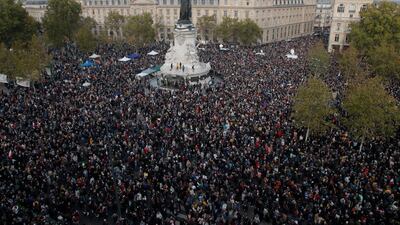
Hundreds of people gather on Republique square during a demonstration in Paris. AP Photo


Dissatisfaction is highest in the US, Brazil, Mexico, South Africa, France, Australia and the UK.
But satisfaction has increased in Germany, South Korea and many of the former communist countries of Central and Eastern Europe.
The main reason behind the disillusionment with democracy among young people was inequality of wealth and income, the report said.
It cited figures that show millennials make up about 25 per cent of the US population but hold only 3 per cent of the wealth.
Baby boomers held 21 per cent of the wealth at the same age.
"This is the first generation in living memory to have a global majority who are dissatisfied with the way democracy works while in their twenties and thirties," said Dr Roberto Foa, lead author of the report.
"By their mid-thirties, 55 per cent of global millennials say they are dissatisfied with democracy, whereas under half of Generation X felt the same way at that age.
"The majority of baby boomers, now in their sixties and seventies, continue to report satisfaction with democracy, as did the interwar generation."
The study suggested the populist challenge to mainstream establishment politics could help to improve democratic engagement by shocking moderate parties and leaders into reversing the decay.
The Cambridge Centre for the Future of Democracy delved into data from more than 4.8 million respondents from 160 countries between 1973 and 2020.

