

It has been a tough stretch for Egypt, with diverse misfortunes leaving the most populous Arab nation struggling to cope.
First there was a mid-March rainstorm so furious that it caused millions of pounds worth of damage.
The coronavirus outbreak struck soon after and gradually worsened, claiming hundreds of lives among the thousands of people infected.
Then a sandstorm cast a shadow over the majority Muslim country’s joy on the first day of Ramadan.
-
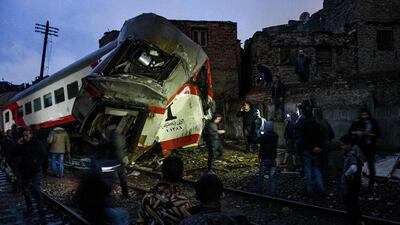
A twisted train carriage after a railroad collision in Cairo during a storm that battered the Egyptian capital on March 12, 2020. AFP -
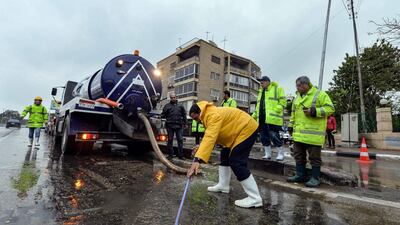
Municipal workers drain a street using a pump following flooding in the Egyptian capital Cairo amidst a heavy rain storm. AFP -

Cars drive along a flooded motorway in Cairo. AFP -
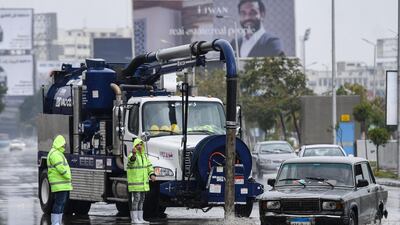
Municipal workers operate a pump to drain a main street flooded by a rainwater. AFP -
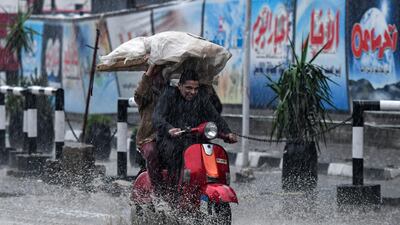
A man carries a wooden board loaded with loaves of bread, covered with plastic, while riding in the back of a scooter amidst a heavy rain storm. AFP -

A man looks from a bus window during a thunderstorm and heavy rains in Cairo. EPA -
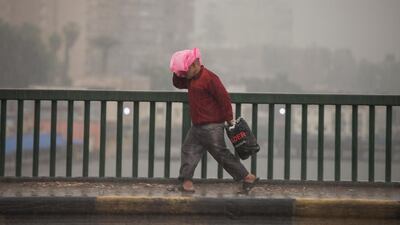
A man walks during a thunderstorm and heavy rains in Cairo. EPA -
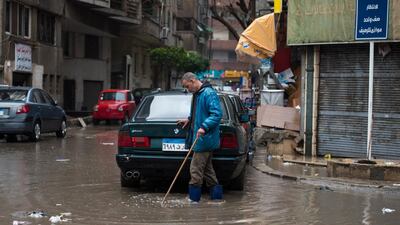
A man walks during a thunderstorm and heavy rains in Cairo. EPA -
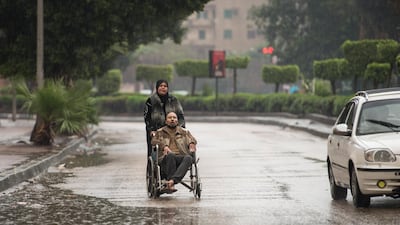
A woman pushes a man during a thunderstorm and heavy rains in Cairo. EPA -
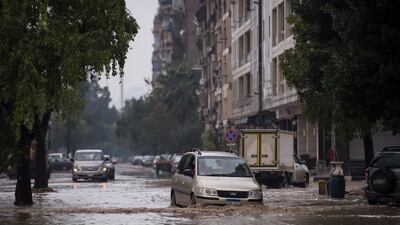
Vehicle pass a flooded street amid a heavy rain shower in Cairo. EPA -
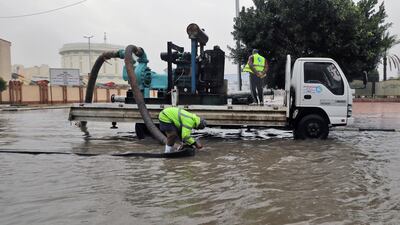
Municipal workers try to clear flood water from a street during a heavy rain shower in Cairo. EPA -
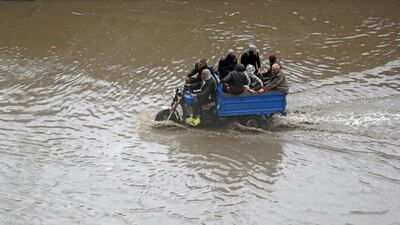
People ride a motorcycle during a thunderstorm and heavy rains in downtown Cairo. Reuters -
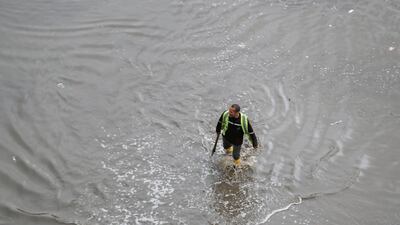
Municipal worker walks in a flooded street during a thunderstorm and heavy rains in Cairo. Reuters -
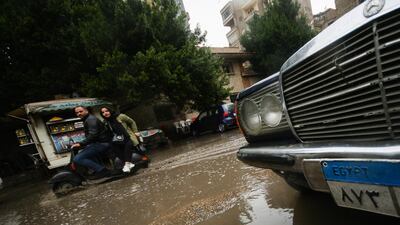
A couple ride a scooter during a thunderstorm and heavy rains in downtown Cairo. Reuters -
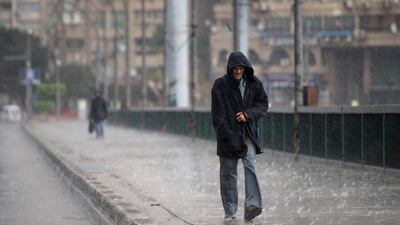
A man walks during a thunderstorm and heavy rains in Cairo. EPA


Making things worse during the holy month is the indefinite closure of mosques, the heart of Ramadan’s spirituality and rituals, to stop the spread of Covid-19.
Measures to contain the outbreak have hit the economy so hard that the government has asked the IMF for financial support to avoid a meltdown.
The restrictions also made clear the sad fact that the chances of surviving the pandemic could be largely dictated by social and economic differences.
Millions of Egyptians cannot afford to leave their jobs and isolate themselves to avoid infection, unlike the wealthy or professionals who can work from home.
Those who must commute to work put themselves at risk every day in packed public transport such as the Cairo metro or communal taxis that ply the streets of the capital and other cities.
-
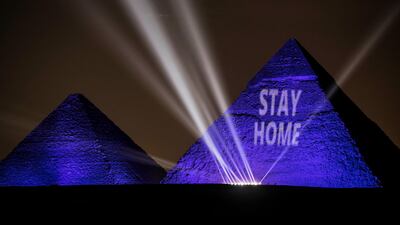
The Great pyramids lit-up with blue light and reading with a laser projection the message "Stay Home" on the Giza plateau outside the Egyptian capital of Cairo on April 18. AFP -
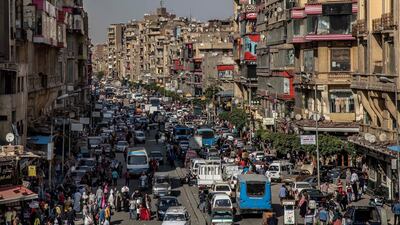
People crowd a street a few hours ahead of curfew in Cairo, Egypt on April 14. AP Photo -

A man wearing a protective face mask walks with others near traditional Ramadan products which are displayed for sale at Al Khayamia street in old Cairo. Reuters -
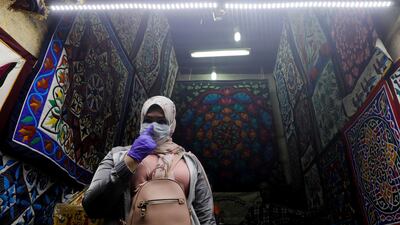
A woman wearing a protective face mask is pictured next to traditional Ramadan products which are displayed for sale at Al Khayamia street in old Cairo. Reuters -
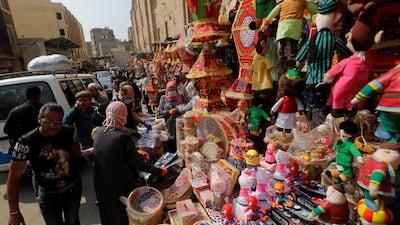
People wearing protective face masks shop traditional Ramadan products which are displayed for sale at Al Khayamia street in old Cairo. Reuters -
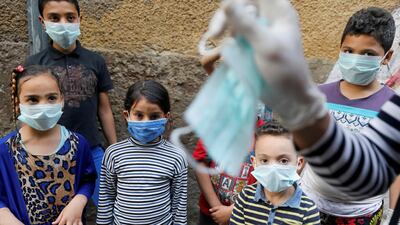
Egyptian clown Ahmed Naser performs to entertain and help children to put on face masks as a preventive measure amid concerns about the spread of the coronavirus disease in Darb Al-Ban district of Cairo. Reuters -

Egyptians wait outside Shaheen market for salted fish named "Fesikh", a traditional dish, which is eaten during the Sham El Nessim holiday next week at El Sayeda Zeinab square in old Cairo. Reuters -
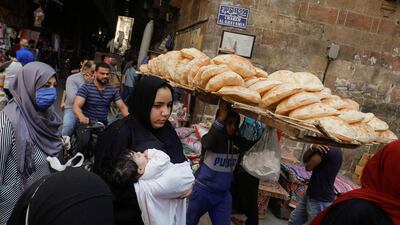
A man carries bread on wooden racks to be sold to customers at Al Khayamia street. Reuters -
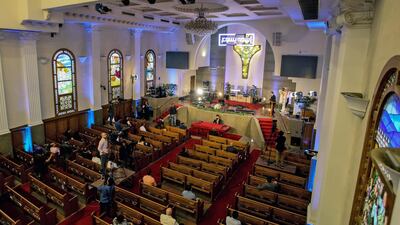
Christian Orthodox Egyptians attend a Bright Saturday service, amid the Covid-19 pandemic, at a church in the capital Cairo on April 18, 2020. AFP -
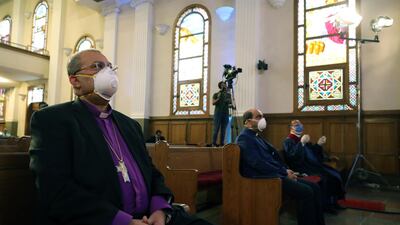
Bishop Andrea Zaki leads a Holy Mass as part of Easter celebrations at the Evangelical Church in Cairo, Egypt, 18 April 2020. EPA


And when it seemed like things could not get any worse, they did.
A roadside bombing claimed by ISIS killed 10 soldiers on Thursday in the deadliest attack in months by the extremists fighting security forces for years in northern Sinai.
“The forces of evil are still trying to hijack this nation,” President Abdel Fattah El Sisi wrote on Facebook after the attack.
The high death toll and the fact that the bombing was carried out during Ramadan renewed calls to permanently crush the insurgency.
The attack was followed by a police raid on a militant hideout nearby in which 18 extremists were killed, the government said.
Moving images of the soldiers’ funerals prompted grief and anger in the nation of 100 million, which was already tired and frustrated by the rapid succession of misfortunes.

“The recurring pains of Sinai present many questions,” prize-winning novelist and columnist Basma Abdel Aziz wrote.
“The grief over those who died today and over years past require serious answers, and not just words of sadness and eulogies.”
The nation's mood was perhaps best summed in a Facebook post that read: “So much to sadden us and so very little to make us happy. No dreams of any kind are left.”
The coronavirus outbreak and its fallout are likely to be the greatest calamities to befall Egypt this year and remain etched on the national psyche for years to come.
The 436 deaths and 6,813 infections reported until May 4 are relatively low for a country of Egypt’s size, but the numbers have been rising steadily.
This would suggest that the outbreak has yet to peak, and raise fears that it could spiral out of control given the fragility of the health sector.
“Egypt has been very lucky and we just don’t know why,” said Michael Hanna, a Middle East expert at the Century Foundation in New York.
"There is a big mystery about what’s going on in Egypt and other countries in a similar situation.
“But it might just be a question of time because, after all, Egyptians are like any other people. They don’t have anything special to protect them.
“Egypt has been buying time but it does not have the capability to take advantage of that time. At the end, everything depends on what the virus does.”

The country’s chances of containing the outbreak are not helped by the fatalist attitude adopted by many Egyptians who adhere to the minimum of preventive measures.
They count on an immunity supposedly inherited from generations who survived hardship, disease and unhygienic living conditions.
“This is a country that lived with bilharzia [a disease borne by parasitic worms] for so long, where thousands die every year in road accidents and entire apartment towers collapse on their tenants,” rights lawyer and commentator Negad El Borai said.
“It won’t shock us if 3,000 to 5,000 of us die but it’s another story, of course, if 500,000 do.”
Sociologist and political commentator Ammar Ali Hassan said the coronavirus would affect society long after the last victim of the outbreak was buried.
While the upper crust would change the way it interacts with others and perhaps even develop an obsession with hygiene, the rest of society would happily go back to lives of struggle they once considered a burden.
“The life that some people have complained about as cruel and inevitable has now become a hope to them,” Mr Hassan said.
He said most wanted to return to their old ways and see their “pre-coronavirus days as a dream played out in packed cafes, large gatherings and busy metro stations”.
“As soon as the pandemic is defeated, they will go back to the old story,” he said. "But a small minority will be careful and insist on social distancing.”

