
US Secretary of State Mike Pompeo said on Wednesday it was up to Israel to decide whether to annex settlements in the occupied West Bank, as Israeli Prime Minister Benjamin Netanyahu has vowed to do despite international opposition.
Senior aides to US President Donald Trump met for a second day to discuss whether to give Mr Netanyahu the green light for annexation, which has drawn condemnation from the Palestinians, US Arab allies and other foreign governments.
Despite that, Mr Pompeo – speaking to reporters ahead of Netanyahu's July 1 target date – said extending Israeli sovereignty was a decision "for Israelis to make."
United Nations Secretary-General Antonio Guterres urged Israel to abandon plans to annex parts of the West Bank, warning this threatened prospects for peace with the Palestinians.
Under Mr Trump’s peace proposal unveiled in January and met with widespread skepticism, the United States would recognise the Jewish settlements – built on land the Palestinians seek for a state – as part of Israel.
The proposal would create a Palestinian state but impose strict conditions. Palestinian leaders have dismissed the initiative and it has gone nowhere.
-
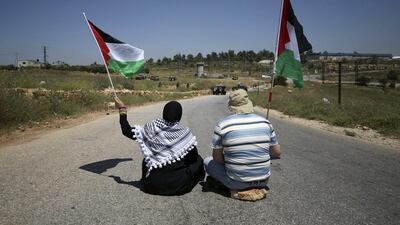
Palestinian protesters wave flags as Israeli troops take position during a protest against Jewish settlements in the West Bank village of Nabi Saleh, near Ramallah. Reuters -
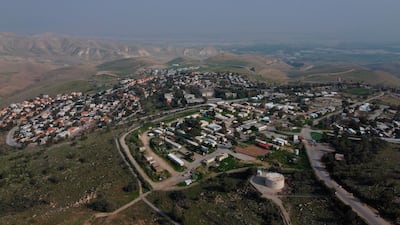
Now that Prime Minister Benjamin Netanyahu has secured a new term in office, there’s little to prevent him from annexing large parts of the West Bank as early as this summer. AP -
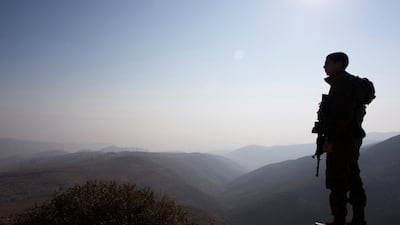
An Israeli soldier stands guard during a tour made by Israeli parliament members in the Jordan Valley near the Jewish settlement of Maale Efrayim. Reuters -
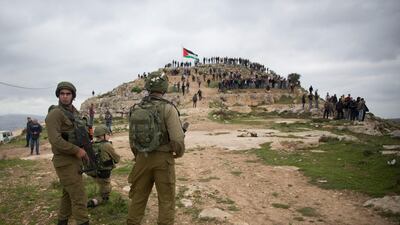
Israeli soldiers take position as Palestinian demonstrators gather during a protest against expansion of Israeli settlements in the West Bank. AP -
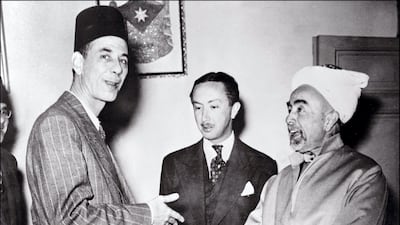
King Abdullah (r) of Transjordan on May 13, 1948 in Amman with Abed Al Rahman Azzam, the secretary general of the Arab League and Abd Al Elah Ibn Ali, the Prince Regent of Iraq, the day before the beginning of the first Arab-Israeli War. AFP -
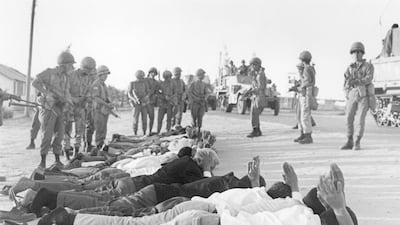
Palestinians surrender to Israeli soldiers in June 1967 in the occupied territory of the West Bank after Israel launched a pre-emptive attack on Egypt and Syria and seized the Gaza Strip, Sinai Peninsula and the Golan Heights in Syria as well as the West Bank and Arab East Jerusalem. AFP -
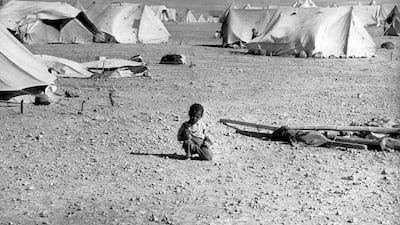
A Palestinian child plays in a refugee camp in Jordan on June 23, 1967. AFP -
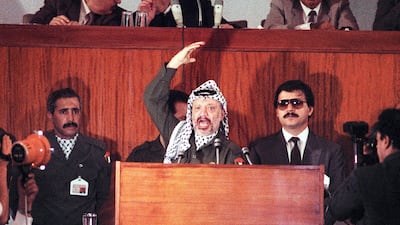
PLO chairman Yasser Arafat delivers a speech to the Palestine National Council meeting to make the historic proclamation of a Palestinian state in the Israeli-occupied territories and to recognize Israel in the Palace of Nations conference hall on November 12, 1988, in Algiers. AFP -

US President Bill Clinton stands between PLO leader Yasser Arafat and Israeli Prime Minister Yitzahk Rabin as they shake hands for the first time on September 13, 1993 at the White House. AFP -
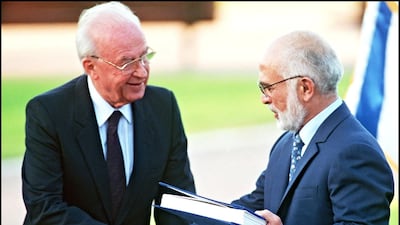
Hussein Ibn Talal, King of Jordan and Israeli Premier Yitzhak Rabin shake hands after they exchanged the documents of the Peace Treaty at Beit Gabriel conference centre on November 10, 1994 on the southern shore of the Sea of Galilee. AFP -
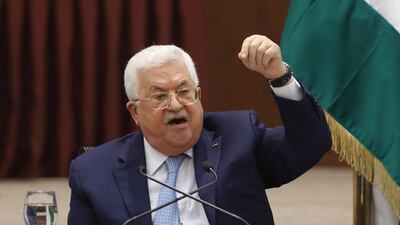
Palestinian President Mahmoud Abbas speaks during the Palestinian leadership meeting and threatened to end security coordination with Israel and the United States, saying Israeli annexation would ruin chances for peace. AFP -
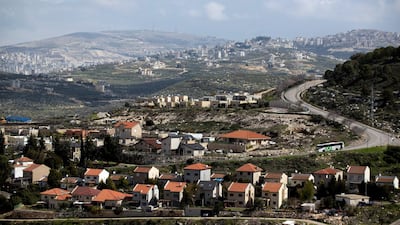
Houses in the Israeli settlement of settlement of Kedumim are seen in the foreground as part of the Palestinian city of Nablus is seen in the background (far left) in the Israeli-occupied West Bank. Reuters -
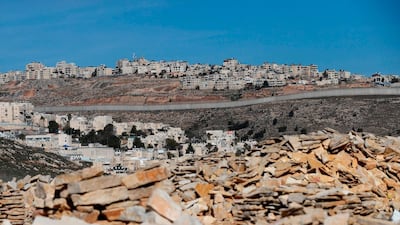
Israel's controversial concrete barrier (C) separating the Jewish settlement of Neve Yaakov (foreground) in the northern part of east Jerusalem and the Palestinian area of al-Ram (background) in the occupied West Bank. AFP -
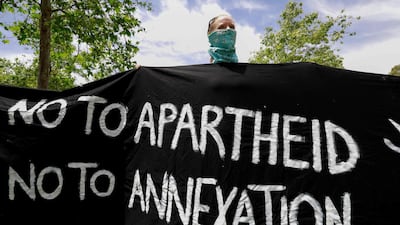
An Israeli activist holds a banner during a protest against the US peace plan for the Middle East, in front of the US ambassador's residence in Jerusalem, on May 15, 2020, as Palestinians commemorate the 72nd anniversary of the 1948 Nakba or "catastrophe". AFP -
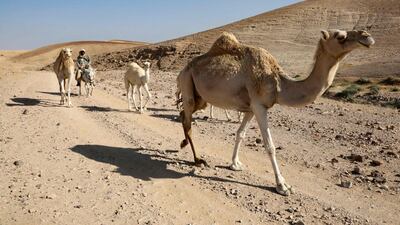
A Palestinian shepherd tends to his camels on arid land considered to be in "Area C" (under Israeli security and administrative control), southeast of Yatta town in the southern West Bank district of Hebron. AFP -
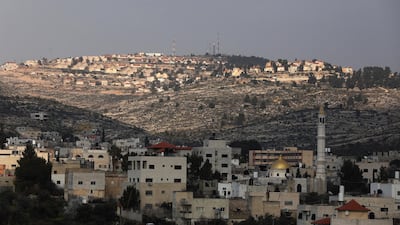
A general view of the Israeli settlement of Elon Moreh, as seen from the Palestinian village of Azmout near the West Bank City of Nablus. EPA -
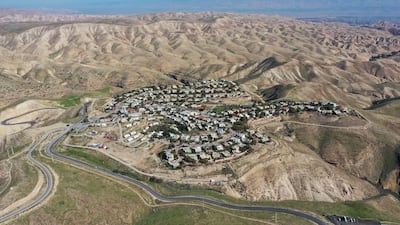
The West Bank Jewish settlement of Maale Michmash. AP


Mr Netanyahu intends to launch his project of extending sovereignty over settlements and the Jordan Valley, hoping for US approval. Most countries view Israel's settlements as illegal, and the Palestinians have voiced outrage at annexation.
While criticising Palestinian leaders for rejecting Mr Trump's "vision for peace," Mr Pompeo did not provide any signs of where the administration stands on the specifics of Mr Netanyahu's plan.
Mr Pompeo was at the White House to join the discussions, and Mr Trump could also take part, a US official said.
Among the main options under US consideration is a gradual, step-by-step process in which Israel would initially declare sovereignty over several settlements close to Jerusalem instead of the 30 per cent of the West Bank envisaged in Mr Netanyahu’s original plan, according to a person close to matter.
The Trump administration has not closed the door to a larger annexation.
But Jared Kushner, Trump's son-in-law and senior adviser is concerned that allowing Israel to move too fast could kill hopes of drawing the Palestinians into talks on the peace plan he mostly authored, the source said.
There are also concerns about opposition from Jordan, one of only two countries that have a peace treaty with Israel, and from Gulf states. Washington has also made clear it wants Israel's unity government, divided on the issue, to reach a consensus.

