
On the anniversary of Lebanon’s uprising, MP Chamel Roukoz urged people to find hope, not despair, and to unite to bring down political structures.
The former head of the country’s special forces Rangers Regiment has long backed the uprising that began last October against corrupt politics, inequality, economic malaise, poor governance and bad service provision.
"I know that politicians have deep roots and hold the country in their grip strongly and effectively because they were militias before [the 1975-1990 civil war]" he told The National from his office in the coastal town of Jounieh, north of Beirut.
“They are trying to make the revolution fail in different ways by infiltrating groups with people who cause riots or by [asking] security forces to arrest people.
"All these this makes people despair. The most important thing is that the anger that is present in people transforms into hope, not into despair.”
Mr Roukoz, 62, said he hoped that the protests would have achieved more in a year and blamed a lack of unity for the failure to make more progress.
But he acknowledged the small gains made and said he understood that many Lebanese had lost faith in political change.
“[Revolutionaries] overcame many difficulties. With their words, and by standing in front of politician’s houses and in the streets, they reached leaders who thought that they were infallible,” he said.
“I hope that this year, the revolution will continue achieving its goals and create a new power structure to replace the one that exists today."
-
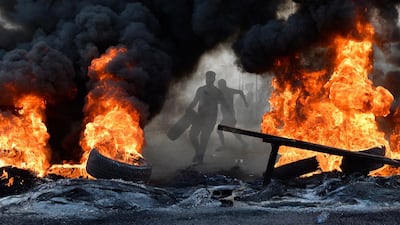
A protester throws a tyre on to a fire to block a road during a protest in north of Beirut, Lebanon in October 2019. EPA -
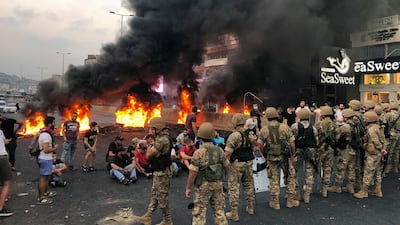
Demonstrators sit together during a protest over deteriorating economic situation, in the city of Jounieh, north of Beirut. Reuters -
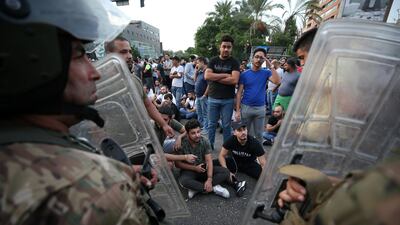
Demonstrators gather in Sidon, Lebanon. Reuters -
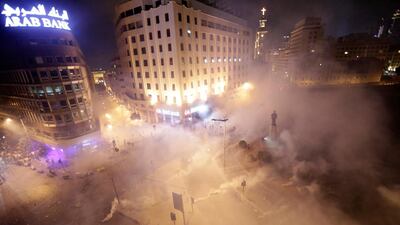
Lebanese riot police fire tear gas. AP Photo -
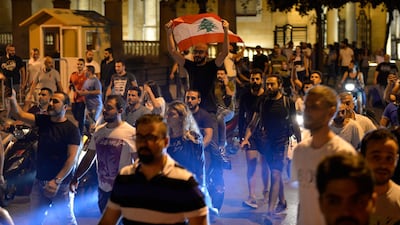
Protesters shout anti-government slogans in front of the Government Palace in downtown Beirut. EPA -

Thousands of protesters, mainly civil activists, condemned the proposed taxes that would go along with the 2020 budget, especially an unexpected government plan to impose a fee for using WhatsApp calls. EPA -
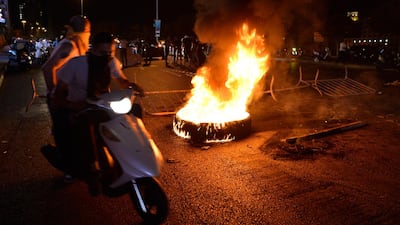
Public anger has simmered since parliament passed an austerity budget in July to help trim a ballooning deficit. EPA -
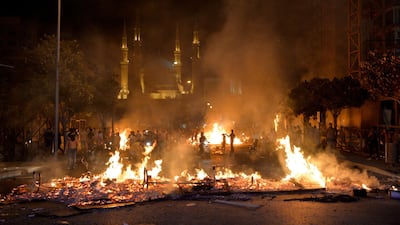
Protesters in the capital blocked the road to the airport with burning tyres, prompting a heavy deployment by security forces. EPA -
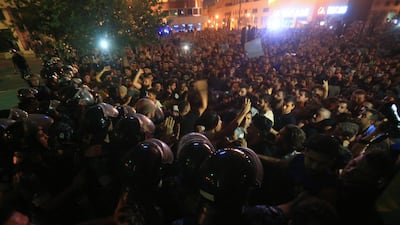
A crows of demonstrators faces police. EPA -
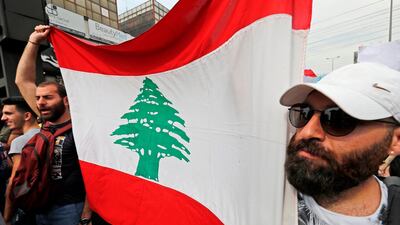
Lebanese demonstrators gather during a protest in Zouk Mikael. AFP -

Lebanese army convoy waits for a blocked road to be open. EPA -
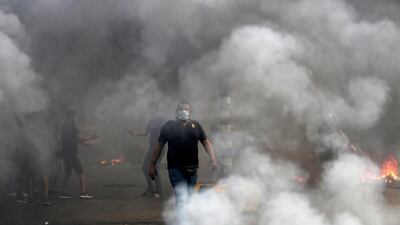
An anti-government protester walks between burning tyres in Beirut, Lebanon. AP Photo -
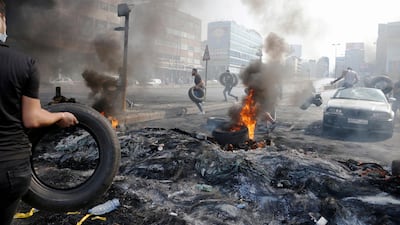
Demonstrators run as they hold tyres during a protest over the deteriorating economic situation, in Dora, Lebanon. Reuters -
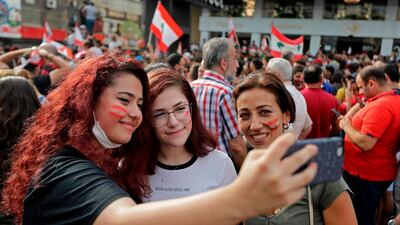
Lebanese demonstrators take a selfie during the protest. AFP -

Passengers walk to the airport after anti-government protesters blocked the road. AP Photo -
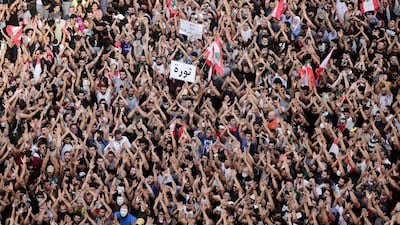
Anti-government protesters hold a placard with Arabic that reads "Revolution," as shout slogans against the Lebanese government. AP Photo -
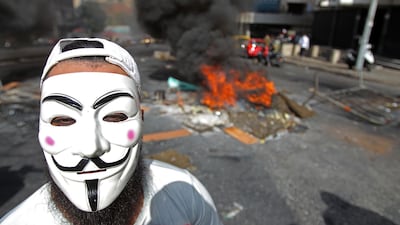
A protester wearing a Guy Fawkes mask looks in Beirut's Salim Slem neighbourhood. AFP -
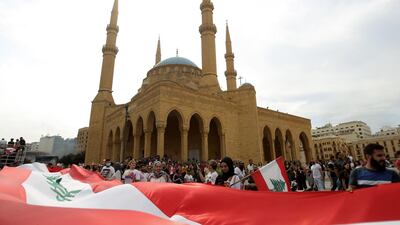
Lebanese demonstrators wave the national flag during a protest against dire economic conditions in downtown Beirut. AFP


Mr Roukoz, a son-in-law of President Michel Aoun, broke off from the Free Patriotic Movement, the political party founded by Mr Aoun, when the anti-government protests began.
Despite his personal connections to the president, he said “political work and the future of the country are a separate topic".
Mr Roukoz, who became MP in 2018, said a government of experts with exceptional powers should work towards bringing about reforms and work for six to nine months to “prepare a new stage in Lebanese politics”.
“The solution is a new political structure with non-corrupt people and a vision to save the country,” he said.
Public debate should centre on “a new electoral law and new elections to arrive to a new political class that is different from the current one".
Parliamentary and municipal elections are scheduled for 2022 but protesters are calling for an early vote.
Mr Roukoz made similar calls during the protests.
But in the past 12 months, a large part of Lebanese society stopped attending protests, especially after some political leaders turned against the movement – including Hezbollah leader Hassan Nasrallah and its Shiite ally Amal.
“Maybe they consider that there is an international conspiracy targeting them, but the feelings of anger and poverty, and the belief that politicians are thieves and stole from the state and their own money, is present among all the Lebanese people,” said Mr Roukoz.
Mr Roukoz, often tipped as a potential president, did not directly answer a question about his own political ambitions.
“There must first be reforms [and] initiatives to build laws and institutions. Then we’ll talk about who is best to be president," he said.
If Mr Roukoz aims for the presidency after his father-in-law leaves office, he will probably have to face Mr Aoun's other son-in-law – Free Patriotic Movement leader Gebran Bassil.
Mr Roukoz is a vocal critic of the Mr Bassil but both men are Maronite Christians, a prerequisite to be president in Lebanon’s sectarian power-sharing system.

