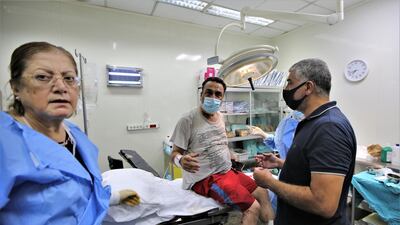
Known as “the hospital of the Middle East,” Lebanon for years held a reputation as a hub for medical tourism, attracting patients from across the region for world-class specialist treatment.
However, the Lebanese healthcare sector is now facing an existential threat as a year of successive crises has pushed hundreds of doctors and nurses to seek work abroad.
In the last two months alone, more than 150 doctors have contacted the Lebanese Order of Physicians to request recommendation letters that would allow them to work abroad, according to Professor Charaf Abou Charaf, the order’s president.
Combined with requests made by doctors directly to their hospitals, Mr Abou Charaf estimates the total number of doctors who have chosen to leave since July to be more than 300.
This new wave of emigration has also begun to deplete the Lebanese nursing workforce. More than two hundred nurses have requested documents to help leave the country over the last six months, according to Myrna Doumit, the president of the Order of Nurses.
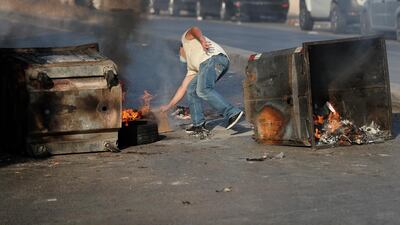
The departure of hundreds of talented healthcare workers is the latest in a series of crises that have struck Lebanon’s healthcare sector over the past year.
The joint economic, financial and currency crises that came to a head in Autumn 2019 were a huge blow to already underfunded and overstretched hospitals owed hundreds of millions of dollars by the government. Private hospitals, which provide more than 80 per cent of Lebanon’s healthcare services, are owed more than $1.3 billion dollars in dues that date back to 2011, according to Sleiman Haroun, the head of the private hospitals’ syndicate.
Shortages of US dollars jeopardised imports of vital medical supplies, while the depreciation of the Lebanese pound slashed salaries and life savings. About 40 per cent of the nursing workforce was laid off in the last year by hospitals which claimed they were no longer able to pay their wages, Ms Doumit said.
Fred Bteich, a neurosurgery resident at Hotel-Dieu de France hospital, is moving to the French city of Dijon next month to specialise in paediatric neurosurgery. Initially, he was planning to spend a few years in France to gain experience before returning to work in Lebanon.
“But then the crisis hit and I started thinking, why would I come back?” he said.
Mr Bteich’s salary at the private hospital in Beirut is five times less than it was a year ago. The 29-year-old doctor now earns less than 50 cents per hour.
“If my country cannot provide me with a decent salary after 13 years of study and work, what’s the point?”
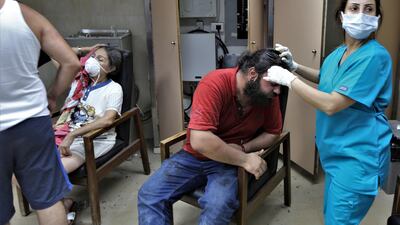
The arrival of the Covid-19 pandemic in February placed further pressure on healthcare workers in under-resourced hospitals – more than 744 healthcare workers in Lebanon have contracted the coronavirus since the first confirmed case of Covid-19 was recorded in Lebanon on February 21.
“It’s just been one disaster after another,” Mr Abou Charaf said. “Now, all of a sudden all our medical skills and expertise are disappearing.”
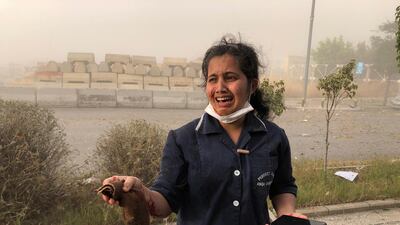
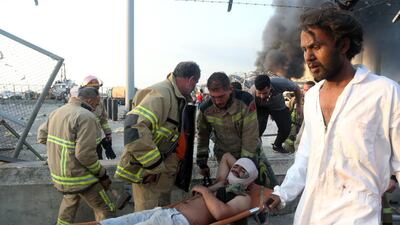
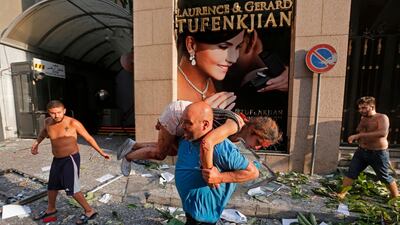
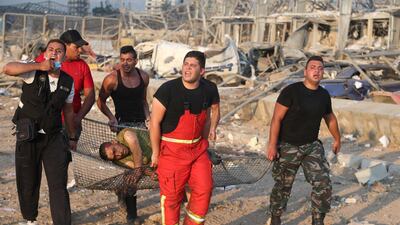
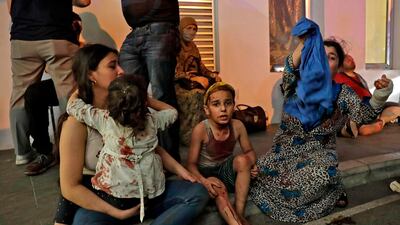
For 24-year-old Kareem, who gave only his last name, the final push to leave Lebanon was the devastating explosion at the Beirut port on August 4 that killed almost 200 people, injured more than 6,000 and decimated large parts of the capital, including at least four hospitals.
More than 2,000 doctors were directly impacted by the blast, whether through injuries or the destruction of their workplaces. Five nurses were killed while on duty.
“Seeing the capital city of my country ripped apart, that was it for me,” said Kareem, a first-year internal medicine resident at the Bahman University Hospital in southern Beirut. “I knew I had to go abroad, to a country that respects its citizens.”
Kareem had been thinking about moving to continue his specialisation for a while, studying German and pouring over American and Canadian medical textbooks to give him the best chance of landing a position in a foreign hospital.
“I have to leave … not only for my medical career, but also for my family to have someone to rely on,” he said.
Lebanon has a long history of migration, with its diaspora population estimated to be three times the size of the local population. However, the compounded crises of the past year have accelerated a “brain drain” as well-educated professionals seek work abroad.
It is not just young doctors and nurses such as Kareem that are leaving Lebanon to start their careers, but also those with decades of experience in their fields, who cannot easily be replaced.
Mr Abou Charaf is one of only eight paediatric cardiologists in Lebanon. Three others have already made plans to leave.
“We need every single one of them, and once they leave, it is unlikely they’ll return,” he said. “The entire healthcare system that we have built in Lebanon is under threat.”
Keeping the best qualified and most experienced nurses in Lebanon is also paramount to maintaining quality of care, Ms Doumit said.
The majority of nurses leaving the country are those with degrees and years of practical experience. While about 1,200 new nurses are expected to enter the workforce in the next year, “we can’t just replace [experienced nurses] with fresh graduates”, Ms Doumit said.
The departure of hundreds of Lebanese doctors and nurses has worrying repercussions for patient safety, warned Fadi El Jardali, a professor of health policy and systems at the American University of Beirut.
“The backbone of any health system is its health workers, but without investing in them, quality of care will decline.”
Now, as Lebanon continues to experience a second wave of the coronavirus, with the daily count hovering about 500 cases, a depleted workforce could prove deadly.
“Make no mistake, if we don’t support healthcare workers, we will see an explosive outbreak of Covid-19,” Mr El Jardali said. “Patient outcomes, including deaths, are directly correlated with the capacity of health workers.”
Dr Bteich is aware of the potential damage caused by the emigration of health professionals like himself and is sad to have to make the difficult decision to leave.
“But I am not going to waste years of my life just waiting for my country to get better,” he said. “I need to be selfish for once.”

MOTHER%20OF%20STRANGERS
%3Cp%3EAuthor%3A%20Suad%20Amiry%3Cbr%3EPublisher%3A%20Pantheon%3C%2Fp%3E%0A%3Cp%3EPages%3A%20304%3Cbr%3EAvailable%3A%20Now%3C%2Fp%3E%0A
Benefits of first-time home buyers' scheme
- Priority access to new homes from participating developers
- Discounts on sales price of off-plan units
- Flexible payment plans from developers
- Mortgages with better interest rates, faster approval times and reduced fees
- DLD registration fee can be paid through banks or credit cards at zero interest rates
What is blockchain?
Blockchain is a form of distributed ledger technology, a digital system in which data is recorded across multiple places at the same time. Unlike traditional databases, DLTs have no central administrator or centralised data storage. They are transparent because the data is visible and, because they are automatically replicated and impossible to be tampered with, they are secure.
The main difference between blockchain and other forms of DLT is the way data is stored as ‘blocks’ – new transactions are added to the existing ‘chain’ of past transactions, hence the name ‘blockchain’. It is impossible to delete or modify information on the chain due to the replication of blocks across various locations.
Blockchain is mostly associated with cryptocurrency Bitcoin. Due to the inability to tamper with transactions, advocates say this makes the currency more secure and safer than traditional systems. It is maintained by a network of people referred to as ‘miners’, who receive rewards for solving complex mathematical equations that enable transactions to go through.
However, one of the major problems that has come to light has been the presence of illicit material buried in the Bitcoin blockchain, linking it to the dark web.
Other blockchain platforms can offer things like smart contracts, which are automatically implemented when specific conditions from all interested parties are reached, cutting the time involved and the risk of mistakes. Another use could be storing medical records, as patients can be confident their information cannot be changed. The technology can also be used in supply chains, voting and has the potential to used for storing property records.
Champions parade (UAE timings)
7pm Gates open
8pm Deansgate stage showing starts
9pm Parade starts at Manchester Cathedral
9.45pm Parade ends at Peter Street
10pm City players on stage
11pm event ends
Farasan Boat: 128km Away from Anchorage
Director: Mowaffaq Alobaid
Stars: Abdulaziz Almadhi, Mohammed Al Akkasi, Ali Al Suhaibani
Rating: 4/5
3%20Body%20Problem
%3Cp%3E%3Cstrong%3ECreators%3A%3C%2Fstrong%3E%20David%20Benioff%2C%20D%20B%20Weiss%2C%20Alexander%20Woo%3C%2Fp%3E%0A%3Cp%3E%3Cstrong%3EStarring%3A%20%3C%2Fstrong%3EBenedict%20Wong%2C%20Jess%20Hong%2C%20Jovan%20Adepo%2C%20Eiza%20Gonzalez%2C%20John%20Bradley%2C%20Alex%20Sharp%3C%2Fp%3E%0A%3Cp%3E%3Cstrong%3ERating%3A%3C%2Fstrong%3E%203%2F5%3C%2Fp%3E%0A
Tributes from the UAE's personal finance community
• Sebastien Aguilar, who heads SimplyFI.org, a non-profit community where people learn to invest Bogleheads’ style
“It is thanks to Jack Bogle’s work that this community exists and thanks to his work that many investors now get the full benefits of long term, buy and hold stock market investing.
Compared to the industry, investing using the common sense approach of a Boglehead saves a lot in costs and guarantees higher returns than the average actively managed fund over the long term.
From a personal perspective, learning how to invest using Bogle’s approach was a turning point in my life. I quickly realised there was no point chasing returns and paying expensive advisers or platforms. Once money is taken care off, you can work on what truly matters, such as family, relationships or other projects. I owe Jack Bogle for that.”
• Sam Instone, director of financial advisory firm AES International
"Thought to have saved investors over a trillion dollars, Jack Bogle’s ideas truly changed the way the world invests. Shaped by his own personal experiences, his philosophy and basic rules for investors challenged the status quo of a self-interested global industry and eventually prevailed. Loathed by many big companies and commission-driven salespeople, he has transformed the way well-informed investors and professional advisers make decisions."
• Demos Kyprianou, a board member of SimplyFI.org
"Jack Bogle for me was a rebel, a revolutionary who changed the industry and gave the little guy like me, a chance. He was also a mentor who inspired me to take the leap and take control of my own finances."
• Steve Cronin, founder of DeadSimpleSaving.com
"Obsessed with reducing fees, Jack Bogle structured Vanguard to be owned by its clients – that way the priority would be fee minimisation for clients rather than profit maximisation for the company.
His real gift to us has been the ability to invest in the stock market (buy and hold for the long term) rather than be forced to speculate (try to make profits in the shorter term) or even worse have others speculate on our behalf.
Bogle has given countless investors the ability to get on with their life while growing their wealth in the background as fast as possible. The Financial Independence movement would barely exist without this."
• Zach Holz, who blogs about financial independence at The Happiest Teacher
"Jack Bogle was one of the greatest forces for wealth democratisation the world has ever seen. He allowed people a way to be free from the parasitical "financial advisers" whose only real concern are the fat fees they get from selling you over-complicated "products" that have caused millions of people all around the world real harm.”
• Tuan Phan, a board member of SimplyFI.org
"In an industry that’s synonymous with greed, Jack Bogle was a lone wolf, swimming against the tide. When others were incentivised to enrich themselves, he stood by the ‘fiduciary’ standard – something that is badly needed in the financial industry of the UAE."
Our legal consultant
Name: Hassan Mohsen Elhais
Position: legal consultant with Al Rowaad Advocates and Legal Consultants.
UAE currency: the story behind the money in your pockets
Voy!%20Voy!%20Voy!
%3Cp%3E%3Cstrong%3EDirector%3A%3C%2Fstrong%3E%20Omar%20Hilal%3Cbr%3E%3Cstrong%3EStars%3A%3C%2Fstrong%3E%20Muhammad%20Farrag%2C%20Bayoumi%20Fouad%2C%20Nelly%20Karim%3Cbr%3E%3Cstrong%3ERating%3A%3C%2Fstrong%3E%204%2F5%3C%2Fp%3E%0A
'Worse than a prison sentence'
Marie Byrne, a counsellor who volunteers at the UAE government's mental health crisis helpline, said the ordeal the crew had been through would take time to overcome.
“It was worse than a prison sentence, where at least someone can deal with a set amount of time incarcerated," she said.
“They were living in perpetual mystery as to how their futures would pan out, and what that would be.
“Because of coronavirus, the world is very different now to the one they left, that will also have an impact.
“It will not fully register until they are on dry land. Some have not seen their young children grow up while others will have to rebuild relationships.
“It will be a challenge mentally, and to find other work to support their families as they have been out of circulation for so long. Hopefully they will get the care they need when they get home.”
Ads on social media can 'normalise' drugs
A UK report on youth social media habits commissioned by advocacy group Volteface found a quarter of young people were exposed to illegal drug dealers on social media.
The poll of 2,006 people aged 16-24 assessed their exposure to drug dealers online in a nationally representative survey.
Of those admitting to seeing drugs for sale online, 56 per cent saw them advertised on Snapchat, 55 per cent on Instagram and 47 per cent on Facebook.
Cannabis was the drug most pushed by online dealers, with 63 per cent of survey respondents claiming to have seen adverts on social media for the drug, followed by cocaine (26 per cent) and MDMA/ecstasy, with 24 per cent of people.
Sole survivors
- Cecelia Crocker was on board Northwest Airlines Flight 255 in 1987 when it crashed in Detroit, killing 154 people, including her parents and brother. The plane had hit a light pole on take off
- George Lamson Jr, from Minnesota, was on a Galaxy Airlines flight that crashed in Reno in 1985, killing 68 people. His entire seat was launched out of the plane
- Bahia Bakari, then 12, survived when a Yemenia Airways flight crashed near the Comoros in 2009, killing 152. She was found clinging to wreckage after floating in the ocean for 13 hours.
- Jim Polehinke was the co-pilot and sole survivor of a 2006 Comair flight that crashed in Lexington, Kentucky, killing 49.
TECH%20SPECS%3A%20APPLE%20IPHONE%2014%20PLUS
%3Cp%3E%3Cstrong%3EDisplay%3A%3C%2Fstrong%3E%206.1%22%20Super%20Retina%20XDR%20OLED%2C%202778%20x%201284%2C%20458ppi%2C%20HDR%2C%20True%20Tone%2C%20P3%2C%201200%20nits%3C%2Fp%3E%0A%3Cp%3E%3Cstrong%3EProcessor%3A%3C%2Fstrong%3E%20A15%20Bionic%2C%206-core%20CPU%2C%205-core%20GPU%2C%2016-core%20Neural%20Engine%C2%A0%3C%2Fp%3E%0A%3Cp%3E%3Cstrong%3EMemory%3A%3C%2Fstrong%3E%206GB%3C%2Fp%3E%0A%3Cp%3E%3Cstrong%3ECapacity%3A%3C%2Fstrong%3E%20128%2F256%2F512GB%3C%2Fp%3E%0A%3Cp%3E%3Cstrong%3EPlatform%3A%3C%2Fstrong%3E%20iOS%2016%3C%2Fp%3E%0A%3Cp%3E%3Cstrong%3EMain%20camera%3A%3C%2Fstrong%3E%20Dual%2012MP%20main%20(f%2F1.5)%20%2B%2012MP%20ultra-wide%20(f%2F2.4)%3B%202x%20optical%2C%205x%20digital%3B%20Photonic%20Engine%2C%20Deep%20Fusion%2C%20Smart%20HDR%204%2C%20Portrait%20Lighting%3C%2Fp%3E%0A%3Cp%3E%3Cstrong%3EMain%20camera%20video%3A%3C%2Fstrong%3E%204K%20%40%2024%2F25%2F3060fps%2C%20full-HD%20%40%2025%2F30%2F60fps%2C%20HD%20%40%2030fps%3B%20HD%20slo-mo%20%40%20120%2F240fps%3B%20night%2C%20time%20lapse%2C%20cinematic%2C%20action%20modes%3B%20Dolby%20Vision%2C%204K%20HDR%3C%2Fp%3E%0A%3Cp%3E%3Cstrong%3EFront%20camera%3A%3C%2Fstrong%3E%2012MP%20TrueDepth%20(f%2F1.9)%2C%20Photonic%20Engine%2C%20Deep%20Fusion%2C%20Smart%20HDR%204%3B%20Animoji%2C%20Memoji%3B%20Portrait%20Lighting%3C%2Fp%3E%0A%3Cp%3E%3Cstrong%3EFront%20camera%20video%3A%3C%2Fstrong%3E%204K%20%40%2024%2F25%2F3060fps%2C%20full-HD%20%40%2025%2F30%2F60fps%2C%20HD%20slo-mo%20%40%20120fps%3B%20night%2C%20time%20lapse%2C%20cinematic%2C%20action%20modes%3B%20Dolby%20Vision%2C%204K%20HDR%3C%2Fp%3E%0A%3Cp%3E%3Cstrong%3EBattery%3A%3C%2Fstrong%3E%204323%20mAh%2C%20up%20to%2026h%20video%2C%2020h%20streaming%20video%2C%20100h%20audio%3B%20fast%20charge%20to%2050%25%20in%2030m%3B%20MagSafe%2C%20Qi%20wireless%20charging%3C%2Fp%3E%0A%3Cp%3E%3Cstrong%3EConnectivity%3A%3C%2Fstrong%3E%20Wi-Fi%2C%20Bluetooth%205.3%2C%20NFC%20(Apple%20Pay)%3C%2Fp%3E%0A%3Cp%3E%3Cstrong%3EBiometrics%3A%3C%2Fstrong%3E%20Face%20ID%3C%2Fp%3E%0A%3Cp%3E%3Cstrong%3EI%2FO%3A%3C%2Fstrong%3E%20Lightning%3C%2Fp%3E%0A%3Cp%3E%3Cstrong%3ECards%3A%3C%2Fstrong%3E%20Dual%20eSIM%20%2F%20eSIM%20%2B%20SIM%20(US%20models%20use%20eSIMs%20only)%3C%2Fp%3E%0A%3Cp%3E%3Cstrong%3EColours%3A%3C%2Fstrong%3E%20Blue%2C%20midnight%2C%20purple%2C%20starlight%2C%20Product%20Red%3C%2Fp%3E%0A%3Cp%3E%3Cstrong%3EIn%20the%20box%3A%3C%2Fstrong%3E%20iPhone%2014%2C%20USB-C-to-Lightning%20cable%2C%20one%20Apple%20sticker%3C%2Fp%3E%0A%3Cp%3E%3Cstrong%3EPrice%3A%3C%2Fstrong%3E%20Dh3%2C799%20%2F%20Dh4%2C199%20%2F%20Dh5%2C049%3C%2Fp%3E%0A
Profile of VoucherSkout
Date of launch: November 2016
Founder: David Tobias
Based: Jumeirah Lake Towers
Sector: Technology
Size: 18 employees
Stage: Embarking on a Series A round to raise $5 million in the first quarter of 2019 with a 20 per cent stake
Investors: Seed round was self-funded with “millions of dollars”
Ten tax points to be aware of in 2026
1. Domestic VAT refund amendments: request your refund within five years
If a business does not apply for the refund on time, they lose their credit.
2. E-invoicing in the UAE
Businesses should continue preparing for the implementation of e-invoicing in the UAE, with 2026 a preparation and transition period ahead of phased mandatory adoption.
3. More tax audits
Tax authorities are increasingly using data already available across multiple filings to identify audit risks.
4. More beneficial VAT and excise tax penalty regime
Tax disputes are expected to become more frequent and more structured, with clearer administrative objection and appeal processes. The UAE has adopted a new penalty regime for VAT and excise disputes, which now mirrors the penalty regime for corporate tax.
5. Greater emphasis on statutory audit
There is a greater need for the accuracy of financial statements. The International Financial Reporting Standards standards need to be strictly adhered to and, as a result, the quality of the audits will need to increase.
6. Further transfer pricing enforcement
Transfer pricing enforcement, which refers to the practice of establishing prices for internal transactions between related entities, is expected to broaden in scope. The UAE will shortly open the possibility to negotiate advance pricing agreements, or essentially rulings for transfer pricing purposes.
7. Limited time periods for audits
Recent amendments also introduce a default five-year limitation period for tax audits and assessments, subject to specific statutory exceptions. While the standard audit and assessment period is five years, this may be extended to up to 15 years in cases involving fraud or tax evasion.
8. Pillar 2 implementation
Many multinational groups will begin to feel the practical effect of the Domestic Minimum Top-Up Tax (DMTT), the UAE's implementation of the OECD’s global minimum tax under Pillar 2. While the rules apply for financial years starting on or after January 1, 2025, it is 2026 that marks the transition to an operational phase.
9. Reduced compliance obligations for imported goods and services
Businesses that apply the reverse-charge mechanism for VAT purposes in the UAE may benefit from reduced compliance obligations.
10. Substance and CbC reporting focus
Tax authorities are expected to continue strengthening the enforcement of economic substance and Country-by-Country (CbC) reporting frameworks. In the UAE, these regimes are increasingly being used as risk-assessment tools, providing tax authorities with a comprehensive view of multinational groups’ global footprints and enabling them to assess whether profits are aligned with real economic activity.
Contributed by Thomas Vanhee and Hend Rashwan, Aurifer
How to become a Boglehead
Bogleheads follow simple investing philosophies to build their wealth and live better lives. Just follow these steps.
• Spend less than you earn and save the rest. You can do this by earning more, or being frugal. Better still, do both.
• Invest early, invest often. It takes time to grow your wealth on the stock market. The sooner you begin, the better.
• Choose the right level of risk. Don't gamble by investing in get-rich-quick schemes or high-risk plays. Don't play it too safe, either, by leaving long-term savings in cash.
• Diversify. Do not keep all your eggs in one basket. Spread your money between different companies, sectors, markets and asset classes such as bonds and property.
• Keep charges low. The biggest drag on investment performance is all the charges you pay to advisers and active fund managers.
• Keep it simple. Complexity is your enemy. You can build a balanced, diversified portfolio with just a handful of ETFs.
• Forget timing the market. Nobody knows where share prices will go next, so don't try to second-guess them.
• Stick with it. Do not sell up in a market crash. Use the opportunity to invest more at the lower price.