
Tribal elders in the Iraqi city of Nasiriyah have called for the punishment of Jamil Al Shammari, the army general who has been widely blamed for the killing of at least 29 Iraqi protesters during a brutal crackdown last week that has been labelled a massacre.
On Sunday, Iraq's judiciary issued an arrest warrant for Mr Al Shammari for the events of November 28, when security forces killed dozens and wounded over 200 in an operation that lasted from dawn until the afternoon. He is barred from leaving the country.
It is the first legal action against a high-ranking member of the armed forces since protests first broke out in Iraq at the beginning of October. Over 420 protesters have been killed by security forces since then, while thousands have been injured.
Tribal leaders from the southern city expressed shock at the army general’s unbridled use of force. Some said he should be sentenced for his role in ordering security forces to open fire on protesters as they attempted to forcibly clear them from the Zeitoun bridge, which had been blocked by demonstrators in an act of civil disobedience.
“They killed our children, this means there must be the worst punishment. This case demands blood, because there were rivers of blood," said Sheikh Hamad Soleiman Nasrallah, who is the head of a large and powerful tribe in the city.
The city’s tribal elders hold an influential position in the province with their own networks of justice and administration and have sworn to prevent further violence from breaking out Nasiriyah.
"The tribes did not know that the operations would be like this. If we had known that a military commander … would do this we would have come with bullets, we would not have allowed them to enter," said Sheikh Nasrallah.
Mr Al Shammari was removed from his position following the violence after one day in office. Since the High Judiciary Council issued his arrest warrant, his locations has been unknown.
“He will be judged in Haboubi square,” said Sheikh Mohammed Al Tama Al Hatim, another tribal leader, referring to the city's central square in Nasiriyah where protests have been taking place and where he has been actively attending.
In reaction to what locals have begun to call the "Nasiriya massacre”, tribal elders rallied forces to stabilise the situation, closing the roads leading in and out. On Sunday, large groups carrying tribal flags joined the protests.
-

Posters of protesters who have been killed in demonstrations and their belongings are displayed in Tahrir Square during ongoing anti-government protests in Baghdad. AP Photo -

University and college students carry pictures of people who were killed at an anti-government protests, in Basra. Reuters -
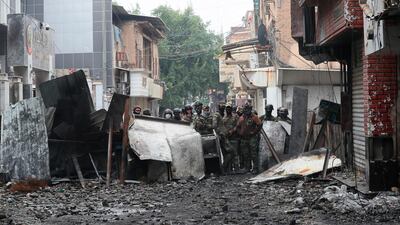
Security forces close River Street during ongoing anti-government protests in Baghdad. AP Photo -
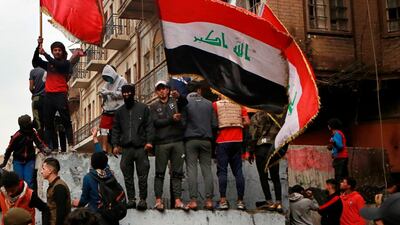
Anti-government protesters gather on barriers set up by security forces to close Rasheed Street during ongoing protests in Baghdad. AP Photo -
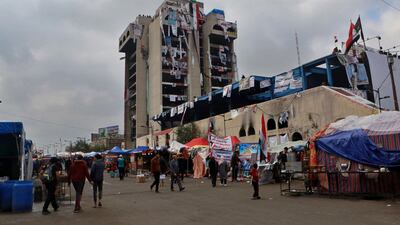
Demonstrators gather at Tahrir Square during ongoing anti-government protests in Baghdad. AP Photo -
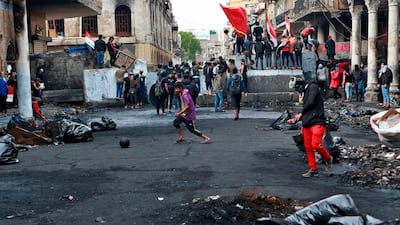
Anti-government protesters gather near barriers set up by security forces to close Rasheed Street during ongoing protests in Baghdad. AP Photo -
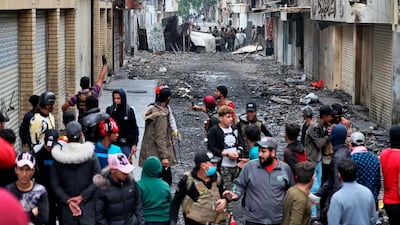
Anti-government protesters and security forces face off on River Street during ongoing protests in Baghdad. AP Photo -

Anti-government protesters and security forces face-off on River Street during ongoing protests in Baghdad. AP Photo


“We are here to protect the protesters first, and secondly to protect the security and the police,” said Sheikh Natham Badr Rumayad, a prominent member of the Rumayad tribe, which joined others in setting up checkpoints on the roads surrounding the city.
"We will not let the anti-riot forces enter the city. We will not allow any military force to enter again except for local police,” said Sheikh Nasrallah, whose tribe took control of the road leading from the nearby city of Salah. “We told them that as the tribes, we will not allow [this sort of violence]. We protect the peace … because this is our country we do not want our country to turn to war.”
While the tribal forces say they control plentiful arms, they also said they do not want to turn them against security forces due to fears that it could send the country spiralling into chaos.
"They [the anti-riot forces] are armed, but we are armed more. But we won’t use our arms … because it could affect the country badly," said Sheikh Nasrallah.
Thursday was a bloody day across Iraq’s Southern provinces, with at least 18 killed in Najaf after protesters set fire to the Iranian consulate. The incident led Iraq’s top cleric Ayatalloh Ali Sistani to withdraw support from the parliament in his weekly Friday address. Shortly following the speech, Iraqi Prime Minister Abdul Adel Mahdi submitted his resignation.
Tribal leaders told The National that they stood with the protesters when it came to their demands for the resignation of the entire government, and that Mr Adel Mahdi's resignation was only the first step.
Sheikh Al Hatim cast doubt on the selection process for a new prime minister due to Iranian influence.
"There can be no prime minister in Iraq without the people’s opinion or will," he said. "We will not leave the square until we get our demands. The government resigns and there are swift elections."
____________
Iraq protests
-
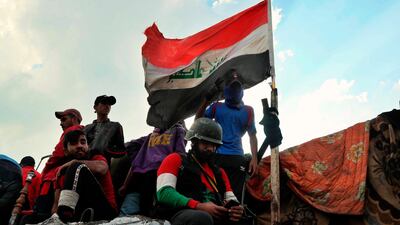
Protesters stage a sit-in on barriers at the Ahrar Bridge during ongoing anti-government protests in Baghdad, Iraq. AP Photo -
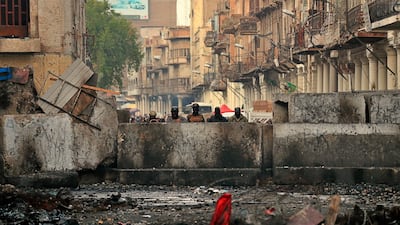
Security forces close Rasheed Street during ongoing anti-government protests in Baghdad. AP Photo -
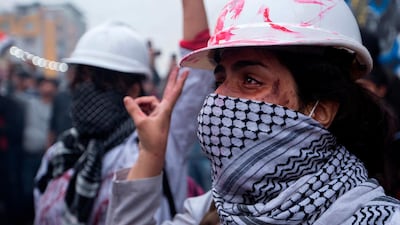
A demonstrator wearing a protective helmet flashes the victory sign in Tahrir Square. AFP -
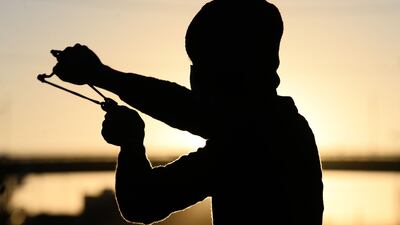
A demonstrator uses a slingshot to hurl stones at security forces during ongoing anti-governments protests in Najaf. AFP -
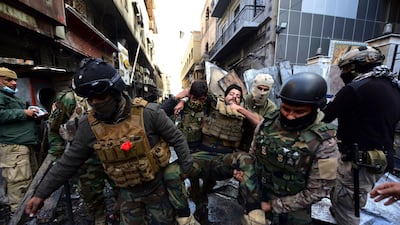
Iraqi security forces help an injured soldier during clashes on Rasheed Street. EPA -
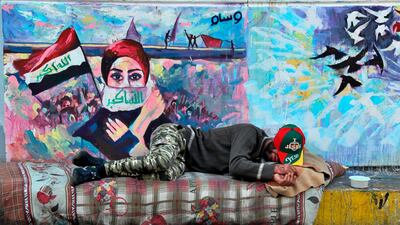
A protester rests during a sit-in at Tahrir Square. AP Photo -
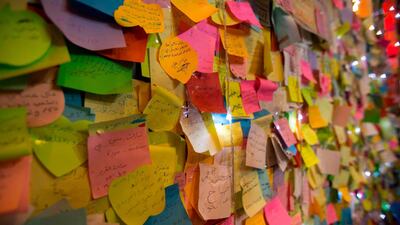
A "wishing wall" set up by demonstrators is seen in Tahrir Square. AFP -
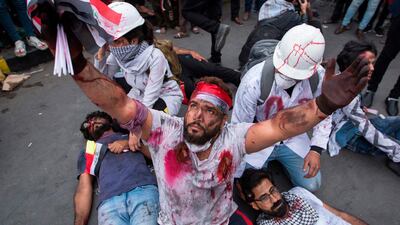
Actors perform a play representing the ongoing anti-government demonstrations in Tahrir Square. AFP -
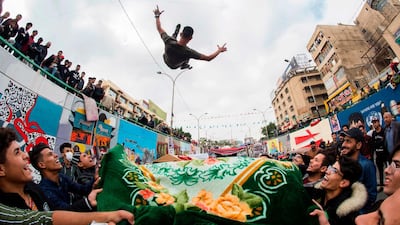
A young protester is blanket-tossed into the air by fellow demonstrators in Tahrir Square. AFP -
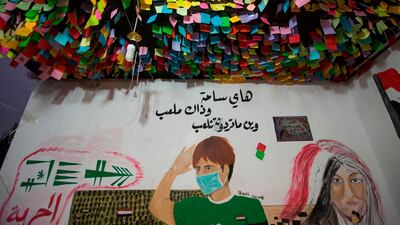
A mural representing an Iraqi pupil saying "this is a public square, and that is a schoolyard...we can play wherever you want", is seen under a canopy of sticky notes in Tahrir Square. AFP



