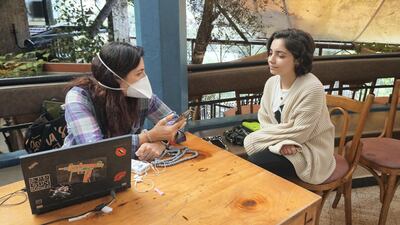

More than 200 Lebanese healthcare workers on the frontlines of the national fight against Covid-19 have been offered free places to stay in Beirut so they can self-isolate away from family when off shift.
A group of activists have found spaces for medics in unoccupied hotels and in empty apartments to bring much-needed peace of mind.
“I didn’t feel safe going home,” said Maya Tabbara, 23, a nurse working in the intensive care unit dedicated to Covid-19 patients at Beirut’s Greek-Orthodox hospital. “I would panic – ‘Did I wear the mask right? Did I remove the gloves right?’ It’s nerve-racking to go home and think about the safety of your family.”

Ms Tabbara has been sharing a room with three other nurses from her intensive care unit at a hostel close to her hospital since April 3, five days after she started treating Covid-19 patients.
In Lebanon, the virus has infected 632 people and killed 20, none of them health workers.
The accommodation is paid for with funds raised by a group of young Lebanese activists who until the virus saw the country go into lockdown were involved in the mass street demonstrations against the government.
Since October, tens of thousands have been protesting years of ineffectual leadership, corruption, poor services and lack of jobs.
Since the pandemic hit the country already reeling from the worst economic crisis in decades, activists have shifted their focus to social work.
In late March, they launched “Baytna Baytak”, or “Our home is your home,” in Arabic, to raise funds from private donors to pay for accommodation for health professionals away from their families and close to their hospitals.
-
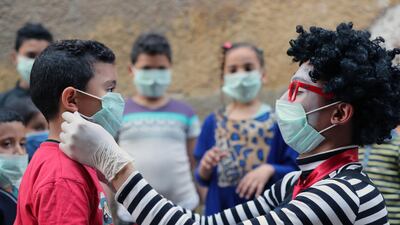
Egyptian clown Ahmed Naser helps children to put on face masks as a preventive measure against the spread of the coronavirus disease, in Darb Al-Ban district in Cairo, Egypt. EPA -
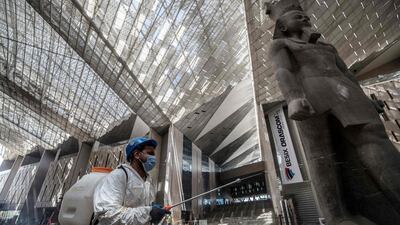
An Egyptian municipality worker disinfects the area around the 3,200-year-old pink-granite colossal statue of King Ramses II at the entrance of the the Grand Egyptian Museum, which is currently under construction, in Giza, Cairo. AFP -
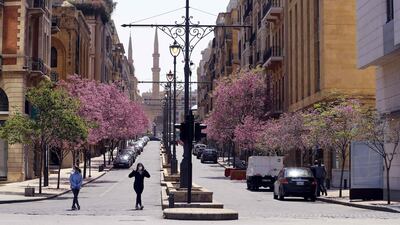
Lebanese women cross an empty street in Beirut's downtown area. AFP -
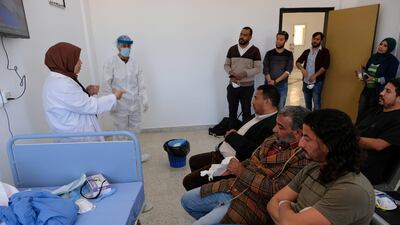
A doctor talks to nursing staff about sterilisation and handling suspected cases of coronavirus at a medical clinic in Benghazi, Libya. Reuters -
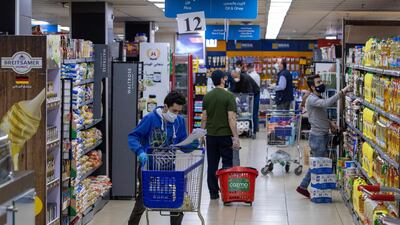
Masked customers and employees are seen at supermarket in Amman, Jordan. EPA -
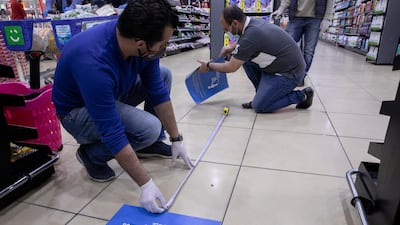
Staff members put in place stickers showing distancing measures to be respected by customers, at a supermarket, in Amman, Jordan. EPA -
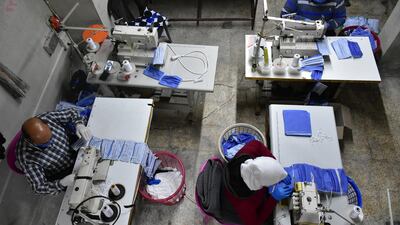
Tailors, who are members of a civil sewing workshop, are making masks and overalls for protection from the Coronavirus, in Damascus, Syria. EPA -
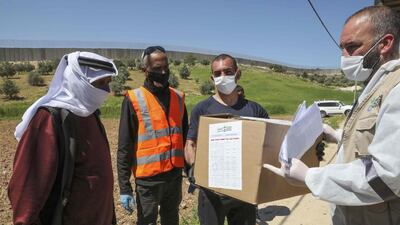
Members of the French Action Against Hunger NGO distribute hygiene and sanitation products to Palestinian residents of al-Ramadin village, southwest of the West Bank town of Hebron. AFP -
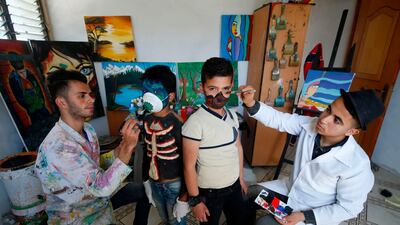
Palestinian artists Hammam Mosallam (L) and Yussef Abu Zerr (R) apply facepaint on a mask and a child's face at their home workshop in the Nusseirat refugee camp in the central Gaza Strip. AFP -
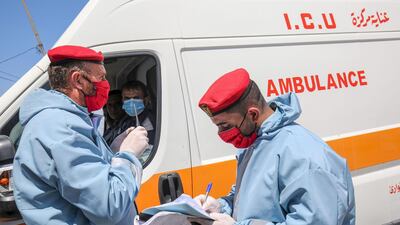
Security forces loyal to Hamas check the papers of an intensive care ambulance at the Rafah border crossing with Egypt, in the southern Gaza Strip, after the crossing was temporarily reopened for four days. AFP -
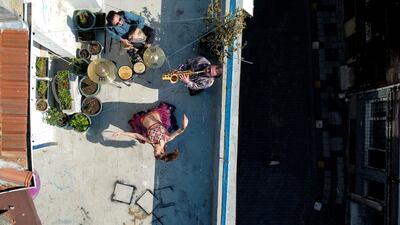
An aerial view of the performance of dancer Su Sevda Uzun from a terrace of her friend's home while she is accompanied by musicians Hakan Kaya and Alper Kalayciklioglu, in Istanbul, Turkey. Reuters -
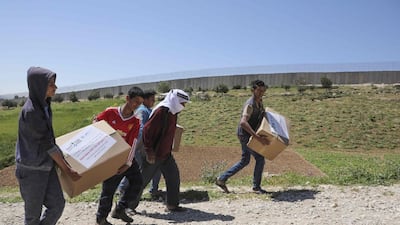
Palestinian residents of al-Ramadin village carry packages of hygiene and sanitation products distributed by the French Action Against Hunger NGO, southwest of the West Bank town of Hebron. AFP -
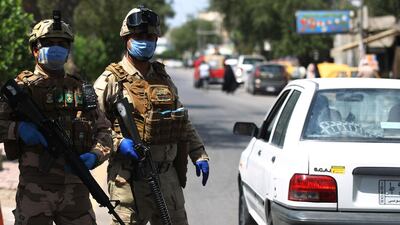
Iraqi soldiers stand at a checkpoint in the Adhamiya district of Baghdad. AFP -
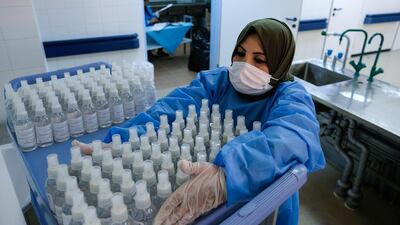
A nurse prepares bottles of sterilising fluid at the Benghazi Medical Centre in Benghazi, Libya. Reuters -
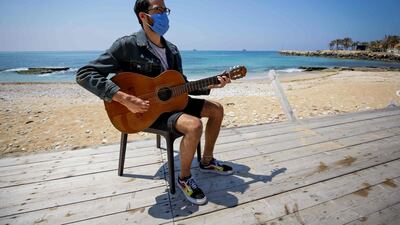
Uruguayan singer Walter Javier Maulelo, stuck in Lebanon, plays guitar while wearing a mask alone on a seafront boardwalk in the northern coastal city of Batroun. AFP -
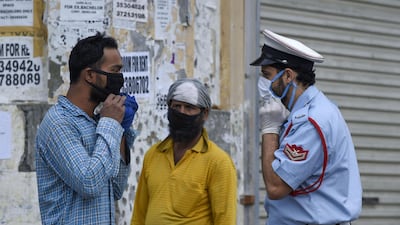
A Bahraini police officer instructs a foreign worker to wear his protective mask, in the old marketplace of the capital Manama. AFP -
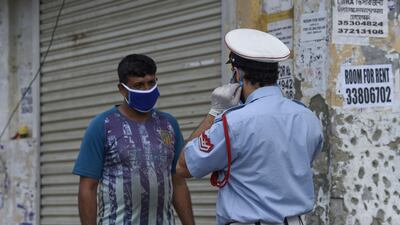
A Bahraini police officer instructs a foreign worker on proper self-protection measures, in the old marketplace of the capital Manama. AFP -
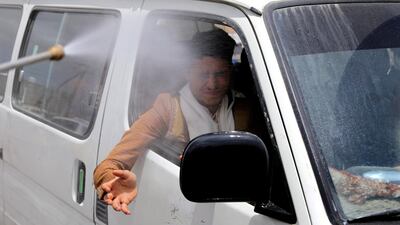
A health worker sprays disinfectant on a man in a van on the outskirts of Sanaa, Yemen. Reuters


Up to now, the group of activists has raised a little more than 15 million Lebanese pounds, or Dh36,542 at the official exchange rate, which has slipped by about 70 per cent on the black market in the past six months.
Elie Saliba, an orthopaedic surgeon who was also active in anti-government protests, said Baytna Baytak was born after he realised one of his colleagues was sleeping at the hospital instead of going home because he was worried about passing the highly contagious virus to his elderly parents.
Dr Saliba found an empty apartment where his colleague could stay for free and asked around to see if others were interested. “Within 10 days, we were hosting 100 people,” he said.
In some cases, Baytna Baytak pays landlords or hotels a reduced monthly fee that covers the cost of electricity and water. But others have offered rooms free of charge.
“It’s a matter of solidarity,” said Roger Edde, the owner of Edde Sands, a luxurious hotel and wellness resort north of Beirut that opened its doors to medical staff on March 25.
“We have not given a limit to how long doctors can stay. As long as they are on the frontline in this battle, we are with them,” Mr Edde said.
Though hotels were not ordered to shut after Lebanon went in lockdown on March 15, most of them were already mostly empty as tourist numbers plummeted after protests started last year. Lebanon closed its airport on March 18.
Those involved say the response to Baytna Baytak has been overwhelmingly positive, but the activists behind the initiative sometimes face difficulties in finding new places where people can stay.
“It’s becoming a bit hard because some people are afraid of hosting doctors, although they are not [Covid-19] positive,” Dr Saliba said. Until now, 230 doctors and nurses have been housed, but 180 more are on a waiting list.
-
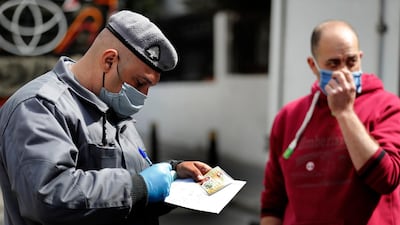
A Lebanese policeman fines a motorist for violating strict measures that allow vehicles with even or odd plate numbers to drive for three days a week each and Sundays will be banned for driving, as part of a plan to help stem the spread of the coronavirus, in Beirut, Lebanon. AP Photo -
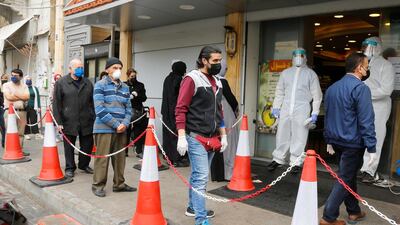
Customers wearing face masks and gloves queue outside a supermarket, during a lockdown to prevent the spread of coronavirus disease (COVID-19) in Beirut, Lebanon. REUTERS -
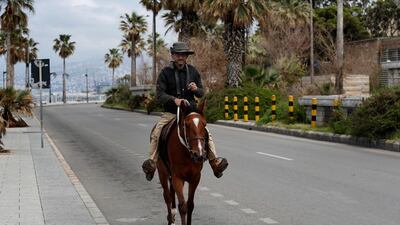
Abu-Hattab rides his horse on a deserted street after security forces began implementing strict measures that allow vehicles with even or odd plate numbers to drive for three days a week each and Sundays will be banned for all driving, as part of a plan to help stem the spread of the coronavirus, in Beirut, Lebanon. AP Photo -
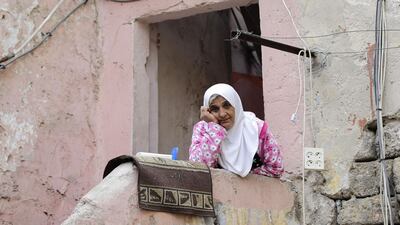
A Lebanese woman sits at her home's entrance during confinement due to the COVID-19 pandemic, in the historic part of the southern coastal city of Saida. Lebanon's President called on international donors to provide financial assistance to the crisis-hit country as it grapples with a severe economic downturn compounded by the novel coronavirus pandemic. AFP -

A Lebanese man sitting by a fresh produce stall checks his phone in the market of the historic part of the southern coastal city of Saida. Lebanon's President called on international donors to provide financial assistance to the crisis-hit country as it grapples with a severe economic downturn compounded by the novel coronavirus pandemic. AFP -
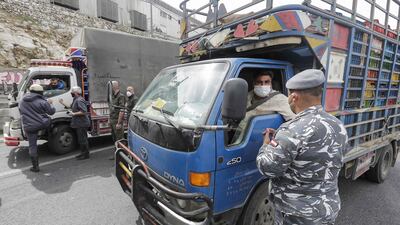
Lebanese security forces stop vehicles at a highway checkpoint in Nahr al-Kalb, north of the Lebanese capital Beirut, as authorities implemented further measures restricting the movement of cars, trucks and motorcycles to three assigned days per week. AFP -
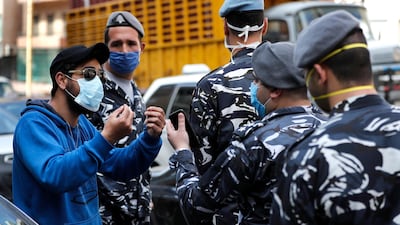
A driver argues with Lebanese policemen after he received a fine for violating strict measures that allow vehicles with even or odd plate numbers to drive for three days a week each and Sundays will be banned for driving, as part of a plan to help stem the spread of the coronavirus, in Beirut, Lebanon. AP Photo -
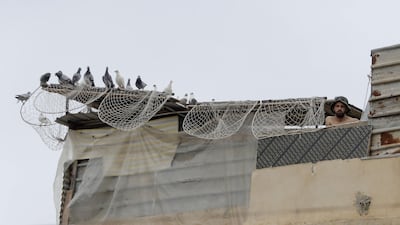
A Lebanese man stands by his pigeon pen on the roof of his house in the historic part of the southern coastal city of Saida. Lebanon's President called on international donors to provide financial assistance to the crisis-hit country as it grapples with a severe economic downturn compounded by the novel coronavirus pandemic. AFP


Like most beneficiaries of the programme, Ms Tabbara heard of Baytna Baytak on social media and was herself part of the hundreds of thousands who took to the streets last year to protest Lebanon’s ruling class.
That it is run by volunteers who took part in the demonstrations was important to her. “It’s an initiative that is close to my heart,” she said.
But Ms Tabbara is finding it hard to be away from her family, especially with Ramadan expected to start this week.
Muslims across the world are bracing for scaled back holy month festivities as many countries remain in lockdown and prohibit social get-togethers.
“I thought it would be wild and exciting to live with friends for the first time,” she said. “But it’s rough, especially with Ramadan coming up soon. This is usually a family gathering.”

