
Egypt will hold Senate elections on two days in August, the chief of the country’s election commission said on Saturday.
The Parliament’s lower chamber was dissolved in 2014 and restored more than a year ago.
The body was reconstituted as part of constitutional amendments that also allowed President Abdel Fatah El Sisi to extend his stay in power, possibly until 2030.
Amendments made to Egypt’s constitution last year provided for the creation of the Council of Senators.
The public will elect two thirds of the 180-member secondary chamber, with the remainder appointed by the president.
Lasheen Ibrahim, chairman of the National Election Authority, said in a televised news conference that Senate elections will be held on August 11 and 12, with run-off elections to take place on September 8-9 if necessary. Egyptian expatriates will vote on August 9-10, and on September 6-7.
-
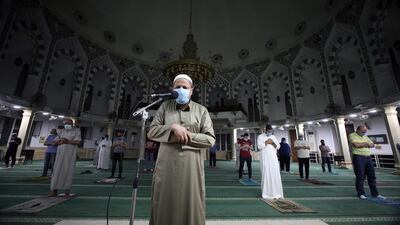
People pray while observing safe distancing at the Al Emam Aly Mosque in Cairo. EPA -
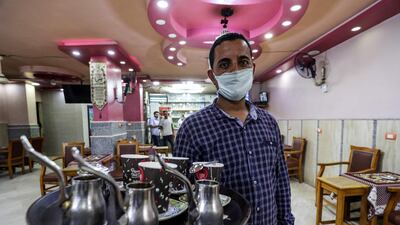
A waiter carries an order at a cafe in the Egyptian capital Cairo after authorities relaxed the lockdown measures in place to curb the spread of coronavirus. AFP -
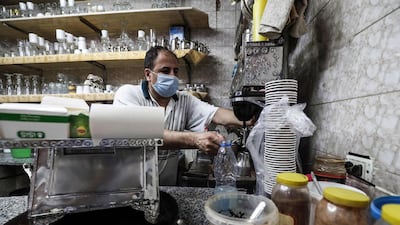
A worker prepares an order at a cafe in the Egyptian capital Cairo after authorities relaxed the lockdown measures in place to curb the spread of coronavirus. AFP -
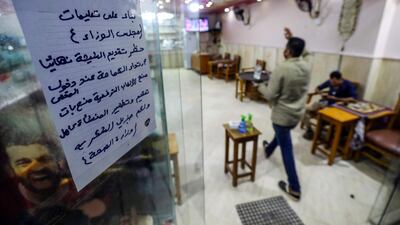
A note asking people to follow the instructions of the Health Ministry is pictured on the door of a cafe in the Egyptian capital Cairo. AFP -

A worker disinfects the door of a cafe in the Egyptian capital Cairo. AFP -
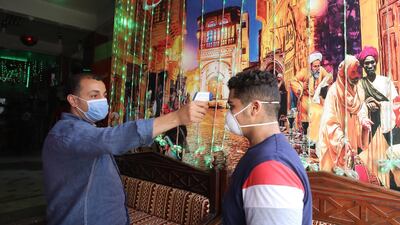
A customer gets his temperature measured by a worker in a cafe in Cairo. EPA -
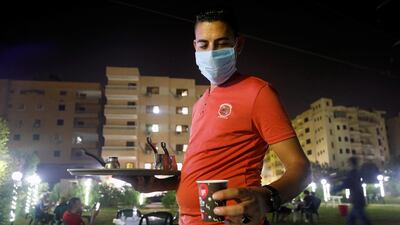
A waiter serves customers in a cafe after months of lockdown in Cairo. Reuters -
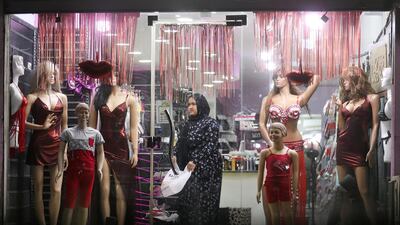
A woman looks at clothes at a store after months of lockdown in Cairo. Reuters -
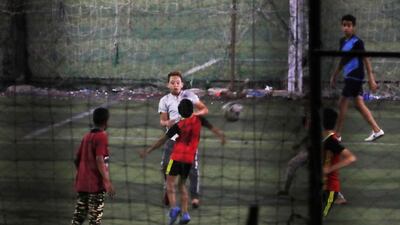
Youth play football at a local sport centre after months of lockdown in Cairo. Reuters -
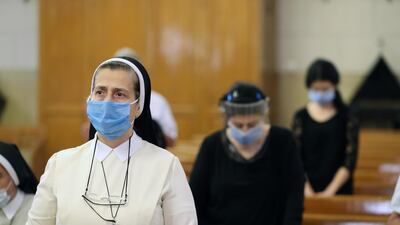
Churchgoers wear face masks and maintain a minimum social distance between each other as they attend a mass at the Armenian Catholic Church in Cairo. EPA -
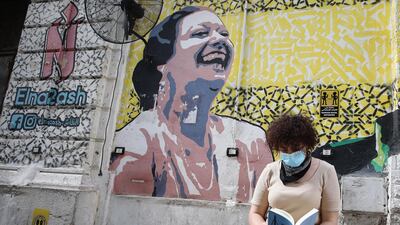
A girl reads a book in a cafe in Cairo. EPA -
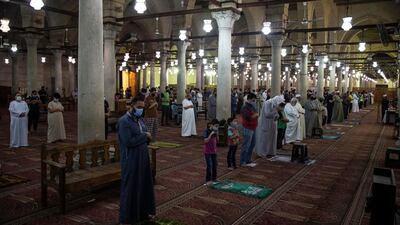
People take part in a dawn prayer inside Amr Ibn Al-As mosque in Cairo on June 27, 2020 as Egypt eased restrictions on public prayers, imposed to contain its coronavirus outbreak. EPA -
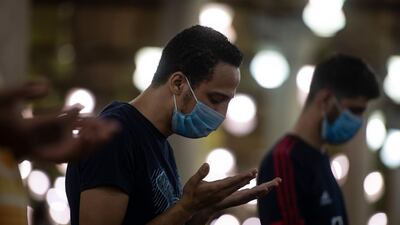
Worshippers are required to wear masks alongside other safety guidelines such as limited capacity at mosques, the use of personal prayer mats, temperature screening and social distancing. EPA -
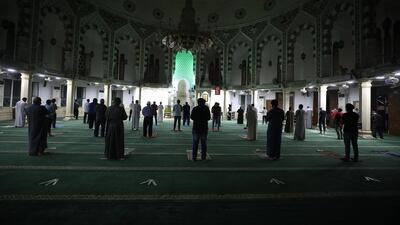
People pray while observing safe distancing at the Al Emam Aly Mosque in Cairo. EPA -
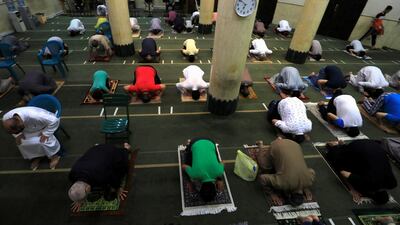
Egyptians attend the Fajr prayer inside the Al Rahman Mosque in the Cairo's Maadi neighbourhood. Reuters -
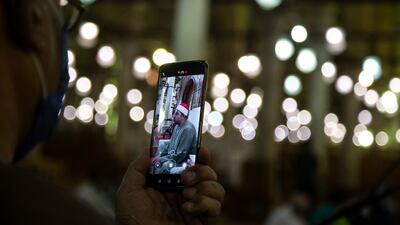
A worshipper records the dawn prayer inside Amr Ibn Al-As mosque in Cairo. EPA -
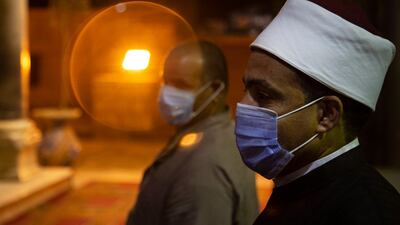
Worshippers wait to perform dawn prayers at the Amr Ibn Al-As in Cairo. EPA -
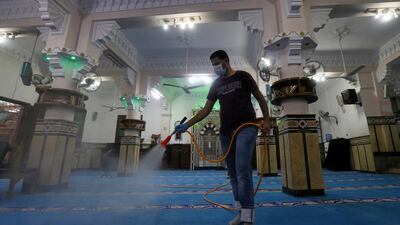
A volunteer wearing a face mask sprays disinfectant inside a mosque before it reopens to the public after three months. Reuters -
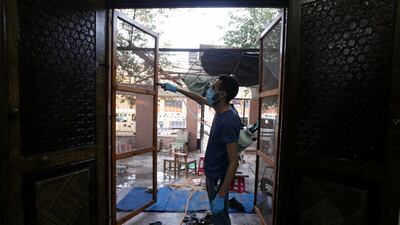
A volunteer disinfects the entrance to a mosque in Cairo. Reuters -
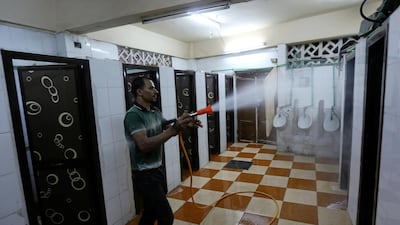
A volunteer sprays disinfectant in bathrooms at a Cairo mosque as it prepares to receive worshippers. Reuters -
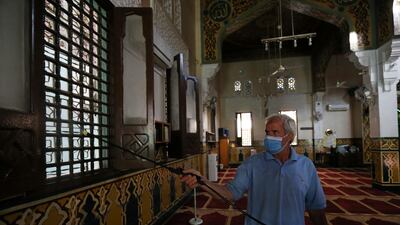
A volunteer wearing a face mask sprays disinfectant inside a mosque in Cairo. Reuters


“Holding elections during the pandemic that has swept the world necessitates that we take several precautionary measures to protect ourselves and society,” Mr Ibrahim said during a televised press conference.
He said all polling stations would observe health guidelines, with all voters and polling staff required to wear masks and social distancing enforced.
Egypt reported 1,412 new cases of the coronavirus on Friday, bringing the total number of infections to 72,711. The figure includes 3,201 deaths.
Mr Ibrahim said “strict preventive measures” would be taken during the vote because of the pandemic.
No gatherings are allowed for political campaigns, which will be mostly limited to social media, he said.
The 300-member Senate was revived as part of constitutional amendments approved in a national referendum in April last year.
The amendments extended a president’s term in office from four to six years and allowed for a maximum of two terms. But they also included an article specific to El Sisi that extended his current second four-year term to six years and allowed him to run for another six-year term in 2024 – potentially extending his rule until 2030.
The constitutional changes also allowed the president to appoint top judges and grant military courts wider jurisdiction in trying civilians.
The amendments introduced the position of vice president and enshrined a 25 per cent quota for women in Parliament’s lower, legislative chamber.
The poll results will be announced on August 19 in the official state gazette, Mr Ibrahim said.

