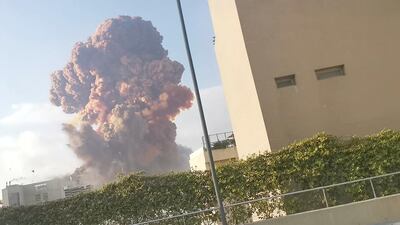
Smoke rises after an explosion in Beirut, Lebanon August 4, 2020, in this picture obtained from a social media video. Karim Sokhn/Instagram/Ksokhn + Thebikekitchenbeirut/via REUTERS THIS IMAGE HAS BEEN SUPPLIED BY A THIRD PARTY. MANDATORY CREDIT. NO RESALES. NO ARCHIVES.
Smoke rises after an explosion in Beirut, Lebanon August 4, 2020, in this picture obtained from a social media video. Karim Sokhn/Instagram/Ksokhn + Thebikekitchenbeirut/via REUTERS THIS IMAGE HAS BEE

Beirut blast may have left blanket of hazardous dust over city, says expert


  • English
  • Arabic

Beirut is probably covered in potentially harmful dust particles, despite the cloud of pollutants and nitrogen dioxide produced by Tuesday's blast clearing, a leading Lebanese expert has warned.

No full scientific analysis of the debris at Beirut port has yet been done, said Najat Aoun Saliba, a professor of analytical chemistry and the director of the Centre for Nature Conservation at the American University of Beirut.

Prof Saliba said a quick study showed there was no uranium or other radioactive substances.

But she said potentially harmful ammonium dust, finely ground debris and glass dust could be coating much of the city.

“I think, environmentally, what worries me now is the diversity and the waste generated from glass powder and from the dust that is going around in the city,” Prof Saliba said.

“And now people are trying to clean up the mess in front of their homes, and you can see roads covered with glass and even powders. This is extremely dangerous if inhaled.”

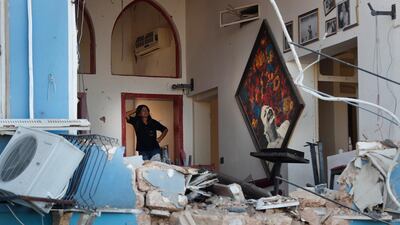
  • A woman stands inside a damaged restaurant. AP Photo
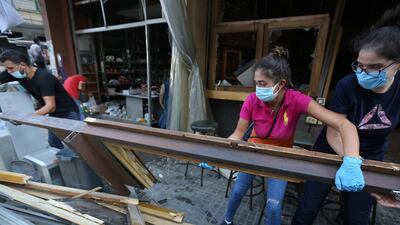
    A woman stands inside a damaged restaurant. AP Photo
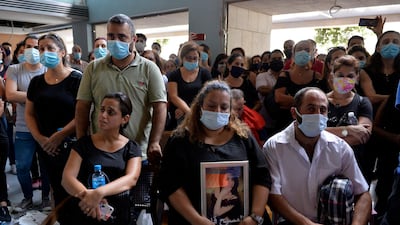
  • People and employees attend a mass over the victims who were killed in the blast, at the Al-Roum hospital at Ashrafieh area in Beirut. EPA
    People and employees attend a mass over the victims who were killed in the blast, at the Al-Roum hospital at Ashrafieh area in Beirut. EPA
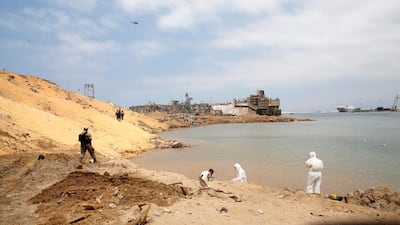
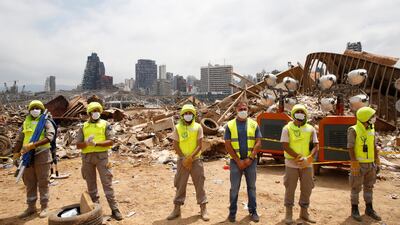
  • Workers are pictured at the devastated site of the explosion at the port of Beirut. EPA
    Workers are pictured at the devastated site of the explosion at the port of Beirut. EPA
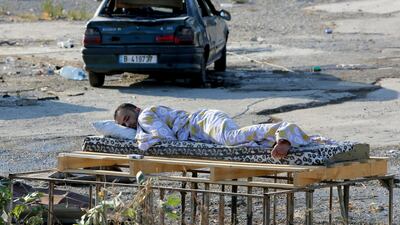
  • A man sleeps near a damaged car near the site of Tuesday's blast in Beirut's port area. REUTERS
    A man sleeps near a damaged car near the site of Tuesday's blast in Beirut's port area. REUTERS
  • Workers line at the devastated site of the explosion at the port of Beirut. EPA
    Workers line at the devastated site of the explosion at the port of Beirut. EPA
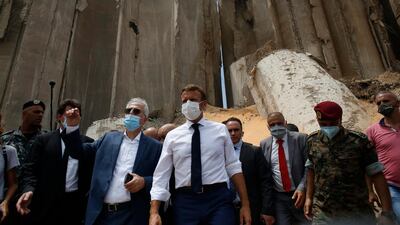
  • French President Emmanuel Macron visits the devastated site of the explosion at the port of Beirut. EPA
    French President Emmanuel Macron visits the devastated site of the explosion at the port of Beirut. EPA
  • People and employees attend a mass over the victims who were killed in the blast, at the Al-Roum hospital at Ashrafieh area in Beirut. EPA
    People and employees attend a mass over the victims who were killed in the blast, at the Al-Roum hospital at Ashrafieh area in Beirut. EPA
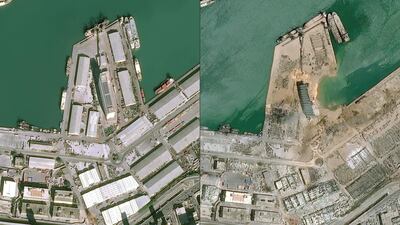
  • A view of the port of Beirut on January 25, 2020, left, and on August 5, 2020, a day after the explosion. AFP
    A view of the port of Beirut on January 25, 2020, left, and on August 5, 2020, a day after the explosion. AFP
  • Bride Israa Seblani poses for a picture in the same place where she was taking her wedding photos at the moment of the explosion. Reuters
    Bride Israa Seblani poses for a picture in the same place where she was taking her wedding photos at the moment of the explosion. Reuters
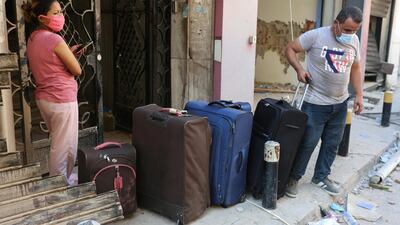
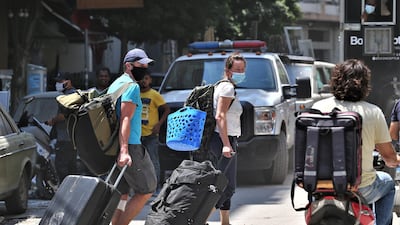
  • People stand with their belongings as they leave their damaged homes. Reuters
    People stand with their belongings as they leave their damaged homes. Reuters
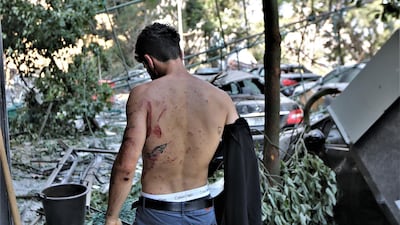
  • A Lebanese man shows injuries on his back after the massive explosion in Beirut. EPA
    A Lebanese man shows injuries on his back after the massive explosion in Beirut. EPA
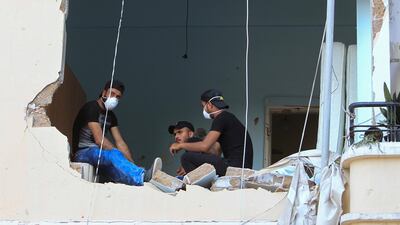
  • Men are seen sitting inside a damaged home, following Tuesday's blast in Beirut's port area. Reuters
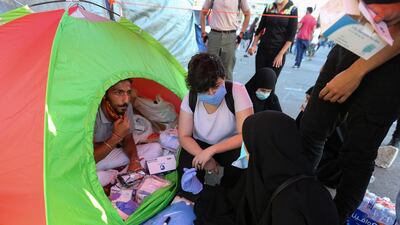
    Men are seen sitting inside a damaged home, following Tuesday's blast in Beirut's port area. Reuters
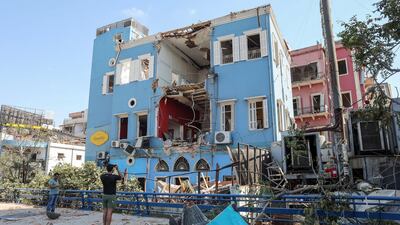
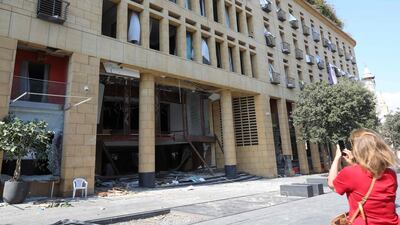
  • A pedestrian takes photos of a badly damaged building in Beirut. Bloomberg
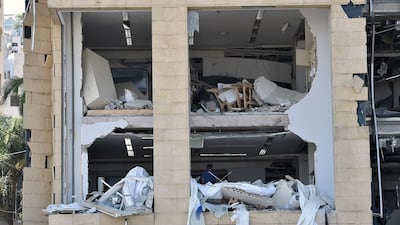
    A pedestrian takes photos of a badly damaged building in Beirut. Bloomberg
  • Lebanese Druze clerics check damaged cars. AP Photo
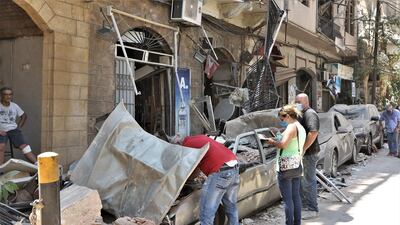
    Lebanese Druze clerics check damaged cars. AP Photo
  • A statue representing the Lebanese expatriate is seen in front of a building that was damaged by the explosion. AP Photo
    A statue representing the Lebanese expatriate is seen in front of a building that was damaged by the explosion. AP Photo
  • People walk with their belongings in the area of Mar Mikhael and Gemayzeh. EPA
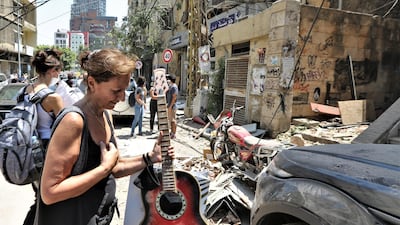
    People walk with their belongings in the area of Mar Mikhael and Gemayzeh. EPA
  • The curtains in the rooms of the Le Gray hotel in the Lebanese capital Beirut swaying in the wind. AFP
    The curtains in the rooms of the Le Gray hotel in the Lebanese capital Beirut swaying in the wind. AFP
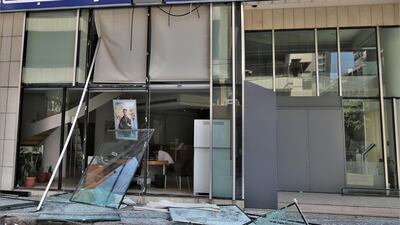
  • A view of a damaged Fransa Bank. EPA
    A view of a damaged Fransa Bank. EPA
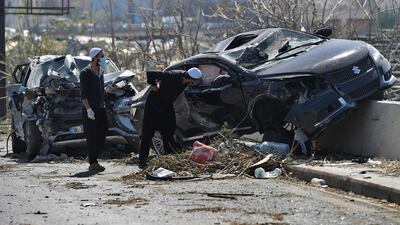
  • People check damaged vehicles. EPA
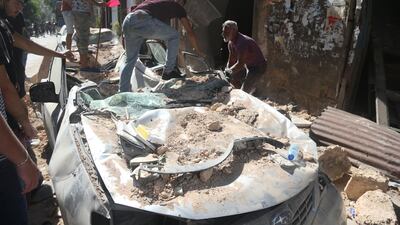
    People check damaged vehicles. EPA
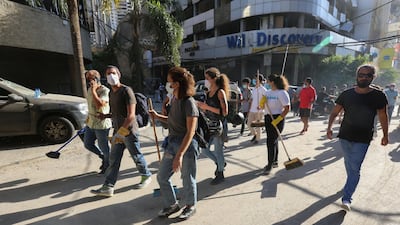
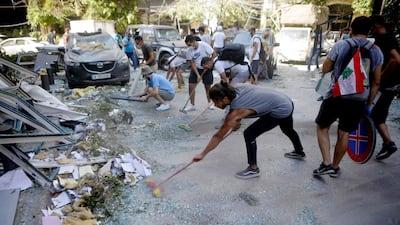
  • Volunteers clean the streets amid the wreckage. Reuters
    Volunteers clean the streets amid the wreckage. Reuters
  • People carry belongings after evacuating their damaged housing units at area of Mar Mikhael and Gemayzeh. EPA
    People carry belongings after evacuating their damaged housing units at area of Mar Mikhael and Gemayzeh. EPA
  • A destroyed Bank Audi SAL branch stands in Beirut. Bloomberg
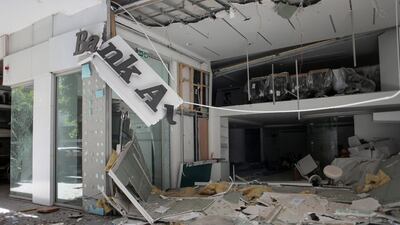
    A destroyed Bank Audi SAL branch stands in Beirut. Bloomberg
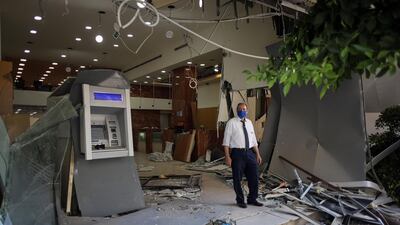
  • A worker wearing a protective face mask stands at the entrance to a destroyed Fransabank SAL branch in Beirut. Bloomberg
    A worker wearing a protective face mask stands at the entrance to a destroyed Fransabank SAL branch in Beirut. Bloomberg
  • Volunteers carry brooms as they walk to clean the streets. Reuters
    Volunteers carry brooms as they walk to clean the streets. Reuters
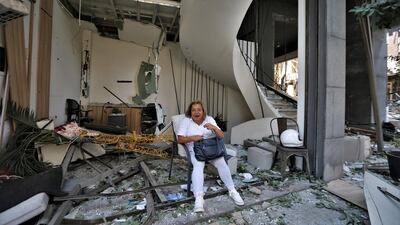
  • A woman sits in front of a damaged building. EPA
    A woman sits in front of a damaged building. EPA
  • A general view of the Beirut port area after the massive explosion. EPA
    A general view of the Beirut port area after the massive explosion. EPA
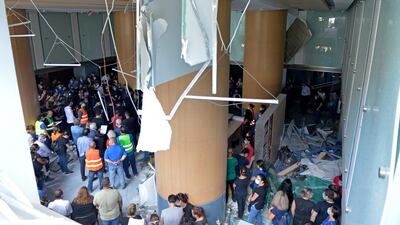
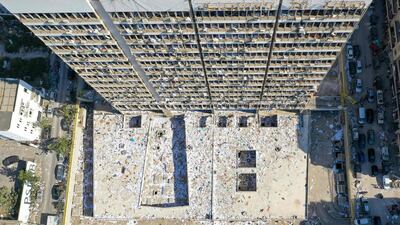
  • An aerial view shows the massive damage done to the Electricity of Lebanon building. AFP
    An aerial view shows the massive damage done to the Electricity of Lebanon building. AFP
  • A view of the damaged building of the Lebanese fashion designer Zuhair Murad. EPA
    A view of the damaged building of the Lebanese fashion designer Zuhair Murad. EPA
  • Volunteers gather aid supplies to be distributed for those affected by Tuesday's blast. Reuters
    Volunteers gather aid supplies to be distributed for those affected by Tuesday's blast. Reuters
  • Lebanese men clears rubble, one day after the explosion at the Beirut Port, in the Gemayzeh area. EPA
    Lebanese men clears rubble, one day after the explosion at the Beirut Port, in the Gemayzeh area. EPA
  • Lebanese youth salvage a velvet sofa from a destroyed apartment in the Gemayzeh area of Beirut. EPA
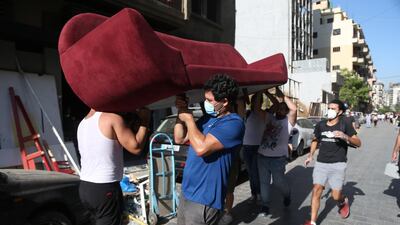
    Lebanese youth salvage a velvet sofa from a destroyed apartment in the Gemayzeh area of Beirut. EPA
  • Lebanese activists take part in a campaign to clean the damaged neighbourhood of Mar Mikhael. AFP
    Lebanese activists take part in a campaign to clean the damaged neighbourhood of Mar Mikhael. AFP
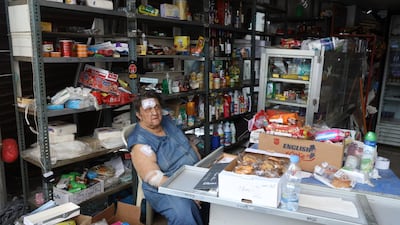
  • An injured Lebanese shop owner sits at her desk selling her wares. EPA
    An injured Lebanese shop owner sits at her desk selling her wares. EPA

She said people should wear masks and gloves and spray water to settle any airborne particulates.

But Prof Saliba said cheap paper masks would not be able to filter out the finest and potentially most harmful dust.

“I'm telling people that the precautions you take for the pandemic you need to keep them and actually double down on them,” she said.

Prof Saliba said thick gloves should be worn when handling dust, along with a face shield or goggles to stop it getting into eyes and heavy-duty masks to prevent inhalation.

She little was known about what chemicals were in the toxic fire and what might still be around the city.

“Chemically speaking, ammonium nitrate on its own will produce nitrogen dioxide and we saw that with the brown smoke over Beirut on the night of the blast,” Prof Saliba said.

“What we know today is that the brown smoke that was there on the night of the blast has dissipated.”

That does not mean the city is now safe.

“We need the inventory of what was there during the blast and we need to take samples from the ground,” Prof Saliba said.

“What are the other chemicals that were burning with the ammonium nitrate? I'm sorry, I don't have an answer for that because we were not able to do thorough chemical analysis.

“We don't know whether there are other chemicals stored in addition to what they’re saying.

"We need a clear mapping of the industrial facilities in the area and for the material that was stored in the containers.”

She said that air-quality monitors at her university picked up the surge in particulates and pollutants to hazardous levels straight after the blast.

But Prof Saliba said these dropped within hours as wind cleared the air.

While they could be harmful in large quantities, she said they were not uncommon in the polluted city.

“Sometimes when we get dust storms from the desert close by, we get to this level," Prof Saliba said.

"But what is more important is the amount of nitrogen dioxide.”

She said that gas was very dangerous.

THE BIO

Age: 33

Favourite quote: “If you’re going through hell, keep going” Winston Churchill

Favourite breed of dog: All of them. I can’t possibly pick a favourite.

Favourite place in the UAE: The Stray Dogs Centre in Umm Al Quwain. It sounds predictable, but it honestly is my favourite place to spend time. Surrounded by hundreds of dogs that love you - what could possibly be better than that?

Favourite colour: All the colours that dogs come in

Attacks on Egypt’s long rooted Copts

Egypt’s Copts belong to one of the world’s oldest Christian communities, with Mark the Evangelist credited with founding their church around 300 AD. Orthodox Christians account for the overwhelming majority of Christians in Egypt, with the rest mainly made up of Greek Orthodox, Catholics and Anglicans.

The community accounts for some 10 per cent of Egypt’s 100 million people, with the largest concentrations of Christians found in Cairo, Alexandria and the provinces of Minya and Assiut south of Cairo.

Egypt’s Christians have had a somewhat turbulent history in the Muslim majority Arab nation, with the community occasionally suffering outright persecution but generally living in peace with their Muslim compatriots. But radical Muslims who have first emerged in the 1970s have whipped up anti-Christian sentiments, something that has, in turn, led to an upsurge in attacks against their places of worship, church-linked facilities as well as their businesses and homes.

More recently, ISIS has vowed to go after the Christians, claiming responsibility for a series of attacks against churches packed with worshippers starting December 2016.

The discrimination many Christians complain about and the shift towards religious conservatism by many Egyptian Muslims over the last 50 years have forced hundreds of thousands of Christians to migrate, starting new lives in growing communities in places as far afield as Australia, Canada and the United States.

Here is a look at major attacks against Egypt's Coptic Christians in recent years:

November 2: Masked gunmen riding pickup trucks opened fire on three buses carrying pilgrims to the remote desert monastery of St. Samuel the Confessor south of Cairo, killing 7 and wounding about 20. IS claimed responsibility for the attack.

May 26, 2017: Masked militants riding in three all-terrain cars open fire on a bus carrying pilgrims on their way to the Monastery of St. Samuel the Confessor, killing 29 and wounding 22. ISIS claimed responsibility for the attack.

April 2017Twin attacks by suicide bombers hit churches in the coastal city of Alexandria and the Nile Delta city of Tanta. At least 43 people are killed and scores of worshippers injured in the Palm Sunday attack, which narrowly missed a ceremony presided over by Pope Tawadros II, spiritual leader of Egypt Orthodox Copts, in Alexandria's St. Mark's Cathedral. ISIS claimed responsibility for the attacks.

February 2017: Hundreds of Egyptian Christians flee their homes in the northern part of the Sinai Peninsula, fearing attacks by ISIS. The group's North Sinai affiliate had killed at least seven Coptic Christians in the restive peninsula in less than a month.

December 2016A bombing at a chapel adjacent to Egypt's main Coptic Christian cathedral in Cairo kills 30 people and wounds dozens during Sunday Mass in one of the deadliest attacks carried out against the religious minority in recent memory. ISIS claimed responsibility.

July 2016Pope Tawadros II says that since 2013 there were 37 sectarian attacks on Christians in Egypt, nearly one incident a month. A Muslim mob stabs to death a 27-year-old Coptic Christian man, Fam Khalaf, in the central city of Minya over a personal feud.

May 2016: A Muslim mob ransacks and torches seven Christian homes in Minya after rumours spread that a Christian man had an affair with a Muslim woman. The elderly mother of the Christian man was stripped naked and dragged through a street by the mob.

New Year's Eve 2011A bomb explodes in a Coptic Christian church in Alexandria as worshippers leave after a midnight mass, killing more than 20 people.

Skoda Superb Specs

Engine: 2-litre TSI petrol

Power: 190hp

Torque: 320Nm

Price: From Dh147,000

Available: Now

The President's Cake

Director: Hasan Hadi

Starring: Baneen Ahmad Nayyef, Waheed Thabet Khreibat, Sajad Mohamad Qasem 

Rating: 4/5

Lexus LX700h specs

Engine: 3.4-litre twin-turbo V6 plus supplementary electric motor

Power: 464hp at 5,200rpm

Torque: 790Nm from 2,000-3,600rpm

Transmission: 10-speed auto

Fuel consumption: 11.7L/100km

On sale: Now

Price: From Dh590,000

From Europe to the Middle East, economic success brings wealth - and lifestyle diseases

A rise in obesity figures and the need for more public spending is a familiar trend in the developing world as western lifestyles are adopted.

One in five deaths around the world is now caused by bad diet, with obesity the fastest growing global risk. A high body mass index is also the top cause of metabolic diseases relating to death and disability in Kuwait,  Qatar and Oman – and second on the list in Bahrain.

In Britain, heart disease, lung cancer and Alzheimer’s remain among the leading causes of death, and people there are spending more time suffering from health problems.

The UK is expected to spend $421.4 billion on healthcare by 2040, up from $239.3 billion in 2014.

And development assistance for health is talking about the financial aid given to governments to support social, environmental development of developing countries.