Hundreds gathered near Beirut port at 6pm on Tuesday evening to mark a week after a deadly blast that killed scores, wounded thousands and destroyed much of Beirut.
At the moment of the blast, the nearby Al Amin Mosque began the azan as the bells of the next-door church St George began to toll in mourning.
The city is still picking up the pieces and assessing the damage from last week’s explosion that killed 171 and wounded 6,000. Anger has bubbled up months after mass protests that began in October subsided.
-
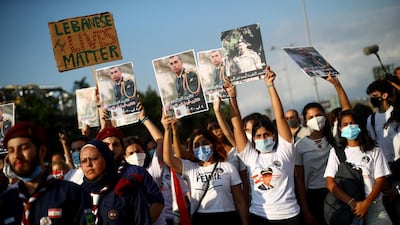
People take part during a vigil for the victims lost in a massive explosion, in Beirut, Lebanon. Reuters -
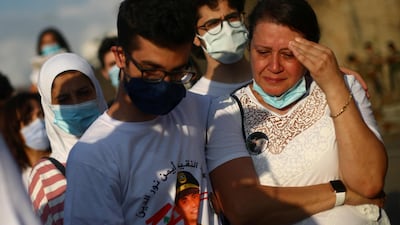
A woman reacts during a vigil for the victims lost in a massive explosion, in Beirut, Lebanon. Reuters -
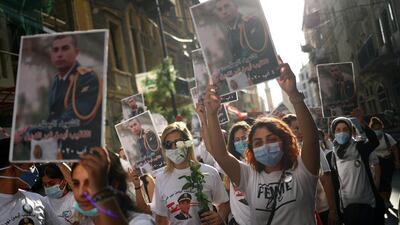
People attend a vigil for the victims lost in a massive explosion, in Beirut, Lebanon. Reuters -
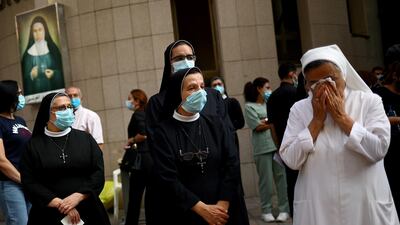
A nun reacts during a vigil for the victims of the massive explosion, in Beirut. Reuters -
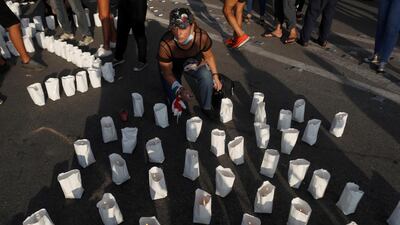
A demonstrator lights a candle during protests near the scene of a blast at Beirut's port area. Reuters -
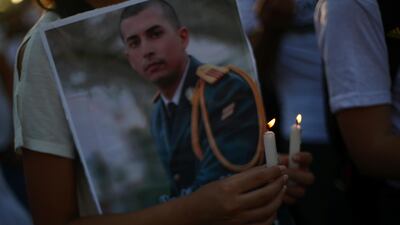
A person holds candles during a vigil for the people killed in a massive explosion, in Beirut. Reuters -
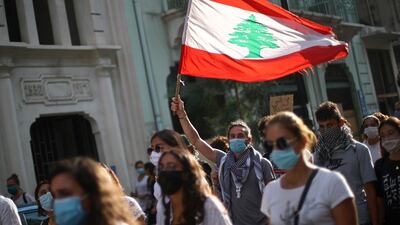
People take part in a vigil for the victims lost in a massive explosion, in Beirut. Reuters -

People take part in a vigil for the victims of the massive explosion, in Beirut. Reuters -
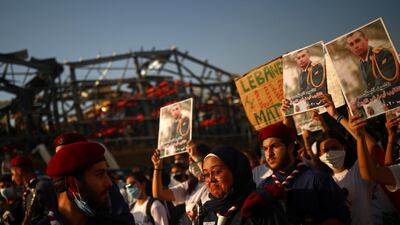
People take part in a vigil for the victims lost in a massive explosion, in Beirut. Reuters


After years of cumulating crises, people are again demanding change and accountability.
But the impact of last week’s blast is still ringing around the city.
Tanya can't be alone in a room. Carla, for days, thought a war was starting. The survivors of the August 4 blast are still in shock over a disaster that disfigured their city.
Almost every generation in Lebanon has experienced some kind of conflict, whether the 1975-1990 civil war or the 2006 hostilities with Israel.
Those episodes are over, but for some, the traumas they left are still vivid – and last week's explosion has added yet another scar to the collective psyche.
Carla was on her balcony in an old Beirut neighbourhood when she felt her building shake.
"I initially thought it was an air raid because I associated the noise with what I remembered from the 2006 war," the 28-year-old told the Agence France-Presse.
After the explosion pulverised her windows, she rushed to the stairwell, petrified.
But before Carla could pull herself together, her elderly neighbour, who had survived the 1975-1990 civil war, was already busy sweeping the floor.
"This is a reflex from the war, whenever something breaks they just sweep it up," Carla said.
She is now staying with her family, and said she is not emotionally ready to move back to her blast-hit home.
Even at her parents' house, she cannot sleep.
"A car driving by on the street becomes the sound of an aircraft," she said.
"Everything now triggers memories of the 2006 war … I had never realised how much that war actually had traumatised me."
Doctors of the World, an international charity, spent several days in the levelled Karantina district, overlooking the blast site.
Its staff knocked on doors in the area to offer residents free psychological support.
In the first days after the explosion, residents were too busy seeking medical treatment or clearing debris from their homes. But as a kind of normality slowly returned, they seemed more ready to speak, said Noelle Jouane, director of the charity's mental health programme.
"It helps relieve all of their anger," she said.
But in the devastated district of Mar Mikhael, the slightest thud sparks alarm.
At the entrance to the neighbourhood, an old man was startled by the bang of a hammer against an iron plate.
He immediately ducked and pressed his body against the hood of his car.
"It's nothing," a passer-by reassured him.
Moments later, fear gripped the entire street, with people scrambling out after rumours spread that the August 4 blast scene had once again caught fire.
Panic, fear, and in some cases a certain detachment from reality are among the "normal reactions to abnormal events", said Rima Makki, the mental health activity manager for Doctors Without Borders (MSF) in Lebanon.
The port blast came as Lebanon was grappling with its worst economic crisis in decades – compounded by the coronavirus pandemic.
"The whole of society was already under psychological pressure," Mr Makki said.
"A traumatic incident of this magnitude, obviously, will have repercussions."
Tanya, 32, was in central Beirut when the explosion tore through buildings around her.
"The first two days I was constantly crying," the accountant said.
"But something inside was telling me: what are you crying about? I am safe, my family is safe, our house is safe."
But the mother of two said she also felt "guilt for surviving."
She said she didn't remember much from the moment of the blast, but the bruises on her body remind her of what happened.
Now, she is too scared to be alone.
"During the day it's easier, but at night I can't. I ask someone to stay by my side," she said.
Omar, a visual artist, believes he could have been killed or disfigured by the explosion that ravaged his neighbourhood.
Luckily, the man in his thirties was not at home at the time.
"Knives flew from the kitchen, the entire glass facade shattered in the house," he said. "Just the image, the possibility of me being here was haunting."
-
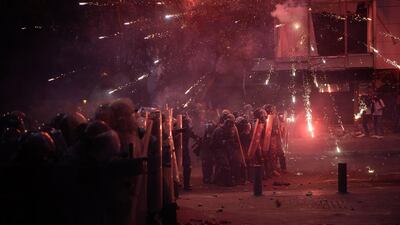
Fireworks thrown at riot police by anti-government protesters explode during clashes near the parliament building following last Tuesday's massive explosion in the seaport which devastated Beirut, Lebanon. AP Photo -
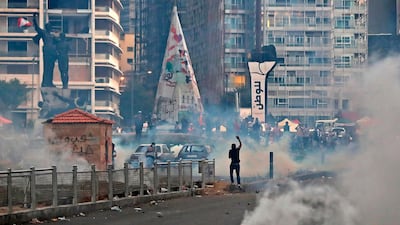
Lebanese protesters, enraged by a deadly explosion, clash with security forces at Martyrs' Square in Beirut. Lebanon's Prime Minister Hassan Diab stepped down amid fury within and outside his government over the deadly Beirut port blast he blamed on the incompetence and corruption of a decades-old ruling class. AFP -
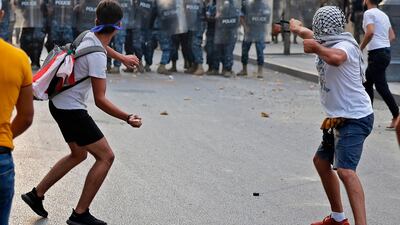
Lebanese protesters, enraged by a deadly explosion, hurl stones at security forces amid clashes in central Beirut. Lebanon's Prime Minister Hassan Diab stepped down amid fury within and outside his government over the deadly Beirut port blast he blamed on the incompetence and corruption of a decades-old ruling class. AFP -
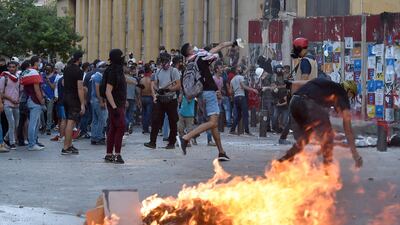
Lebanese anti-government protesters throw stones at security forces at one of the roads leading to the parliament building in Beirut, Lebanon. EPA -
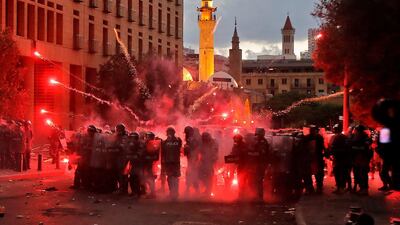
Lebanese security forces clash with protesters near the parliament building in central Beirut following a huge chemical explosion that devastated large parts of the Lebanese capital. AFP -
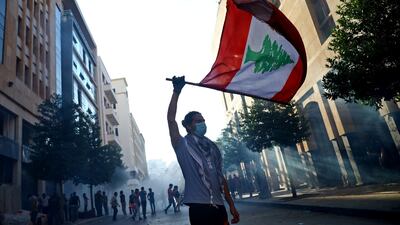
A demonstrator waves a Lebanese flag during anti-government protests that have been ignited by a massive explosion in Beirut, Lebanon. Reuters -
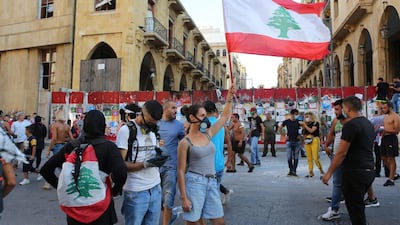
Protesters wave a Lebanese flag during demonstrations near the parliament building in Beirut, Lebanon. EPA -
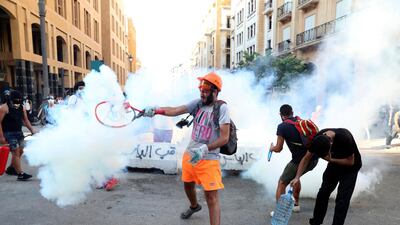
An anti-government protester uses a tennis racket to hit back a tear gas canister towards riot policemen during a protest following last Tuesday's massive explosion, which devastated Beirut, Lebanon. AP Photo -
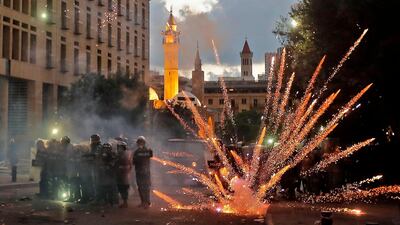
Lebanese security forces clash with protesters near the parliament in central Beirut following a huge chemical explosion that devastated large parts of the Lebanese capital. AFP -
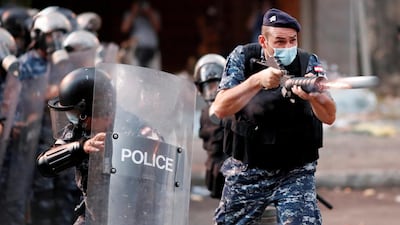
A member of Lebanese riot police fires a weapon during anti-government protests that have been ignited by a massive explosion in Beirut, Lebanon. Reuters -
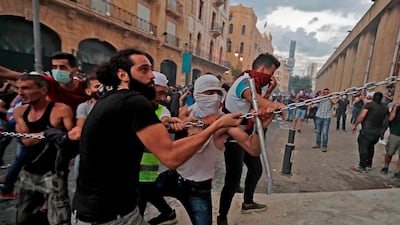
Lebanese protesters try to storm the vicinity of the parliament in central Beirut following a huge chemical explosion that devastated large parts of the Lebanese capital. AFP -
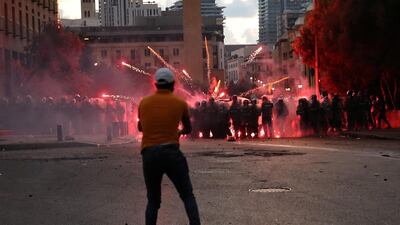
A demonstrator throws fireworks at riot police during anti-government protests that have been ignited by a massive explosion in Beirut, Lebanon. Reuters


During a massive anti-government rally near parliament on Saturday, a fatigued Omar suddenly felt like demonstrations were going nowhere, although he had participated in several similar rallies since a protest movement emerged in October.
"I felt how can we return to the same place we were a few months ago despite … this catastrophic event," he said.
Two people he knew died in the disaster.
"I don't know how or if one can get over something like that," he added.
"I mean you continue your life, but you continue it differently."

