• People spend time at the seafront promenade in the Saudi port city of Jeddah as the country reopens following the lifting of a lockdown due to the Covid-19 pandemic. AFP
    People spend time at the seafront promenade in the Saudi port city of Jeddah as the country reopens following the lifting of a lockdown due to the Covid-19 pandemic. AFP
  • People spend time at the seafront promenade in the Saudi seaport of Jeddah. AFP
    People spend time at the seafront promenade in the Saudi seaport of Jeddah. AFP
  • A man walks at the seafront promenade in the Saudi port city of Jeddah. AFP
    A man walks at the seafront promenade in the Saudi port city of Jeddah. AFP
  • Saudi youths ride bicycles at the seafront promenade in the Saudi port city of Jeddah. AFP
    Saudi youths ride bicycles at the seafront promenade in the Saudi port city of Jeddah. AFP
  • A hairdresser clad in face shield and mask cuts a client's hair at a women's salon in Saudi Arabia's capital Riyadh. AFP
    A hairdresser clad in face shield and mask cuts a client's hair at a women's salon in Saudi Arabia's capital Riyadh. AFP
  • A hairdresser clad in face shield and mask blow-dries a client's hair at a women's salon in Saudi Arabia's capital Riyadh. AFP
    A hairdresser clad in face shield and mask blow-dries a client's hair at a women's salon in Saudi Arabia's capital Riyadh. AFP
  • Mask-clad men walk along the promenade of Tahlia street in the centre of Saudi Arabia's capital Riyadh. AFP
    Mask-clad men walk along the promenade of Tahlia street in the centre of Saudi Arabia's capital Riyadh. AFP
  • Mask-clad clients wait for their table to be sanitised upon arriving at a cafe in Saudi Arabia's capital Riyadh. AFP
    Mask-clad clients wait for their table to be sanitised upon arriving at a cafe in Saudi Arabia's capital Riyadh. AFP
  • A worker sanitises a table for clients at a cafe in Saudi Arabia's capital Riyadh. AFP
    A worker sanitises a table for clients at a cafe in Saudi Arabia's capital Riyadh. AFP
  • A waiter takes orders from clients at a cafe in Saudi Arabia's capital Riyadh. AFP
    A waiter takes orders from clients at a cafe in Saudi Arabia's capital Riyadh. AFP
  • A mask-clad waiter takes orders from clients at a cafe in Saudi Arabia's capital Riyadh. AFP
    A mask-clad waiter takes orders from clients at a cafe in Saudi Arabia's capital Riyadh. AFP
  • Cars drive down King Fahad boulevard after the authorities eased some of the lockdown measures that had been imposed in a bid to slow down the spread of the coronavirus, in the Saudi capital Riyadh. AFP
    Cars drive down King Fahad boulevard after the authorities eased some of the lockdown measures that had been imposed in a bid to slow down the spread of the coronavirus, in the Saudi capital Riyadh. AFP
  • Cars drive along King Fahad boulevard after the authorities eased some of the lockdown measures that had been imposed in a bid to slow down the spread of the novel coronavirus, in the Saudi capital Riyadh. AFP
    Cars drive along King Fahad boulevard after the authorities eased some of the lockdown measures that had been imposed in a bid to slow down the spread of the novel coronavirus, in the Saudi capital Riyadh. AFP
  • Workers wearing protective face masks work on a road after authorities eased some of the measures that had been imposed in a bid to slow the spread of the coronavirus, in the Saudi capital Riyadh. AFP
    Workers wearing protective face masks work on a road after authorities eased some of the measures that had been imposed in a bid to slow the spread of the coronavirus, in the Saudi capital Riyadh. AFP
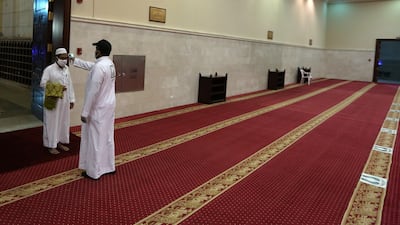
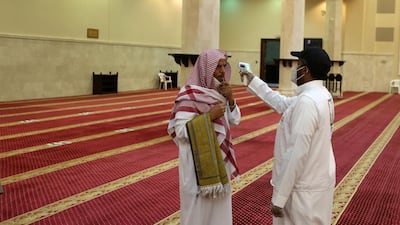
  • A volunteer checks the temperature of a man as he arrives to perform the dawn prayer at a mosque in the Saudi holy city of Makkah. AFP
    A volunteer checks the temperature of a man as he arrives to perform the dawn prayer at a mosque in the Saudi holy city of Makkah. AFP
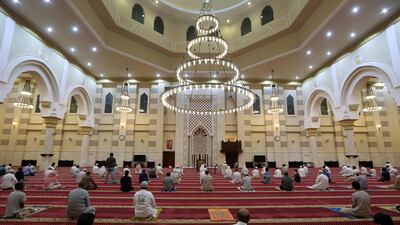
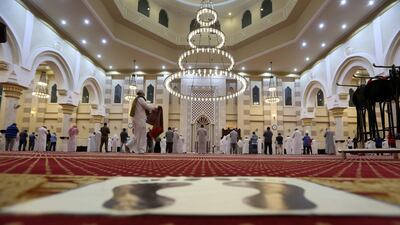
  • Worshippers, keeping a safe distance from one another, perform the dawn prayer at a mosque in the Saudi holy city of Makkah. AFP
    Worshippers, keeping a safe distance from one another, perform the dawn prayer at a mosque in the Saudi holy city of Makkah. AFP

Life returns to Saudi Arabia as lockdown lifts


  • English
  • Arabic

Saudis flocked to hairdressers, barbers and shops on Sunday as coronavirus lockdown measures were lifted across the kingdom.

Workers returned as offices, mosques, cafes, restaurants, movie theatres and gyms reopened after more than three months of measures to curb the spread of the virus, including nightly lockdowns.

Roads in Jeddah that had been eerily quiet for months sprang to life from 6am, with people venturing out of their homes to shop.

Cafes and restaurants in the city's popular Tahlia Street were full to capacity, with tables set farther apart than normal but often not the full mandated 1.5 metres.

Waiters wore masks and gloves, offering hand sanitiser to customers and checking temperatures.

Gyms and health clubs are increasing operations, welcoming fitness enthusiasts while touting how they have implemented local and government safety protocols.

Hundreds of people flocked to neighbourhood barber shops to trim their long locks or have a shave after 74 days of restrictions.

"The rush of customers was too much on the first day of reopening the shop on early Sunday," Turkish hairstylist Hussain Jovalan told The National at his busy salon in the city's Salama district.

“We sent many of them away and told others to try their luck in another salon or make an appointment for another day, rather than waiting for their turn here.”

Mr Jovalan said barbers had missed their busiest periods of Ramadan and Eid, so they were glad customers were returning.

Tough restrictions to curb the spread of coronavirus came into force in March, including 24-hour curfews in most towns and cities.

Citizens and residents in all parts of the kingdom expressed relief but in careful and cautious ways.

In Makkah, Abdullah Ajhoori, owner of popular food truck Luqma Basha, said his and other businesses were working hard to ensure hygiene requirements were met.

  • Worshippers perform the dawn prayer at a mosque in Makkah, Saudi Arabia, after authorities eased lockdown measures that had been imposed in a bid to stem the spread of coronavirus. AFP
    Worshippers perform the dawn prayer at a mosque in Makkah, Saudi Arabia, after authorities eased lockdown measures that had been imposed in a bid to stem the spread of coronavirus. AFP
  • Worshippers gather for the dawn prayer at a mosque in the Saudi city of Makkah. AFP
    Worshippers gather for the dawn prayer at a mosque in the Saudi city of Makkah. AFP
  • A volunteer checks the temperature of a man as he arrives to perform the dawn prayer at a mosque in the Saudi city of Makkah. AFP
    A volunteer checks the temperature of a man as he arrives to perform the dawn prayer at a mosque in the Saudi city of Makkah. AFP
  • A volunteer checks the temperature of a man as he arrives to perform the dawn prayer at a mosque in Makkah. AFP
    A volunteer checks the temperature of a man as he arrives to perform the dawn prayer at a mosque in Makkah. AFP

"Thank God, I feel happy. Past times were difficult as opposed to now," he told The National from his truck, parked in front of Al Hijaz Mall in Al Nuzhah.

“I hope caution will be practised in the next stage. The truck is sterilised periodically or every hour while adhering to the necessary measures of hygiene.”

Makkah was the only Saudi province to be kept under 24-hour lockdown throughout Ramadan, and has remained under a nightly lockdown since Eid, from 3pm to 6am.

"Maintain caution now that the ban has been lifted in all cities in Saudi, in accordance with the necessary health requirements. Most importantly wearing a face mask - medical or a cloth mask - leaving a safe distance of no less than two metres and maintaining social distancing and hand washing," said Makkah Health Ministry spokesman, Hamad Feehan.

"This return was based on several studies by the authorities concerning the return to normal life. We return to normal life but we return with caution."

Kamal Abdulqader, a renowned Saudi writer, urged the public to do their part.

“People need to take a step back and look at the position we’re in, and to recognise that the release from lockdown comes with responsibilities for all of us in the way that we choose to behave,” Abdulqader said.

“The virus is still threatening our lives. Therefore, I hope people will comply with the government's guidance or we could face another lockdown.”

Up to 75 per cent of the kingdom’s public sector employees were eligible to return to their offices from Sunday, but many are still concerned about the health implications and getting used to a corporate office culture again after the lockdown.

“Still, worries over hygiene will continue to top concerns as employees return to the workplace,” said Bandar Al Musalem, a government employee in Riyadh.

“Luckily, the government minimised the number of staff.”

Saudi Arabia announced 3,379 new cases of the coronavirus on Sunday, taking the total number of cases to 157,612.

More than 1,200 people have died from the disease in the kingdom.

Ten tax points to be aware of in 2026

1. Domestic VAT refund amendments: request your refund within five years

If a business does not apply for the refund on time, they lose their credit.

2. E-invoicing in the UAE

Businesses should continue preparing for the implementation of e-invoicing in the UAE, with 2026 a preparation and transition period ahead of phased mandatory adoption. 

3. More tax audits

Tax authorities are increasingly using data already available across multiple filings to identify audit risks. 

4. More beneficial VAT and excise tax penalty regime

Tax disputes are expected to become more frequent and more structured, with clearer administrative objection and appeal processes. The UAE has adopted a new penalty regime for VAT and excise disputes, which now mirrors the penalty regime for corporate tax.

5. Greater emphasis on statutory audit

There is a greater need for the accuracy of financial statements. The International Financial Reporting Standards standards need to be strictly adhered to and, as a result, the quality of the audits will need to increase.

6. Further transfer pricing enforcement

Transfer pricing enforcement, which refers to the practice of establishing prices for internal transactions between related entities, is expected to broaden in scope. The UAE will shortly open the possibility to negotiate advance pricing agreements, or essentially rulings for transfer pricing purposes. 

7. Limited time periods for audits

Recent amendments also introduce a default five-year limitation period for tax audits and assessments, subject to specific statutory exceptions. While the standard audit and assessment period is five years, this may be extended to up to 15 years in cases involving fraud or tax evasion. 

8. Pillar 2 implementation 

Many multinational groups will begin to feel the practical effect of the Domestic Minimum Top-Up Tax (DMTT), the UAE's implementation of the OECD’s global minimum tax under Pillar 2. While the rules apply for financial years starting on or after January 1, 2025, it is 2026 that marks the transition to an operational phase.

9. Reduced compliance obligations for imported goods and services

Businesses that apply the reverse-charge mechanism for VAT purposes in the UAE may benefit from reduced compliance obligations. 

10. Substance and CbC reporting focus

Tax authorities are expected to continue strengthening the enforcement of economic substance and Country-by-Country (CbC) reporting frameworks. In the UAE, these regimes are increasingly being used as risk-assessment tools, providing tax authorities with a comprehensive view of multinational groups’ global footprints and enabling them to assess whether profits are aligned with real economic activity. 

Contributed by Thomas Vanhee and Hend Rashwan, Aurifer

MATCH INFO

Uefa Champions League semi-final, first leg
Bayern Munich v Real Madrid

When: April 25, 10.45pm kick-off (UAE)
Where: Allianz Arena, Munich
Live: BeIN Sports HD
Second leg: May 1, Santiago Bernabeu, Madrid

The Perfect Couple

Starring: Nicole Kidman, Liev Schreiber, Jack Reynor

Creator: Jenna Lamia

Rating: 3/5

Jetour T1 specs

Engine: 2-litre turbocharged

Power: 254hp

Torque: 390Nm

Price: From Dh126,000

Available: Now

The five pillars of Islam

1. Fasting

2. Prayer

3. Hajj

4. Shahada

5. Zakat 

COMPANY PROFILE
Name: HyperSpace
 
Started: 2020
 
Founders: Alexander Heller, Rama Allen and Desi Gonzalez
 
Based: Dubai, UAE
 
Sector: Entertainment 
 
Number of staff: 210 
 
Investment raised: $75 million from investors including Galaxy Interactive, Riyadh Season, Sega Ventures and Apis Venture Partners
Who's who in Yemen conflict

Houthis: Iran-backed rebels who occupy Sanaa and run unrecognised government

Yemeni government: Exiled government in Aden led by eight-member Presidential Leadership Council

Southern Transitional Council: Faction in Yemeni government that seeks autonomy for the south

Habrish 'rebels': Tribal-backed forces feuding with STC over control of oil in government territory

ARGYLLE
%3Cp%3EDirector%3A%20Matthew%20Vaughn%3C%2Fp%3E%0A%3Cp%3EStarring%3A%20Bryce%20Dallas%20Howard%2C%20Sam%20Rockwell%2C%20John%20Cena%3C%2Fp%3E%0A%3Cp%3ERating%3A%203%2F5%3C%2Fp%3E%0A
The years Ramadan fell in May

1987

1954

1921

1888

Try out the test yourself

Q1 Suppose you had $100 in a savings account and the interest rate was 2 per cent per year. After five years, how much do you think you would have in the account if you left the money to grow?
a) More than $102
b) Exactly $102
c) Less than $102
d) Do not know
e) Refuse to answer

Q2 Imagine that the interest rate on your savings account was 1 per cent per year and inflation was 2 per cent per year. After one year, how much would you be able to buy with the money in this account?
a) More than today
b) Exactly the same as today
c) Less than today
d) Do not know
e) Refuse to answer

Q4 Do you think that the following statement is true or false? “Buying a single company stock usually provides a safer return than a stock mutual fund.”
a) True
b) False
d) Do not know
e) Refuse to answer

The “Big Three” financial literacy questions were created by Professors Annamaria Lusardi of the George Washington School of Business and Olivia Mitchell, of the Wharton School of the University of Pennsylvania. 

Answers: Q1 More than $102 (compound interest). Q2 Less than today (inflation). Q3 False (diversification).